More Black Friday Sales

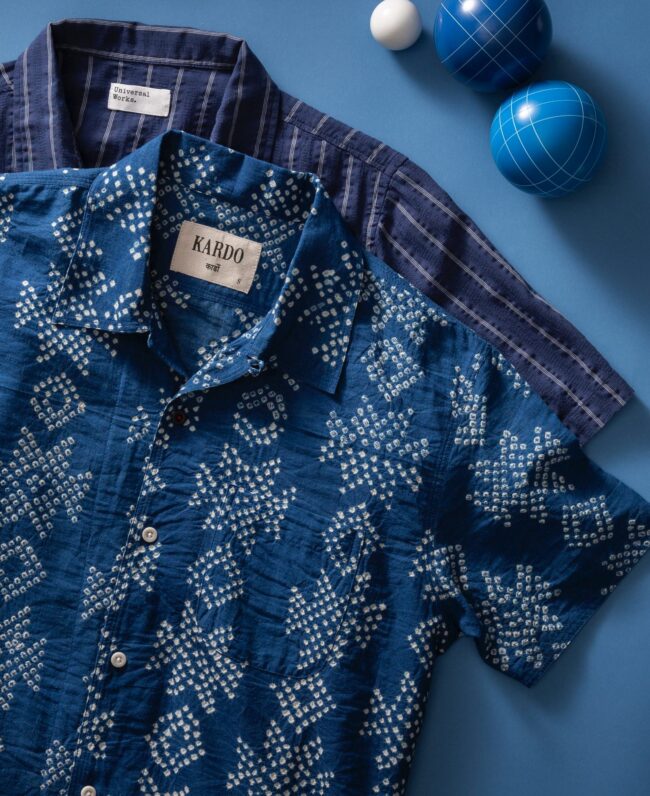
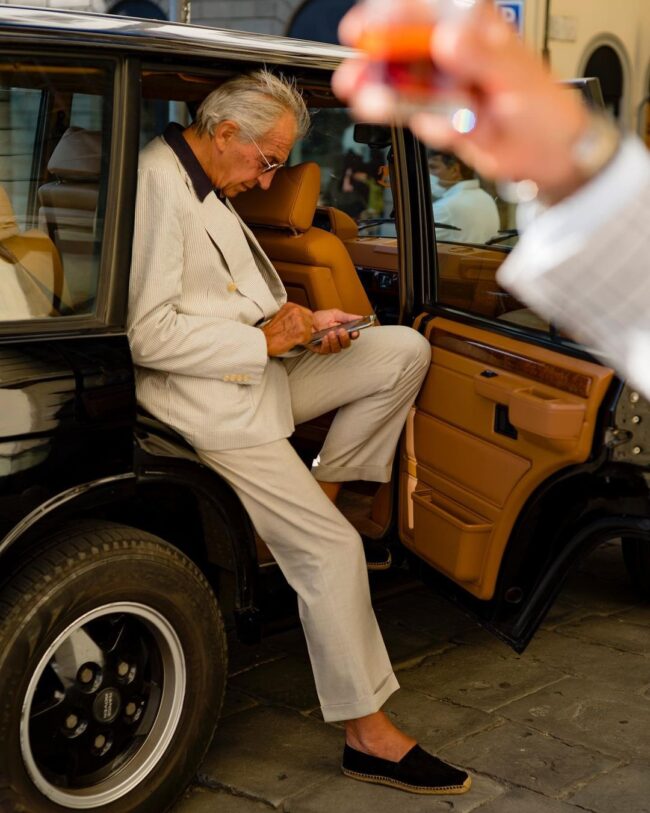
I rounded up every Black Friday sale for Put This On and will update the list through Cyber Monday. But as I do every year, I'm also highlighting some special sales from that list here. Perhaps most notable is the blowout over at LuxeSwap. I didn't include it in this list below because it's not technically a sale. But friend and menswear writer extraordinaire Bruce Boyer is clearing out some things from his wardrobe, and these items are up for auction on eBay. This is not only an opportunity to own something from one of the great menswear writers of our time, but also a chance to own some incredible menswear that may not be available elsewhere. Bruce uses world-class bespoke tailors such as Liverano & Liverano, Cifonelli, and A. Caraceni (the third of which also made for Gianni Agnelli). I handled some of the tailoring, and the workmanship is the best I've seen anywhere. The suits and sport coats fit between a size 38S and 40S, depending on the house style (I found the Liverano to fit slimmer than the A. Caraceni, the second of which has that Golden Age drape). There are also some handsome shoes from labels such as GJ Cleverley, Edward Green, and Stefano Bemer, sweaters from O'Connell's, and accessories from Drake's. You can find the entire collection by searching for the "Bruce Boyer Collection." Now to the other Black Friday deals:

Canoe Club: 30% Off; Code BF22

Canoe Club represents a new approach to casualwear, where stores aren't just carrying things with a singular point of view, but reflect the eclectic taste of their customers. Twenty or thirty years ago, most casualwear stores specialized in a "look"—the minimalism of Helmut Lang, the ruggedness of Levis, or the smart-casual looks of Loro Piana. But as more men have become comfortable dabbling in different aesthetics, and building wardrobes where rare Nikes sit comfortably alongside shell cordovan Aldens, stores such as Canoe Club have gained a lot of ground. 

Keep reading
Excited To Wear This Fall

For the past few years, I've been doing these posts every season where I talk about what I'm excited to wear for spring/summer and fall/winter. I usually do these at the beginning of the season. This one comes a little late, but on the upside, I get to talk about some new things I've purchased and have been wearing. There are also more links to in-season options. 

Flamborough Marine Guernsey

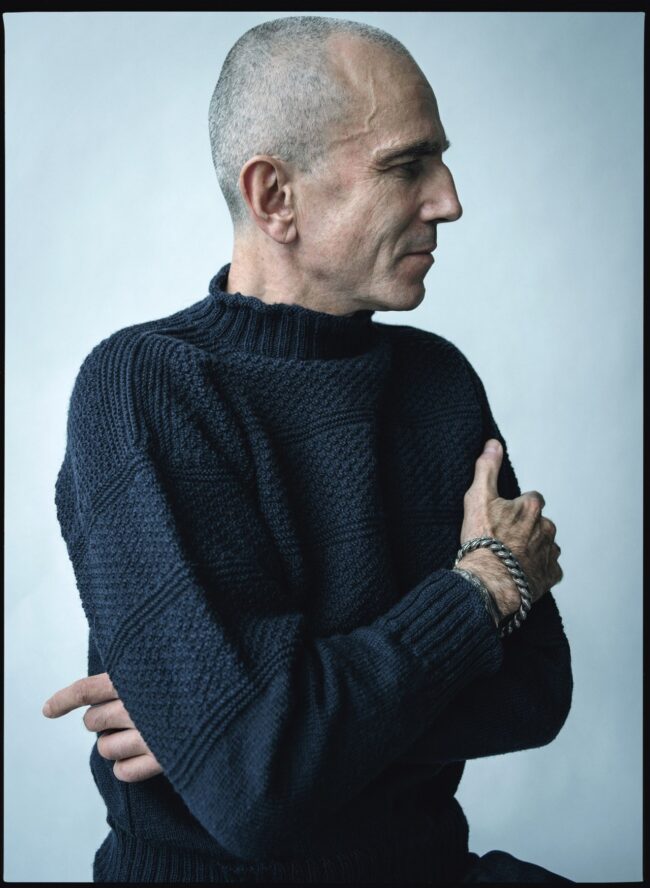
Daniel Day-Lewis once said he hates to be "dressed." By which he means, "dressed by others." He rejects the conventional photoshoot routine as an artifice—photographers and stylists carefully dress their subjects in clothes borrowed from fashion labels, often those advertising on the pages next to the celebrity being featured. So when DDL was photographed for the cover of W Magazine a few years ago, he brought with him a small duffle full of his own clothes. His wardrobe that day included a thoughtful mix of styles: a bespoke three-piece Harris tweed suit made by a tailor in New York City, a blue plaid shirt, a white tee, some rugged jewelry, a pair of slim-straight selvedge jeans, a striped Breton pullover, and some rugged work boots he designed himself. "I want to wear soft, comforting, plain things," he told the interviewer. When the article was published, a small line was printed below each photograph, taking the place where brand names would usually appear. Each line read: "All clothing his own."  

Keep reading

No Man Walks Alone Weekend Sale

No Man Walks Alone is an advertiser on this site, but also one of my favorite online shops. I've always felt that guys can build an excellent wardrobe if they simply set aside some money to shop here every season. The store carries everything from classic Italian tailoring to Japanese workwear to even some avant-garde. And from now until Sunday night, you can take 20% off all full-priced items with the checkout code FALL20. Note, since No Man Walks Alone is an East Coast retailer, this promotion runs until 12 midnight Eastern Time. Some things that I think are particularly worth checking out: 

Kaptain Sunshine Traveler Coat

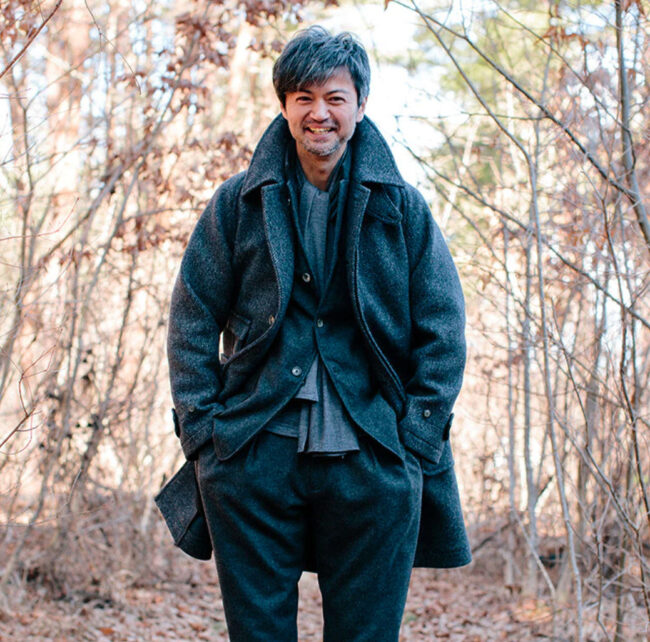
If I had a reduce my outerwear wardrobe to just three staple pieces, I'd keep my Lee 101-J, Margiela five-zip, and Kaptain Sunshine Traveler. Actually, I have two Travelers. I bought one in navy Melton wool a few years ago, and found that I wear it so much, I purchased a lighter version for autumn (the Melton can only be worn in the wintertime). For me, this is the Ultimate Long Coat (ULC). It's the one piece you can always grab from your wardrobe and feel confident about how you look. The coat's power is all in its cut. Kaptain Sunshine's Traveler is roomy and voluminous, comes down to your knees, and has an A-line silhouette. When worn, it covers almost your entire body, effectively making it your whole outfit. I wear it with everything from chunky Inis Meain sweaters and tailored trousers to stained J. Crew sweatshirts and repaired RRL work pants. It's literally impossible to look bad in this thing. No one can do it, not even me. 

Keep reading

How To Develop Good Taste, Pt. 4

Bespoke tailoring and the restaurant industry share something in that they both use the terms "back of house" and "front of house" to describe how their businesses are structured. "Back of house" refers to the behind-the-scene activities that customers typically don't see, such as the cutters, tailors, chefs, and line cooks who prepare the things that are eventually given to customers. "Front of house" is a little different. In the restaurant industry, this term refers to the customer touchpoints, such as the waitstaff and host who work to create a pleasant experience. The front of a bespoke tailoring house, which can consist of salespeople and fitters, also provides those things. However, they also offer something more important: a sense of taste.

George Wang, the founder of the Beijing-based bespoke tailoring company BRIO, works the front of house. When you commission something here, you're not just paying for the skillful craftsmanship that goes into each garment, but also George's sense of taste. He's the one who created the company's overall aesthetic. He's also the person who will guide you through decisions such as fabric choices and stylistic details. George tells me that each customer is different, and it's important to be sensitive to a person's needs, lifestyle, and even personality. A conservative businessman who needs a winter work suit has very different requirements than a young creative who wants something to wear to summer parties. It's easy to trivialize this service now that there's so much information on the internet, leading people to believe they can do everything independently. But over the years, I've come to appreciate how useful it is to work with a tailoring house that has both "front" and "back" staff persons (tailors, while wonderful, are better thought of as technicians than stylists). At Rubinacci, Mariano does the vital work of ensuring every client walks out of his shop looking "right."

I often ask George for his opinion on things, such as the right fabric to use for a project, what color the lining should be in a folio, and what watch best matches a certain kind of wardrobe. He always gives me an answer that feels like a step above what I would have initially considered. Instead of the usual recommendations for linen, wool-silk-linen blends, and Fresco for warm-weather garments, he recommended to me slippery Super 150s wools in colors such as light blue, coral, and citrus yellow. He also turned me on to London Shrunk, as well as world-class makers such as Sartoria Corcos, Sartoria Marinaro, The Work, Saic, and Masahito Furuhata. In a word, I find his taste to be sophisticated. So, for the last entry in this series, I'll start with George's thoughts on how to develop good taste. 

Keep reading

How to Develop Good Taste, Pt. 2

Style is still something of an art and has not, in Bruce Boyer's words, "descended to one of the sciences." The process of developing taste is akin to developing a worldview or personal philosophy—it's a highly subjective process not easily given to hard rules. But over the years, I've noticed that people who've been able to develop tasteful wardrobes in a short period of time often rely on the gentle guidance of tasteful merchants, tailors, and friends. So for the remainder of this series on how to develop good taste (part one was published a few weeks ago), I'm surveying stylish people on how they think others can develop a similarly keen sense of aesthetics. Consider these entries like gentle advice from a friend who has the kind of high taste that almost seems unreachable.

When I first considered who to include in this post, I immediately thought of Mark Cho. Mark is the co-founder of The Armoury and someone I occasionally turn to for wardrobe recommendations. But it was his interview with WatchBox Studios a few years ago that made me want to get his views on the broader subject of taste. In the interview, Mark discusses his watch collecting journey, which started many years ago with an affordable Omega Chronostop he purchased at a second-hand watch store in Hong Kong. He was drawn to the watch for two reasons: he liked the shape of the case and had never seen a gray watch before. That purchase sparked in him a horological passion, and he was soon obsessed with collecting the milestones and classics in watch-making history. But as he's chopped and changed his collection over the years, he's found that almost none of those iconic pieces have remained. Instead, his watch collection is just a reflection of his taste, which is threaded together by nothing more than his emotional connection to objects. Having seen and handled thousands of watches since that initial Omega purchase, Mark has also developed what art dealers call The Eye—“that irrevocable power to discern art from trash, real from fake, inspired from derivative."

There's no better representation of what it means to have taste than Mark's tantalum and steel Royal Oak. Originally made to celebrate Nick Faldo's 1990 Masters and British Open back-to-back championships, Mark purchased it in 2013 because he wanted a baby version of the jumbo-sized Royal Oak 5402. But the only way to achieve that smaller, thinner profile was to get a quartz movement, which the Faldo version houses. High-horology purists would probably frown on the idea of spending thousands of dollars on a quartz movement, but Mark didn't purchase his Royal Oak as a flex or an "anti-flex"—he simply wanted a smaller version of that design. "The Royal Oak used to be the watch no one wanted, and the quartz even less so," Mark told me. "In the US, many people considered that watch too small, almost like it's a ladies' watch." True style means dressing like you know yourself, and having the confidence to wear things others might dismiss as uncool. At the same time, it requires cultural awareness and sensitivity to the social meaning of your aesthetic choices. I love that Mark's Royal Oak captures all of those things, so we'll start today's post with his views on how to develop good taste. 

Keep reading

How To Develop Good Taste, Pt. 1

Marcel Duchamp once noted in a 1968 interview with Francis Roberts, “If your choice enters into it, then taste is involved—bad taste, good taste, uninteresting taste.” For those fortunate enough to live in post-industrial societies, where choices are now nearly limitless, taste is everything. Taste shapes what we purchase, the cultural artifacts we consume, how we dress, and how we decorate our living spaces. In the 19th century, standards for taste were passed down through aesthetic curricula conceived in formalized education systems. To have a certain type of taste was to show that you were educated and cultivated. Those standards have not been culturally relevant for over two generations, and thus, debates about taste take place everywhere. They happen in public spaces such as public transport, cafés, and boutiques, where people speak in hushed tones about other people's consumer choices. They also happen on social media and online forums. On Hacker News, a message board for tech workers, people discuss what constitutes a tasteful wardrobe. On subreddits and Facebook groups dedicated to topics wholly unrelated to fashion, such as motherhood and accounting, people post fit pics for feedback. Godwin's Law asserts that all online discussions, no matter the topic or scope, eventually result in someone comparing their opponent to Hitler. There should be a similar adage for how all discussions eventually lead to matters of taste. 

Yet, despite all the interest in taste, few people ask the more fundamental questions: What is good taste? How do you cultivate it? If you’re just starting to build a better wardrobe, how do you adjudicate between the different and often contrasting styles prescribed by hard-nosed traditionalists, Hypebeasts, gothninjas, workwear enthusiasts, and the avant-garde? Discussions about taste frequently take too much for granted, as though the laws governing aesthetics were chiseled into stone tablets. Or they fade into unhelpful aphorisms, such as “to each his own,” at which point participants all quietly drop the subject, not wanting to ruffle feathers. 

I've been thinking about taste a lot in the last few months. Fifteen years ago, if you were interested in classic tailoring, online debates about taste were settled with a scan from Apparel Arts or a photo of how an Italian industrialist dressed during the 1960s. Today, few people care about classic tailoring, and such specialized source materials hold little authority. In recent years, the scope for what we consider "legitimate taste" has widened to include a broader cross-section of society (a good thing). However, it has also become harder to critique ugly outfits (a bad thing). It's also harder to discuss aesthetics, as menswear has become balkanized, and The Discourse is increasingly about how to shop, not dress (a frustrating thing). So, I wanted to write a multi-part series on how to develop good taste. The first part is about theory; the second part is about practice. To be sure, this series will not settle any debates. But hopefully, it will give people better footing when discussing what lies at the heart of menswear: our taste in clothes.

Keep reading

In Good Nature: A No Man Walks Alone x Stoffa Collaboration

Until recently, "collaborations" have been mainly in the purview of streetwear. They're a way for companies with specific strengths or areas of expertise to create something unique together, sort of like how academics from different fields might come together on a project. Growing up, I've always associated the term with Nike, or how a cut-and-sew company might collaborate with a cool brand specializing in screenprints. But as the fashion industry has increasingly embraced streetwear in the last ten years, even luxury lines are marketed under the flashing neon-lights sign of "collaboration." Collaborations are a way for companies to generate not only products, but also online content and interest in today's noisy, crowded market.

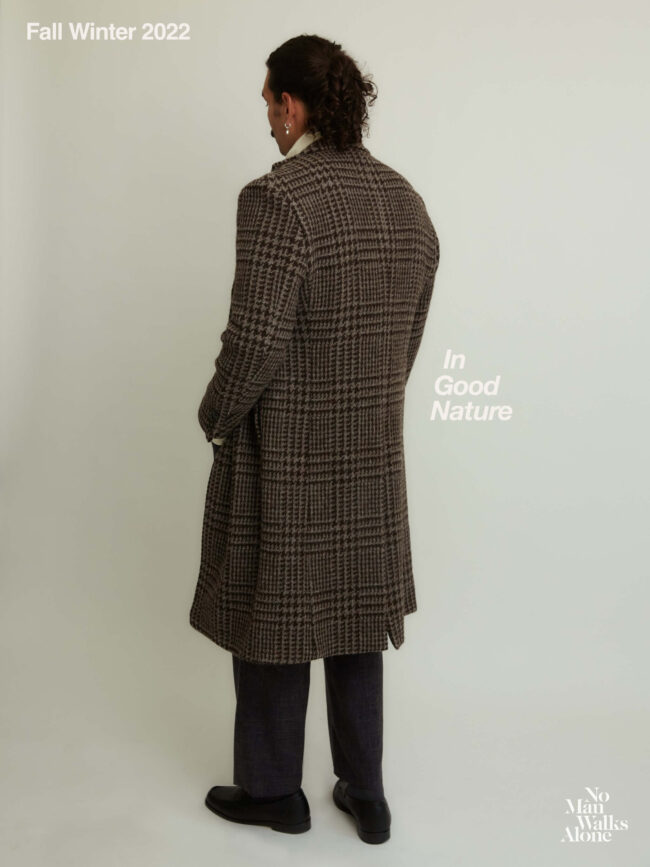
The best collaborations involve companies with distinct points of view, but aren't worlds apart. Last week, two of my favorite companies, No Man Walks Alone (a site sponsor) and Stoffa, collaborated on a project called In Good Nature. It's a fall/winter capsule collection that includes dramatic overcoats, patterned tailoring, lounge jackets, drawstring pants, and camp collared shirts with generously sized chest pockets. Like the two companies involved, the collection straddles the line between classic and modern, allowing you to style the clothes in various ways (more on this later).

The name In Good Nature refers to the team's goal of producing clothes with minimal environmental impact. Stoffa founder Agyesh Madan sourced deadstock Italian wools originally made in the late 1990s and early 2000s, saving material that would have otherwise been discarded. You don't often see collections like this because larger brands need enough cloth to produce massive runs. NMWA and Stoffa were able to use these remnants because they made a small capsule collection through flexible Italian factories ("The clothes are made in the same way we would do a one-off MTM," No Man Walks Alone founder Greg Lellouche explained). They also sourced natural, undyed fabrics from the Yorkshire-based mill Marling & Evans, which specializes in this sort of cloth. Most fabrics are chemically treated to take on the color palette of your wardrobe. Undyed fabrics allow the natural color of an animal's fleece to shine through. They're typically cold in hue, have some visual depth (since the fibers haven't been dyed into a flat uniform color), and range from grey to taupe to chocolate brown.

Keep reading

This Summer’s Best Shirts

Fall/winter style is all about outerwear, but the shirt comes into its own in the summertime. What's typically considered background material for a nice coat or jacket becomes the centerpiece when it's too hot for layering. Unfortunately, there are few guidelines for choosing a good summer shirt. Basic white poplins and light blue oxford button-downs are wardrobe staples but a bit boring by themselves. Summer prints can vary wildly, leaving many people confused about what to buy. So this season, I've compiled a list of what I think are some excellent options, along with tips on how to wear specific shirts and what aesthetics they fit.

THE USEFUL BLUE SHIRT

In the most famous shirt-related scene committed to paper, Daisy Buchanan is described as sobbing stormily into thick shirt folds, her head bent and voice muffled as she cries about how she's "never seen such beautiful shirts before." The shirts had been thrown onto a table, mounted high into a soft, rich pile, and came in a spectrum of rainbow colors, including, as F. Scott Fitzgerald vividly described, "coral and apple green and lavender and faint orange with monograms of Indian blue." The enchanting description beautifully captures the decadence of the book's main character, the mysterious millionaire Jay Gatsby. But if you want to build a useful shirt wardrobe, you should stick to just one color: light blue. 

Keep reading

Excited to Wear This Spring

For the past few years, whenever we're about to start a new season, I've been doing roundups about things I'm excited to soon wear. These lists are about what I'm interested in at the moment; they are not meant to serve as shopping guides for seasonal essentials (which invariably repeat the same yawn-inducing basics). But hopefully, between the entries, styling suggestions, and innumerable photos at the end, you can find some outfit ideas for your wardrobe. Here's this year's spring list. You can also revisit the lists for spring 2019 and 2021 for more warm-weather outfit ideas (2020's list was about life at home).

COTTON SUITS

Europeans and North Americans felt the Industrial Revolution not just in social terms, but also tangibly on their skin. Before the revolution, most Westerners wore and slept on linen, which was typically grown on local farms, spun at home, and made into moisture-wicking bedsheets and clothes. But changes in international trade, the invention of the cotton gin, and the evolution of factory cotton production made cotton incredibly cheap, relegating linen to buckram and underwear by the mid-19th century. Today, cotton is so ubiquitous that it's described as "the fabric of our lives." We wear it as shirts, shorts, pants, jackets, and even shoes. But for suits and sport coats, the fiber is often overlooked, sometimes even reviled.

Keep reading

Six New Brands I’ve Been Watching

In an interview with The Telegraph, Patrick Grant of Norton & Sons once described fashion as being an “ever-moving feast.” I find that the quick-paced nature of fashion -- where things are constantly being created and destroyed -- makes the field endlessly interesting. There’s always something new, something different, something to talk about. For the past few years, I've been doing annual roundups on new brands I find to be interesting. To be sure, not all of them are new -- many have been around for years -- but they're new to me. This year, there are so many brands on the list, I'm splitting the post into two parts. Here's part one, with part two coming in the next installment. 

GHIAIA CASHMERE

When Davide Baroncini left his job at Brunello Cucinelli, he didn't want to work for another luxury label. It would be strange, he said, to suddenly go from telling people that Cucinelli makes the best clothes to championing Tom Ford. So he started his own brand, Ghiaia Cashmere, which is named after the smooth pebbles found on the shoreline of his native Sicily. Baroncini says the name represents him returning to his roots, the memory of feeling the ground underneath his feet. It also suits a company specializing in thin, luxurious knitwear designed for Mediterranean climates, such as Sicily and Baroncini's newly adopted home, Pasadena. Plus, it sounds nice, so long as you can pronounce it (say it slowly, it's jhe-EYE-ah).

Keep reading