No Man Walks Alone Anniversary Sale

image


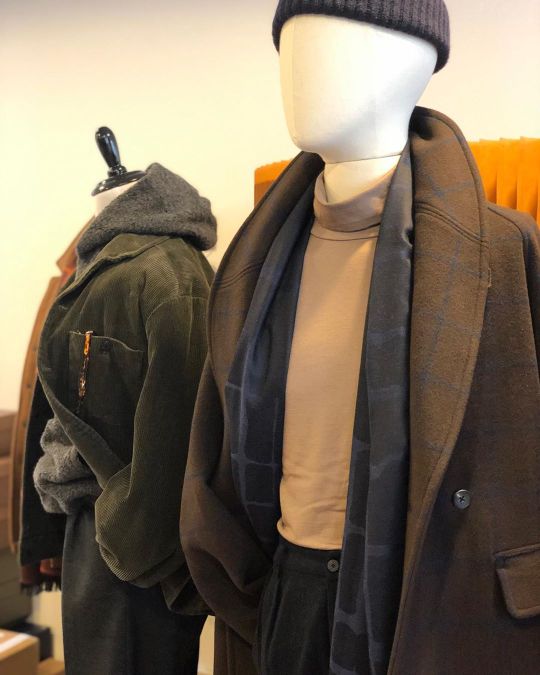
Six years ago, Greg Lellouche called me to say he’s starting a new online store called No Man Walks Alone (today a sponsor on this site). I remember being excited about it because Greg has a uniquely open-minded view on men’s style. Even today, most shops are singularly focused on prep, workwear, or the avant-garde – they push a very specific look. No Man Walks Alone mixes all three in a way that feels natural. 

In a recent interview at Handcut Radio, Greg says he thinks streetwear has had a positive influence on menswear, at least on balance. “I like how streetwear has liberated men from the idea of a uniform. They can wear crazy printed pants with an old sweatshirt from high school and not feel ridiculous about mix-and-matching different perspectives. By broadening the scope, it’ll eventually trickle down to a mainstream way of dressing, and it’ll bring a bit more freedom and individuality to men’s style.” That open-mindedness probably explains why you can find everything from Italian tailoring to Japanese workwear to the avant-garde at his shop.

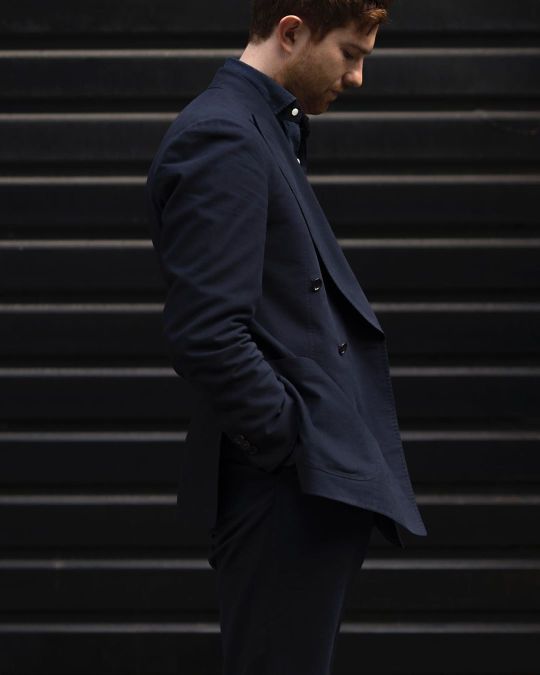
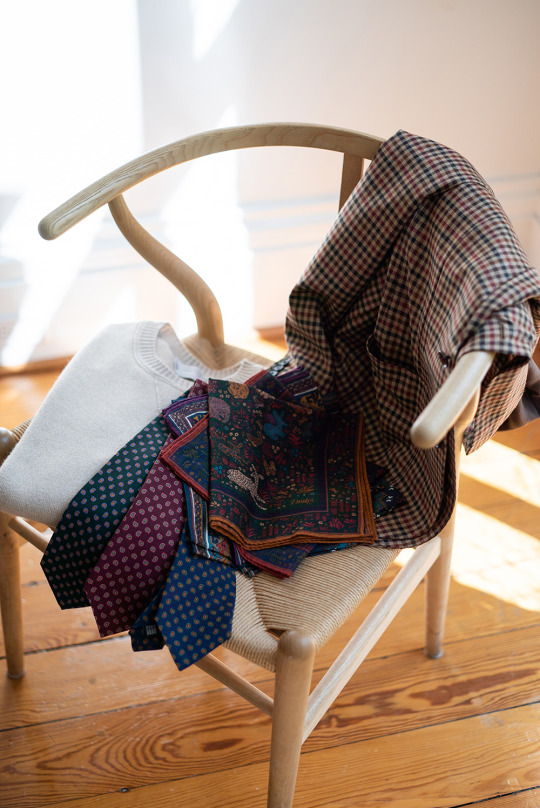
To celebrate their sixth anniversary, No Man Walks Alone is offering a 20% discount if you use the checkout code sixyears. The promotion is running until this Tuesday, October 22nd. Here are nine things in the store I’ve been admiring.

Keep reading

A Look at Drake’s FW19 Collection

image


In academia, and particularly social science, research methods have become more rigorous, but the field has produced fewer big thinkers. Take David Ricardo, for instance, the British political economist who transformed the world at age 37 after reading Adam Smith’s Wealth of Nations. Having already made a fortune as a stockbroker and loan broker, Richardo published his first political economy paper on the “bullion controversy” in 1809. He posited that the Bank of England’s propensity to issue excess banknotes was causing inflation, an early theory in what is today known as monetarism. A few years later, in his “Essay on the Influence of a Low Price of Corn on the Profits of Stock,” he articulated the law of diminishing marginal returns.

His most significant contribution, however, came when he studied Britain’s protectionist Corn Laws. Using the simple, yet profound example of how Britain could trade cloth for Portuguese wine, he formulated the idea of comparative advantage — the basis for much of free trade thinking today. Like other great political economy theorists before him, such as Adam Smith and Karl Marx, Ricardo had the uncanny ability to arrive at complex conclusions without the mathematical tools deemed essential in today’s academic research. In his book Price Theory, David Friedman wrote of the man: “The modern economist reading Ricardo’s Principles feels rather as a member of one of the Mount Everest expeditions would feel if, arriving at the top of the mountain, he encountered a hiker clad in T-shirt and tennis shoes.”

Ricardo’s examples, however, were not arbitrary. Portugal at the time was renowned for its sweet port wine, and Britain excelled at producing woolens, linens, cottons, silks, and all things textile related. In the Scottish Border towns, tweeds and cashmere were woven and knitted from local and native wools. Further south, Manchester’s steam-driven textile mills produced almost a third of the world’s cotton, thus giving the city its nickname, Cottonpolis. Spitalfields, similarly, was known for its exquisite and lustrous silk. French Protestant refugees (Huguenots) in the 17th century established the silk trade in this East London district after fleeing from religious persecution. The tradition was later taken up by Irish immigrants who arrived with little more than their weaving skills. It was a simple example involving Britain’s textile industries that helped to set up the following 200+ years of economic theory.

Keep reading

Expanding on a Fall Wardrobe

image


When I lived in Moscow, Russia many years ago, I relied on my gray flannel trousers, tweed sport coat, and waxed cotton jacket to get me through fall. Superficially, the primary function of an autumn wardrobe is to protect you from cold, wind, and rain. But in a faraway, foreign land, cocooning myself in layers also brought some psychological comfort. The renowned Russian playwright Anton Chekhov – whose haunting and lyrical prose helped define the modern form of short storytelling – wrote about this feeling over 120 years ago in his story, “The Man in the Case.”

[T]wo months ago a man called Byelikov, a colleague of mine, died in our town. You have heard of him, no doubt. He was remarkable for always wearing galoshes and a warm wadded coat, and carrying an umbrella even in the very finest weather. And his umbrella was in a case, and his watch was in a case made of grey chamois leather, and when he took out his penknife to sharpen his pencil, his penknife, too, was in a little case; and his face seemed to be in a case too, because he always hid it in his turned-up collar. He wore dark spectacles and flannel vests, stuffed up his ears with cotton-wool, and when he got into a cab always told the driver to put up the hood. In short, the man displayed a constant and insurmountable impulse to wrap himself in a covering, to make himself, so to speak, a case which would isolate him and protect him from external influences.

There’s something oddly comforting about fall/ winter clothes, not just in terms of how they keep you warm, but also emotionally protected. Encased in woolens, with a Scottish cashmere scarf around your neck and your coat’s collar turned-up, you feel like you can take on the world. At the same time, there’s something genial about autumnal clothing — materials such as soft cashmere, nubby oxford, and suede leather invite a smile and conversation. The other day, a stranger complimented me on my outfit. It felt warm. 

Keep reading

Tailoring for Younger Men

image


In 1968, Tommy Nutter was exasperated with his sales job at Donaldson, Williamson, and G. Ward, a bespoke tailoring firm based in London’s Burlington Arcade. Nutter derisively described their house style as “little” and wanted to update it with some flair. The traditional-minded tailors in the workroom, however, dismissed his ideas as technically impossible and, in any case, tasteless. “People did not come here to be measured up for tents,” one journalist documented. So Tommy petitioned for a new job at Henry Poole. When the firm’s managing director, Samuel Cundey, saw Tommy’s fashionably long hair, however, he sent him away, horrified.

Tommy would save his ideas for himself. Shortly after quitting his job, he and Edward Sexton went on to form one of the most important tailoring houses of the 20th century, Nutters of Savile Row. If you believe menswear lore, many of the long-standing firms, such as Huntsman, viewed Nutters at first with suspicion. Bespoke tailoring at the time was a hush-hush and stuffy business. Tailoring shops didn’t even have display windows and firms such as Anderson & Sheppard considered publicity vulgar. The expression “it’s not done” not only sums up the hard-edged attitude of many in the solvent class, but also the tailors who served them.

Nutters not only displayed their goods to the public, they also talked to journalists and attracted younger customers into the then-stodgy precincts of Savile Row. They tailored for Elton John, Mick Jagger, and The Beatles, as well as women such as Twiggy and Diana Ross. Men walked out of the Nutters shop clad in box plaid suits, flared pants, and mini-platform shoes. As they strutted down the street, competing tailors stared, mouths agape. Perhaps they were offended by the garish designs. Or maybe they feared Nutters made them look stodgy by comparison.

Keep reading

Summer Tweed and Slubby Oxford

image


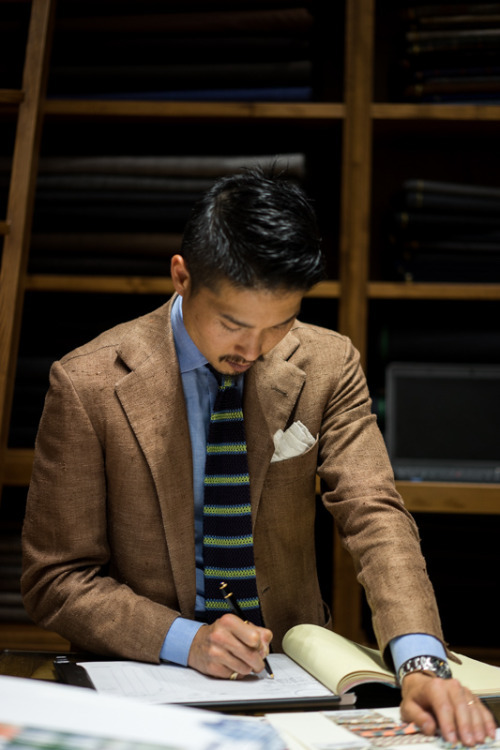
A couple of years ago, after having no success trying to find raw silk jacketing, I organized a custom-run of linen-silk fabric modeled after Taka’s jacket pictured above. The cloth mimics the slubby texture of raw silk jacketings from yesteryear — which are impossible to find today outside of vintage fabric vaults — but it wears cooler and is readily available. I call it summer’s tweed.

I never anticipated it would be such a hit. Since running the fabric, it’s appeared in GQ, The Sartorialist, and Permanent Style. Bespoke shoemaker Nicholas Templeman wore it in a Last Magazine feature. Dionisio D'Alise, the head cutter at Sartoria Formosa, sometimes wears it at fittings. Anderson & Sheppard trained coatmaker Lee Oxley says he loves the cloth. For clients of custom tailors, finding an interesting spring/ summer fabric can be tough. They typically don’t have the same textures or patterns that make fall/ winter clothes so appealing. This one, however, has the visual texture of your favorite tweeds, but is airy enough for spring/ summer weather. 

It’s also a favorite of readers. After having organized multiple custom fabric runs at this point, I’ve received more emails about this one than any other. Those who pre-ordered the fabric have written in to say how much they like their resulting garments. Those who missed out have asked if the cloth will be offered again. So, I’m doing one more run of summer tweed — this time with a special collaboration with Spier & Mackay.

Keep reading

On the Edges of Style

image


In his 1966 essay “The Secret Vice,” originally published in The New York Herald Tribune, the white-clad chronicler of American culture, Tom Wolfe, starts by talking about men who love handmade buttonholes. This was, of course, before surgeon cuffs were standard on ready-to-wear, but the passage will ring true to anyone who’s ever obsessed over the details. 

“Real buttonholes. That’s it!” Wolfe exclaimed. “A man can take his thumb and forefinger and unbutton his sleeve at the wrist because this kind of suit has real buttonholes there. […] Yes! The lid was off, and poor old Ross was already hooked on the secret vice of the Big men in New York: custom tailoring and the mania for the marginal differences that go into it. Practically all the most powerful men in New York, especially on Wall Street, the people in investment houses, banks and law firms, the politicians, especially Brooklyn Democrats, for some reason, outstanding dandies, those fellows, the blue-chip culturati, the major museum directors and publishers, the kind who sit in offices with antique textile shades – practically all of these men are fanatical about the marginal differences that go into custom tailoring.”

The phrase “it’s all about the details” has been exhausted, but in classic men’s tailoring, it’s still true. Suits and sport coats follow a template that’s the result of many generations and skilled hands. But there’s still plenty of room for personal expression. Much has been written about pocket styles (jetted, welted, and patched), lapel shape (peak, notch, straight, and bellied), and closure (single button, two-button, three-roll-two, and the never to be worn hard-three). However, there’s not much online about how the edge of a coat can be finished. It’s a detail that’s easy to forget but can make a surprisingly strong impact on how a garment looks. Here’s a run-through:

Keep reading

A Modern Dickie Greenleaf Look

image


The Talented Mr. Ripley, the film version and not the book, opens with a brilliantly economical line about clothes. Matt Damon, as the film’s anti-hero Tom Ripley, borrows a Princeton jacket from a friend while working as as a piano player at a party. The Ivy League jacket ends up getting him the attention of a wealthy shipbuilder, who thinks that Tom went to Princeton with his son Dickie. He sends Tom away to Europe, hoping Tom can convince his ne'er-do-well son to come back home from southern Italy. Having left his bleak Manhattan life, however, Tom becomes enraptured by Dickie’s charming dilettante lifestyle. So he strikes up a Faustian bargain and steals it. “If I could just go back … if I could rub everything out … starting with myself, starting with borrowing a jacket,” Tom silently dreams to himself at the beginning of the film. And doesn’t Tom’s line neatly sum up what we all wish for when we purchase a new jacket or pair of shoes? The fantasy that it’ll somehow magically transform our mundane lives? (Well, maybe without the murderous crime.)

The film is important to fashion in other ways. Every summer, men reference Anthony Minghella’s chilling thriller as one of their favorite sources for warm weather style inspiration. The Talented Mr. Ripley captures the feeling of being young and carefree, not unlike the films of French New Wave, but with more of a la dolce vita vibe and touristy idyllic scenes of a sun-drenched 1950s Italy. It’s a hypnotic, voluptuously beautiful film with tons of references to menswear cliches: inherited wealth, Ivy League education, and an impossibly glamourous lifestyle in an Italian seaside town. 

For that Dickie Greenleaf vibe, even if not its literal look, you can turn to Joyce. The relatively new brand offers the same laid-back, vacation style that defines the film. Their clothes are loosely cut, retro-inspired, and pair well with tortoiseshell sunglasses and well-mixed martinis. The company even has the same America-to-Italy backstory. The idea for the brand was first seeded when John Walters, the company’s founder, was working as a product designer in New York. However, it didn’t materialize until Walters visited his girlfriend in Florence, Italy (where they now both live). Today, it’s based out of their Florentine studio, while product fulfillment takes place out of Indian Wells, California. “Stylistically, our online visuals reference a lot of Pink Floyd’s earlier works, as well as some of Alain Delon’s films, such as Purple Noon and The Swimming Pool,” says Walters. “Aside from that, we also get a lot of our style inspiration from traveling.”

Keep reading

Things I’m Excited to Wear This Summer

image


It’s easy to get down on summer clothes. They don’t have the natural appeal of fall and winter wardrobes – there are no plush cashmere knits or prickly tweeds to draw you in, and there are few opportunities to layer. Over the years, however, I’ve come to appreciate how the changing of wardrobes helps mark the passing of time. Summer allows us to wear camp collar shirts, soft suede loafers, and airy materials, such as Tencel and linen. It’s also a good time to reintroduce ourselves to cheerier colors: warm peach, French blue, and sunflower yellow. If you’re looking for ideas on what to wear this season, here are ten things I’m particularly excited about. 

Bold Striped Shirts

White shirts are an all-time classic. During the Middle Ages, being able to wear a fresh linen shirt every day suggested you had wealth and status. White shirts were considered underwear, the first layer against the skin, and were easily soiled during a time of limited hygiene practices. Blue shirts, on the other hand, came much later as part of the uniform of laborers, sailors, and even prisoners.

Keep reading

It’s Easy Being Green

image


You’ve heard the phrase a million times: “You can have any color as long as it’s black.” In his autobiography My Life & Work, Henry Ford claimed he told his management team in 1909 that, going forward, his best-selling Model T would only be available in one color. But for the first few years of its production, from 1908 to 1913, it wasn’t available in black at all, but rather bullet gray, dark green, midnight blue, and fire engine red. The all-black change didn’t happen until 1914, with the outbreak of World War One. Ford switched to black because of the paint’s low cost, durability, and faster drying time. Paint choices were determined by the chemical industry, which at the time was affected by dye shortages and new nitrocellulose lacquer technologies. The decision had more to do with economics than style.

Cars back then were painted using a process called japanning, which today would be known as baked enamel. “It was first used in the mid-1800s for decorative items imported into America,” says Model T restorer Guy Zaninovich. “A piano has a shiny black surface that almost looks like plastic rather than paint because it’s done with the japanning process. It leaves a tough and durable surface.” Japanning also dries quickly, which was important to the efficiency-obsessed Ford. His plants produced as many as 300,000 cars per year, at a time when competing automakers had a combined production of about 280,000 cars, so shaving minutes off each car’s production time was critical. The catch? Japanning was only available in black. “If japanning worked in hot pink, all Model T’s would have been hot pink,” Zaninovich joked. 

The history of the Model T is just one of the many strange stories of why certain things come in specific colors. Suits, for example, mainly come in navy and gray because, back in the Regency period, men wore navy coats with cream-colored breeches. Regency blue eventually gave way to Victorian black by the mid-19th century, but the norm for wearing contrasting trousers remained. The suit, as defined by a coat worn with matching trousers, wasn’t typical in London until the end of the 19th century. Until then, the suit was only worn for sport and leisure, mostly in the countrysides. No proper gentleman would ever wear it to town.

Keep reading

Excited to Wear This Spring

image

Spring is the season for songbirds and meaningless baseball, cool mornings and warm afternoons, but for people who love clothes, it’s also the worst time of the year. Spring clothes are often less interesting. There fewer opportunities to layer. The cuts reveal more than conceal, and few of us look good naked. Whereas dressing for winter can be a paint-by-numbers exercise, dressing for spring is more like trying to solve a puzzle. How do you dress well, but also comfortably?

It always takes me a while to switch wardrobes this time of year, but I often go back to the same things – breathable tailoring, button-down shirts, and loafers. For casualwear, it’s usually a workwear styled jacket and some raw denim jeans (gotta get those fades). I also like bolder shirts nowadays with unusual collars, and have even been embracing things such as graphic tees. If you’re looking for some early spring inspiration, here are some things I’ve been thinking about.

MY KIND OF FUN SHIRT

Keep reading