Things I’m Excited to Wear This Fall

A few months after the world shut down this past spring, Cathy Horyn of The Cut interviewed Raf Simons about what he thought of fashion's possible future. Simons, who's known in fashion circles for introducing a generation of men to the skinny black suit, was sitting in his apartment in Antwerp at the time while wearing elasticated easy pants and a hoodie. He ruminated on what fashion might look like after this pandemic. "'I think there must be a bunch of people out there, when they start thinking about fashion, who don't want to be reminded of the shitty time they had at home in the last five months. But —' He hesitated. 'It's just so personal. I have no clue. [...] honestly, I haven't worn a piece of fashion in months.'"

That's mostly the feeling I get when I think about fashion nowadays. But recently, I've been enjoying Mark Cho's new YouTube series, titled "Dress to Ingest." In a series of relaxing videos that run between five and ten minutes, Mark sits down with various Hong Kong restaurateurs to talk about their signature dishes. The videos are meant to give people some context on where they can wear tailored clothing, here being at restaurants. "They say you don't appreciate it until it's gone," Mark tells me. "Tailoring is often misunderstood only as a 'formal' option, but there's a difference between 'formal' and 'dressed up.' 'Formal' is serious and somber. 'Dressed up' is simply being invested in your appearance for your benefit and others around you. There has always been something precious about breaking bread with friends and family. Given how seldom we see each other now, why not give these rare occasions the celebration they deserve?" 

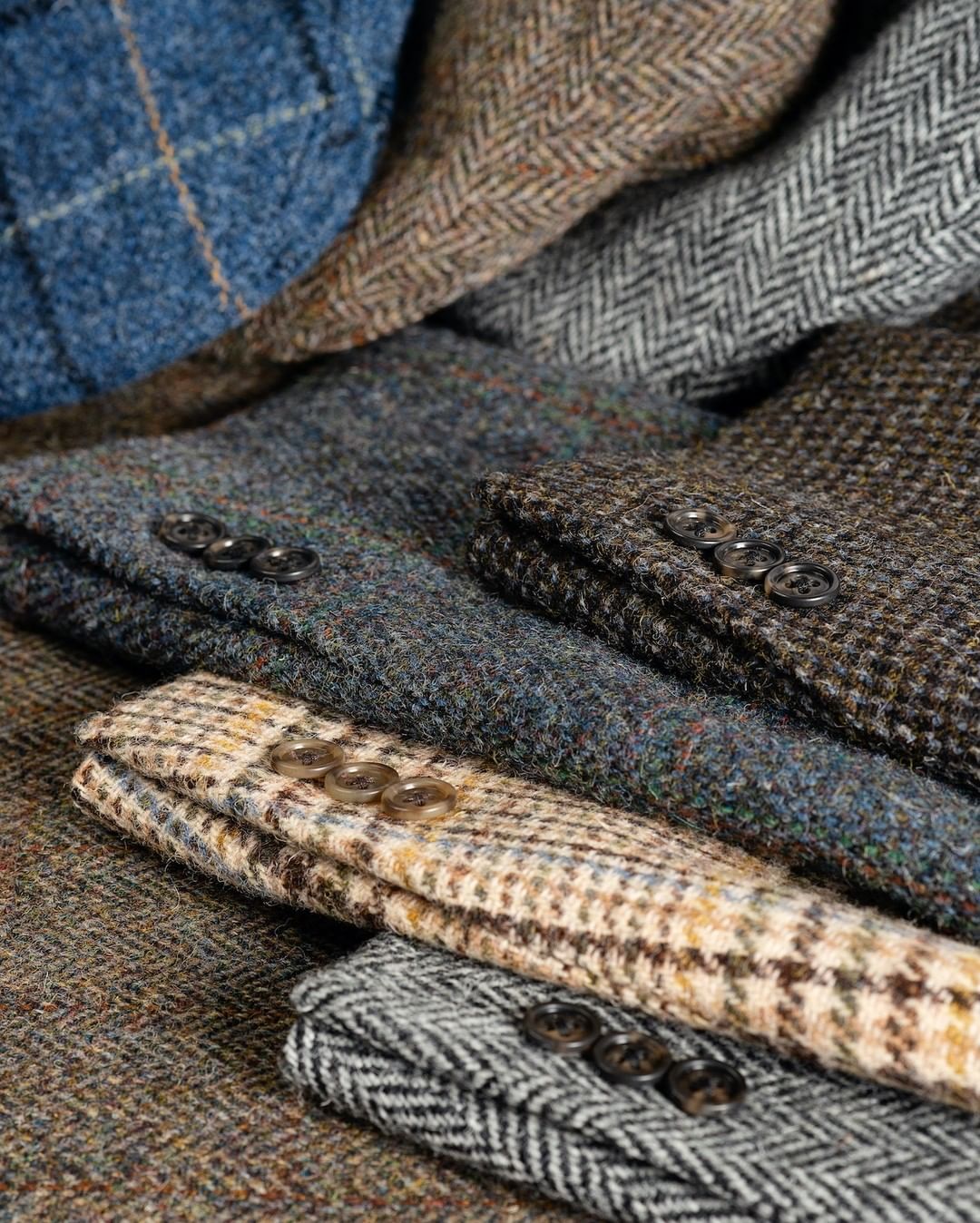
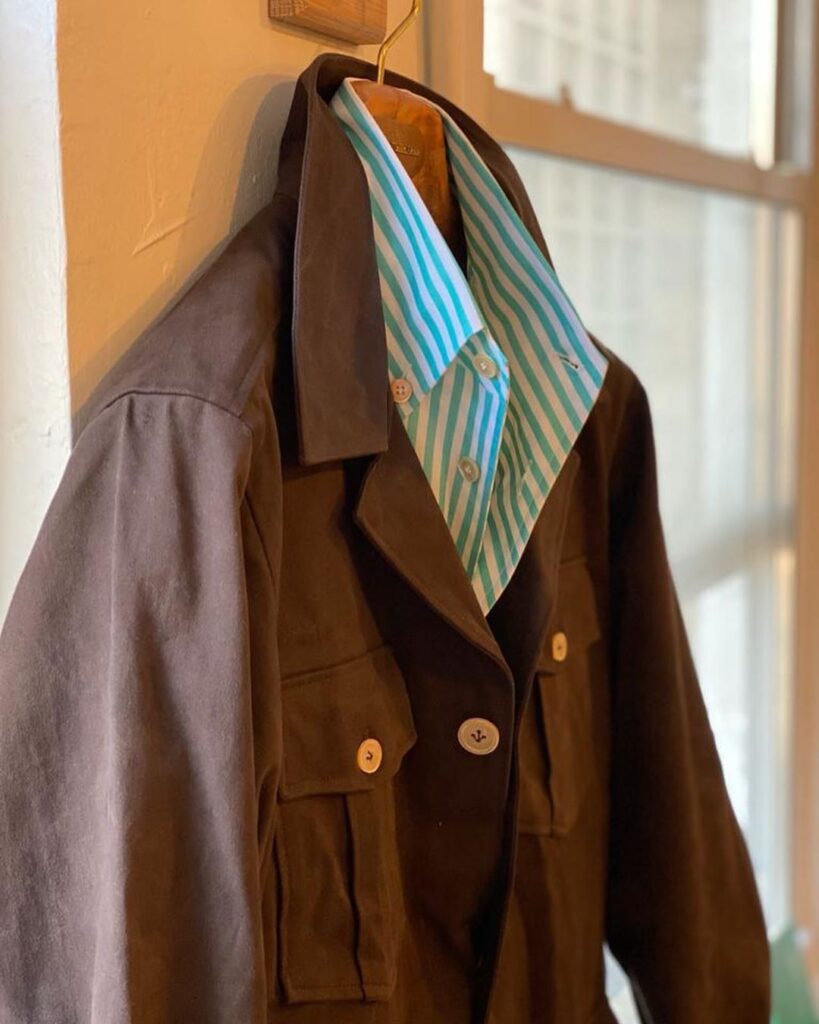
I don't wear tailored clothing as much as I used to, given that I mostly spend my days at home. But I've tried to make an effort to wear nicer clothes when I can -- a sport coat for short walks around the neighborhood, better flannel shirts even when I'm at home, a nicer pair of pants that I used to reserve for going to the city. "Outside" clothes help break up what's become a very monotonous life at home. Plus, on the few occasions when I can safely meet with friends, I've taken the opportunities to "dress up" more than I used to. The future of fashion is still uncertain, and yet, clothes continue to be one of our small comforts. In that spirit, here are eleven things I'm excited to wear this season. 

Keep reading
5 New Brands I’m Watching

In an interview with The Telegraph, Patrick Grant of Norton & Sons once described fashion as being an “ever-moving feast.” I find that the quick-paced nature of fashion -- where things are constantly being created and destroyed -- makes the field endlessly interesting. There’s always something new, something different, something to talk about. For the past few years, I've been doing annual roundups on new brands I find to be interesting. To be sure, not all of them are new -- many have been around for years -- but they're new to me. This year, there are so many brands on the list, I'm splitting the post into two parts. Here's part one, with part two coming later this week. 

NORLHA

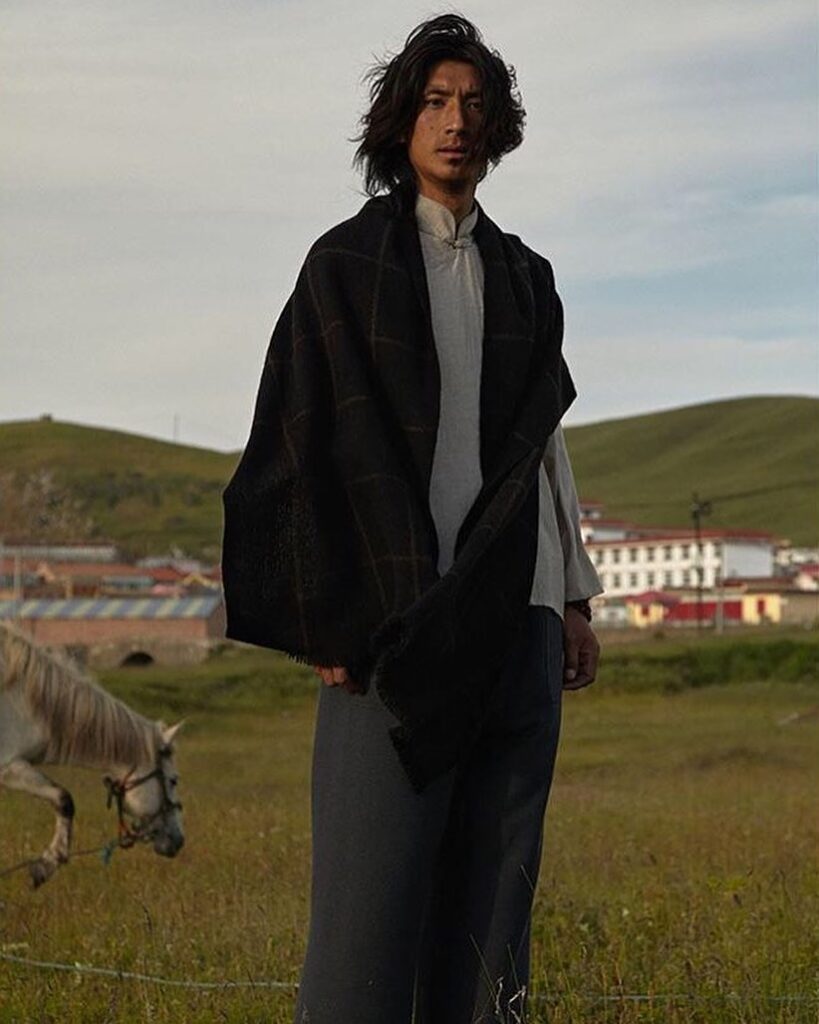
With a camera in her hand and a translator by her side, Dechen Yeshi arrived at the Amdo region of the Tibetan plateau in 2004. She came partly to explore her family's history on her father's side, a Tibetan academic who once served as a Minister to His Holiness the Dalai Lama. She also came at the behest of her mother, Kim Yeshi, a French-American anthropologist who co-founded the Norbulingka Institute, a Tibetan cultural center based near Dharmsala, India. Kim has always been fascinated by textiles, and long believed that yak wool could be a source of income for Tibetan families. So she sent her daughter Deschen to investigate.

Keep reading

Where To Shop For a Suit

In the last few months, the fashion press has been abuzz about whether the coronavirus pandemic will sound the death knell for the suit. Over on Savile Row, bespoke tailoring houses are getting crushed by soaring rents and the lack of overseas orders. In the United States, three of the largest companies to declare bankruptcy this year — J. Crew, Brooks Brothers, and most recently Men’s Wearhouse — are known for their affordable tailoring. In her recently published New York Times Magazine article, Irina Aleksander wonders if Americans may have settled into sweatpants forever.

As most people only wear tailoring to the office, suit sales will likely be in a slump for a while. But for people who dress for pleasure, I imagine the suit and its accoutrements will remain relevant for some time. The fact is, it feels good to dress up. “Outside” clothes help divide the day into distinct periods, which is especially nice now that work-from-home culture threatens to make every activity feel the same. A few weeks ago, I got coffee with my friend Peter Zottolo outside of a cafe, where he told me that he and his wife still try to find occasions to dress up now and again. One day we’ll return to bars, restaurants, and perhaps even offices. And when we do, “nice” clothes will return.

The good news is that the tailored clothing market has never been better. Ten years ago, if you wanted a semi-affordable suit, your options were mostly limited to J. Crew, Brooks Brothers, and various haberdashers who worked with Southwick. You could shop second-hand, of course, but what you saved in money, you spent on time. Today, there are many more options at affordable prices, particularly for people who favor classic Italian style. If you’re looking to get a suit any time in the future, here are three places that I think are worth being on your shortlist.

Keep reading

Lamb Chopped: The Story Behind Brooks Brothers’ Bankruptcy

Two years ago, at a black-tie gala held at the Jazz at Lincoln Center, nearly 1,000 guests gathered to commemorate Brooks Brothers' bicentennial anniversary. While sipping on themed cocktails named "Modern Classic" and "Golden Fleece," guests enjoyed an all-American jazz program befit for an all-American clothier. Since their founding in 1818, Brooks Brothers has defined classic American men's style, invented the ready-to-wear suit, and dressed nearly every US President. Brooks Brothers CEO Claudio del Vecchio, who has been widely credited with reviving the company since it fell out of favor under previous owner Marks & Spencer, told The New York Times that he's working to reinforce a culture. "I have to make sure that we are building a company that will last after me," he said while sitting at his 346 Madison Avenue office, where his polished mahogany desk faces an antique grandfather clock once owned by the store's founder, Henry Sands Brooks. "I don't want to be here another 20 years. Forget about another 200 years. It's really about trying to build a culture that will last longer than the business. That will make it very hard for the next guy to screw it up."

Last week, Brooks Brothers filed for Chapter 11 bankruptcy protection, making it the highest-profile men's clothier to do so during the coronavirus pandemic. The company says they plan to close about 51 of their stores, a decision they attribute to the toll of mass shutdowns. This comes on the heels of their announcement that they'll close all three of their US factories by the end of this summer. So far, Brooks Brothers has shut the lights at their Garland, North Carolina shirtmaking factory, which employs about 25% of the town's residents. The company's Southwick suit factory and New York tie factory have been reduced to producing masks, but they too will shutter unless the company can secure a buyer.

Soon, the fashion press will churn out stories about what went wrong at Brooks Brothers. I suspect theories will include something about rampant globalization, rapacious capitalism, corporate mismanagement, and mass-marketization. Brooks Brothers either failed to adapt to changing consumer tastes, or they adapted too much. For diehard trads, the decline of Brooks Brothers will undoubtedly be linked to the decline of Western civilization itself.

Keep reading

No Man Walks Alone Starts Sale

No Man Walks Alone is a sponsor on this site, but also genuinely one of my favorite stores. It's hard for me to think of a place with a better selection of both casualwear and tailored clothing. This morning, they started their end-of-season promotion, where you can find select items discounted by as much as 40%. You don't need a promo code, but since sales are final, you'll want to double-check sizing and measurements (the store has excellent service and you can always email them for advice). Here are a few highlights:

Glenn's Denim Slim-Tapered Jeans

After working for years behind the scenes designing, cutting, and sewing for others, Glenn Liburd started his namesake denim brand at the age of 62. Glenn's Denim is one of those rare "maker-brands," where nearly everything is done in-house. While other companies typically outsource their production, you can find Liburd making almost everything himself out of his small, Brooklyn-based workroom (the exception is the workshirts, which are produced in Portugal). The company also sources their denim from some of the few remaining American weavers. Glenn Denim feels like on one of those obscure, local brands you find at a cool NYC boutique. 

Keep reading

This Season’s Best Sales

Last night, when Mr. Porter announced their second markdown, I visited their sale section and many more. I'm relieved to say that the apocalyptic clearance sale that many predicted would happen is not, in fact, happening. This is good news for those of us who want to see stores survive. However, there's also good news for shoppers: sales this season are slightly better than usual, even if they're not at blowout prices. Retailers that normally don't hold sales are holding one. Mr. Porter added previous seasons' inventory to their sale section. And a bunch of stores started new promotions this morning. Here are what I think are the season's best sales, along with highlights from each. 

Mr. Porter: Up To 60% Off

Outerwear: Along with slashing prices for the second time, Mr. Porter added some new inventory in their sale section last night. In the outerwear section, you can find leather jackets from Valstar, Reese Cooper, Golden Bear, and Kingsman. The Valstar shearling trucker jacket, pictured below, is one of my favorites from last year. You can wear it with chunky sweaters, raw denim jeans, and pebble-grained boots for a terrific cold-weather outfit. Valstar also has supple suede bombers if your climate is more temperate. Additionally, check out these topcoats from Camoshita and Mr. P. Most topcoats are too short and slim, but Camoshita's topcoats always have enough room to give them verve. Neither of these coats will be wearable this summer, but you can consider them pre-fall purchases. 

Keep reading

The Rise of Korean Fashion

image


When British economist Alfred Marshall was looking out of his window in the late-19th century, he saw a country full of cottage industries and industrial clusters. In the Scottish Border towns up north, thousands of spinners, weavers, and knitters were making robust tweeds and soft cashmere. A little further south was Manchester, where steam-powered mills produced so much of the world’s cotton, the city was known as Cottonopolis. In the East End district of London known as Spitalfields, the descendants of French Protestant refugees and Irish immigrants were toiling over looms to make some of the world’s most beautiful silks. When those silks were woven, they were then transported to Macclesfield, where artisans decorated them with hand-blocked patterns.

Marshall wrote about similar clusters in his book Principles of Economics, which not only became the standard economics textbook in England for decades to come but also sparked an intellectual revolution. Most econ students will know Marshall as the man who transformed economics from the philosophical works of John Stuart Mill and Karl Marx to the rigorous mathematical field it is today. Marshall helped lay the groundwork for neoclassical economics, as well as developed the supply and demand graph. But in Book 4, Chapter 10 of Principles of Economics, there were also a few paragraphs about the benefits of spacial clustering — an idea that would come into greater prominence about a hundred years later and helped to shape developmental policies.

Clustering is the idea that firms benefit from sharing infrastructure, suppliers, and distribution networks. Companies that supply components and support services can fit neatly into each other like Lego bricks. When you have a cluster of businesses, skilled workers can also share knowledge and move between firms, which helps soften the blow of unemployment. Back in the day on Savile Row, tailors across the many firms gathered at the pubs after work, where they would imbibe, gossip, and share ideas. “They were all enormous drinkers,” Thomas Girtin wrote of them in his book Nothing but the Best. “When they had been paid, they would ‘go on the cod,’ indulging in monster drinking bouts — drinking like a fish, perhaps — from which there was no recalling them until they had spent all their money.” Tom Mahon of Redmayne tells me that he remembers how much fun he used to have with other tailors at the pub, as well as how tailors shared knowledge by sketching out drafting patterns on the back of napkins.

Keep reading

Hearing From Small Businesses

image


Last week, as I was reading Sendhil Mullainathan’s article in The New York Times about the importance of small businesses, I felt like I was reading my own story. Mullainathan is an Asian American who grew up in California, where his mother owned and operated a small video store. “She survived a major economic recession, two riots that rumbled past her window, and even the opening of a Blockbuster nearby,” he writes. Eventually, however, her business succumbed to the changing times. When her customers moved on, she felt she was ready to let go too. The difference, as Mullainathan notes, is that there are hundreds of thousands of small businesses today under threat, but were flourishing just three weeks ago. Their owners are not yet ready to move on. Their customers want those businesses to continue. And more importantly, their employees want to work.

Mullainathan’s article made me think of how many people in the United States have experience either owning a small business or working for one. On the block where my parents ran their video store, there were other Vietnamese families just like us. I remember playing in the back alley with kids whose parents owned the neighboring grocery store, bakery, dentist office, chiropractic office, and phở restaurant (why nearly every Vietnamese commercial block has this same exact mix of businesses, I have no idea). “I take the plight of small-business people personally,” writes Mullainathan. “Perhaps you do, too.”

Over the weekend, I reached out to some people behind small menswear operations to see how they’re doing. These are the people behind bespoke tailoring workshops, ready-to-wear boutiques, and even factories. I’ve been worried sick about what the crisis will do to small businesses. Instead of wondering what challenges these people face, and how others can support them, I asked business owners directly. Notably, since this crisis is moving so quickly, some details have since changed (Kiya at Self Edge, for example, noted that the quarantine timeline was looking to be months, which is now uncertain). But the contours of these concerns remain largely the same. Here’s how seven small business owners are thinking about the crisis.

Keep reading

A Guide to Spring Tailoring

image

Reginald Jeeves is a fictional, dry mannered valet in a series of comedic short stories by PG Wodehouse. He serves at the behest of a charmingly clueless man-child named Bertie Wooster, a wealthy, idle Londoner who’s the very definition of Baudelaire’s dandy (“The wealthy man, who, blasé though he may be, has no occupation in life but to chase along the highway of happiness”). Wooster’s immense wealth allows him to indulge every whim and fantasy, including matters involving his wardrobe, which he views purely through the lens of personal expression and sartorial originality. He wears grape-purple socks and green Alpine hats decorated with pink feathers, often to the chagrin of the more conservatively dressed Jeeves, who tries to steer him towards better decisions.

In the short story “Jeeves in the Springtime,” Wooster wakes up and asks his valet if his new mauve shirts have arrived. Jeeves confirms they did, but he sent them back because they would not “have become him.” “Well, I must say I thought fairly highly of those shirtings, but I bowed to superior knowledge,” Wooster silently reflects. Nevertheless, Wooster springs out of bed and heads to the park to do his pastoral dances, bringing with him his whangee, his yellowest of shoes, and an old green Homburg. You can almost sense Jeeves inclining his head gravely. “In the spring, Jeeves, a livelier iris gleams upon the burnished dove,” the young master’s voice cheesed. “So I have been informed, sir,” his valet dryly replied.

I thought about these stories recently as I was flipping through swatch books at an I Sarti Italiani trunk show. In the fall and winter months, it’s much easier to choose a tasteful tweed or corduroy sport coat. Fall materials are often conservative by nature. The colors are cooler and easier to wear, and even the boldest plaids are blunted by the fact that they’re expressed on fuzzy woolens, rather than hard-finished worsteds. But come springtime, it can be a challenge to find something beyond your basic tropical wools. When spring is in the air, it’s easy to swept up by the romance of a brightly colored, bold patterned linen or silk-blend. But most warm-weather fabrics are questionable, perhaps even Wooster-like.

Keep reading

Things I’m Excited About

image


With spring officially a month away, new collections of airy polos, linen popovers, and loose-fitting safari jackets are just starting to hit stores, ready to be tried-on, coveted, and perhaps even purchased. For the next three months, brands will try to convince us that we need specialized outerwear to deal with the heat. “Get something unlined!” goes the mantra. This is mostly true until about June, when the sweltering swamp that is summer weather brings nothing but pain and regret. And yet, we’ll continue to wear those lightweight jackets because we bought them. Plus, we look better in outerwear.

For the time being, it’s still cold enough for the kind of clothes that generally excite people: warm scarves, chunky cable knits, Melton outerwear, and the occasional tweed. Friends of mine at StyleForum are already talking about what they plan to buy and wear this coming season, but I’ve only been thinking about how much I still enjoy my cold-weather gear. If you, like me, are still stuck in a fall/winter mindset, here are some things I’ve been excited to wear, and what I’m looking forward to wearing later this year.

COVERT CLOTH SUITS

Keep reading