Seven More Black Friday Sales

Later today, I'll be posting a full roundup of every Black Friday sale worth checking out. The list will be published at Put This On, and it'll be updated until the end of Cyber Monday. In the meantime, here are seven more noteworthy sales, along with some suggestions of what items to check out. Along with yesterday's list, you should have some good shopping options this weekend.

KIKA NY: 20% OFF;  CODE BLACKFRIDAY21

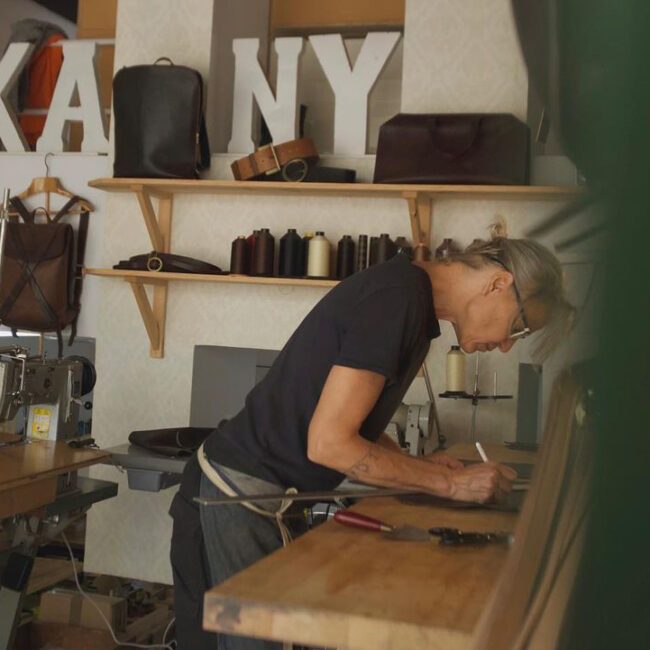
When Kika Vliegenthart moved from the Netherlands to New York City in the early 1990s, she intended to study film but somehow ended up working for Barbara Shaum, the legendary leatherworker who made things for Ralph Lauren and Calvin Klein. Shaum passed away a few years ago, but her legacy remains through the people she taught, Vliegenthart among them. These days, Vliegenthart runs a company with her life and business partner, Sabine Spanjer. Their company, KikaNY, transforms top-end Italian leathers into bags, belts, sandals, and other accessories. There's something bohemian and uniquely NYC about their work -- reminiscent of the Arts & Crafts Movement and 1960s East Village aesthetic for which Shaum became known. Their leathers are softer and gentler than the stiff bridle leather you might get from an English maker, such as Equus Leather, but no less durable. I like their belts, which are the kind of thing you'd expect to see at a Brooklyn boutique with potted Monstera plants growing in the corner. The 1.33" double-o ring belt, in particular, comes in just the right size for casual wear, and the leather ages wonderfully. The No. 8 and oval buckles look nice, too. 

Keep reading
Seven Great Black Friday Sales

Even when it's online, and you can shop from the comfort of your home, Black Friday still feels like a mad dash to get the best deals. Every year around this time, I round up a list of Black Friday promotions at Put This On. Those lists are huge -- the number of sales included typically ends up being in the hundreds. To make things more manageable, I pull together lists of some notable sales here, and include suggestions for what I think are special products. Here are seven Black Friday sales right now that I think are noteworthy. 

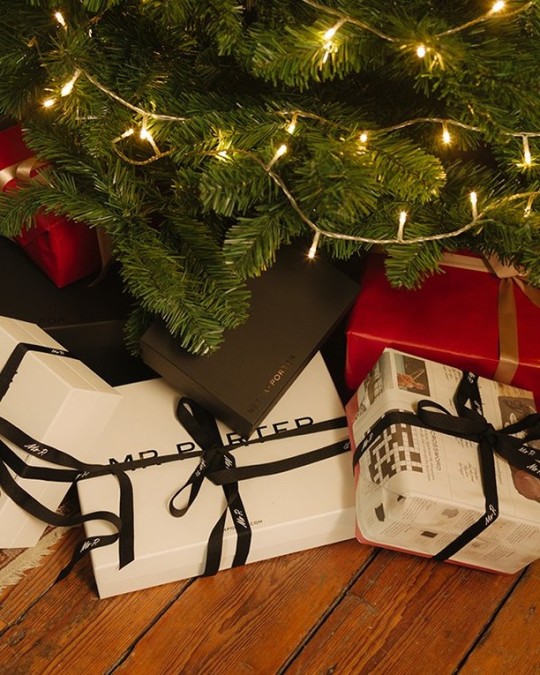
MR. PORTER: UP TO 30% OFF; NO CODE NEEDED

The first is Mr. Porter, where you can find select items discounted by as much as 30% off. Since Mr. Porter's inventory is ginormous, I recommend using the site's filters for brands and sizing. Some of my favorite labels here include Chimala, De Bonne Facture, Drake's, Engineered Garments, Filson, Howlin, Inis Meain, Lemaire, Margaret Howell, Monitaly, Orslow, Our Legacy, Private White VC, RRL, Stoffa, Valstar, and Yuketen. Remember that things tend to move quickly at Mr. Porter, but returns are free. Historically, their Black Friday sales are also often better than what they include in their first round of discounts during end-of-season promotions. 

Keep reading

Excited to Wear This Fall

In the summer of 1830, French publisher Charles Gosselin grew tired of Victor Hugo's excuses. Hugo was working on a novel titled Notre-Dame de Paris. He wanted to write the book because he was worried that Paris' Gothic architecture was being rapidly replaced by more modern structures (this is why large sections of the book go into exceeding detail when describing the buildings). But between Hugo's procrastination, writer's block, and other deadlines, he struggled to complete the book. Gosselin kept pestering the French novelist for updates, and by the summer of 1830, he demanded that the book be finished within six months. 

Realizing that Gosselin was serious, Hugo concocted a scheme to keep himself writing. According to his wife, Hugo bought himself a bottle of dark ink and a huge grey knitted shawl, which "swathed him from head to foot." He then locked up all of his "outside clothes" so that he wouldn't have access to his outfits. Without the distraction of his clothes and the temptation to go outside, Hugo was able to write continuously for six months while confined to his study. Notre-Dame de Paris was published the following year, and later renamed The Hunchback of Notre-Dame for the English translation

In the last year and a half, it has become crystal clear that dressing well is inextricably linked to the experience of moving through the world. In one of my favorite articles published last year, New Yorker staff writer Rachel Syme wrote: "What I’ve felt, perhaps, is a yearning for the spontaneous ways that clothing and public life can collide -- the feeling, say, of riding the subway, en route to a holiday party, wearing something sparkly and foolish underneath a puffer coat." The world still isn't fully open -- who knows if things will ever be what they were -- but it's more open than before, and I'm thankful to be able to dress up again. Hugo was right. Clothes are a distraction, yes, but a wonderful one as far as distractions go. Here are some things that I'm excited to wear this fall.

Keep reading

Colorful Conversation With Stòffa

Over the summer, I thought I should buy some long-sleeved polos because I was tired of ironing my shirts. When I browsed online at some of my favorite shops, I faced a digital wall of seemingly endless options. Every shop had Italian pique cottons and soft jersey knits in a range of Pantone colors. Many of these colors were given names that sounded like bite-sized plates on an expensive Brooklyn bar menu: dark guava, dried fig, hazelnut, burnt acorn, and plum. I wanted to be more adventurous and break out of my routine of only wearing light blue and white shirts, but I wasn't sure how. These polos were expensive, and I wanted to choose the right colors. 

Some of the greatest minds have written about the sources and uses of color. Aristotle believed that colors were related to the four primary elements -- earth, wind, fire, and water. That theory held for more than two thousand years until Newton found that light breaks up into distinct colors when passed through a prism (this is the ROYGBIV of colors, also known as The Dark Side of the Moon). Yet, for all the theories, we still don't have many good ideas for how to incorporate more interesting colors into a wardrobe. Much of men's dress follows a formula: jeans are blue or black, shirts are white or light blue, shoes are black or brown, etc. When building a wardrobe, it's easier to stick to colors such as navy, brown, and white because they play well together, making it easier to get dressed in the morning. 

But what about the more exciting colors -- mauve, celadon, or ochre? To get some ideas, I talked to my friend Agyesh Madan, co-founder of Stòffa. Agyesh and his team put together some of the most beautiful online presentations I've seen from any brand, big or small. I also find their use of colors compelling: the styles are subtle and subdued, but there's always a sophisticated tweak here or there in how they vary their shades. To me, this is more interesting than just splashing purple shoes or bright orange parkas into an outfit. So I chatted with Agyesh on the phone a few weeks ago about how to use color in a wardrobe (secretly trying to ply some info for my polo purchase). 

Keep reading

A Story About Ranch Dressing

Before arriving in the United States, Igwe Udeh had never seen a cowboy in real life. He didn't even know they still existed. When he was a child in Nigeria, peddlers used to come through his small town, show spaghetti Westerns on a projector, and sell American products to amped-up audiences. Udeh loved those films and knew all the lines to every Clint Eastwood classic. But to him, the cowboy was a mythical character — a symbol of a bygone era in the American West. That is, until the autumn of 1980, when he looked up from his desk at the University of Oklahoma and saw a tall, slender man strolling into the classroom. This man wore a red plaid shirt, thick leather boots that clicked as he walked, and a wide-brimmed hat that obscured his face. When he sat down, he gently took off his hat and set it on the seat next to him. As other students poured into the classroom, no one dared to sit there. Udeh was in awe of this man's confidence.

Udeh left Nigeria to pursue a graduate degree in economics at the University of Oklahoma. But when he arrived, he found that he was the only black man in his program and one of the few in the town of Norman. None of the local barbers knew how to cut Udeh's hair, so he let it grow into an Afro. Some of the locals also had a hard time understanding Udeh through his thick Nigerian accent. When Udeh went to church, he wore his most traditional garb: a colorful West African pullover known as a dashiki. "No one would talk to me," he recalls in an interview. "They'd look at me like, 'Why are you dressed like that?' I'd sit down and people would get up one by one from the pews and move somewhere else. I'd leave feeling rejected and alienated."

Udeh wanted to assimilate, but in a way that would still allow him to express his African identity. As a Nigerian of Igbo descent, Udeh recognized some commonalities between his background and the American cowboy. Both cultures are deeply connected to the land. They are also both known for their strong, independent spirit and blunt manner of speaking. So Udeh went around to the local thrift stores to shop for some cowboy clothes (not difficult, as that's all they sold). He purchased plaid flannel shirts with shiny pearl-snap buttons, second-hand blue jeans, and cowboy boots that made him stand taller. He even bought the biggest Kawasaki motorcycle he could afford — his own iron horse — but found he couldn't wear the helmet because his Afro was too big. His appearance tickled local Oklahomans who had never seen a foreigner dress this way. "The first time I walked into a classroom in my new cowboy getup, someone said, 'Look at that! Igwe wants to be a cowboy.' I smiled and replied, 'Yes, I do.'"

Keep reading

My Tailoring Wish List

A few weeks ago, Bruce Boyer emailed me a photo of his big day in Manhattan. He had just passed the two-week period after getting his second dose of the vaccine. Eager to get back to his normal life, Bruce took a trip to New York City -- for the first time since March 2020 -- and met with friends for a wine-soaked lunch. He also went to The Armoury to commission a new suit: a soft-shouldered Model 3 made from Dugdale's tan cavalry twill. In the photo, a clearly happy Bruce can be seen wearing his signature look: a brown sport coat with a button-down collar shirt, solid navy tie, pair of charcoal trousers, and what looked to be Edward Green Dovers in dark oak leather. 

The photo warmed my heart because it reminded me that normality is just around the corner. Soon, we'll be able to meet up with friends, make appointments, and go window shopping in the city. His photo also reminded me that trunk shows will resume sometime this year. When the Bay Area first went into lockdown last year, everything screeched to a standstill. Although I've bought some clothes since then, much of it is casualwear I can wear at home -- baggy shorts, ball caps, and some graphic tees. When Bruce emailed me his photo, it was the first time I've thought about buying custom-tailored clothing in a long time. "Hm, cavalry twill suits," I thought. "Interesting." 

I've since found myself going down the rabbit hole, daydreaming about new summer sport coats and casual fall suits. Since I often get inspired by friends' commissions, I thought I'd put together a list of clothes I'd like to order at some point. Hopefully soon, tailored clothing will once again be part of our normal lives. If you're looking for something new to wear, here are some suggestions that go beyond your basic navy sport coats and fall tweeds. 

Keep reading

Small is Beautiful

Shortly after the loud roar of New Year's celebrations quieted in 1955, Ernst Friedrich Schumacher flew into New York City on his way to Rangoon. He had been to the United States before. In the 1930s, he attended Columbia University as a student of economics and even took a year-long post as a lecturer at Columbia's School of Banking. But if the city's bright lights spellbound him as a young man, he saw them differently now. At the time, he had just been appointed as an economic advisor to the newly independent Burma, and was required to attend a series of United Nations briefings before his trip. Each day, when he came out of his Midtown Manhattan hotel, he felt a vague sense of disgust for the crisscrossing roads and oversized vehicles he saw everywhere. "One gets the impression that the primary preoccupation of the American people is with motor cars," he wrote to his wife back home, "you see nothing but cars everywhere you look, cars moving, cars shopping, cars parking, cars for sale, cars required and unrequired, all enormous and ugly." Schumacher, who had dedicated his life to promoting growth, started to question his role as an economist.

Born in Bonn, Germany in 1911, as the second son of a political economy professor, Schumacher grew up in the ivory tower of academia. He attended the best schools — The London School of Economics, Oxford, Cambridge, and Columbia University — and studied under some of the great British intellectuals of his day, including John Maynard Keynes, Arthur Cecil Pigou, and Dennis Robertson. Upon finishing his studies, he returned to Germany in April 1934. Two months later, Hitler, then Chancellor, purged his party of disloyalists and, shortly after, declared himself Führer of the German people. Appalled by the Nazis, Schumacher fled to London the following year. When the war broke out at the dawn of September 1939, Schumacher and his wife remained separated from their German family for the duration of the conflict.

Life for Schumacher was not easy during the war, even as he took refuge in Britain. At the outset, he was labeled as an "enemy alien" and interred at the Prees Heath camp in the Shropshire countryside. After several months, he was given an early release by the government, thanks partly to his connections to a network of influential British figures. Schumacher then moved to Eydon Hall, an isolated Northamptonshire estate located not more than twenty-five miles from where John Lobb and Crockett & Jones produce their shoes today. While there, he toiled in the fields, repaired fences, and brought in the harvest by day, and then wrote papers about international economics by night. Always a voracious reader, Schumacher also consumed a mountain of books. He pored over the writings of Marx, Engels, and Lenin, essays by J. B. S. Haldane, J. D. Bernal's The Social Function of Science, Seebohm Rowntree's Poverty and Progress, and C. H. Waddington's The Scientific Attitude. By the end of his time at Eydon Hall, Schumacher, an erstwhile liberal, became a cocksure socialist and strident atheist. He would later recall his time at the farm as his "real education."

Keep reading

Excited to Wear This Spring

By many accounts, life in the United States is supposed to start feeling more normal sometime this year. It's unclear what "normality" will look like in a post-vaccine world — who knows when we'll return to crowded bars, restaurants, and offices — but we may have small gatherings by summer. Which, of course, means the ability to dress again.

In the last year, many people have become sharply aware of the pleasure that clothes can bring to their daily routine. Yet, without the ability to move through the world and be seen, few people truly get dressed. These days, I mostly wear things that sit somewhere between loungewear and tailored clothing. I don’t like the feeling of wearing shapeless sweats all day, but I also don’t feel motivated to put on a tie. So, I wear comfy flannel shirts, raw denim jeans, and five-pocket cords, sometimes with a sweatshirt that I can easily launder at home. At the same time, when going out in public, I want to feel good about my outfit without having to fully change. This at-home uniform then serves as a base layer for outerwear with structure, texture, and weight, reminding me that brief moments outside are special.

I imagine many people will be dressed in some version of this for much of this year, as they balance comfort, presentability, and ease of cleaning. If you're in that position, here are some things I'm excited to wear this spring, either in this in-between mode or as easy get-ups that don't require special care.

Keep reading

A Soft History of American Radicals, Revolutionaries, and Christians

Shots were fired in the late summer of 1777, a year after the United States declared independence, as some 15,000 British soldiers descended onto Philadelphia, then the seat of the rebellious Second Continental Congress. After some hard-fought battles that resulted in over a thousand Continental Army deaths, the British marched into Philadelphia unopposed. The Continental Congress first relocated to Lancaster and then York, leaving civilians behind in Philly. One of those civilians was Molly Rinker.

Molly Rinker, also known to friends as Old Mom Rinker, was a matronly woman who ran a Philadelphia tavern. While George Washington and his troops were encamped just a few miles outside of the city, Mom Rinker closely tended to British soldiers and Tories, keeping their plates full, their beer pitchers flowing, and the conversation animated. But her intentions went beyond just providing good service. While drunken redcoats chatted away, Mom Rinker picked up bits and pieces of information, which she then covertly jotted down in the backroom. Each night, she wrapped her notes around tiny stones, and then hid those stones inside large balls of yarn. And on the following day, she took her knitting needles and yarn to the outskirts of town, where she’d climb high atop of a rocky ridge. From this vantage, Mom Rinker could easily survey the area. She would then sit down and proceed to innocently knit.

With yarn strewn around her and knitting needles in her hand, Mom Rinker was a portrait of tranquil domesticity. British soldiers who may have seen her from afar suspected nothing. But from this position, Mom Rinker could see when a Continental soldier emerged from the brush below. When she did, she’d gently nudge a ball of yarn over the brink, causing it to tumble to the ground, and the soldier would then scoop up, pocket, and carry her priceless message to George Washington. Old Mom Rinker, who never dropped a stitch, was America’s first and perhaps only sweater-making spy. She turned cloak-and-dagger techniques into yarn and knitting needles.

Keep reading

Seven Amazing Black Friday Sales

It's that time of year again. Black Friday is technically supposed to start on Friday, but many retailers have gotten a jump on their promotions. This Friday, I'll be rounding up some of my favorite sales both here and at Put This On. But for some early Black Friday shopping, here are seven stellar deals. 

No Man Walks Alone: Up to 35% Off, No Code Needed

No Man Walks Alone is a sponsor on this site, but also genuinely one of my favorite online stores. Founder Greg Lellouche worked for a time as a banker on Wall Street, so he knows his way around a classic coat-and-tie rig. At the same time, he has an exceptional eye for casualwear. Take the suede Valstar jacket below, for example, which comes in both black and tan. It has a Western styled yoke, snap button pockets, and a generously shaped collar that looks great when popped from the back. You can wear it with denim, chinos, or even wool trousers. The subtle Western details give it a bit more flavor than your average suede bomber, and it looks especially good with sneakers or boots. I recommend taking your regular jacket size. 

Keep reading