Cosmopolitanism and Style

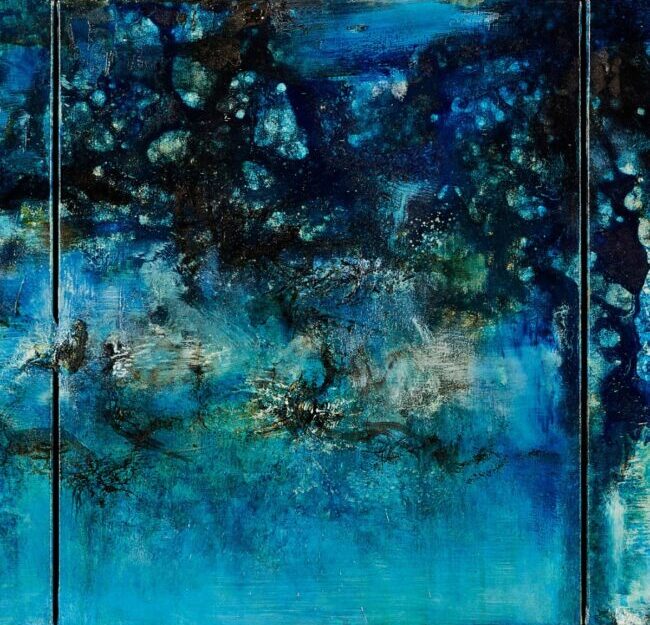
At the Sotheby’s auction house in Hong Kong, a man in a dark blue suit shouted into a microphone as hands kept rising, pushing the price of Zao Wou-Ki’s triptych masterpiece, Juin-Octobre 1985, ever higher. Initially commissioned by I.M. Pei for his Raffles City complex in downtown Singapore, the painting represents the artist’s “Infinity Period.” Across three giant canvases, warm hues of peach, saffron, and lilac silently danced and exploded along a horizontal axis, giving the viewer a sense of the cosmos. In 2005, the painting was taken down from its Raffles City location and sold to a Taiwanese art collector. Then in October 2018, it appeared at this port-city auction house. That night, as arms flew up — many sheathed in silky worsteds, black lambskins, and gauzy blouses — the price kept climbing. By the time the hammer fell, the price for this marquee piece had landed at a staggering HK$450 million (US$65 million), setting a new record for an art piece auctioned in Hong Kong.

Born in Beijing in 1920, Zao was the scion of a prosperous family. His father was a well-heeled banker; his grandfather held the title xiù cai, which signaled a certain level of success in Imperial China’s civil service examination. Zao’s family encouraged him to follow in his father’s footsteps and pursue finance, but he had artistic ambitions. As a teen, Zao spent his days clipping images out of European and American art magazines, and pleading with his family to allow him to attend art school. His parents relented, but not without requiring him to at least get a classical Chinese education. So in 1935, a young Zao went to to the China Academy of Art, where he spent six years studying calligraphic ink painting. Upon graduating, he spent a few more years there as a teacher. Then in 1947, as the Chinese revolution drew nigh, Zao hopped on a plane and flew to Paris, intending to pursue two more years of art education.

Even as Paris was lifting itself out of the wreckage of the Second World War, the city had a vibrant and flourishing art scene. Much of this was thanks to the diversity already present in the French capital. Before the war, Paris attracted talented sculptors, painters, and printmakers from around the world. Many of these immigrants were young Jewish men who resettled on the Left Bank of Paris, where artists, writers, and philosophers gathered in cafes, salons, and galleries. Such artists included the great Amedeo Modigliani (an Italian painter known for his sleek and beautiful portraits), Marc Chagall (a Russian-French pioneer of modernism), and Chaïm Soutine (a tailor’s son whose impressionist portrait of a woman has since become a symbol of democratic protest in his home country of Belarus).

Keep reading
A Story About Ranch Dressing

Before arriving in the United States, Igwe Udeh had never seen a cowboy in real life. He didn't even know they still existed. When he was a child in Nigeria, peddlers used to come through his small town, show spaghetti Westerns on a projector, and sell American products to amped-up audiences. Udeh loved those films and knew all the lines to every Clint Eastwood classic. But to him, the cowboy was a mythical character — a symbol of a bygone era in the American West. That is, until the autumn of 1980, when he looked up from his desk at the University of Oklahoma and saw a tall, slender man strolling into the classroom. This man wore a red plaid shirt, thick leather boots that clicked as he walked, and a wide-brimmed hat that obscured his face. When he sat down, he gently took off his hat and set it on the seat next to him. As other students poured into the classroom, no one dared to sit there. Udeh was in awe of this man's confidence.

Udeh left Nigeria to pursue a graduate degree in economics at the University of Oklahoma. But when he arrived, he found that he was the only black man in his program and one of the few in the town of Norman. None of the local barbers knew how to cut Udeh's hair, so he let it grow into an Afro. Some of the locals also had a hard time understanding Udeh through his thick Nigerian accent. When Udeh went to church, he wore his most traditional garb: a colorful West African pullover known as a dashiki. "No one would talk to me," he recalls in an interview. "They'd look at me like, 'Why are you dressed like that?' I'd sit down and people would get up one by one from the pews and move somewhere else. I'd leave feeling rejected and alienated."

Udeh wanted to assimilate, but in a way that would still allow him to express his African identity. As a Nigerian of Igbo descent, Udeh recognized some commonalities between his background and the American cowboy. Both cultures are deeply connected to the land. They are also both known for their strong, independent spirit and blunt manner of speaking. So Udeh went around to the local thrift stores to shop for some cowboy clothes (not difficult, as that's all they sold). He purchased plaid flannel shirts with shiny pearl-snap buttons, second-hand blue jeans, and cowboy boots that made him stand taller. He even bought the biggest Kawasaki motorcycle he could afford — his own iron horse — but found he couldn't wear the helmet because his Afro was too big. His appearance tickled local Oklahomans who had never seen a foreigner dress this way. "The first time I walked into a classroom in my new cowboy getup, someone said, 'Look at that! Igwe wants to be a cowboy.' I smiled and replied, 'Yes, I do.'"

Keep reading

My Tailoring Wish List

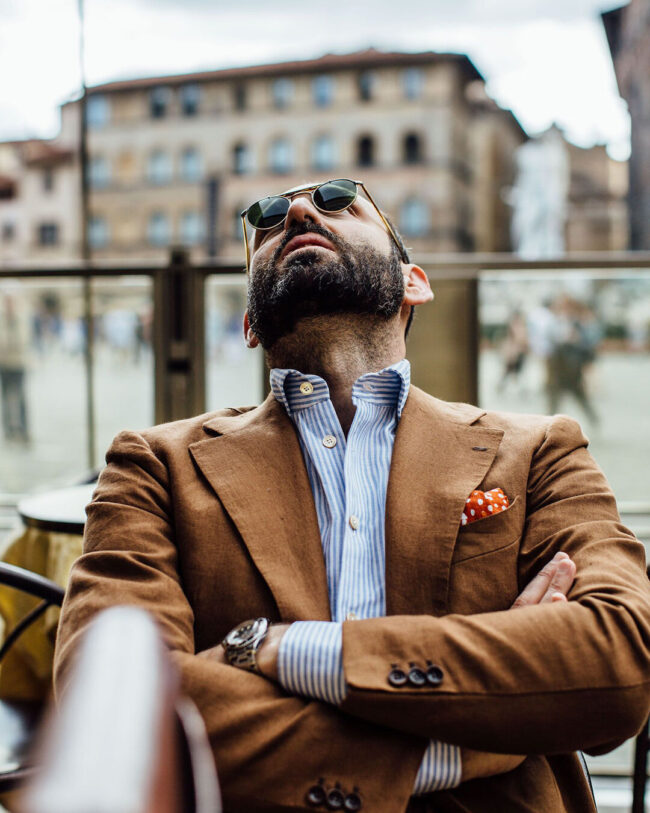
A few weeks ago, Bruce Boyer emailed me a photo of his big day in Manhattan. He had just passed the two-week period after getting his second dose of the vaccine. Eager to get back to his normal life, Bruce took a trip to New York City -- for the first time since March 2020 -- and met with friends for a wine-soaked lunch. He also went to The Armoury to commission a new suit: a soft-shouldered Model 3 made from Dugdale's tan cavalry twill. In the photo, a clearly happy Bruce can be seen wearing his signature look: a brown sport coat with a button-down collar shirt, solid navy tie, pair of charcoal trousers, and what looked to be Edward Green Dovers in dark oak leather. 

The photo warmed my heart because it reminded me that normality is just around the corner. Soon, we'll be able to meet up with friends, make appointments, and go window shopping in the city. His photo also reminded me that trunk shows will resume sometime this year. When the Bay Area first went into lockdown last year, everything screeched to a standstill. Although I've bought some clothes since then, much of it is casualwear I can wear at home -- baggy shorts, ball caps, and some graphic tees. When Bruce emailed me his photo, it was the first time I've thought about buying custom-tailored clothing in a long time. "Hm, cavalry twill suits," I thought. "Interesting." 

I've since found myself going down the rabbit hole, daydreaming about new summer sport coats and casual fall suits. Since I often get inspired by friends' commissions, I thought I'd put together a list of clothes I'd like to order at some point. Hopefully soon, tailored clothing will once again be part of our normal lives. If you're looking for something new to wear, here are some suggestions that go beyond your basic navy sport coats and fall tweeds. 

Keep reading

Small is Beautiful

Shortly after the loud roar of New Year's celebrations quieted in 1955, Ernst Friedrich Schumacher flew into New York City on his way to Rangoon. He had been to the United States before. In the 1930s, he attended Columbia University as a student of economics and even took a year-long post as a lecturer at Columbia's School of Banking. But if the city's bright lights spellbound him as a young man, he saw them differently now. At the time, he had just been appointed as an economic advisor to the newly independent Burma, and was required to attend a series of United Nations briefings before his trip. Each day, when he came out of his Midtown Manhattan hotel, he felt a vague sense of disgust for the crisscrossing roads and oversized vehicles he saw everywhere. "One gets the impression that the primary preoccupation of the American people is with motor cars," he wrote to his wife back home, "you see nothing but cars everywhere you look, cars moving, cars shopping, cars parking, cars for sale, cars required and unrequired, all enormous and ugly." Schumacher, who had dedicated his life to promoting growth, started to question his role as an economist.

Born in Bonn, Germany in 1911, as the second son of a political economy professor, Schumacher grew up in the ivory tower of academia. He attended the best schools — The London School of Economics, Oxford, Cambridge, and Columbia University — and studied under some of the great British intellectuals of his day, including John Maynard Keynes, Arthur Cecil Pigou, and Dennis Robertson. Upon finishing his studies, he returned to Germany in April 1934. Two months later, Hitler, then Chancellor, purged his party of disloyalists and, shortly after, declared himself Führer of the German people. Appalled by the Nazis, Schumacher fled to London the following year. When the war broke out at the dawn of September 1939, Schumacher and his wife remained separated from their German family for the duration of the conflict.

Life for Schumacher was not easy during the war, even as he took refuge in Britain. At the outset, he was labeled as an "enemy alien" and interred at the Prees Heath camp in the Shropshire countryside. After several months, he was given an early release by the government, thanks partly to his connections to a network of influential British figures. Schumacher then moved to Eydon Hall, an isolated Northamptonshire estate located not more than twenty-five miles from where John Lobb and Crockett & Jones produce their shoes today. While there, he toiled in the fields, repaired fences, and brought in the harvest by day, and then wrote papers about international economics by night. Always a voracious reader, Schumacher also consumed a mountain of books. He pored over the writings of Marx, Engels, and Lenin, essays by J. B. S. Haldane, J. D. Bernal's The Social Function of Science, Seebohm Rowntree's Poverty and Progress, and C. H. Waddington's The Scientific Attitude. By the end of his time at Eydon Hall, Schumacher, an erstwhile liberal, became a cocksure socialist and strident atheist. He would later recall his time at the farm as his "real education."

Keep reading

No Man Walks Alone Starts Sale

No Man Walks Alone, a sponsor on this site, is one of my favorite online stores. For such a small operation, they’ve had an outsized impact on how many men think about clothes. Over the years, they’ve helped break down the imaginary border between classic tailoring and casualwear. Along with selling suits and sport coats, they carry contemporary casualwear, classic workwear, and hard-to-find Japanese labels. For men who want to build a more holistic wardrobe, No Man Walks Alone is as close as you can get to a one-stop shop.

This morning, they started their midseason sale, where you can find select items discounted by as much as 25%. Since it’s relatively early in the season, there’s still a good selection of sizes left. There’s also no code needed — prices are as marked.

You can find the sale section up now on their website. I recommend browsing through the whole selection, as the number of discounted items is still reasonably manageable. If you want some highlights, here are some pieces I think are particularly special. 

Keep reading

2020 in Hindsight: A Year in Fashion

In the social science literature, the term "critical juncture" is used to describe a moment when significant changes can occur rapidly, knocking institutions and culture onto a new developmental course. In the last year, many have debated whether the coronavirus pandemic is such a moment. Is remote work morphing into a more permanent reality? Will we be wearing coffee stained t-shirts and elasticated pajama bottoms forever? Are we witnessing the death of hype culture and the emergence of a more thoughtful fashion consumer? In a recent New York Times interview, Raf Simons expressed skepticism over whether liberal market economies can be permanently bent and reshaped. "The one lesson I think fashion will not learn from this, which is the one it should learn, if I am brutally honest, is that it should be less greedy," he said. "It became too much this economic machine. For the majority, the first desire is economic growth. […] And you can't do that with only one or two collections a year."

It's been one year since the first case of coronavirus was reported in the United States. Since then, some things have changed, although their permanence is yet to be determined. After J. Crew filed for Chapter 11 protection in May of last year, other corporate giants toppled like dominoes — Neiman Marcus, Brooks Brothers, J.C Penney, Men's Wearhouse, Aldos, and John Varvatos among them. That has sent shockwaves throughout the global supply chain, affecting heritage producers such as Vanners Silk Weavers. The Gap and H&M, two mainstays in high-street retailing, announced plans to shutter hundreds of stores in this coming year. And for every one of these headlines about big industry names, countless small businesses don't get nearly enough attention. Last year, New York City lost over 500 small businesses alone. The Partnership for New York City, an influential business group, estimates that about a third of the city's 240,000 small businesses "may not make it to see the post-vaccine promised land."

Last December, as the year was drawing to a close, I wondered "what are some of the year's most defining themes?" (Yes, this is a "year in review" post, which comes a month late, but please cut me some slack, as I've been dealing with a pandemic, a recession, and an insurrection.) Some of the things that have transpired were many years in the making, just accelerated and taken to the extreme. The Casual Friday movement that started in the 1990s has now ended with all of us in sweatsuits and t-shirts. The decline of suburban malls, department stores, and other general merchandise stores has morphed into a total brick-and-mortar meltdown, threatening to reshape the American landscape. Online shopping is at an all-time high, which has created a new demand for shipping supplies. Environmentalists are now bracing themselves for all the corrugated containers, plastic packaging, shrink wrap, bouncy air pillows, and bubble mailers that will wind up in our landfills, incinerators, and natural environment. To be sure, these are the real themes of last year. But along with these very obvious concerns, what else defined fashion in 2020?

Keep reading

Mr. Porter Starts Black Friday Sale

Mr. Porter's massive selection puts them in everyone's orbit. Whether you favor classic tailored clothing, Japanese workwear, or oversized, minimalist contemporary garb, Mr. Porter likely carries more than a handful of brands for you. 

Today, Mr. Porter started their Black Friday promotion, where you can take up to 30% off select items. Inis Meain's sweaters are expensive, even with the discount, but absolutely exquisite and a joy to wear. Engineered Garments and Chimala are personal favorites for workwear; SNS Herning is great textured knitwear you can layer under heavy coats (be sure to size up). 

Things tend to move fast at Mr. Porter. Given the size and scope of their inventory, your best bet is to filter things by category, then brands, and then sizing. If you're on the fence about an item, I recommend just taking a chance and returning if things don't work out (Mr. Porter offers free and easy returns). If you want some quick highlights, here are ten things that I think are notable. 

Keep reading

Streetwear From Above

In 1994, advertising executive Donald Rifkin came up with a new installment for Coca-Cola's "Obey Your Thirst" campaign, designed to promote the company's sparkling lemon-lime beverage Sprite. In the commercial, a young white teen with an unfortunate center-part haircut wrestles with one of life's eternal questions: "what is cool?" As he stands at a city intersection, our narrator considers the various identities he can adopt to boost his social standing — hip hop head, defiant skater, or entitled prep ("now that is not cool," he quickly surmises of the third). By the end of the 30-second advert, he still has not chosen an identity, but Coca Cola assures us that he can at least give his mind a rest by selecting the one reliably cool drink, Sprite.

When this commercial aired, countless corporations were already clamoring to co-opt street culture as a way to gain street credibility and reach new markets. In the decade prior, companies such as Philips, Atari, McDonald's, Hershey's, and Mountain Dew aired hip hop themed advertisements, which featured breakdancers popping and locking to sell everything from egg sandwiches to chiropractic services. Following the success of Jane Fonda's at-home workout videos, many companies also tried selling breakdancing videos to teach people how they can top rock, windmill, flare, float, and freeze. By the mid-90s, breakdancing was so thoroughly co-opted by the Suits, it was considered uncool in the streets, and a new dance movement emerged called freestyling.

It was also around this time when streetwear became legitimized as a fashion market. To be sure, street and youth culture have long existed. Since the end of the Second World War, young people in Britain and the United States have expressed themselves as beats, beatniks, bobby soxers, modernists, mods, hippies, bohemians, surfers, skaters, punks, and rockers. During mid-1940s Britain, ex-Guards officers, many of them gay, ordered fanciful Edwardian suits from their Savile Row tailors as a reaction to demob dreariness. These suits were defined by their long, flared skirt, turnback cuffs, and tight, drainpipe trousers. At the time, this New Edwardian style was fashionable in posh gay circles, having been championed by society photographer Cecil Beaton and the dandy couturier Bunny Roger. Savile Row tailors were all too happy to promote the look, as doing so helped fill their ledgers with orders.

Keep reading

How to Choose Better Shoes

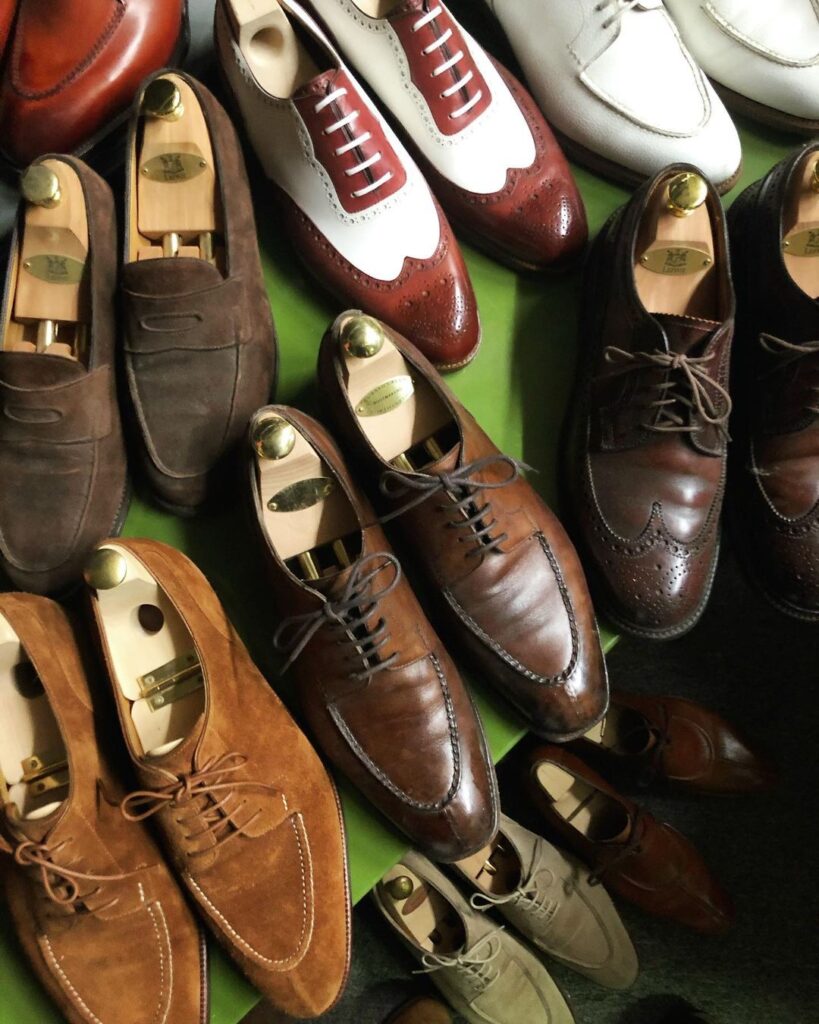
In the last ten years, the internet has exploded with innumerable sources for high-end shoes. What used to be a small market of Goodyear welted footwear has become an electronic bazaar with virtual stalls from around the world. In the past, if you wanted a pair of good shoes, you had your pick of two American brands, a handful of Northampton makers, and some Continental labels that were hard to source. Today, dozens of specialized dealers offer MTO options, adjusted lasts, and handwelted shoes made in the Austro-Hungarian tradition.

When shopping for shoes in this environment, it can be easy to get sucked into the endless number of options, especially when you’re scrolling through Instagram accounts and dedicated shoe blogs for inspiration. The photos that catch our eye tend to be of shoes that are sleek, interesting, and creatively designed. So people pause on photos of shapely oxfords in gleaming museum calf leathers, two-toned button boots, and chukkas in jewel tones such as sapphire blue and ruby red. And since footwear blogs tend to be so singularly focused on shoes — the leather types, construction techniques, and historical origins of some style — it’s also easy to find yourself thinking about shoes as standalone objects, disconnected from a wardrobe and be to be collected like Pokémon. I found myself doing this when I first got into fountain pens. The more I learned about filling systems and specialized nibs, the more I wanted certain pens, even though my time would have been better spent practicing my handwriting with the pens I already own.

Such internet-driven shoe shopping doesn’t always lead to good results in a wardrobe. In classic men’s dress, the cynosure of an outfit is typically the triangular area formed by a jacket, shirt, and tie. When done well, this area should lead a viewer’s eye upwards toward the space that deserves the most attention, your face. This is why it can be hard to wear patterned trousers or shoes in unusual colors: they draw the eye downwards. But when shopping online, we tend to be drawn to shoes that catch our eye, which is the opposite of what you want in an outfit. This doesn’t mean you have to get the most boring shoes possible (“They are not cheap; they are also an investment,” Hardy Amies wrote in The Englishman’s Suit. “So design is of the plainest”). Dreadfully boring shoes can sometimes signal a kind of conservatism that suggests you’re too self-conscious and afraid to have a point of view. Instead, get something that complements the rest of your wardrobe and builds towards a style you want to project. Here are three friendly suggestions on how to shop for better shoes.

Keep reading

Things I’m Excited to Wear This Fall

A few months after the world shut down this past spring, Cathy Horyn of The Cut interviewed Raf Simons about what he thought of fashion's possible future. Simons, who's known in fashion circles for introducing a generation of men to the skinny black suit, was sitting in his apartment in Antwerp at the time while wearing elasticated easy pants and a hoodie. He ruminated on what fashion might look like after this pandemic. "'I think there must be a bunch of people out there, when they start thinking about fashion, who don't want to be reminded of the shitty time they had at home in the last five months. But —' He hesitated. 'It's just so personal. I have no clue. [...] honestly, I haven't worn a piece of fashion in months.'"

That's mostly the feeling I get when I think about fashion nowadays. But recently, I've been enjoying Mark Cho's new YouTube series, titled "Dress to Ingest." In a series of relaxing videos that run between five and ten minutes, Mark sits down with various Hong Kong restaurateurs to talk about their signature dishes. The videos are meant to give people some context on where they can wear tailored clothing, here being at restaurants. "They say you don't appreciate it until it's gone," Mark tells me. "Tailoring is often misunderstood only as a 'formal' option, but there's a difference between 'formal' and 'dressed up.' 'Formal' is serious and somber. 'Dressed up' is simply being invested in your appearance for your benefit and others around you. There has always been something precious about breaking bread with friends and family. Given how seldom we see each other now, why not give these rare occasions the celebration they deserve?" 

I don't wear tailored clothing as much as I used to, given that I mostly spend my days at home. But I've tried to make an effort to wear nicer clothes when I can -- a sport coat for short walks around the neighborhood, better flannel shirts even when I'm at home, a nicer pair of pants that I used to reserve for going to the city. "Outside" clothes help break up what's become a very monotonous life at home. Plus, on the few occasions when I can safely meet with friends, I've taken the opportunities to "dress up" more than I used to. The future of fashion is still uncertain, and yet, clothes continue to be one of our small comforts. In that spirit, here are eleven things I'm excited to wear this season. 

Keep reading