Excited to Wear This Spring

It is a grim feature of modern life that we treat downtime as a pit stop between bursts of usefulness. In the United States, where the Protestant work ethic took the deepest root, even Sabbath observance was shaped by the belief that unproductive time required moral justification. Writing in the early 1930s, Bertrand Russell warned that “immense harm is caused by the belief that work is virtuous.” By 1948, the German philosopher Josef Pieper offered a more forceful philosophical defense of leisure. His book Leisure: The Basis of Culture, published in the wake of one of the largest labor strike waves in US history, pushed back against what he called the tyranny of “total work,” a condition in which the modern human is reduced to their measurable productivity.

If leisure needs any justification at all, it can be found in the breakthroughs it enables: Darwin doing his deepest thinking during long walks at Down House, Beethoven composing "Symphony No. 6" in the countryside, Newton developing the foundations of calculus while on a two-year leave from Cambridge. But framing leisure in terms of output, or even as a way to rejuvenate us for labor, still reduces it to an instrument of the state or market. Instead, Pieper argues that leisure is a necessary condition for the soul. The Greek word for leisure, scholē, is the root of our word school—not a site of vocational training, but a space for contemplative stillness. Leisure ensures that “the human being does not disappear into the parceled-out world of his limited work-a-day function, but instead remains capable of taking in the world as a whole, and thereby to realize himself as a being who is oriented toward the whole of existence.”

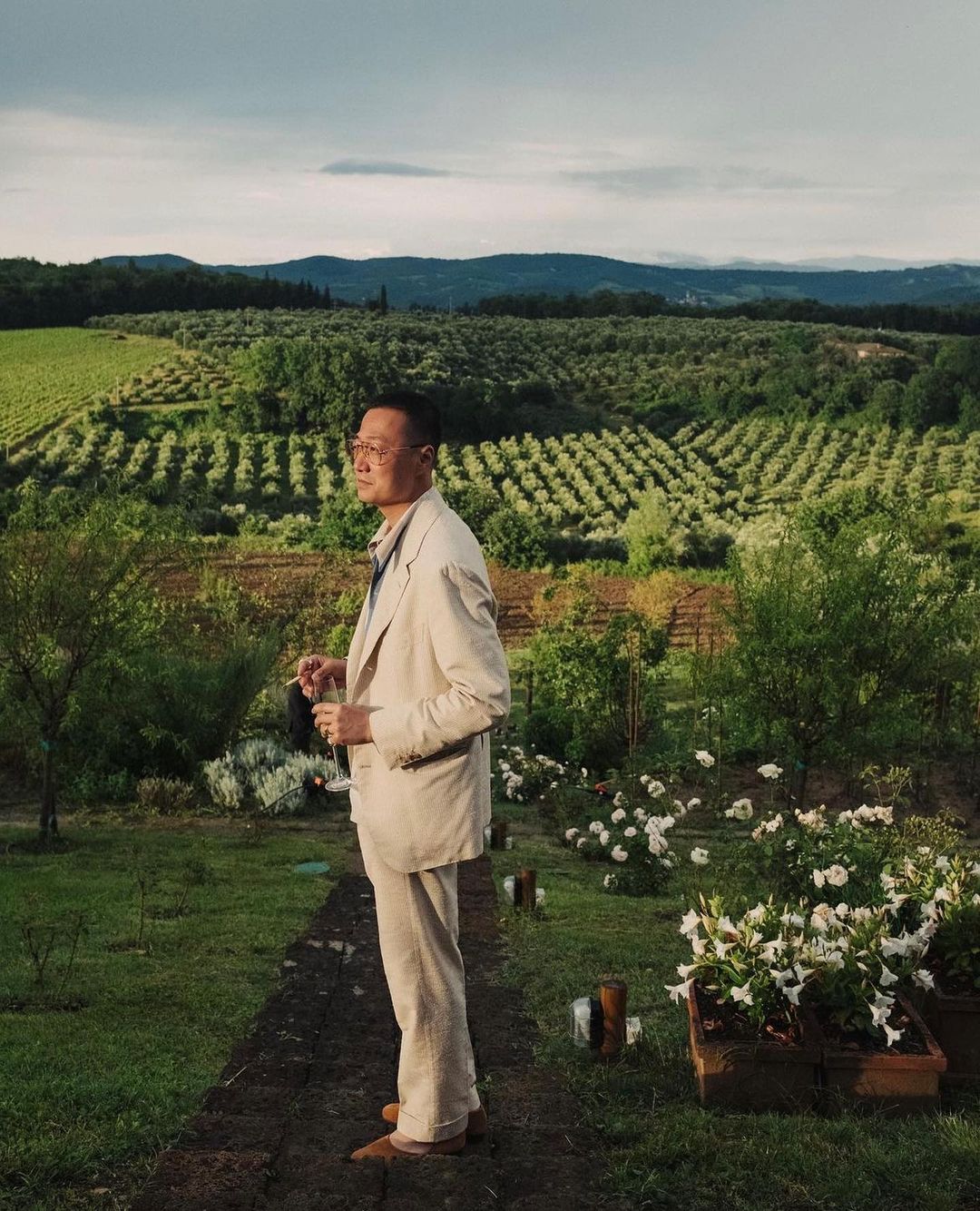
In the last few years, I’ve been doing a series called “Excited to Wear.” It’s my way of sidestepping the pointless exercise of defining menswear “essentials,” a concept that flattens the richness of style into generic shopping lists. Instead, I prefer to discuss clothes that excite me as the seasons shift. This spring, I’m drawn to clothes that reflect work and leisure—not as polar opposites but as parallel expressions of human wholeness. After all, spring and summer are the seasons for idleness, marked by bikes that creak out of garages and folding chairs that live in trunks. This list is about the clothes I like to wear for light work on warm afternoons and dawdling on cool evenings. It’s clothes for gardening, brunch, and listening to rediscovered LPs. Hopefully, you can find something here that inspires you for your wardrobe.

Keep reading

Excited to Wear This Spring

According to superstition, good luck comes to those who wear at least one new article of clothing on Easter Sunday, the official start of spring (style-wise). For years, I wrote spring style guides for various publications, including Put This On, but as menswear has become balkanized into tiny little communities, I've found it better to simply talk about what I'm excited to wear in the new season. These "Excited to Wear" posts aren't meant to be prescriptive—find whatever works for you—but perhaps you will find some inspiration here. Here are ten things I'm excited to wear this spring, along with some miscellanea, including a Spotify playlist at the end to go along with the photos. 

Hey, Nice Pants!

Five years ago, John Mayer presented his "theory on pants" in a dimly lit room while playing Qari's "Pants from Japan" in the background. The gist: while pants are often neglected and considered to play second fiddle to jackets, they’re actually important cultural markers. From the bellbottoms of the 1970s to the baggy jeans of the 1990s to the bone-hugging slim-fits of the early aughts, how we cover our lower limbs reflects the spirit of the times. In this sense, Mayer feels we should respect the power of pantaloons and dress from the bottom up. “I’m saying we pick our pants first,” he explained, “and we pick our pants wisely. By making better decisions in pants—and making pant decisions first—we send the circulation of good taste through the rest of our body. The pants we choose will affect what shoes we wear and, systematically, what we wear on top. Good pants make good outfits.”

Keep reading

Excited to Wear This Spring

For the last few years, I've been doing these posts about things I'm excited to wear for the season. They're a way for me to talk about things I'm excited about without getting into the fraught concept of "wardrobe essentials" (which feels increasingly less relevant nowadays when people have such different needs and lifestyles). Still, readers have found these posts to be useful as seasonal style guides. Here's this year's "excited for spring" post with a bonus soundtrack at the end. You can check previous years' posts for 2018, 2019 (I also did one for summer), 2021, and 2022

CHAMBRAY AND SILKY SHIRTS

I've always been primarily an oxford cloth button-down guy. I admire the style's place in American clothing history, as well as its casual, rumpled nature and bookish appeal. However, in the last few years, I've also added two other shirt styles to my regular rotation: snap-button Western shirts, mostly those rendered in denim or needlecord, and silky shirts made from slippery materials such as rayon, Tencel, and actual silk. 

Keep reading

Excited to Wear This Spring

For the past few years, whenever we're about to start a new season, I've been doing roundups about things I'm excited to soon wear. These lists are about what I'm interested in at the moment; they are not meant to serve as shopping guides for seasonal essentials (which invariably repeat the same yawn-inducing basics). But hopefully, between the entries, styling suggestions, and innumerable photos at the end, you can find some outfit ideas for your wardrobe. Here's this year's spring list. You can also revisit the lists for spring 2019 and 2021 for more warm-weather outfit ideas (2020's list was about life at home).

COTTON SUITS

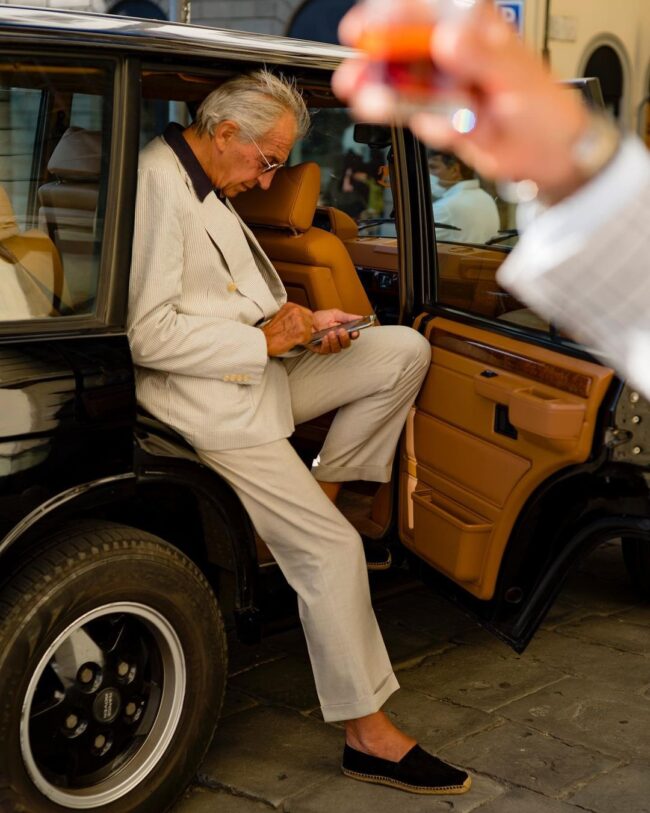
Europeans and North Americans felt the Industrial Revolution not just in social terms, but also tangibly on their skin. Before the revolution, most Westerners wore and slept on linen, which was typically grown on local farms, spun at home, and made into moisture-wicking bedsheets and clothes. But changes in international trade, the invention of the cotton gin, and the evolution of factory cotton production made cotton incredibly cheap, relegating linen to buckram and underwear by the mid-19th century. Today, cotton is so ubiquitous that it's described as "the fabric of our lives." We wear it as shirts, shorts, pants, jackets, and even shoes. But for suits and sport coats, the fiber is often overlooked, sometimes even reviled.

Keep reading

The Armoury’s Spring Style Tips

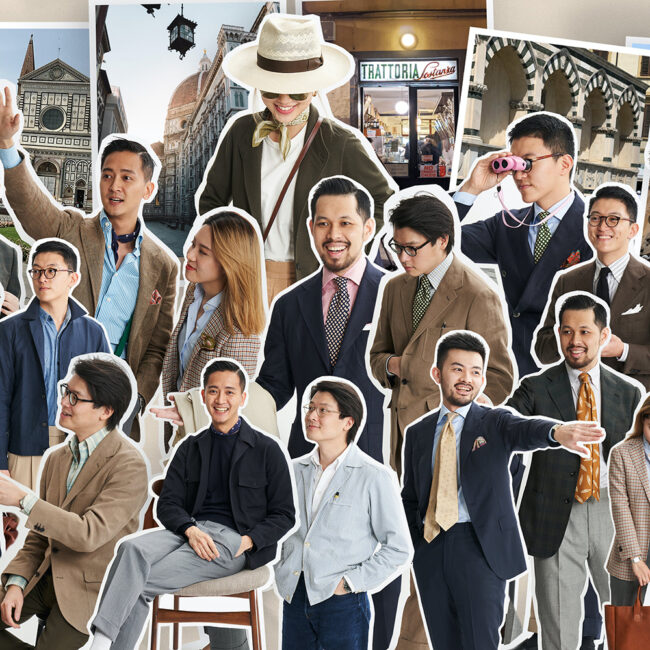
When The Armoury started putting together their spring lookbook a couple of months ago, they knew they couldn't travel abroad. The company's team members were stuck in their respective home cities, Hong Kong and New York City, and could only communicate with each other via phone and email. Yet, they also wanted to create a lookbook that was hopeful, an encouraging reminder that better days are ahead. "We love traveling, and we miss visiting Florence, Italy," Mark Cho told me over the phone. "So we wanted to make something that would be a celebration of our time there."

After drumming up some ideas, The Armoury's co-founders Mark Cho and Alan See dug through their holiday photos, and the company's team shot one or two people at a time in a studio, following masking rules. They then had to figure out a way to put the images together. At first, they used a green screen, but Mark says the resulting images were so terrible, a viewer would never be able to suspend their disbelief ("they were not good enough to be believable, but also not so bad that the images were funny. They were just bad."). Eventually, they landed on this cutout sticker design. "We had a colleague illustrate things, handwrite things, and then photograph crumpled paper to give everything some texture. There are also small paint drops on the collages, echoing the colors in the clothes, which helps bring everything together." The result is a virtual destination lookbook that feels reminiscent of a travelog.

Over the years, The Armoury's collections have gotten noticeably more casual. Along with their suits and sport coats, they also sell sporty knitwear, holiday shirts, and workwear from The Real McCoys. Mark says he expects this to continue in a post-vaccine world. "I think things will get more casual," he says, "which means tailoring also has to be more casual. This year's spring tailoring can be worn in the office, but the clothes come into their own when they're worn casually. When you show a collection like this, I think people become more comfortable with the idea of wearing tailored clothing." If you, like me, are eager to get back into a suit or sport coat, here are some suggestions on how to wear tailoring this spring, using images from The Armoury's new lookbook and various social media feeds.

Keep reading

Excited to Wear This Spring

By many accounts, life in the United States is supposed to start feeling more normal sometime this year. It's unclear what "normality" will look like in a post-vaccine world — who knows when we'll return to crowded bars, restaurants, and offices — but we may have small gatherings by summer. Which, of course, means the ability to dress again.

In the last year, many people have become sharply aware of the pleasure that clothes can bring to their daily routine. Yet, without the ability to move through the world and be seen, few people truly get dressed. These days, I mostly wear things that sit somewhere between loungewear and tailored clothing. I don’t like the feeling of wearing shapeless sweats all day, but I also don’t feel motivated to put on a tie. So, I wear comfy flannel shirts, raw denim jeans, and five-pocket cords, sometimes with a sweatshirt that I can easily launder at home. At the same time, when going out in public, I want to feel good about my outfit without having to fully change. This at-home uniform then serves as a base layer for outerwear with structure, texture, and weight, reminding me that brief moments outside are special.

I imagine many people will be dressed in some version of this for much of this year, as they balance comfort, presentability, and ease of cleaning. If you're in that position, here are some things I'm excited to wear this spring, either in this in-between mode or as easy get-ups that don't require special care.

Keep reading

A Guide to Spring Tailoring

image

Reginald Jeeves is a fictional, dry mannered valet in a series of comedic short stories by PG Wodehouse. He serves at the behest of a charmingly clueless man-child named Bertie Wooster, a wealthy, idle Londoner who’s the very definition of Baudelaire’s dandy (“The wealthy man, who, blasé though he may be, has no occupation in life but to chase along the highway of happiness”). Wooster’s immense wealth allows him to indulge every whim and fantasy, including matters involving his wardrobe, which he views purely through the lens of personal expression and sartorial originality. He wears grape-purple socks and green Alpine hats decorated with pink feathers, often to the chagrin of the more conservatively dressed Jeeves, who tries to steer him towards better decisions.

In the short story “Jeeves in the Springtime,” Wooster wakes up and asks his valet if his new mauve shirts have arrived. Jeeves confirms they did, but he sent them back because they would not “have become him.” “Well, I must say I thought fairly highly of those shirtings, but I bowed to superior knowledge,” Wooster silently reflects. Nevertheless, Wooster springs out of bed and heads to the park to do his pastoral dances, bringing with him his whangee, his yellowest of shoes, and an old green Homburg. You can almost sense Jeeves inclining his head gravely. “In the spring, Jeeves, a livelier iris gleams upon the burnished dove,” the young master’s voice cheesed. “So I have been informed, sir,” his valet dryly replied.

I thought about these stories recently as I was flipping through swatch books at an I Sarti Italiani trunk show. In the fall and winter months, it’s much easier to choose a tasteful tweed or corduroy sport coat. Fall materials are often conservative by nature. The colors are cooler and easier to wear, and even the boldest plaids are blunted by the fact that they’re expressed on fuzzy woolens, rather than hard-finished worsteds. But come springtime, it can be a challenge to find something beyond your basic tropical wools. When spring is in the air, it’s easy to swept up by the romance of a brightly colored, bold patterned linen or silk-blend. But most warm-weather fabrics are questionable, perhaps even Wooster-like.

Keep reading

Excited to Wear This Spring

image

Spring is the season for songbirds and meaningless baseball, cool mornings and warm afternoons, but for people who love clothes, it’s also the worst time of the year. Spring clothes are often less interesting. There fewer opportunities to layer. The cuts reveal more than conceal, and few of us look good naked. Whereas dressing for winter can be a paint-by-numbers exercise, dressing for spring is more like trying to solve a puzzle. How do you dress well, but also comfortably?

It always takes me a while to switch wardrobes this time of year, but I often go back to the same things – breathable tailoring, button-down shirts, and loafers. For casualwear, it’s usually a workwear styled jacket and some raw denim jeans (gotta get those fades). I also like bolder shirts nowadays with unusual collars, and have even been embracing things such as graphic tees. If you’re looking for some early spring inspiration, here are some things I’ve been thinking about.

MY KIND OF FUN SHIRT

Keep reading

No Man Walks Alone’s Spring Sale

image


Every season, I find myself wanting at least a few things from No Man Walks Alone (a sponsor on this site, although I pay for all my purchases at full price like everyone else). The store has an impressive selection covering a range of styles, from Japanese workwear to Neapolitan tailoring to contemporary minimalism. But a lot of the stuff comes together in a way that works for guys who appreciate classics without wanting to look like they’re in repro, as well as contemporary clothes without seeming overly trendy. Greg, the shop’s founder, used to work as a senior investment banker at UBS, where he had to wear a coat-and-tie. I appreciate that he has a better eye for tailoring than more casual shops, but also a more stylish take on casualwear than most traditional clothiers. 

For the next three days, they’re holding an early spring sale, where you can take 20% off any full-priced item with the checkout code SPRING20. They also have some deeply discounted stragglers left in their winter sale section, although the code doesn’t stack. Here are five things that I think are particularly notable right now: 


Keep reading

How to Wear Tailoring for Spring

image


A few months ago, L Brands, formerly known as The Limited, shuttered all 23 of their Henri Bendel stores, including their Fifth Avenue flagship in New York City. Founded in 1895, the luxury womenswear retailer was the first in many categories — the first retailer to hold a fashion show, the first retailer to hold semi-annual sales, and the first retailer to carry Coco Chanel’s line in the United States. On their website, they also took credit for discovering Andy Warhol, who they hired early on as an in-house illustrator.

Henri Bendel’s profits, however, have been dipping for years as the upscale retailer struggled to find footing against online behemoths such as Net-a-Porter and FarFetch. Last September, when they finally announced that they would close all their locations by the end of January, The New York Times contacted Mark Cho of The Armoury to see how his brick-and-mortars have been able to thrive in this economy. Mark said it came down to people — having personal relationships with customers and hiring sales associates who know The Armoury’s products. “For some luxury brands, the customer comes in and knows exactly what he wants, and the salesperson is just a vending machine,” Mark said. “The Armoury has no aspiration to be a big brand.”

Some of their success can also be chalked up to how they make classic men’s style feel relevant, especially to a new generation of men who didn’t grow up wearing a coat-and-tie. Their clothes are traditional and sophisticated, but they don’t reach for the same tired tropes about luxury clothing and class pedigree. They’ve also done an impressive job of pulling together small makers, such as Ring Jacket, Carmina, and Liverano & Liverano, before these names became common reference points for menswear enthusiasts. I can’t tell you how many bespoke tailors have told me about clients who ask for curvy, Florentine quarters – no doubt because of The Armoury’s influence. 

Keep reading