Excited to Wear This Spring

By many accounts, life in the United States is supposed to start feeling more normal sometime this year. It's unclear what "normality" will look like in a post-vaccine world — who knows when we'll return to crowded bars, restaurants, and offices — but we may have small gatherings by summer. Which, of course, means the ability to dress again.

In the last year, many people have become sharply aware of the pleasure that clothes can bring to their daily routine. Yet, without the ability to move through the world and be seen, few people truly get dressed. These days, I mostly wear things that sit somewhere between loungewear and tailored clothing. I don’t like the feeling of wearing shapeless sweats all day, but I also don’t feel motivated to put on a tie. So, I wear comfy flannel shirts, raw denim jeans, and five-pocket cords, sometimes with a sweatshirt that I can easily launder at home. At the same time, when going out in public, I want to feel good about my outfit without having to fully change. This at-home uniform then serves as a base layer for outerwear with structure, texture, and weight, reminding me that brief moments outside are special.

I imagine many people will be dressed in some version of this for much of this year, as they balance comfort, presentability, and ease of cleaning. If you're in that position, here are some things I'm excited to wear this spring, either in this in-between mode or as easy get-ups that don't require special care.

Keep reading

The Future is Made to Measure

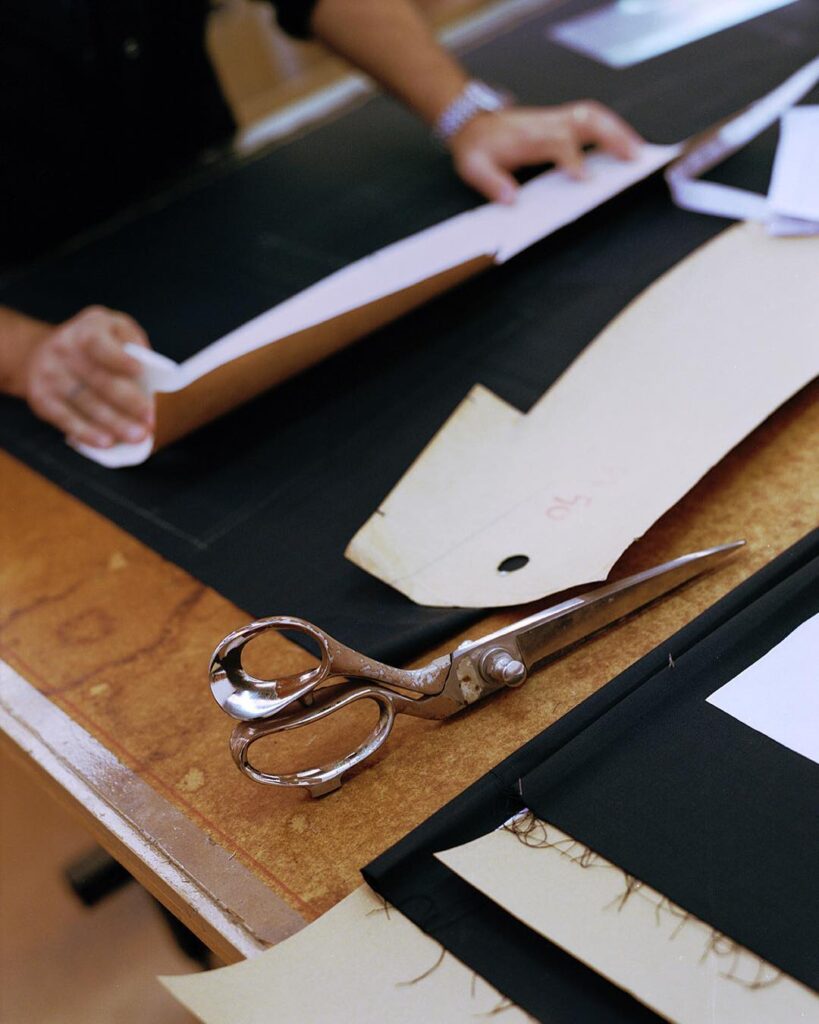
In the storybook tale of how clothing is made, there are three tiers of production, each ascending a luxury pyramid. At the bottom-most level, you have ready-to-wear, which are those clothes we see hanging on racks and in stores, ready to be tried on, coveted, and perhaps even purchased. The next level up is made-to-measure, where a block pattern is adjusted using a client's measurements, and then, we assume, a whizzing, thumping machine somewhere shoots out a custom-tailored garment. Finally, at the capstone of this pyramid, there's bespoke, the highest expression of craft. In the popular imagination, bespoke is about the hush-hush, wood paneled rooms on Savile Row, where tailors work diligently around ancient tables stacked high with heavy bolts of worsteds, flannels, and tweeds. For many, bespoke is "the dream."

That's the story anyway. Men who are just getting into tailored clothing often think they should climb as high up on this pyramid as their wallet allows. But in reality, clothing production systems are much more complicated, and there are good and bad examples of clothes in each tier — quality ready-to-wear, bad bespoke, and everything in between. Rather than being stacked on a pyramid, these systems overlap with each other in meaningful ways. To understand how clothing is made, we have to go back to the early 19th century, when the development of the ready-to-wear industry coincided with the industrial revolution, the emergence of modernism, and the American Civil War.

There was a time when nearly all men wore bespoke clothes. Before the Civil War, most men had their clothes custom made by a tailor, if they could afford one, or by women in their home. The only ready-made clothing at this time was crudely sewn workwear, often produced for sailors, miners, and slaves. It wasn't until 1849 that Brooks Brothers debuted the first ready-made suit in meaningful quantities, and even then, the quality of these clothes paled when compared to bespoke garments.

Keep reading

2020 in Hindsight: A Year in Fashion

In the social science literature, the term "critical juncture" is used to describe a moment when significant changes can occur rapidly, knocking institutions and culture onto a new developmental course. In the last year, many have debated whether the coronavirus pandemic is such a moment. Is remote work morphing into a more permanent reality? Will we be wearing coffee stained t-shirts and elasticated pajama bottoms forever? Are we witnessing the death of hype culture and the emergence of a more thoughtful fashion consumer? In a recent New York Times interview, Raf Simons expressed skepticism over whether liberal market economies can be permanently bent and reshaped. "The one lesson I think fashion will not learn from this, which is the one it should learn, if I am brutally honest, is that it should be less greedy," he said. "It became too much this economic machine. For the majority, the first desire is economic growth. […] And you can't do that with only one or two collections a year."

It's been one year since the first case of coronavirus was reported in the United States. Since then, some things have changed, although their permanence is yet to be determined. After J. Crew filed for Chapter 11 protection in May of last year, other corporate giants toppled like dominoes — Neiman Marcus, Brooks Brothers, J.C Penney, Men's Wearhouse, Aldos, and John Varvatos among them. That has sent shockwaves throughout the global supply chain, affecting heritage producers such as Vanners Silk Weavers. The Gap and H&M, two mainstays in high-street retailing, announced plans to shutter hundreds of stores in this coming year. And for every one of these headlines about big industry names, countless small businesses don't get nearly enough attention. Last year, New York City lost over 500 small businesses alone. The Partnership for New York City, an influential business group, estimates that about a third of the city's 240,000 small businesses "may not make it to see the post-vaccine promised land."

Last December, as the year was drawing to a close, I wondered "what are some of the year's most defining themes?" (Yes, this is a "year in review" post, which comes a month late, but please cut me some slack, as I've been dealing with a pandemic, a recession, and an insurrection.) Some of the things that have transpired were many years in the making, just accelerated and taken to the extreme. The Casual Friday movement that started in the 1990s has now ended with all of us in sweatsuits and t-shirts. The decline of suburban malls, department stores, and other general merchandise stores has morphed into a total brick-and-mortar meltdown, threatening to reshape the American landscape. Online shopping is at an all-time high, which has created a new demand for shipping supplies. Environmentalists are now bracing themselves for all the corrugated containers, plastic packaging, shrink wrap, bouncy air pillows, and bubble mailers that will wind up in our landfills, incinerators, and natural environment. To be sure, these are the real themes of last year. But along with these very obvious concerns, what else defined fashion in 2020?

Keep reading

A Soft History of American Radicals, Revolutionaries, and Christians

Shots were fired in the late summer of 1777, a year after the United States declared independence, as some 15,000 British soldiers descended onto Philadelphia, then the seat of the rebellious Second Continental Congress. After some hard-fought battles that resulted in over a thousand Continental Army deaths, the British marched into Philadelphia unopposed. The Continental Congress first relocated to Lancaster and then York, leaving civilians behind in Philly. One of those civilians was Molly Rinker.

Molly Rinker, also known to friends as Old Mom Rinker, was a matronly woman who ran a Philadelphia tavern. While George Washington and his troops were encamped just a few miles outside of the city, Mom Rinker closely tended to British soldiers and Tories, keeping their plates full, their beer pitchers flowing, and the conversation animated. But her intentions went beyond just providing good service. While drunken redcoats chatted away, Mom Rinker picked up bits and pieces of information, which she then covertly jotted down in the backroom. Each night, she wrapped her notes around tiny stones, and then hid those stones inside large balls of yarn. And on the following day, she took her knitting needles and yarn to the outskirts of town, where she’d climb high atop of a rocky ridge. From this vantage, Mom Rinker could easily survey the area. She would then sit down and proceed to innocently knit.

With yarn strewn around her and knitting needles in her hand, Mom Rinker was a portrait of tranquil domesticity. British soldiers who may have seen her from afar suspected nothing. But from this position, Mom Rinker could see when a Continental soldier emerged from the brush below. When she did, she’d gently nudge a ball of yarn over the brink, causing it to tumble to the ground, and the soldier would then scoop up, pocket, and carry her priceless message to George Washington. Old Mom Rinker, who never dropped a stitch, was America’s first and perhaps only sweater-making spy. She turned cloak-and-dagger techniques into yarn and knitting needles.

Keep reading

The Complex Web of Production

On a warm afternoon in April 2009, the machines at the Southwick factory briefly stopped humming, as workers took a break from sewing fine men's suits and naval officers' uniforms so they could listen to two distinguished guests speak. The guests were Massachusetts Governor Deval Patrick and Brooks Brothers CEO Claudio Del Vecchio, who were visiting that day to congratulate workers on their new facility. Just a year prior, Southwick, which was then located in Lawrence, Massachusetts, was on the verge of closing and having its operations moved to Thailand. It was then narrowly rescued by its largest customer, Brooks Brothers, who purchased the factory and relocated it just ten miles north to Haverhill.

Compared to its old location, the new Southwick factory had countless upgrades, including air conditioning and about $10 million in new manufacturing equipment. Instead of rolling out large, heavy bolts of cloth by hand, as workers used to do, this Haverhill factory had a computer-guided machine that effortlessly skimmed across a cutting table. When Del Vecchio promised in a speech that "Southwick's best days are still to come," hundreds of workers erupted with applause. "If it weren't for him, we'd be in the unemployment line," Regina Parisi, a stitcher, told The Eagle-Tribune.

Earlier this year, news leaked that Brooks Brothers was planning to close all three of its US factories — the suit factory in Haverhill, MA; shirt factory in Garland, NC; and necktie factory in Queens, NY — which spurred concerns about the brand's future and its identity as a "made in America" label. As it turned out, Brooks Brothers was trimming its cost structure and preparing for Chapter 11 bankruptcy. By the end of summer, Southwick's equipment was sold off, and a Japanese company acquired the rights to its name. Meanwhile, the Garland shirt factory has been sold to a company specializing in manufacturing personal protective equipment. Such has been the long decline of Brooks Brothers' American footprint. Forty years ago, nearly all of Brooks Brothers' clothing was manufactured in the United States. Before their closure, these three remaining US facilities produced just 20 percent of Brooks Brothers' inventory, which has mostly shifted to sportswear.

Keep reading

5 New Brands I’m Watching

In an interview with The Telegraph, Patrick Grant of Norton & Sons once described fashion as being an “ever-moving feast.” I find that the quick-paced nature of fashion -- where things are constantly being created and destroyed -- makes the field endlessly interesting. There’s always something new, something different, something to talk about. For the past few years, I've been doing annual roundups on new brands I find to be interesting. To be sure, not all of them are new -- many have been around for years -- but they're new to me. This year, there are so many brands on the list, I'm splitting the post into two parts. Here's part one, with part two coming later this week. 

NORLHA

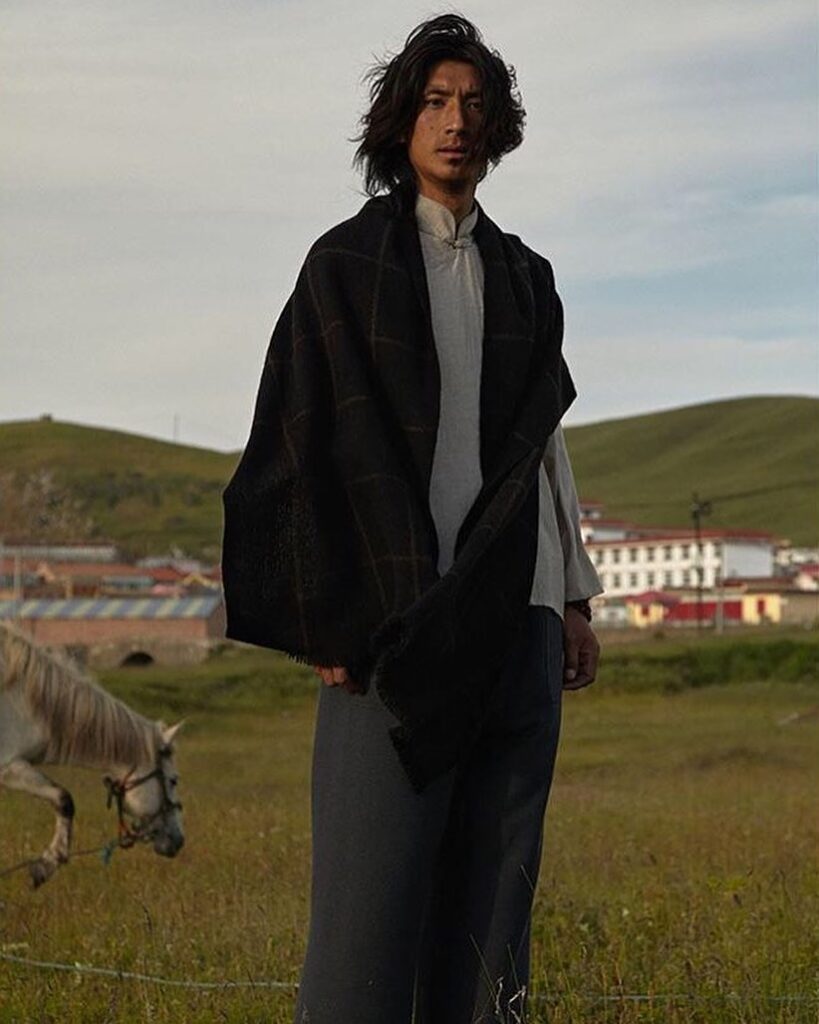
With a camera in her hand and a translator by her side, Dechen Yeshi arrived at the Amdo region of the Tibetan plateau in 2004. She came partly to explore her family's history on her father's side, a Tibetan academic who once served as a Minister to His Holiness the Dalai Lama. She also came at the behest of her mother, Kim Yeshi, a French-American anthropologist who co-founded the Norbulingka Institute, a Tibetan cultural center based near Dharmsala, India. Kim has always been fascinated by textiles, and long believed that yak wool could be a source of income for Tibetan families. So she sent her daughter Deschen to investigate.

Keep reading

Where To Shop For a Suit

In the last few months, the fashion press has been abuzz about whether the coronavirus pandemic will sound the death knell for the suit. Over on Savile Row, bespoke tailoring houses are getting crushed by soaring rents and the lack of overseas orders. In the United States, three of the largest companies to declare bankruptcy this year — J. Crew, Brooks Brothers, and most recently Men’s Wearhouse — are known for their affordable tailoring. In her recently published New York Times Magazine article, Irina Aleksander wonders if Americans may have settled into sweatpants forever.

As most people only wear tailoring to the office, suit sales will likely be in a slump for a while. But for people who dress for pleasure, I imagine the suit and its accoutrements will remain relevant for some time. The fact is, it feels good to dress up. “Outside” clothes help divide the day into distinct periods, which is especially nice now that work-from-home culture threatens to make every activity feel the same. A few weeks ago, I got coffee with my friend Peter Zottolo outside of a cafe, where he told me that he and his wife still try to find occasions to dress up now and again. One day we’ll return to bars, restaurants, and perhaps even offices. And when we do, “nice” clothes will return.

The good news is that the tailored clothing market has never been better. Ten years ago, if you wanted a semi-affordable suit, your options were mostly limited to J. Crew, Brooks Brothers, and various haberdashers who worked with Southwick. You could shop second-hand, of course, but what you saved in money, you spent on time. Today, there are many more options at affordable prices, particularly for people who favor classic Italian style. If you’re looking to get a suit any time in the future, here are three places that I think are worth being on your shortlist.

Keep reading

The Potential for Slow Fashion

Three years ago, I was in an elevator in a San Francisco hotel with Agyesh Madan, co-founder of Stoffa, after he finished a trunk show. We were on our way to get lunch at a cafe across the street. Madan, who's always immaculately dressed, was wearing a grey suede double rider with a pair of cream-colored trousers, a dark blue Camoshita pullover, and some beat-up Belgian loafers. As we exited the hotel lobby, Madan told me about his design process. "We spent years developing this jacket," he said of the double rider he was wearing. "For everything we create, we go through cycles of prototyping and testing, as I want to be confident of the things we offer to our customers."

The things Stoffa offered at their trunk show that day in 2017 — including the luxurious faded chevron scarves, lightweight Tuscan leather bags, peached cotton trousers, and core line of made-to-measure leather outerwear — are still with them today. In an industry that reinvents itself every season, with designers wiping the slate clean and starting anew, Stoffa is a remarkable example of slow fashion. Not only does the company take its time to incubate ideas and develop new products, but items stay in their collection for years and years. In this way, consumers don't feel pressured to continually replace things they already own.

Over the years, I've admired Stoffa's approach to slow fashion, which starts with its product development process and extends through to their repair service. A couple of weeks ago, I talked with Madan and his business partners over the phone about their latest capsule collection. We also discussed whether sustainability is possible in an industry that relies on selling people new clothes every season.

Keep reading

The Loss of Distinction

In the last few months, as millions of Americans have transported their work from cubicles to bedrooms, the US has engaged in something of a massive, unplanned social experiment. It’s estimated that up to half the US labor force now works from home. The other half is split between those not working and those still working at a jobsite (the second of which is mainly composed of essential service workers). Almost overnight, the US has transformed into a work-from-home economy coordinated through online applications such as Slack, Zoom, and Google Docs.

Now it seems that many companies may continue with this arrangement even in a post-COVID world as a way to save money. This summer, Facebook and Twitter captured headlines when they announced plans to let some employees operate from home indefinitely. Financial giants Morgan Stanley, Barclays, and Nationwide say they intend to do the same. At the moment, roughly 90% of Morgan Stanley’s 80,000 employees work from home, a process that CEO James Gorman says has been remarkably smooth. “We’ve proven we can operate with no footprint,” Gorman told Bloomberg Television. “Can I see a future where part of every week, certainly part of every month, a lot of our employees will be at home? Absolutely.” By the time the coronavirus crisis is over, we may emerge from our homes only to be told to go back inside again.

The opportunity to work from home has some obvious benefits: more time with family and pets, not having a stern boss peer over your shoulder, and being able to intersperse work periods with leisure activities (work at your own pace, so goes the theory). But when you check emails where you sleep and type where you eat, it’s hard to beat back the workday’s colonizing tendencies. Professors and freelancers know this all too well, as their constant-work culture deprives them of true leisure. When you never officially clock in or out, it’s easy to feel like you should always be using your time more productively, so you start to feel guilty for enjoying anything outside of labor. “I should be working,” says the nagging little voice in your mind.

Keep reading

On Emotional Durability

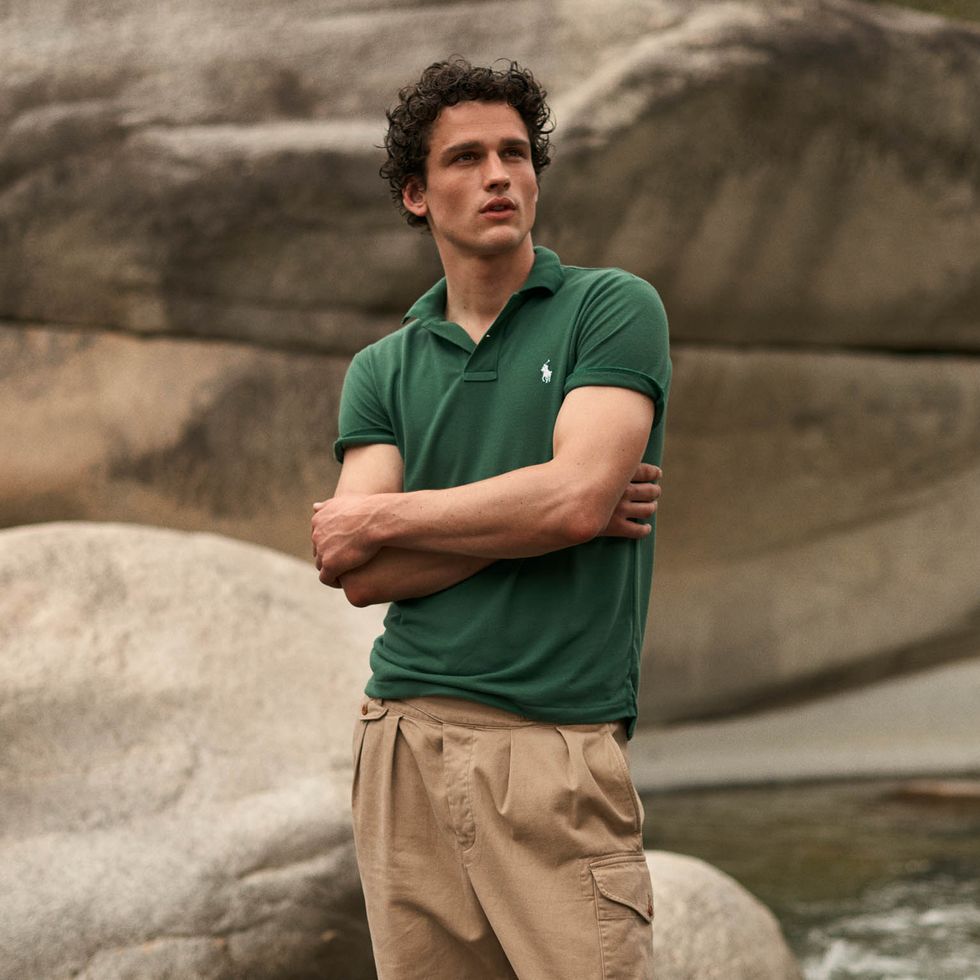
The hottest trend last year wasn't the oversized puffer jackets, patchwork coats, or resurgence of lowbrow patterns such as tie-dye and leopard prints. Instead, the dominating trend of 2019 was the topic of sustainability. During the spring/summer seasons, major brands such as Ralph Lauren and Adidas capitalized on a growing consumer interest for eco-friendly products by releasing green polos and running shoes wholly made from ocean waste and recycled plastics. By autumn, Kering — the parent company to Gucci, Saint Laurent, and Brioni, among other big luxury labels — announced that it would commit to being carbon neutral across all of its operations. At the behest of French President Emmanuel Macron, François-Henri Pinault, the chief executive of Kering, also spearheaded an effort to get other major labels to do the same. Known as the Fashion Pact, the global coalition includes over 60 signatories, ranging from H&M to Hermes. They say they'll make significant changes in their business to help meet science-based targets in three areas: achieving carbon neutrality by 2050, restoring biodiversity, and preserving oceans by reducing their use of single-use plastics. No punitive measures, however, will be imposed should they fail to meet their goals.

Of course, much of this comes as a result of the scrutiny the fashion industry has faced over its impact on the global climate crisis. There have been a lot of disturbing facts hastily thrown around, many of them not carefully checked. It's often said that nearly three-fifths of the fashion industry's annual production — estimated to be upwards of 150 billion garments — ends up in incinerators or landfills within years of being made. That results in about 10% of the world's annual greenhouse gas emissions, more than the aviation and maritime shipping industries combined. As Vox noted, actual evidence for this is scant, although the fashion industry is indeed a mess. If anything, we know there's too much clothing in the world by merely looking at our closets. Similar concerns have come up before, even if not directly about global warming. During the 19th century, as industrialization made things more affordable, many Europeans felt wonder and anxiety over their new material abundance. People worried about how to use goods well, what abundance might be for, and how not to be spoiled by possessions. Human virtues such as restraint and simplicity came to the fore, and some questioned whether the sheer quantity of objects around them would dull their senses.

When it comes to sustainability in fashion, discussions follow a very predictable course. The focus is often on tangible dimensions, such as build quality, materials, technology, transport, and recycling. In an interview on the podcast show Time Sensitive, Gabriela Hearst says her experience growing up on a ranch gave her a deeper appreciation for the calmness that comes with knowing that things around you don't need to change, including the clothes on your back. "I really thought about why I am so attracted to things of quality," she said. "It is because things have to be made well to last and to endure, so I grew up with things that were made to last and endure, not necessarily from an ostentatious point of view but from a quality, utilitarian aspect." The only sensible and sustainable antidote to throwaway culture, then, is to purchase timeless, long-lasting clothing that you can wear for life.

Keep reading