Ambrosi, Napoli

At some point, tailoring becomes art. When I was in Naples, I had a chance to stop by Ambrosi’s atelier, which is located in the Spanish Quarter district of the city. If one thought finding tailors in Chiaia is difficult, especially since many of them are tucked away inside courtyards, the Spanish Quarter can be even more so. The place feels a bit like a Byzantine labyrinth, and tailors are hidden inside buildings without any commercial signage. I found myself walking down these really narrow, cobblestone streets, past peach-colored Italian buildings, and trying to talk to old men by asking in Italian, “Do you know Ambrosi? Where can I find Ambrosi?” The district actually reminds me a lot of Moscow, where sometimes commercial stores are hidden inside of apartment buildings, and you wouldn’t know how to find a place unless you were from the area. 

When I finally found the building, the entrance has a very small brass plate with buttons on it, just as you would find on an apartment building. In small letters, there was the name, “Ambrosi.” I rang the buzzer and the son, Salvatore Ambrosi, let me in. Inside, the atelier is quite simple. There’s one room that they’ve fixed up. It looks quite nice and has tasteful antique furnishings. The rest of the place is basically a workshop, which is solely dedicated to making bespoke trousers. 

Each of Ambrosi’s trousers takes eight hours to make, and they can vary in terms of their level of handwork. The models I saw were about 80% hand stitched. I think the only thing that was done by machine was the inseam on the inside. The outside had even been finished with some beautiful, nubby handstitches. The rest of the trousers - the lining, pockets, and buttonholes - were all handstitched and handsewn.

There are eight or eleven different models (I’ve since forgotten, exactly). One pair of tan trousers I saw had a large extended tab fastening belt, as well as a large waistband. The other didn’t have a belt, but just a basic front fly enclosure. Both had French flys with two buttons on the inside. A French fly, as you may know, is when the closure has a front fly with an inside tab button. This keeps the fly laying smooth. Ambrosi’s two button French fly goes a step further by making sure nothing will pivot as you move. 

On the bottom, the trousers are finished with cuffs that can be opened and closed with a button. This allows you to clean out any debris that may have accumulated. A rather smart thing, I thought. 

If you can get to Naples, the entry level price for Ambrosi’s bespoke trousers is about $600. If you catch them on one of their tours, it starts around $900. It may seem like a lot for pants, but it’s important to remember that you’re paying for an artisanal product. If you can afford the price tag, it’s nice to have a little romance in your life. 


StyleForum 10th Anniversary Party

I can’t imagine there are too many readers here that don’t also follow me at Put This On, but for the sake of telling everyone, I thought I’d also post something here about the StyleForum 10th Anniversary Party. 

It’s going to be awesome. If you can get to San Francisco, you really ought to go. First, there’s the O’Mast screening on May 4th. Gianluca, the director of the film, will be there for a Q&A session. Prior to the movie, there’s also going to be a special Put This On pre-screening with Jesse Thorn. 

On May 5th, there’s a vendor showcase with companies such as A Suitable Wardrobe, Epaulet, and LeatherSoul. This will be a great chance to handle some of the finest clothing and footwear you may have ever seen. Later that night, there’s the party itself. 

I guarantee it will be a good time. I cannot guarantee, however, that there won’t be impromptu WAYWT workshops held in adjacent rooms, or that a dance circles won’t turn into “motherf*ckin walk offs.” Please understand, I can only guarantee so much. 

Get more information about the event here, and be sure to RSVP by sending an email to styleforum10@gmail.com 

The Earthier Spring Palette

Camo has a spring-summer collection that I really like, not so much for the style, but for the colors. Most of it is in your earthier tones of brown, grey, and blue, but they’re a bit lighter in tone, and slightly tweaked to be spring appropriate. You often see companies such as Loro Piana and Banana Republic rely on these palettes. I suppose it sells well because men find earthier colors intuitive, and they figure something lighter and slightly off hue will give them a more interesting, if not at least more appropriate, look for spring.

It’s fairly easy to build a spring wardrobe in this palette. Raingear such as this beige trench and navy mac are natural (the navy mac is on sale, actually, for $145, but I’m unsure of the fit or quality). Outside of the rainy season, you could thrown on something like this Brooks Brothers tan jacket for the same effect. 

For trousers, you can wear a pair of chinos in either navy or stone. Stone, in my opinion, is an incredibly underrated color for chinos. Like with grey wool trousers, they go well with almost anything, and if you get the right fit, they can look quite sharp. There are also these incredibly nice linen trousers over at Howard Yount. Linen is to spring what tweed is to fall, and something like these taupe greys would be a great pair if you already have a pair of basic tans. Additionally, Barneys has an interesting pair of fawn flannel trousers. I was hoping to pick them up a couple of weeks back, but they were out of my size. 

It’s also easy to find sweaters and shirts in earthier spring colors. For example, there’s this Gant Rugger in powder blue, Brioni in pale grey, and Loro Piana in taupe. The same colors could be utilized for shirts, and they would extend a bit past the normal light blue and white that everyone wears. If you wanted to inject some color, you could do so with something like this sea green shirt or light purple sweater. Just remember to keep colors pale, and limit the “colorful” garment to one. The rest of your ensemble should be more rooted in sandy colors, creams, dove greys (both in darker and lighter tones), and dark blues. It’s an earthier spring palette after all, not a preppy pool party. 


Thinking of Summer Suede

Yesterday, I was looking at Rose and Born’s new lookbook and got kind of inspired by some of the shoes featured (ignore the trendy hats, ridiculously short pants, and spring scarves for a moment). All of them were in summery suede colors, such as russet brown and bright navy, and had slightly chunkier red brick soles. It got me thinking about how well certain suede shoes can work for the summer. Not the dark brown kind that you normally see, but ones in the lighter and brighter shades of tan and blue. 

In the field of summer suede shoes, I think Americans do better than the English. For example, Alden has a great pair of bucksunlined loafers, and shortwings for sale, as well as navy suede tassels if you’re feeling a bit more daring. I myself just picked up a pair of their buttery soft, unlined suede chukkas, and think they’ll be perfect with jeans and an oxford cloth button down. Allen Edmonds has a similar model called the Amok, but the last is a bit sleeker. Oddly, I prefer Alden’s in this case, mostly because I think it better serves its purpose of being a casual shoe. According to my friend Stephen, Fred Astaire even wore his with suits, but I think I’ll stick with jeans, chinos, and tropical wool trousers. 

The other champion in this area is Mark McNairy. Although I normally don’t care for his clothing designs, he really makes some great casual footwear. For example, these navy chukkas, contrast soled derbies, and sand suede double monks can look perfect underneath a madras shirt, linen blazer, and some chinos. Their advantage in their red brick soles, a feature that’s really pulled off well in the Rose and Born lookbook. 

Finally, Brooks Brothers has some nice options with their bucks and wingtips, and Oak Street Bootmakers has a trail moc that I’ve always liked. Brooks’ bucks will be discounted in a few weeks to about $150. I like the deeper, richer brown on McNairy’s, but those probably won’t be put on sale until the end of the season. 

I’ve included some photos below, as well as a video of Rose and Born’s lookbook, which hopefully you can use for inspiration. Suede is such a perfect material for casual footwear, and it’s made even more seasonally appropriate when it’s put into colors such as russet, milkshake, and navy. If you can find a pair to wear this summer, I think you should.  


The Other Supergas

I’ve been looking for a new pair of plimsolls for summer. Plimsoll, as you know, is the British term for shoes with a canvas upper and rubber sole. The first was invented in the 1830s and was designed for beachwear. Thus, its original name was “sand shoe.” In 1870, however, people started calling it the “plimsoll” because the horizontal colored stripe that ran along the upper of the sole resembled the plimsoll line on a ship’s hull. The name has stuck ever since. 

These days, the plimsoll isn’t necessarily just for beachwear. You can wear them anywhere, and they make for great summer shoes. Classics include SupergaSpring Court, and Jack Purcell, but there are a dozen others. 

Originally, I was just going to get another pair of Superga 2750s, but in my search, I came across these 1705s at Oi Polloi. It has slightly less stitching, no red logo, and all around seemed a bit cleaner looking. There are pairs being sold on eBay right now for $55 plus shipping, which if you’re in the States costs about $23. Don’t bother trying to skirt it by looking for a US supplier. I gave it an hour and couldn’t find one. It seems only the British have these. 

Mine came in the mail last week and I quite like them. It’s a simple enough design that it’ll look just right with cotton chinos and madras shirts this summer.

Note, if you decide to get a pair, check with the seller regarding sizing. I’m between a 9D and 9.5D in most shoes, but have to go to a UK9 or 43 EU for Supergas.  


Asians in Barbours

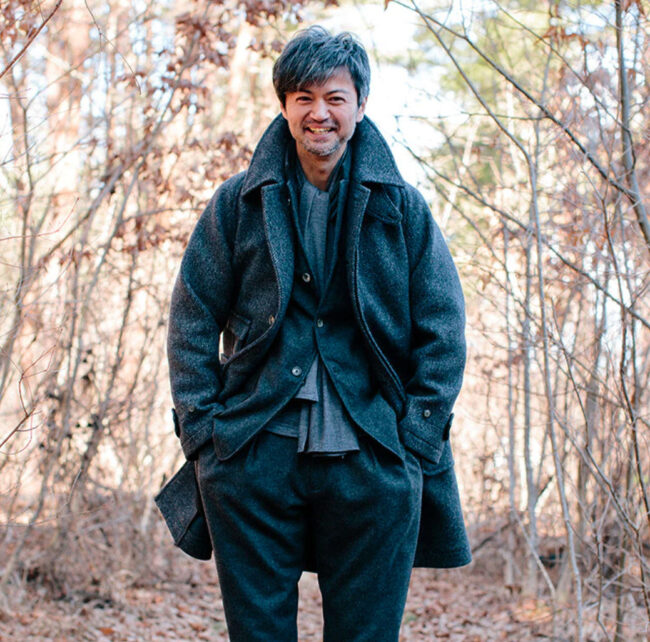
My friend Cooper has been intermittently posting pictures of Asians in Barbours the last few months. Which reminded me - Barbour jackets are great. Their classics, the Bedale and Beaufort, can be worn with khakis, jeans, odd wool trousers, and even casual country suits. I presume Cooper took these photos from Japanese magazines such as Leon and Mens’ Ex. The last photo, which is of the most important Asian of them all, is something I added myself. 

With all the new outerwear designs that come out every season, it’s good to be reminded: the term “classic” isn’t always just a marketing trick. Real classics exist, and they’re quite good. Go get yourself a Bedale or Beaufort if you haven’t already.  


First Look: Howard Yount’s New Line of Trousers

Howard Yount makes some of my favorite trousers. They simply fit better than almost anything else I’ve found. There are clean lines everywhere, both on the front and back, and they drape well from the fork, which rarely happens on me. They’re also very well constructed to boot. The only thing I wish is that they were a hair higher waisted. I like my trousers to sit above my hips. Yount’s do, for the most part, but they’re a quarter of an inch shorter than I’d like. 

I mentioned this to Jamison, the proprietor of Howard Yount, a few weeks ago while I was buying another pair of his trousers (these cream tropical wools, which will be perfect for summer). He let me in on something - he’s developing a new line that will feature exactly that. I can’t tell you how excited I became. 

Jamison sent me more details and photos yesterday. Apparently, they’ll be made in New York City and the quality will be nearly identical to his current line (which are made in Italy). They’ll feature a two-piece split curtained waistband in a blue oxford cotton fabric, interior piping in the same oxford, three button closure, belt keeper loop, and framed pockets. The cut will have a slightly higher rise, just a hair more tapering in the legs, and a little bit more forgiveness in the seat and waist (full measurements given behind the cut). I was a bit worried when I heard he was tapering them more. I like my leg openings to be around 8”, at least for most trousers, so that they look appropriate for academia and business. However, it looks like the tweaks Jamison made are slight enough that fans of his older cut needn’t worry. 

The Italian line will still exist. In fact, Jamison is getting a wide variety of classics this falls, including another batch of VBC flannels in two weights and a variety of colors. 

The photos below are of Jamison’s new showroom space in New York and him modeling the new line. Everything he’s wearing in those photos, incidentally - except for the polo, double monks, and Jack Purcells - are available at his webstore. There are also pictures of the new trousers themselves. Here we see fine wool twills, cotton canvas, baby corduroys, and madras. The fabrics are source from a variety of mills in Italy, England (canvas), and India (madras, of course). Click through the cut to see all of them. As Jamison joked - the madras is fantastic, but you could say you need tennis balls to wear them. 

Ah, I love corny jokes. 


Read More

First Look: Isaia SS12

A friend of mine at Isaia, Agyesh, was kind enough to share with me the company’s latest spring-summer lookbook. Here we see very soft-shouldered jackets paired with slim, tapered trousers and a variety of slip on shoes. Including, I may add, some sand suede double monks. If you’re wondering whether they’re the blogoratti’s favorites by ROTM, they’re not, but that would have been fun to see. Also might be good to note the number of whites, dove grays, and washed blues you see here - all wonderful colors to wear this spring/ summer. 

I was able to take a full tour of Isaia’s factory when I was Naples last January, and will be writing about the experience for StyleForum’s blog. The tour itself took maybe an hour or two, and then I asked about six hours of questions (yes, six hours). Suffice to say, the team over there is incredible kind and patient, and I think readers will be in for a real treat when they get to see what a top-tier production house looks like. I’ll let you know when the story is up (it’ll be sometime in April, I imagine). 


The Spring Shirt-Jacket

Many men find sport coats, even the most casual ones, to be too formal. One alternative is the shirt-jacket, which can’t be accused of being formal at all, but still gives a nice collar line to the wearer and pockets to hold things in. Spring happens to be a great season for shirt-jackets. You can wear one on the weekends or when you’re out quickly running errands. It’s perfect for casual activities on the slightly cooler days, the kind of days that characterize spring and fall. 

The best spring shirt-jackets, in my opinion, are made from linen. It’s rumply, unstructured, and perfectly expresses the casualness that’s inherent in the design. Unfortunately, as I’ve found, it’s not so easy getting an affordable, well-fitting, linen shirt-jacket. So a few compromises have to be made. I recently picked up this Ralph Lauren shirt-jacket from Macy’s for ~$100 (using XJW562A992 as a discount code). It’s made from cotton, not linen, but it fits well and will serve its purpose. I wear mine with chinos or lightweight wool trousers, usually with either an oxford cloth button down or broadcloth shirt underneath. Sometimes the sleeves are rolled up a bit, just as you see below. Note that while Macy’s page shows it as having white buttons, mine came with midnight navy buttons, as Ralph Lauren’s original page shows it. 

I’m still hoping for a linen shirt-jacket at some point. However, to get something with all the design details I want, it looks like bespoke is the only option, and that’ll run just north of $500. Perhaps some day I’ll commission one, but for this spring, a $100 Ralph Lauren jacket will do.


Drake’s Grenadines

I used to have a couple of over-theorized opinions about grenadines. Grenadine, as you know, is a slightly textured silk that’s used for neckties. Most tiemakers get their silk from one of two weavers in Italy, Fermo Fossati and Seteria Bianchi, both of which produce two types of weaves. The first is Garza Grossa, which is a looser weave with a honeycomb-like pattern. The second is Garza Fina, which is more finely textured. 

My first opinion was that “formal” colors such as silver are best done in Garza Fina. That’s because such colors are typically worn with suits that have a smoother finish. Since larger scale textures and patterns are more informal, it seems only right that the finer texture of well-mannered Garza Fina should matched to a more formal suit. Other colors, such as navy, burgundy, or racing green, can be either Garza Grossa or Garza Fina, but I think ones matched with heavily textured jackets, such as a rough tweed, are better executed with Garza Grossa. Again, keeping textures and formality in harmony. 

My second opinion was that Garza Fina lends itself better to patterns. The finer texture seems to be better for stripes and pin dots, whereas I think executing it in Garza Grossa would make it too busy. 

Leave it to Drake’s to break of all my poorly formed opinions. This season they have grenadines of every variety you can imagine. There are stripes, plaids, and an interesting silk and cotton woven that has a two-toned effect. All of these come in Garza Grossa and Garza Fina variety, and a few are even made without tipping, a matter that used to be of some controversy, but no longer seems to be. 

Just goes to show, sometimes you can’t put too much stock in theories. In the end, you have to see it to judge, and these by Drake’s all certainly look wonderful.