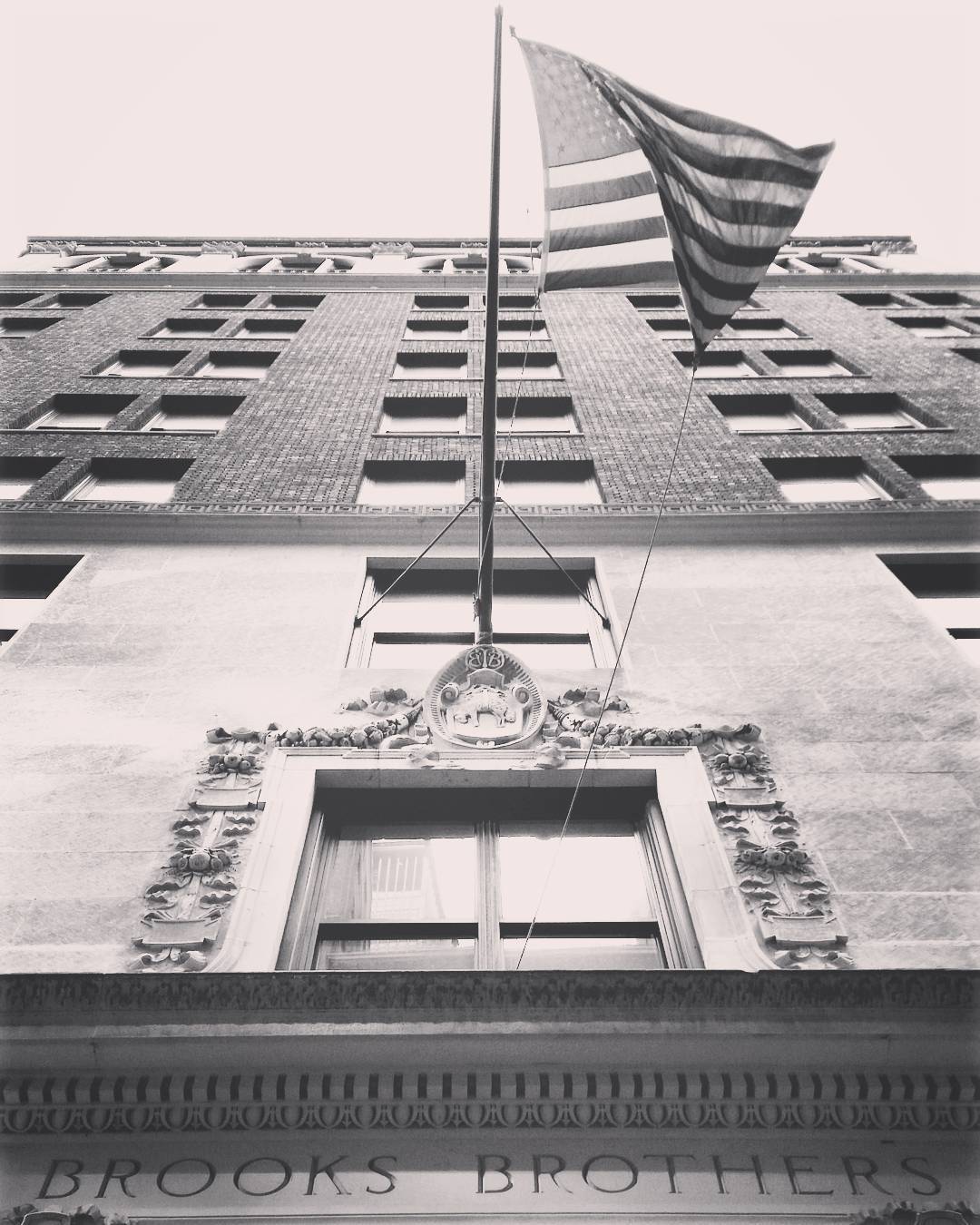
Lamb Chopped: The Story Behind Brooks Brothers’ Bankruptcy

Two years ago, at a black-tie gala held at the Jazz at Lincoln Center, nearly 1,000 guests gathered to commemorate Brooks Brothers' bicentennial anniversary. While sipping on themed cocktails named "Modern Classic" and "Golden Fleece," guests enjoyed an all-American jazz program befit for an all-American clothier. Since their founding in 1818, Brooks Brothers has defined classic American men's style, invented the ready-to-wear suit, and dressed nearly every US President. Brooks Brothers CEO Claudio del Vecchio, who has been widely credited with reviving the company since it fell out of favor under previous owner Marks & Spencer, told The New York Times that he's working to reinforce a culture. "I have to make sure that we are building a company that will last after me," he said while sitting at his 346 Madison Avenue office, where his polished mahogany desk faces an antique grandfather clock once owned by the store's founder, Henry Sands Brooks. "I don't want to be here another 20 years. Forget about another 200 years. It's really about trying to build a culture that will last longer than the business. That will make it very hard for the next guy to screw it up."

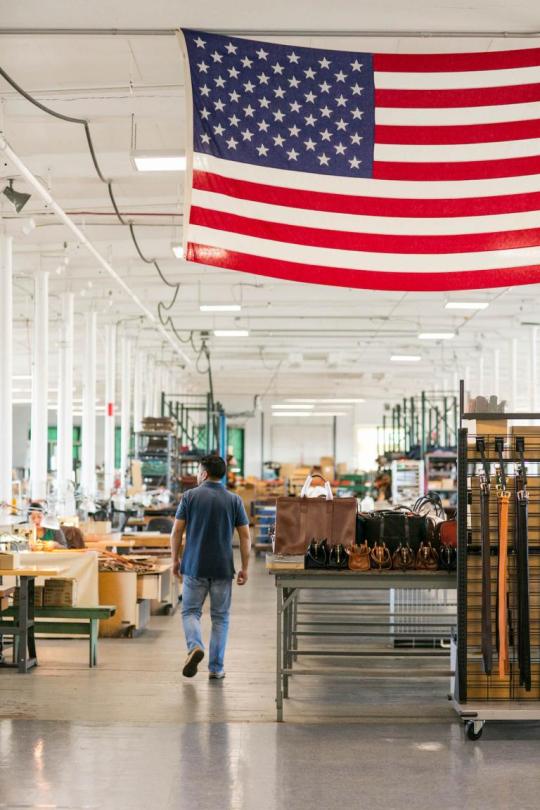
Last week, Brooks Brothers filed for Chapter 11 bankruptcy protection, making it the highest-profile men's clothier to do so during the coronavirus pandemic. The company says they plan to close about 51 of their stores, a decision they attribute to the toll of mass shutdowns. This comes on the heels of their announcement that they'll close all three of their US factories by the end of this summer. So far, Brooks Brothers has shut the lights at their Garland, North Carolina shirtmaking factory, which employs about 25% of the town's residents. The company's Southwick suit factory and New York tie factory have been reduced to producing masks, but they too will shutter unless the company can secure a buyer.

Soon, the fashion press will churn out stories about what went wrong at Brooks Brothers. I suspect theories will include something about rampant globalization, rapacious capitalism, corporate mismanagement, and mass-marketization. Brooks Brothers either failed to adapt to changing consumer tastes, or they adapted too much. For diehard trads, the decline of Brooks Brothers will undoubtedly be linked to the decline of Western civilization itself.

Keep reading
This Season’s Best Sales

Last night, when Mr. Porter announced their second markdown, I visited their sale section and many more. I'm relieved to say that the apocalyptic clearance sale that many predicted would happen is not, in fact, happening. This is good news for those of us who want to see stores survive. However, there's also good news for shoppers: sales this season are slightly better than usual, even if they're not at blowout prices. Retailers that normally don't hold sales are holding one. Mr. Porter added previous seasons' inventory to their sale section. And a bunch of stores started new promotions this morning. Here are what I think are the season's best sales, along with highlights from each. 

Mr. Porter: Up To 60% Off

Outerwear: Along with slashing prices for the second time, Mr. Porter added some new inventory in their sale section last night. In the outerwear section, you can find leather jackets from Valstar, Reese Cooper, Golden Bear, and Kingsman. The Valstar shearling trucker jacket, pictured below, is one of my favorites from last year. You can wear it with chunky sweaters, raw denim jeans, and pebble-grained boots for a terrific cold-weather outfit. Valstar also has supple suede bombers if your climate is more temperate. Additionally, check out these topcoats from Camoshita and Mr. P. Most topcoats are too short and slim, but Camoshita's topcoats always have enough room to give them verve. Neither of these coats will be wearable this summer, but you can consider them pre-fall purchases. 

Keep reading

Silence of the Lamb

It's been barely a month since J. Crew filed for Chapter 11 bankruptcy, making it the first major retailer to fall during the coronavirus pandemic. Since then, an alarming number of fashion-related businesses have followed, including Neiman Marcus, Aldo, John Varvatos, JC Penney, and J. Hilburn. This month may lay claim on one of the largest men's clothiers. In a phone call that took place late last April, Brooks Brothers CEO Claudio del Vecchio allegedly told a group of senior executives that that company plans to file for Chapter 11 bankruptcy this June.

I first heard about the phone call last month while I was working on a story about how Brooks Brothers is planning to shutter all three of its US factories. Since finding the bigger headline, I've been interviewing former and current Brooks Brothers executives, who were willing to share the insider story of how the brand has found itself in this position. This morning, Business of Fashion published my feature. The story is about a lot more than the spread of Casual Friday or the coronavirus pandemic (although those certainly contributed to Brooks Brothers' downfall).

The situation stems from a massive network of long-term real estate leases, which stretch back to the 1980s. Under the leadership of Julius Garfinckel & Co., Brooks Brothers operated just 11 locations in 1971. By the time Marks & Spencer sold Brooks Brothers to Retail Brand Alliance in 2001, there were 155 stores and outlets in the US and Japan. Today, there are roughly 250 stores in the United States alone -- and nearly half of them are outlets. Of Brooks Brothers' full-line US stores, just 40 are responsible for 80 percent of sales. One executive told me that they could have closed over 100 locations and not seen much change in profits. The fall of Brooks Brothers ties together many things: the decline of tailored clothing, the challenges of running a brick-and-mortar business, and the difficulty of telling an American story during a globalized age. You can read my story over at Business of Fashion

Keep reading

Taking a Shorts Break

In the mid-1920s, the press snapped a photo of the renowned radiologist Dr. Alfred Charles Jordan as he was cycling to work at his Bloomsbury practice. Soon after, the picture was published in a British newspaper, where it scandalized readers. Jordan was shown wearing a pair of shorts with a tailored jacket. At the time, no man in the city, and certainly none in professional life, bared his knees in public. Shorts were for children and perhaps people hiking on holiday. Even tennis players in the 1920s wore cream-colored flannel trousers when playing sports.

Jordan went on to be one of the founding members of the Men's Dress Reform Party, a flock of odd ducks in Britain who believed there was an intimate connection between clothes and health. Founded in June 1929, after a meeting at 39 Bedford Square in London, the Party sought to reform men's dress so that it could catch up to the progress they felt womenswear achieved. Members believed that men's clothing was too tight, ugly, and cumbersome, and before the adoption of dry cleaning, unwashable and thus unhygienic. “The Committee believes it would be premature to offer fixed and final views,” they wrote in their first publication. “Indeed, the men's dress reform movement should have as one of its aims the encouragement of a somewhat greater range of individual style than is possible with men's stereotyped costumes.”

For generations up to this point, "proper attire" in Britain was regulated by time, place, and occasion. Men wore dark worsted suits and black calfskin oxfords in the city, then tweeds and brogues for sporting and leisurely activities in the countryside. The members of the MDRP, however, wanted to free men from the shackles of social convention. They didn't just want to banish the suit; they want to replace it with holiday attire. For work in the city, members felt that men should be free to wear soft, open-collared shirts made from colorful rayons and fine poplins, which they thought paired well with jacket-and-shorts suits and matching wool stockings. "Most members wish for shorts; a few for the kilt; nearly all hate trousers. Some plead for less heavy materials and less padding; others for brighter colors," the London Times reported in 1929.

Keep reading

The Rise of Korean Fashion

image


When British economist Alfred Marshall was looking out of his window in the late-19th century, he saw a country full of cottage industries and industrial clusters. In the Scottish Border towns up north, thousands of spinners, weavers, and knitters were making robust tweeds and soft cashmere. A little further south was Manchester, where steam-powered mills produced so much of the world’s cotton, the city was known as Cottonopolis. In the East End district of London known as Spitalfields, the descendants of French Protestant refugees and Irish immigrants were toiling over looms to make some of the world’s most beautiful silks. When those silks were woven, they were then transported to Macclesfield, where artisans decorated them with hand-blocked patterns.

Marshall wrote about similar clusters in his book Principles of Economics, which not only became the standard economics textbook in England for decades to come but also sparked an intellectual revolution. Most econ students will know Marshall as the man who transformed economics from the philosophical works of John Stuart Mill and Karl Marx to the rigorous mathematical field it is today. Marshall helped lay the groundwork for neoclassical economics, as well as developed the supply and demand graph. But in Book 4, Chapter 10 of Principles of Economics, there were also a few paragraphs about the benefits of spacial clustering — an idea that would come into greater prominence about a hundred years later and helped to shape developmental policies.

Clustering is the idea that firms benefit from sharing infrastructure, suppliers, and distribution networks. Companies that supply components and support services can fit neatly into each other like Lego bricks. When you have a cluster of businesses, skilled workers can also share knowledge and move between firms, which helps soften the blow of unemployment. Back in the day on Savile Row, tailors across the many firms gathered at the pubs after work, where they would imbibe, gossip, and share ideas. “They were all enormous drinkers,” Thomas Girtin wrote of them in his book Nothing but the Best. “When they had been paid, they would ‘go on the cod,’ indulging in monster drinking bouts — drinking like a fish, perhaps — from which there was no recalling them until they had spent all their money.” Tom Mahon of Redmayne tells me that he remembers how much fun he used to have with other tailors at the pub, as well as how tailors shared knowledge by sketching out drafting patterns on the back of napkins.

Keep reading

Hearing From Small Businesses

image


Last week, as I was reading Sendhil Mullainathan’s article in The New York Times about the importance of small businesses, I felt like I was reading my own story. Mullainathan is an Asian American who grew up in California, where his mother owned and operated a small video store. “She survived a major economic recession, two riots that rumbled past her window, and even the opening of a Blockbuster nearby,” he writes. Eventually, however, her business succumbed to the changing times. When her customers moved on, she felt she was ready to let go too. The difference, as Mullainathan notes, is that there are hundreds of thousands of small businesses today under threat, but were flourishing just three weeks ago. Their owners are not yet ready to move on. Their customers want those businesses to continue. And more importantly, their employees want to work.

Mullainathan’s article made me think of how many people in the United States have experience either owning a small business or working for one. On the block where my parents ran their video store, there were other Vietnamese families just like us. I remember playing in the back alley with kids whose parents owned the neighboring grocery store, bakery, dentist office, chiropractic office, and phở restaurant (why nearly every Vietnamese commercial block has this same exact mix of businesses, I have no idea). “I take the plight of small-business people personally,” writes Mullainathan. “Perhaps you do, too.”

Over the weekend, I reached out to some people behind small menswear operations to see how they’re doing. These are the people behind bespoke tailoring workshops, ready-to-wear boutiques, and even factories. I’ve been worried sick about what the crisis will do to small businesses. Instead of wondering what challenges these people face, and how others can support them, I asked business owners directly. Notably, since this crisis is moving so quickly, some details have since changed (Kiya at Self Edge, for example, noted that the quarantine timeline was looking to be months, which is now uncertain). But the contours of these concerns remain largely the same. Here’s how seven small business owners are thinking about the crisis.

Keep reading

A Guide to Spring Tailoring

image

Reginald Jeeves is a fictional, dry mannered valet in a series of comedic short stories by PG Wodehouse. He serves at the behest of a charmingly clueless man-child named Bertie Wooster, a wealthy, idle Londoner who’s the very definition of Baudelaire’s dandy (“The wealthy man, who, blasé though he may be, has no occupation in life but to chase along the highway of happiness”). Wooster’s immense wealth allows him to indulge every whim and fantasy, including matters involving his wardrobe, which he views purely through the lens of personal expression and sartorial originality. He wears grape-purple socks and green Alpine hats decorated with pink feathers, often to the chagrin of the more conservatively dressed Jeeves, who tries to steer him towards better decisions.

In the short story “Jeeves in the Springtime,” Wooster wakes up and asks his valet if his new mauve shirts have arrived. Jeeves confirms they did, but he sent them back because they would not “have become him.” “Well, I must say I thought fairly highly of those shirtings, but I bowed to superior knowledge,” Wooster silently reflects. Nevertheless, Wooster springs out of bed and heads to the park to do his pastoral dances, bringing with him his whangee, his yellowest of shoes, and an old green Homburg. You can almost sense Jeeves inclining his head gravely. “In the spring, Jeeves, a livelier iris gleams upon the burnished dove,” the young master’s voice cheesed. “So I have been informed, sir,” his valet dryly replied.

I thought about these stories recently as I was flipping through swatch books at an I Sarti Italiani trunk show. In the fall and winter months, it’s much easier to choose a tasteful tweed or corduroy sport coat. Fall materials are often conservative by nature. The colors are cooler and easier to wear, and even the boldest plaids are blunted by the fact that they’re expressed on fuzzy woolens, rather than hard-finished worsteds. But come springtime, it can be a challenge to find something beyond your basic tropical wools. When spring is in the air, it’s easy to swept up by the romance of a brightly colored, bold patterned linen or silk-blend. But most warm-weather fabrics are questionable, perhaps even Wooster-like.

Keep reading

California Sunshine and Noir

There are two stylized images of life in Southern California. One is an exotic fantasy that was first communicated through surf films such as Gidget (1959) and Beach Party (1964), where the entire Golden State was distilled to the few beach towns that radiate up and down the coast. In these wholesome coming-of-age-stories, there’s always a group of athletic teens with sun-bleached hair that laugh and smile as they get into freewheeling antics at some late-night beach party. Sometimes there’s a romantic misunderstanding or a rivalry with a vicious, but hilariously stupid, group of bullies, but their lives are otherwise uncomplicated. As the endpoint of westward expansion in the United States, California is the geographical and symbolic opposite of the East Coast. Whereas New England’s gloomy weather inspires a kind of pensiveness, California is a place where you can live without a care, sometimes not even a thought, in the world.

The other representation of Southern California is darker, grittier, and more dystopian. In his book City of Quartz, historian Mike Davis paints a picture full of Dickensian extremes. Downtown Los Angeles has a monumental architecture glacis that segregates the rich from the poor. Wealthy neighborhoods in the canyons and hillsides are isolated behind guarded walls and electronic surveillance systems, while homeless people sleep on the street in a district known as Skid Row. In Hollywood, celebrity architect Frank Gehry apotheosized the siege look with a library that resembles a military compound.

Over in Watts, there is a series of shopping centers modeled on panopticon architectural systems, which English philosopher Jeremy Bentham surmised would help institutions control large groups of people with minimal resources. Seven-foot-high, wrought iron fences surround the largest shopping center while a private security force patrols the perimeter, and an LAPD substation is located inside the central surveillance tower. (Developer Alexander Haagen defended his design by saying the fence is inspired by a similar barrier that surrounds the USC campus, which separates students from community residents. That barrier has since only grown with new ID checks, fingerprint scanners, license plate readers, and surveillance cameras). This is a picture of a city girded by fear, and, as William Whyte observed of social life in cities, fear invariably ends up proving itself. In his chapter titled “Fortress LA,” Davis writes:

Keep reading

Can You Spot Bespoke?

image


I was recently having a discussion with my friend Voxsartoria about whether there’s a practical difference between bespoke and high-end ready-to-wear. He thinks the difference is not only night-and-day but claims he can tell when someone is wearing something that was made for them. I don’t believe him. 

Writers who cover bespoke tailoring will often breathlessly swoon about the Old World fitting rooms on Savile Row and how it feels to have a tailor stretch measuring tape across your shoulders. In the foreward of Anderson & Sheppard’s vanity book, A Style is Born, Graydon Carter says a client’s bespoke pattern is more honest than any autobiography (Carter’s foreward is beautifully written, but not that critical or technical). On the topic of whether bespoke lends any advantages, one of the most sensible and grounded articles I’ve read is by David Isle, which was published some years ago at No Man Walks Alone (a sponsor on this site). 

As David notes, comparisons between bespoke and ready-to-wear tailoring are usually complicated by “different makers, different fabrics, different wearers and all manner of other variables that could matter.” In his post, he compares a RTW Formosa sport coat to a bespoke one, both made in the same workshop, according to the same standard, and with the same fabric. The only difference here is that the RTW jacket is cut from a standard pattern and made-up as a finished jacket, whereas the bespoke one is cut from David’s pattern and refined through a series of two fittings. 

Keep reading

Things I’m Excited About

image


With spring officially a month away, new collections of airy polos, linen popovers, and loose-fitting safari jackets are just starting to hit stores, ready to be tried-on, coveted, and perhaps even purchased. For the next three months, brands will try to convince us that we need specialized outerwear to deal with the heat. “Get something unlined!” goes the mantra. This is mostly true until about June, when the sweltering swamp that is summer weather brings nothing but pain and regret. And yet, we’ll continue to wear those lightweight jackets because we bought them. Plus, we look better in outerwear.

For the time being, it’s still cold enough for the kind of clothes that generally excite people: warm scarves, chunky cable knits, Melton outerwear, and the occasional tweed. Friends of mine at StyleForum are already talking about what they plan to buy and wear this coming season, but I’ve only been thinking about how much I still enjoy my cold-weather gear. If you, like me, are still stuck in a fall/winter mindset, here are some things I’ve been excited to wear, and what I’m looking forward to wearing later this year.

COVERT CLOTH SUITS

Keep reading