Unstructured Shoes

image


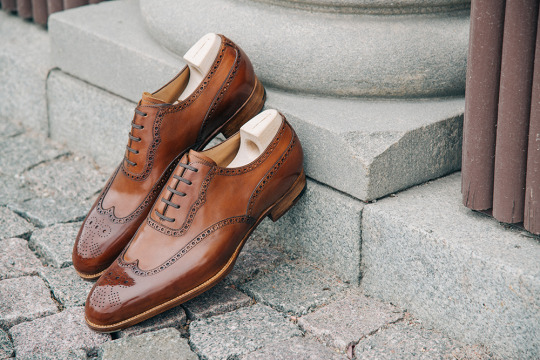
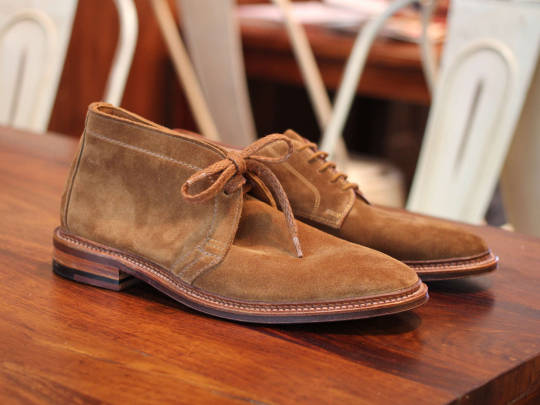
Suit jackets and sport coats aren’t the only things that come unstructured. For the miserably hot days we’ve been having lately, I’ve been enjoying my unlined shoes. Soft and slipper-like, they feel a little more comfortable and carefree when temperatures climb past the mid-eighties – even if you’re still sweating like a pig. 

To explain, most leather shoes come with a full leather sock liner built-in. That means two pieces of leather are joined to form the uppers – there’s the leather that faces the outside world, and the leather that touches your feet. By joining these two pieces together, you get something that’s a bit more structured and will hold its shape better. Without the lining, however, you get a softer, more comfortable shoe. Whereas most leather footwear needs a break-in period, unlined shoes feel like slippers on first wear. 

My favorite unlined shoes come from Alden. They have three main models: a chukka, a loafer, and a blucher. Like with neckties, when a company describes their footwear as unlined, they usually mean they’re lightly- or partially-lined. Alden’s loafers are lined at the back half of the shoe and at the toe – leaving only the vamp and front sides unlined. This gives their loafers an appreciable softness when worn, but they’re not nearly as soft as the company’s chukkas, which are almost completely unstructured. 

Keep reading
The Beauty of African Indigo

image


I had a project last year where I wanted to re-line a black leather jacket with an old piece of Japanese boro – a term used for heavily repaired, indigo-dyed peasant fabric that comes out of the island’s countryside. The project hasn’t gone so well. Although I found my boro (it was bought at Shibui), I haven’t found the right jacket. The original plan was to get a cafe racer from an old season by Junya Watanabe, but after ordering one direct from Japan, it was lost in the mail. So, the boro sits neatly folded in my closet, waiting for another jacket to arrive. 

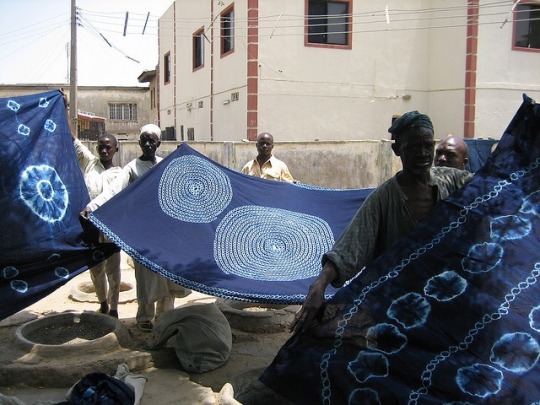
The process has gotten me interested in other textile traditions, however. Re-lining something such as an old cotton field jacket or a beat-up leather bomber seems like a nice way to (quietly) incorporate fabrics that might otherwise never get used in men’s clothing. One area of interest at the moment: African textiles – namely mud cloths and indigos, although since these traditions are so varied and intricate, I’ll only highlight the latter today. 


Keep reading

Dad’s Style (Sort Of)

image


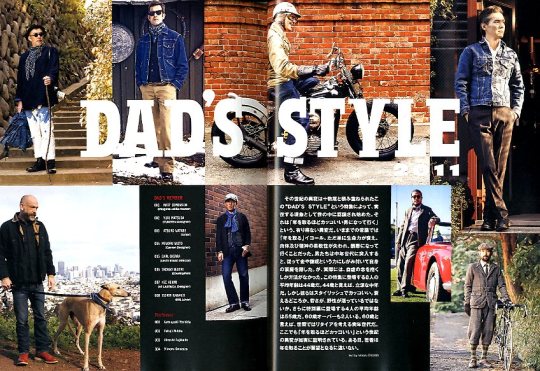
Is it too late for a Father’s Day post? Each year, Free & Easy dedicates an issue to what they call “Dad’s Style,” which is their way of referring to classic or traditional men’s clothing. Of course, when Free & Easy talks about classics, they mostly mean it in the hip sense. If your dad actually owns anything featured in this magazine, there’s a good chance you were conceived at Pitti Uomo. 

Still, previous issues have featured men such as Bruce Boyer and Christian Chensvold, both of whom have genuinely classic (and good) taste. I also like some of the things they photograph. There are the usual things that Japanese style editors fawn over, such as Brooks Brothers jackets and Alden shoes, to more unusual items, such as vintage bags and raincoats from Arnys and Invertere. I also really like those split-toes from JM Weston (misleadingly described below as “u-tips”). They look like Edward Green’s Dovers on steroids, and possibly just the thing to wear with heavy cavalry twill trousers.

Granted, even among the genuinely classic pieces, I don’t know how much of this really reflects “dad style.” But if the last few weeks of menswear sales are any indication, Father’s Day isn’t really aimed at fathers anyway.  

Keep reading

Swede Deal on Saint Crispin’s

image


There’s been a lot of excitement and speculation in the last few weeks, ever since Skoaktiebolaget announced that they’ll be bringing a new label into their store. Yesterday, they held a special event for the big reveal. Apparently, the new label will be … drum roll, please … Saint Crispin’s, the Eastern European maker of hand-welted, peg-waisted shoes. 

This is big news. Not just because we have another retailer for Saint Crispin’s, but because the exchange rate between the US Dollar and Swedish Krona is so good (well, for Americans anyway). At the moment, with VAT discounts, the starting price for Saint Crispin’s will be just north of $1,000. That’s a good $500-600 less than what you’d pay elsewhere (although, as always with ordering from abroad, some of those savings could be washed out by import taxes). 

The store currently carries nine in-stock models. There are some dandy options, such as the jade green austerity brogues, cloud grey wholecuts, and pair of “devil red” chukkas (those might require a bit of gusto to wear). Then there are some conservative pieces, such as these beautifully designed wingtips, finely shaped oxfords, and uniquely grained “Russian calf” split-toes (note, this is a printed calf, not the 200 year-old Russian leather that was recovered from a sunken brigantine). Since there’s no up-charge for basic custom orders, however, you can essentially order anything you want for the price of ready-to-wear. 

Keep reading

A Specialty Shop in Sweden

image


The landscape for high-end men’s clothing has changed a lot in the last hundred years. It’s slowly shifted from large, luxury department stores, such as Saks Fifth Avenue and Neiman Marcus, to smaller and more specialized boutiques, such as Self Edge and Leffot. Granted, any individual boutique will have smaller sales numbers than a larger operation, but few style enthusiasts I know shop at luxury chains anymore – even those as small as Barney’s. Everyone seems to prefer things that feel a bit more intimate, specialized, and niche. 

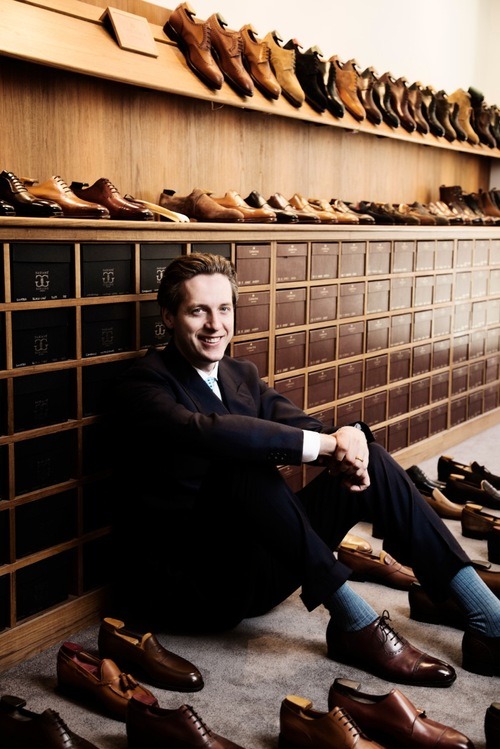
One specialty store I’ve been particularly impressed with is Skoaktiebolaget. A small, Scandinavian operation that focuses on footwear, it started only a few years ago in 2012. Still, in just three years, it’s managed to build an impressive roster of brands – Edward Green, Gaziano & Girling, Carmina, and Enzo Bonafè. No small feat, especially when you consider that Edward Green has been operating at full capacity for some time and is very selective about who they let carry their label.

Patrik Löf, the shop’s owner, tells me that he picks brands based on what he loves, as well as what each brings to the table. Carmina offers the best bang-for-the-buck in the premium segment, while Edward Green has some of the most iconic styles around. Enzo Bonafè also gives uniquely good value given their craftsmanship and flexible made-to-order program (which Patrik says gives “almost endless possibilities”). “They’re a small family-owned company in Bologna,” he says. “They specialize in hand welted shoes, which the Italians sometimes mischaracterize as hand welted Goodyear.” As readers know, short of going bespoke, it’s hard to find hand welted shoes these days – especially for less than $1,000. Most high-end shoes are constructed by machine – either with Goodyear welting or Blake stitching – even if they market themselves as “benchmade” or “handgrade.”

Keep reading

Hunters of Brora

image


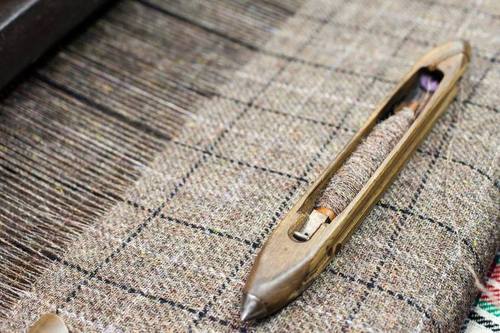
Some disappointing news today from Scotland. It seems Hunters of Brora has been sold to a ready-to-wear company, and that company will no longer be supplying fabrics to tailors or individual customers. Instead, all fabrics and archive books will be used exclusively for the ready-to-wear label. The sale marks and end to what’s been a turbulent time for the 114 year-old Hunters name. The company was sold in 2003 and the mill closed shortly thereafter. The retail side was also struggling for some time, but lived on for ten years thanks to the help of a family. 

At the moment, the remaining stock of tweed is being sold to anyone who’s interested (including non-trade customers, such as clients of bespoke tailors). Prices are discounted and negotiable, but you’ll have to contact Hunters for details. I bought a jacket’s length of the Kildary Blarmor Tweed, which has a mixture of birdseye and herringbone. My friend David loaned me some of Hunters’ books a few years ago and I thought that was one of the standouts. Sad to see it’ll no longer be produced for public purchase. 

(Many thanks to Mark for the correction on an earlier version of this article, which said that the Hunters mill will be closing soon, when in fact it’s been closed for some time). 

Keep reading

For Those Chilly Mornings

image


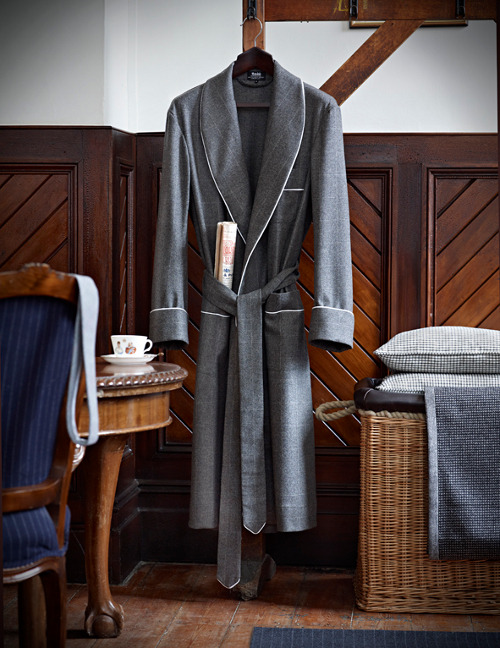
Of all the styles of classic men’s clothes to have slowly disappeared over the years, the dressing gown might be the easiest to pull off (both figuratively and literally). They’ve gone by the wayside, unfortunately, like most things involving tailoring. Replacing gowns are sweatpants and t-shirts, which I can confirm are not nearly as comfortable. If made well, a gown and a pair of pajamas are just about the best clothes you can wear at home.

I received my first gown last month. Made by Ascot Chang and modeled after something I saw at The Merchant Fox, it features a shawl collar, deep patch pockets, and contrast piping. The mid-grey windowpane flannel comes in at a 13/ 14oz weight, which feels perfect for this kind of thing – heavy enough to drape well, but not so heavy to feel overly warm. Getting out of my bedcovers in the morning has never felt better.

Although dressing gowns aren’t terribly common nowadays, you can still find them at a number of places. Some traditional menswear stores stock them, such as Ben SilverPaul Stuart, and O’Connell’s. There are also a number of good, traditional English makers, such as Turnbull & AsserEmma Willis, and Derek Rose (Mr. Porter carries all three labels, and often puts their gowns on sale, but stock seems low at the moment). Finally, The Merchant Fox carries some by Budd Shirtmakers, while A Suitable Wardrobe has a few versions from various shops around the world (this knockout silk piece was made by one of the more famous French tailoring houses).

If you have a shirtmaker, you can also get something made-to-measure. In this case, the cost of a custom garment isn’t too much more than something high-end and ready-to-wear. Some suggestions, based off of my experience with just this one:

Keep reading

The London Collections

image


January marks the beginning of a number of fashion tradeshows and runway presentations. The London Collections just concluded, and today is the start of Pitti Uomo. After that, there’s Milan’s Fashion Week, Bread & Butter, and a couple of events in NYC.

If you’re interested in following such shows, I find Vogue, StyleForum, the UK edition of GQ to be good sites to follow. The first has runway photos, while the other two will have editorials. The Instagram accounts for Nick Sullivan, Josh Peskowitz, and Eugene Tong are also good for random pictures here and there. Tommy Ton will be shooting street style photography for Style.com and GQ, while Journal of Style will document some of the more classic looks at Pitti. For funny (fake) coverage of Pitti, follow Voxsartoria’s Twitter account.

From the recent London Collections, here are a few presentations that caught my eye.

Keep reading

Mr. Porter Price Drops

image


A surprisingly early price drop just happened over at Mr. Porter. Select items have been discounted by up to 50%. There’s a lot of great stock left, although I imagine most of it will be cleared out by tomorrow morning.

Some notable finds:


image

Keep reading

Wear Your Rubbers

image


Funny how good shoes can make you welcome bad weather. It’s been drizzly here in the Bay Area, with heavier showers predicted for the not-to-distant future. Shell cordovan boots used to be my go-to rain shoes, but shell tends to spot with water, which requires some annoying upkeep (you can quickly brush them out with a horsehair brush, but it’s work). So instead, I’ve been wearing rubbers lately.

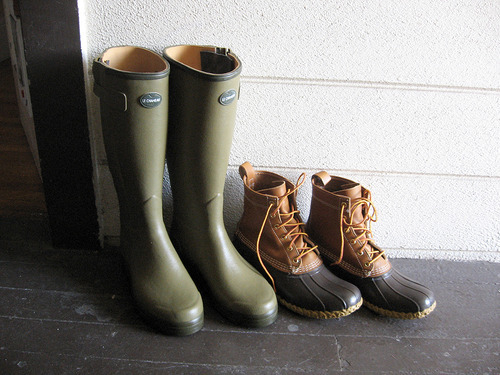
LL Bean’s duck boots are some of the best when it comes to rubber rain shoes. Excellently built and relatively low-priced, they’re backed by a lifetime satisfaction guarantee and – surprisingly – go well with a number of casual outfits. For more serious rain shoes, there are Wellington boots. Based off of leather Hessian boots, which come high and fit trim, these rubber boots are designed to keep the water out when you’re wading through bogs, going through tall grass, or walking across muddy ground.

Of course, few of us do farm work or hunt, so these are a bit overkill for city use. However, if you’re in heavier rain, a tall boot can help keep water from soaking up your hem and migrating to your calf. They’re also good for keeping debris and water from splashing onto your pants. Plus, I think they just look awesome. Arguably better with certain styles of raincoats than the more casual duck boot – and it’s always nice to have options.

Among wellies, I really like Le Chameau – a French brand that seems to spare no effort in reminding you that their boots are handmade (to the degree rubber boots can be handmade) and the preferred choice of European royalty. I don’t know if any of that matters to me, but they are handsome and come with more secure feeling treads. Their flagship model is the Chasseur, which comes lined in a variety of materials. The ones with Neoprene or shearling are insulating and warm, which is nice if you suffer from cold feet. The leather-lined one isn’t as warm, but it’s a bit more comfortable, which is great for long walks. 

Keep reading