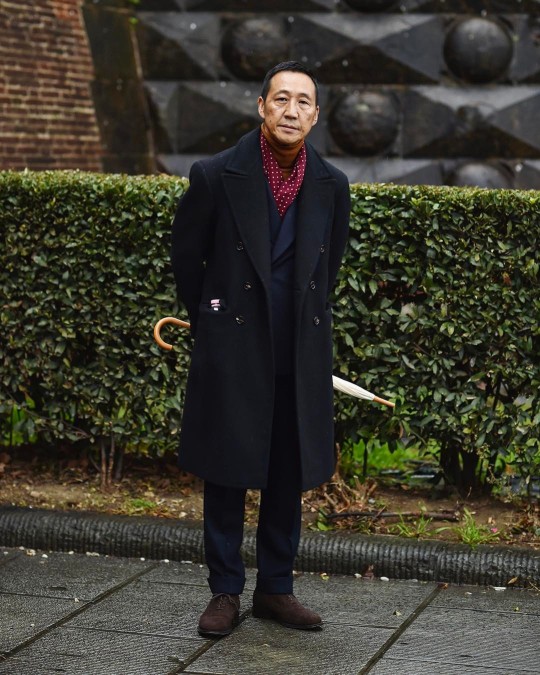
A Fisherman on Fifth Avenue

image


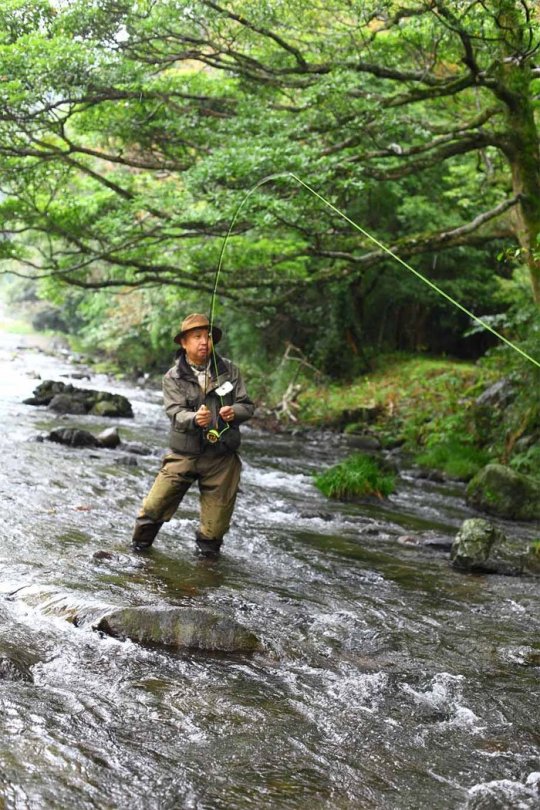
The Compleat Angler is the book everyone owns, but no one has read. It’s the third most reprinted work in the English language, just after the Bible and Shakespeare. Written by an English tailor named Izaak Walton, it’s ostensibly about fishing, but fishing is just the hook to Walton’s deeper and more contemplative  mediations on all things pastoral. Between his practical instructions on how to be a better fisherman, Walton interleaved poems, song lyrics, illustrations, cooking recipes, and other diversions about nature. He believed that fishing was at once a sport, a social activity, and a spiritual experience – and by connecting with it, we could become better people. 

The thing to know about The Compleat Angler is that it was written during a time of tremendous upheaval. England was in the middle of its civil war; Oliver Cromwell had just executed the king; and the country was trying to set up its first Commonwealth. Walton, a staunch monarchist and devout Anglican, felt displaced, so he retreated to the countryside and sought refuge in fishing. He dreamed of the “Brotherhood of the Angle,” a group where men could set aside their political differences and unite through their shared appreciation of nature. This was transcendentalism before transcendentalism; a rejection of Hobbes’ Leviathan. It was a modest proposal that fishing isn’t really about catching fish, it’s about finding community and peace. As Walton puts it, to “go a-Angling” is to “study to be quiet.” One of my favorite passages from the book reads:

And for you that have heard many grave, serious men pity Anglers; let me tell you, Sir, there be many men that are by others taken to be serious and grave men, whom we condemn and pity. Men that are taken to be grave, because nature hath made them of a sour complexion; money-getting men, men that spend all their time, first in getting, and next, in anxious care to keep it; men that are condemned to be rich, and then always busy or discontented: for these poor rich-men, we Anglers pity them perfectly, and stand in no need to borrow their thoughts to think ourselves so happy. No, no, Sir, we enjoy a contentedness above the reach of such dispositions […]

Keep reading
Following Hardy Amies’ Advice

image


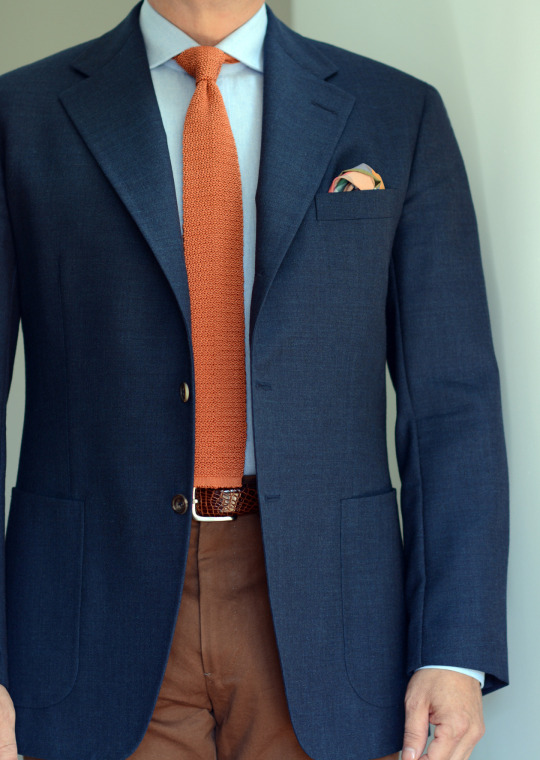
Hardy Amies, the famed British designer who served as Queen Elizabeth II’s official dressmaker, loved to give dictums on how people should dress. In his 1964 book The ABC of Men’s Fashion, he declared men “should always buy the most expensive belt possible.” I suspect, however, this was because his eponymous label was selling expensive leather dress belts at the time. Three years before the book’s publishing, Amies launched his first full line of menswear. 

His logic was reasonable though. A well-made dress belt can last a long time, sometimes even decades. It’s often seen when your jacket is open, and more so when it’s off. Plus, in today’s world – which favors plain front, low sitting trousers – a good outfit cries out for some sort of belted rigging, as opposed to higher-waisted trousers that are designed for suspenders or side tabs. 

I’ve wanted a dark brown alligator belt for years, having fallen in love with them after seeing one on a tailor in Naples. When we met for lunch, he was wearing a soft-shouldered, olive checked sport coat and slightly tapered, gray tropical wool trousers, but it was the textured belt that literally and figuratively pulled everything together – a richly colored, dark brown alligator piece that gave the outfit some personality. Jesse at Put This On once described this as having “a point of distinction,” a term for details that elevate a prosaic outfit into something more stylish. “It’s easy to pile wild choice on top of wild choice, or conversely to make nothing but down-the-middle clothing decisions,” he writes. “To choose to demonstrate understated mastery and nonetheless show distinction is much more difficult.”

Keep reading

Clothes, Food, and Marol

image


I’ve always thought clothing should be written about like food, rather than technical equipment – less stitch count, more mouthfeel. A few weeks ago, I was having drinks with a friend, who was telling me about a dinner he had at a local Michelin star restaurant. A multi-course meal there runs $750 per person. Or in his case, $1,500 for him and his wife. On the menu? Avocado toast, supposedly the reason why Millennials can’t afford to buy homes (OK, maybe true here). 

“So, how was the toast?,” I asked. My friend shrugged. “Pretty damn good – the best I’ve had. But, you know, it’s avocado toast.”

That’s about the best I can come up with for Marol’s new collaborative shirts with Bruce Boyer, which cost a dizzying $585. Marol is an old, Italian shirt factory based on Bologna, having started in the late 1950s. Recently, the company was sold to new owners, as the current owners don’t have someone in the family for succession (as would be typical in Italian businesses). For much of their history, Marol made their way by producing private-label, finely tailored shirts for top-end companies. Under their new management, however, they’re starting to branch out and develop their own brand. 

Keep reading

Five Relatable Style Lessons

image


Even with the explosion of online media nowadays for men’s clothing, it can be a challenge to find good, relatable content for how to wear a coat-and-tie. Much of what’s celebrated online is too aggressively styled for most offices – tightly cut suits, heavily patterned fabrics, and unusual accessories. Great for Instagram and menswear blogs, but less so for the day-to-day grind of most people’s lives. 

Which is why it was such a pleasure for me to talk with Mr. Kazuto Yamaki. He’s the CEO of Sigma, a Japanese manufacturer of camera lenses, flashes, and other photographic accessories. He’s also an exceptionally well-dressed public figure, but so far removed from the world of menswear blogs that I had to try a few times to convince him that I was not, in fact, joking when I said I wanted to interview him about how he dresses. 

Much of what Mr. Yamaki wears will be familiar to anyone who reads this site – softly tailored Italian-influenced suits and sport coats, paired with tastefully designed ties and solid colored dress shirts. Where I think he makes a distinction is that everything looks relatable, something you can wear to most offices today. It’s thoughtfully considered without being obsessive; informed without nit picking. And in being so, it looks more naturally put together. 

Keep reading

Barbour x Engineered Garments Preview

image


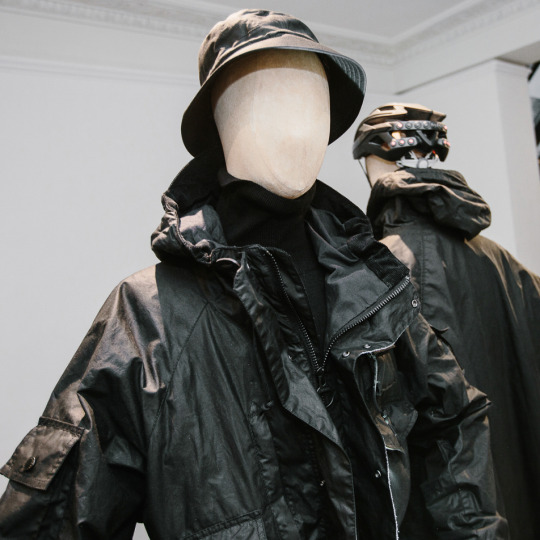
Barbour holds a special place in my heart, but from their expansive collection, the only pieces I wear are the Bedale and Beaufort. The first is a waxed cotton jacket with ribbed storm cuffs, which is great for layering over sweaters; the second is similar, but a little longer so you can comfortably wear it over sport coats. This fall, however, they’re introducing a special collaboration with Daiki Suzuki of Engineered Garments and I couldn’t be more excited. The collection was recently unveiled this past Saturday at London Men’s Fashion Week, although the jackets won’t be available for sale until fall. If you couldn’t wait for last year to be over, this collection is a good reason to pine for the end of this one. 

Each jacket is made from Barbour’s signature waxed cottons, in neutral colors such as olive, black, and navy. Waxed cotton, as many know, is one of the more traditional forms of water-resistant fabrics, but unlike others, it develops a unique patina over time. Before British sportsmen wore the material to cover themselves from the rain, British sailors covered their capes in grease in order to protect themselves from the sea’s sprays. 

Daiki Suzuki says Barbour reached out to him for the collaboration, and given how much he already draws from hunting clothes, the partnership was natural. “I personally love Barbour and hold in my collection a Bedale, Beaufort, International, Cowen Commando and vintage reissued cape given to me by WP Lavori,” he said. “One of the main elements of Engineered Garments is its classic military styling. It was a challenge to think about how to go about working with such an iconic brand and one that I hold dearly." 

Keep reading

A Bit About Tweed

image


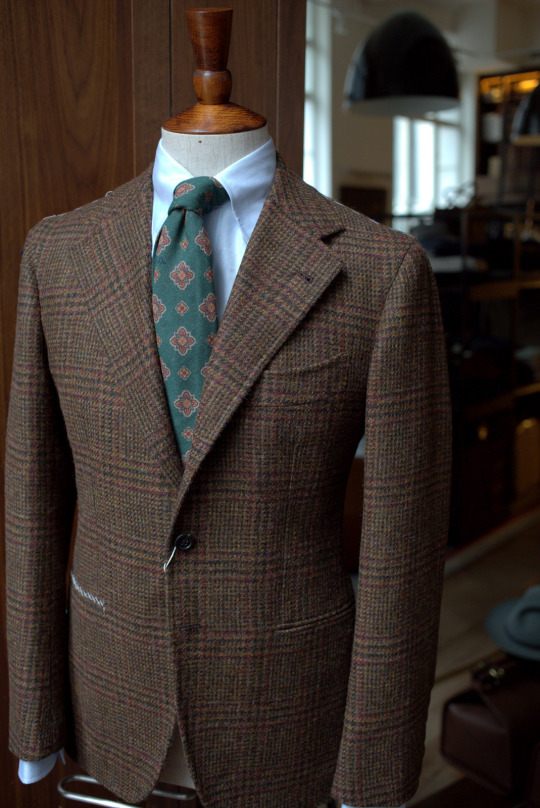
There are two often-recited stories for how tweed got its name. The first is that it was originally a misreading of tweel – an old Scottish word for twill – which was supposedly written on an invoice somewhere. How that misreading eventually made it into the more general vernacular, nobody knows, but it’s probably the pithiness of the story that counts. The other guess is that the word tweed refers to how the cloth originally came from the valley of the River Tweed. That, to me, seems like the more likely reason. Many of the ancient names we have for fabrics are derived from the places where the material was often made – cashmere for Kashmir (India), muslin for Mosul (Iraq), worsted for Worstead (England), cambric for Cambrai (France), and the endlessly cited denim for de Nimes (also France). In many ways, the names we have for fabrics today tell a story about earlier waves of globalization. 

For all the histories we have about tweed, however, few people really know what defines the cloth. It’s one of those “you know it, when you see it” type materials. Prickly in texture and earthy in color, it’s the fabric of fall and winter. It somehow manages to be one of the least and most comfortable materials you can wear. Least in the sense that it’s often too scratchy and rough to be worn against bare skin, which is why it feels and looks better when layered over thicker dress shirts – oxford cloth button downs or brushed cotton flannels. Tweed trousers, if you have occasion to wear them, often need to be fully lined. At the same time, tweed has an undeniably comforting quality to it. It’s hardy and reliable; sturdy and flattering. In a genuinely classic cut, a tweed jacket is something you can wear for the rest of your life. 

The best definition of tweed is a kind of negative definition – a way to understand to cloth by what it is not, rather than what it is. Tweed is one of the oldest, if not the oldest, of British textiles. Before the advent of modern loom technology, European fabrics were stiff and heavy. City fabrics (such as those that would be worn in London) were naturally more refined than country cloths, but they were still more substantial than the Super 100s you’ll find in stores today. Scottish fabrics were rougher still. After the union of the two kingdoms, an economic board was set up to organize and encourage the cottage industries around Scotland. Among those were tweed weavers, who for centuries, made workwear fabrics designed for heavy use out on the countryside.

Keep reading

On Hating Cheap Things

image


A few years ago, British writer Alain de Botton penned an essay on why we hate cheap things. His point was simple: we don’t think we’re snobs, but we often behave like we are. We conflate worth with price and assume cheap things can’t be any good – after all, there must be a reason why they’re cheap. And in doing so, we miss many of the more common pleasures surrounding us. 

His essay starts with the story of the pineapple. Once a rare and exotic fruit, pineapples were difficult to cultivate and even more difficult to transport. In the 17th century, a single pineapple would cost about $7,500 in today’s dollars. Only royalty could afford to eat it. Russia’s Catherine the Great was a big fan, as was Charles II of England. Grand monuments and buildings were erected in its honor; poems were written about its flavor. If you were so lucky to get a pineapple, you’d put it on your mantle until it rotted and fell apart. Pineapples were a luxury, even a status symbol. 

Then, at the end of the 19th century, two things happened. First, large commercial plantations were set up closer to the West, such as in Hawaii. Second, the advent of steam ship technology dramatically lowered transportation costs. Today, you can get a pineapple for less than $5 in almost any supermarket, sometimes available in bite-sized pieces contained in see-through boxes. There’s no glamour to pineapples anymore, but it’s not because the fruit has changed – only our attitude towards it. 

Keep reading

Eight Favorite Black Friday Sales

image


Black Friday sales are upon us. Every year, I roundup some of my favorites both here and at Put This On (we’ll have a comprehensive list of every worthwhile sale later this week, on Friday). Some of my favorite stores, however, are getting a jump on things. Many have started their Black Friday promotions already, with discounts going as deep as 50% off. From Mr. Porter to No Man Walks Alone to East Dane, here are eight early-bird sales I think are pretty great. 

Mr. Porter: Up to 30% Off Select Items

Mr. Porter’s massive selection has put them in everyone’s orbit. Whether you favor classic tailored clothing, Japanese workwear, or oversized, minimalist contemporary garb, Mr. Porter likely carries more than a handful of brands for you. 

Keep reading

Knitwear is Better Textured

image

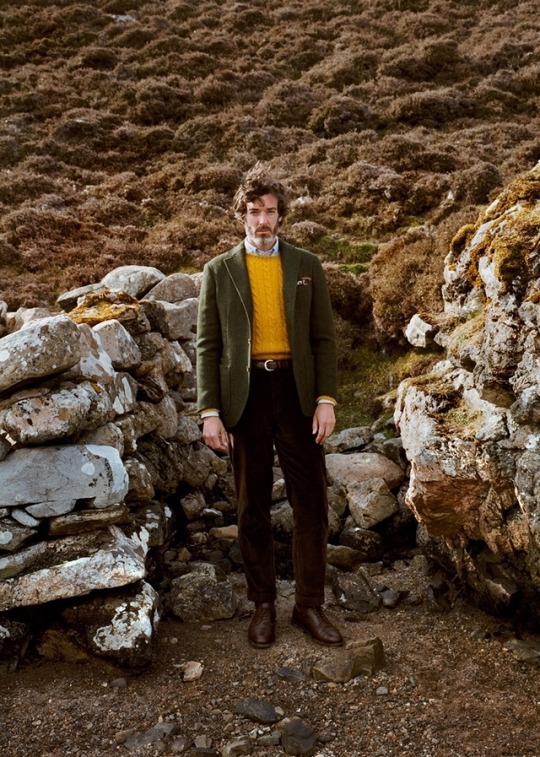
The explosion of sportswear and designer clothing after the Second World War shattered dress norms. Whereas men in the pre-war era were united by their allegiance to the coat and tie, fashion became a lot more diverse and divergent after the 1950s. Prole gear such as chambray shirts, five-pocket jeans, and white tees became popular off the worksite precisely because they represented something different – something more rebellious – to the more formal buttoned-down and strait-laced look of the establishment. Bruce Boyer has a nice essay about it in his book Rebel Style

To the degree there’s still a male uniform in the United States, it’s the dress shirt with dark jeans and a smooth merino knit. It’s the final outfit for men who don’t wear tailored jackets – the thing they can use to go to churches, offices, and other conservative settings without fear of drawing unwanted attention. It’s the thing your mother wanted you to wear when it came time to have your yearbook portrait taken. And likely what most men will be wearing next month at holiday parties.

The uniform persists for a reason. Shallow v-necks with dress collars underneath frame the face in a way that t-shirts can’t, and the combination gives a vague sense of formality without actually being formal. The look is nearly failsafe, but it’s also devoid of personality. A finely knit sweater in plain navy or gray is about as good of a candidate as any for a menswear staple, but I find I rarely wear mine. 

Keep reading

Outerwear I’m Excited About

image


If there was ever a reason to care about global warming – aside from total death of all living things on this planet – our ability to wear cool jackets should be it. As each year gets warmer and warmer, it feels like the opportunity to wear our favorite fall and winter clothes is getting shorter and shorter. It’s been unseasonably warm these past few months, but luckily the temperatures just dropped low enough to break out our favorite outerwear. And let’s be honest. Men’s style revolves around outerwear. 

Menswear blogs this time of year are often filled with lists about seasonal essentials – the perfect pea coat, the ideal trench. All of which can be great, but also feel a bit too generic to be personal. So while this isn’t a list of  menswear essentials, here’s a list of eight outerwear styles that have me excited this year. Hopefully you can find something here that also works for you. 


Keep reading