The Liberty Cap

image

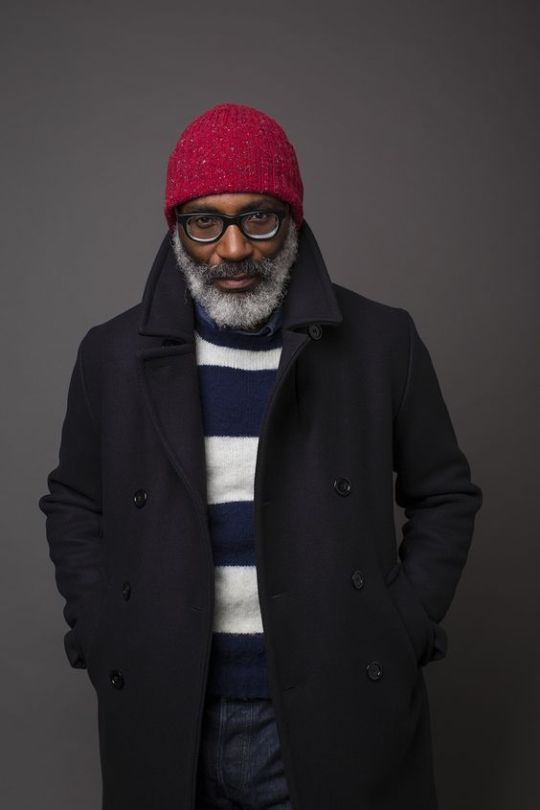
A lot has been written about the death of suits, along with the accompanying necktie, but the first piece of traditional men’s dress to have disappeared is the hat. It’s been said that men stopped wearing hats en masse when President John F. Kennedy declined to wear one at his inauguration. Neil Steinberg, I think, has a more nuanced and convincing account. In his book Hatless Jack, he traces the slow disappearance of men’s headwear back to the late 1800s. Changing social norms and technology probably had more to do with it. Plus, after the Second World War, hats were increasingly seen as stodgy and conformist. In an age when informality is equated with authenticity, the fedora and its cousins can feel phony. 

Costume designers, however, continue to use hats to great effect. A hat can be the quickest way to say something about a character, communicating something just below the surface about how the person feels and thinks. Earlier this month, Apple TV+ debuted their new eight-part mini-series, Little America, which puts on-screen the moving portraits of real-life immigrants. These stories, which were collected by Epic Magazine, are about the essential goodness of America’s promise. “Everyone here came from somewhere else,” Epic’s editors write. “Even Native Americans crossed the Bering Strait at some point. This is the basic American idea — an identity open to all — but it can be easy to forget from inside. And that’s when politics can turn ugly, as it has recently, with our political narrative becoming a story of blame and fear. Little America is meant to counter that narrative with a fuller portrait of our most recent arrivals." 

In an episode titled "The Cowboy,” Conphidance plays the Nigerian graduate student Iwegbuna Ikeji, who came to Oklahoma during the early 1980s to study economics. Ikeji’s open enthusiasm and frank dislike for certain parts of American culture put him at odds with his fellow students, as well as a snarky tutor. He doesn’t understand why Americans privilege the individual over the community, and some of the tensions between him and his peers are aggravated by racism, even if not totally motivated by it. 

Keep reading

The Best End-Of-Season Sales

image


This will probably be the last sales post for the season. After this, there will be a few price drops here and there, but sizing will start to get scant, and the selection narrow. At the moment, however, there are still some excellent end-of-season promotions. Here are seven I’ve been looking at, along with choice picks from each section.

No Man Walks Alone: Up to 40% Off

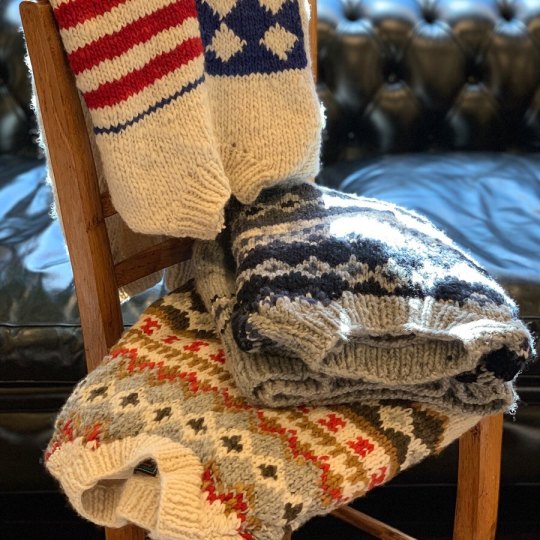
No Man Walks Alone, a sponsor on this site, just started their end-of-season promotion this morning, where you can find select items discounted by as much as 40% off. This season, I bought one of their Chamula sweaters, which are hand-knitted in Mexico from plush merino yarns. They’re stretchy and somewhat loosely knitted, but supremely comfortable and have an attractive, slightly uneven texture. Available in Fair Isle and an American flag motif. Just size up, as these run small.

Keep reading

A Catholic Taste in Clothing

image


It’s hard to believe that it took until May 1939, the spring before the start of the Second World War, for Vogue to publish its first cover of a fashionable woman in trousers. We know the image still had the power to shock because the editors assuaged anxious readers by saying that, while pants were considered masculine at the time, they can still be worn in conventionally feminine ways. “If people accuse you of aping men, take no notice,” they wrote encouragingly. “Our new slacks are irreproachably masculine in their tailoring, but women have made them entirely their own by the colors in which they order them, and the accessories they add.” In the photo, the woman was shown wearing a pair of ochre-colored sharkskin trousers with delicate jewelry, Moroccan slippers, and a scarlet jersey shirt with a plunging neckline. A silk scarf was wrapped around her head like a turban, with a turquoise encrusted pin holding everything together.

Since that cover was published, women have adopted nearly every masculine symbol into their wardrobe, from blue jeans to bomber jackets. But examples of men imitating women’s dress are rare. When they do, they’ll counter criticism by citing men’s earlier use of the style. A belted robe coat isn’t something your aunt would wear, but rather a reference to the earliest iteration of a polo coat, as seen on the strong-shouldered Richard Gere. Cuban heeled Chelsea boots aren’t so much high-heeled as they are Beatles-esque. And when long-haired youths were criticized for their appearance in the late 1960s, they pointed to how Jesus is often depicted with shoulder-length locks.

Kenji Kaga, the silver fox behind Tie Your Tie, has no problem telling you that he’s inspired by femininity — and he’ll do so without qualification. When I talked to him last month, I didn’t get the impression that he was saying so for political reasons. Instead, as an aesthete, it didn’t occur to him why he should do otherwise. “Most ties today come in stripes or small geometrics, such as the ones you might find at E. Marinella or Drake’s,” Kaga tells me. “Ours are inspired by vintage designs from the turn of the century until about the 1930s. I’m most inspired by French design, which I like for its femininity. The lines are more fluid and romantic; the design less symmetrical. When we color our collections, I also take inspiration from women’s collections, such as Saint Laurent, Celine, and Valentino. Very old designs, but in new colors. This is our style.”

Keep reading

The Return of Fun Socks

image


There’s a small shop in Rome called Gammarelli that’s tucked away behind the Pantheon. At first glance, it may not seem different from the many family-owned clothiers scattered throughout Italy. The small, rectangular space is fitted with glass counters and glossy wooden shelves. On the main floor, there are bolts of cloth stacked neatly on top of each other for customers to peruse. Towards the back of the shop, an old, wooden staircase spirals up to the workroom, where tailors labor away on benched tables peppered with pincushions and pieces of chalk. The shop’s head tailor can sometimes be seen here running up and down between the floors for fittings, while a tall, bearded man in a tweed sport coat on the main floor scribbles down orders on a notepad. But between the worsted wools and crisp cotton wovens, you’ll also see deep purple robes, ceremonial swords, and feather-trimmed hats. On the signage outside the shop, below the name Gammarelli, the words read: Sartoria Per Ecclesiastici, or “clerical outfitters.”

If there’s such a thing as timelessness in dress, you can find it here at Ditta Annibale Gammarelli, purveyors of ecclesiastical clothing since 1798. For over 200 years, whenever a new pope is elected, the shop’s tailors and managers rush out the Vatican to meet the supreme pontiff in a chamber called the Room of Tears. They present to him a custom, white papal cassock, cut to a floor-brushing size, and made with some thirty handsewn buttonholes. The Pope slips into his Gammarelli garb and dons the traditional papal accessories: an ermine-trimmed red velvet shoulder cape known as a mozzetta; a white skullcap known as a zucchetto; and a pair of red leather papal shoes. He then steps out on the balcony of St. Peter’s to greet the faithful. 

Over the years, after this initial ceremony, each Pope has accessorized his dress slightly differently. John Paul II ditched the red slippers in favor of cordovan colored walking shoes made in his native Poland. When Benedict XVI restored the use of swanky bright red slippers for outdoor attire, Esquire voted him “Accessorizer of the Year.” That prompted the Vatican’s official daily paper to issue the stern reply: “The Holy Father is not dressed by Prada, but by Christ.”

Keep reading

Mr. Porter’s Sale Starts

image


Mr. Porter’s massive selection puts them in everyone’s orbit. Whether you favor classic tailored clothing, Japanese workwear, or oversized, minimalist contemporary garb, Mr. Porter likely carries more than a handful of brands for you.

Today, Mr. Porter started their Black Friday promotion, where you can take up to 30% off select items. Inis Meain’s sweaters are expensive, even with the discount, but absolutely exquisite and a joy to wear. Engineered GarmentsBlue Blue Japan, and Kapital are personal favorites for workwear; SNS Herning is great textured knitwear you can layer under heavy coats (be sure to size up). 

Given the scope and size of their inventory, your best bet is to filter by sizing and brands to see what you like. That said, here are ten items that I think are worth highlighting. 

Keep reading

Nine Stellar Black Friday Sales

image


I remember when Black Friday was about waking up early to try to beat the crowds, only to wind up standing in line and wondering whether the savings are worth the trouble. Thankfully, nowadays, everything is held online, which means you can snag the best deals without ever having to leave your couch. But still, it helps to have some intel.

Every year at Put This On, I roundup Black Friday sales for our readers. The list, which comes out on Friday, is massive and often reaches into the hundreds of stores. For those who want something more manageable, I also list some of my favorites here. Since some stores have already started their promotions, here are nine early-bird specials that I think are notable. More will come as the week moves on and new deals emerge. 


Keep reading

Eddie Bauer’s Legendary Parkas

image


When it comes to American style, few companies tower over our history like Brooks Brothers. After all, it was out of their Manhattan store where many Americans first bought their oxford button-downs, polo coats, penny and tassel loafers, Shetland sweaters, bleeding madras, and natural shouldered suits. Brooks Brothers figures so strongly into our cultural identity, they even shaped how we discuss clothing.

The sack suit, for example, is not called so because it fits like a sack. Instead, it’s a tailoring term that Brooks Brothers picked up in 1901 to advertise their “No. 1 Sack Suit.” During the Victorian era, the term sack — sometimes spelled sac or saque — referred to how the garment is made with two relatively straight back panels, rather than the four curved pieces that shape the back of a frock coat, morning coat, or tailcoat. Brooks Brothers followed in that utilitarian tradition when they made their first-ever mass-produced item for men, which was first worn by store clerks before it made it into corporate boardrooms. Brooks Brothers’ No. 1 Sack Suit carried men from the turn of the 20th century into the “jazz clubs of the Roaring Twenties, through the dark days of the Great Depression, on to college campuses in booming postwar America.” Consequently, the suit’s name also became shorthand for Ivy Style. Technically, all suits are a sack cut, but a sack suit refers to a particular iteration made famous by this New York clothier.

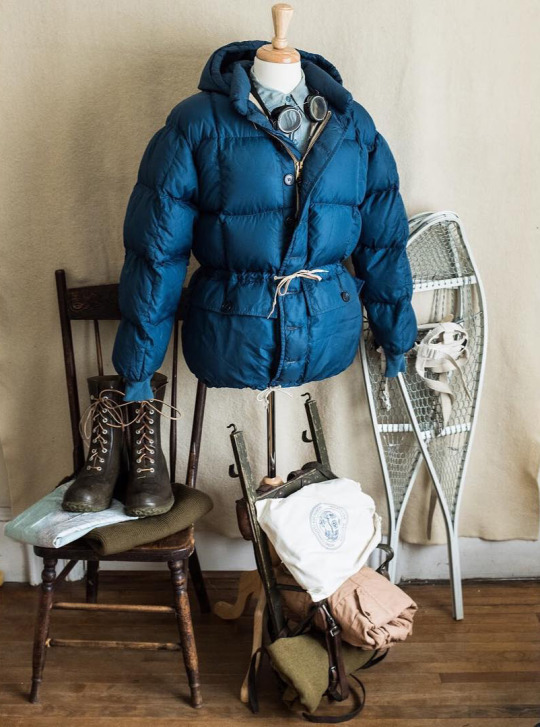
When it comes to a more casual style, however, many of the more influential companies radiated from up-and-down the West coast. From Levi’s, we get five-pocket jeans and much of American workwear. Lee and Wrangler were to Levi’s what Ivy shops such as J. Press and Chipp were to Brooks. Later came sneakers from Nike, sportswear from Patagonia, and the dream of a leisurely, forever young, California lifestyle from brands such as PacSun, Vans, and Stussy. The other giant is Eddie Bauer, which is now sadly a shell of its former self. For nearly two generations of Americans, however, this Seattle-based company was one of the best sources for down-filled parkas. But it was an accident of history that it was ever American at all.

Keep reading

Notes on Camping and Fashion

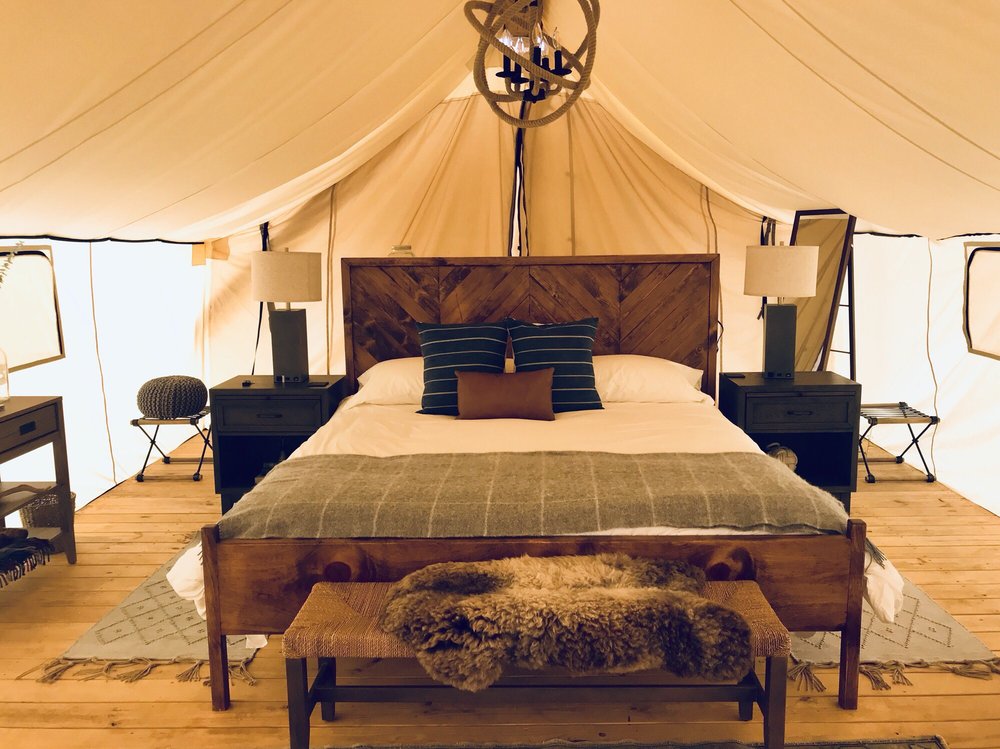
On an island in the New York Harbor, a quick ferry ride from downtown Manhattan, you can spend a night in a tent while enjoying an unparalleled view of Lady Liberty. The experience is hosted by Collective Governors Island, one of the many glamping destinations popping up across America. Glamping, which is a portmanteau of glamour and camping, is about “roughing it,” but with the modern amenities of a luxury hotel — a real bed, plush furnishings, stocked minibars, massage tables, and attending stewards. Such experiences have been around since the early 20th-century with African wildlife safaris, but today’s glamping retreats offer something local and democratic.

The Yelp reviews for Collective Governors Island are nothing short of hilarious. The campground is described as a “soccer field” and “dirt-filled.” One reviewer complained that there aren’t enough planned activities aside from movie night and s'mores. Another says the island is too quiet. More than a few say that sleeping under the stars — no matter how romantic the idea — means you have to suffer under a blanket of heat and humidity. This is because, well, the Northern Hemisphere tilts towards the sun in the summertime, and sleeping in a tent means it’ll be hot. My favorite is the reviewer who complained there are bugs and wished there was a kiddie pool. The most sensible person wrote: “Some of these reviews are a bit ridiculous. I mean, it’s CAMPING after all.”

Then there are the critics on the other side of the aisle. Sportsmen, hikers, and outdoor purists often see glamping as a posh and phony version of the real thing. Why pretend you’re reconnecting with nature when these RRL-like set-ups are often better than your actual home? Glamping is frequently described as inauthentic, but that raises the question: what is the most authentic version of camping?

Keep reading

Touched By A Feeling

image


Our emotional associations with texture are arguably innate and perhaps even universal. In an article published in Textile: The Journal of Cloth and Culture, Hilary Davidson examined the fabrics people are buried in. What is the last thing someone ever wears, and who decides what emotions those garments embody? Davidson analyzed excavation findings from British cemetery sites, where the bodies of poor mid-19th century Londoners were often laid to rest. “The choice of interred textiles and garments — such as a satin baby’s bonnet, pinned silk ribbons, and a false waistcoat— their qualities and construction all bespeak emotions around pride, dignity, religious feeling, tenderness, and socially codified grief,” she writes. “Clothing fragments become a substitute fleshliness as the bodily tissue they cover wears away, the last traces of the invested, materialized emotions surrounding death.” The softness of some of those garments was also presumably meant to bring the dead some eternal comfort.

Such associations between texture and emotion mostly follow a predictable pattern. We like things that are soft, silky, and smooth; we dislike things that are sharp, cold, and jagged. There’s a reason why challenging days are described as “hard” and “rough,” while sweet moments make you feel “warm and fuzzy.” One study published in Acta Psychologica found a relationship between body temperature and feelings of exclusion. When people feel socially excluded, the mere act of holding a warm beverage can make them feel better. 

Similarly, in a series of psychological experiments, University of Michigan professor Joshua Ackerman found our thinking can be affected by the physical things we handle. “These influences are not trivial – they can sway how people react in important ways, including how much money they part with, how cooperative they are with strangers, or how they judge an interview candidate,” Ed Yong wrote of the study in Discover. “Weight is linked to importance, so that people carrying heavy objects deem interview candidates as more serious and social problems as more pressing. Texture is linked to difficulty and harshness. Touching rough sandpaper makes social interactions seem more adversarial, while smooth wood makes them seem friendlier. Finally, hardness is associated with rigidity and stability. When sitting on a hard chair, negotiators take tougher stances, but if they sit on a soft one instead, they become more flexible.”

Keep reading

The Other Kind of Slip-On

image


In his book Gentleman, Bernhard Roetzel opens his chapter on overcoats with an amusing observation about dress coat culture. Superficially, outerwear is designed to keep us warm and protected from the elements. But even in temperate climates, overcoats figure into people’s wardrobes because people feel a need to put things on and take them off. Dress coats are part of the language of making an entrance, a gesture that’s first communicated through old films and TV shows. There’s something romantic about shuffling a coat off your shoulders before you sit down at a bar or restaurant. 

“By putting on his overcoat, a man indicates his intention to leave. By taking it off, he indicates that he has arrived,” Roetzel writes. “Only when he has been relieved of his overcoat does he begin to make his entrance. But the man who arrives without taking off his overcoat is signaling reserve, distrust, or just indecision. ‘Later the whole crowd went to a bar, where at first everybody stood around in the overcoats …’ wrote Max Frisch in Gantenbein (also known as A WIlderness of Mirrors), outlining in a few words a situation that is as yet unresolved.”

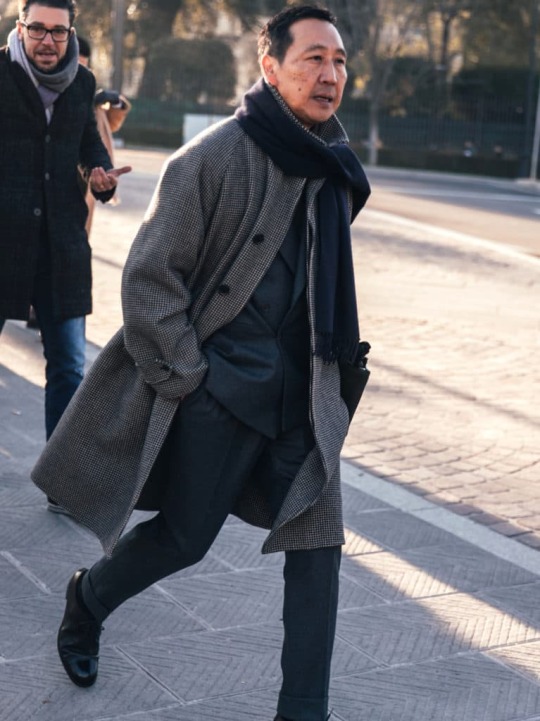
Perhaps that’s why I find raglan overcoats so appealing. In my mind, they’re like a modern version of a cape, the most dramatic of entrance clothing. I can imagine myself curling a coat’s edge between my fingers and palm, then swirling the coat behind me before it settles cleanly on my shoulders. Naturally, you’ll need to ask friends and family members to stand back, so the swirling cape — or I mean coat — doesn’t hit them in the face. If there are enemies nearby, however, give them no warning. 

Keep reading