A Literally Sick Outfit

image


Winter style is often presented as sled riding through some New England forest, or enjoying a hearth redolent of roasting Indian corn, but reality is often less romantic. This time of year is flu season, which means for many people, winter at some point will be about Robitussin, hot tea, blankets, and cough drops. I’ve been holed up at home for the past few days trying to fight off a stubborn cold, stay warm, and sleep through the night despite fits of coughing. 

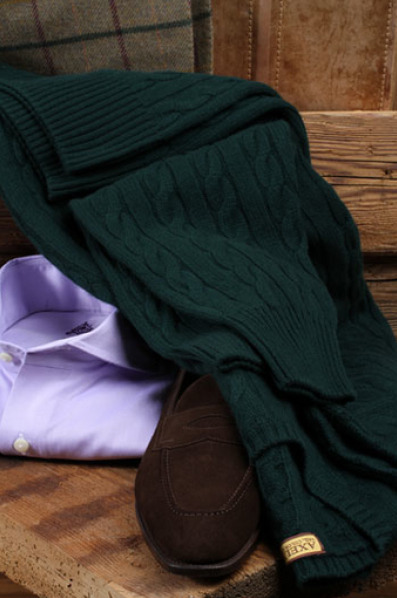
Nothing will cure a cold except time, but there are things you can do to make yourself feel better. The Chinese have an herbal remedy called Nin Jiom Pei Pa Koa, which does wonders for a sore throat, even if it tastes awful (I drink hot water mixed with a scoop of honey instead). Nasal sprays can help manage congestion, although you don’t want to use them for more than three days in a row. And wearing good loungewear feels so much better than laying around in sweatpants and a t-shirt. 

Years ago, Jacob Gallagher at The Wall Street Journal wrote a piece exploring whether men still wear pajamas. There aren’t many, and among those who do, some are apparently trying to sell others a set (Andy Spade, one of the founders behind Sleepy Jones, was quoted). The reasons given for PJs were predictable – they confer a better sense of self-respect when you’re at home (I have none to begin with, so that matters little), and they allow you to look presentable should an unexpected guest drop by (I have no social life, so that matters even less). 

Keep reading
No Man Walks Alone Anniversary Sale

image


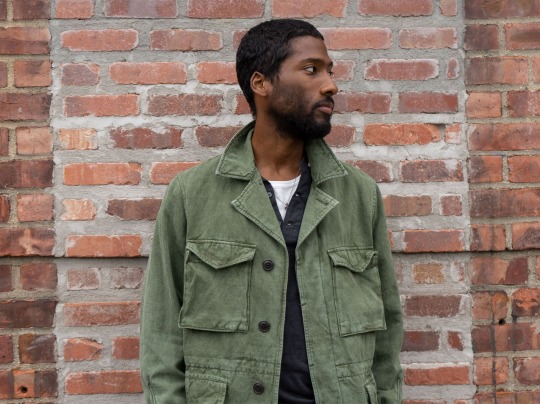
No Man Walks Alone is an advertiser on this site, but also one of my favorite stores. In the last ten years, the average menswear shopper has become a lot more sophisticated – they know just as much about Neapolitan tailoring as they do about directional casualwear. No Man Walks Alone serves that kind of customer. They have classic suits and sport coats, but also interesting clothes for the weekend. It’s one of the few shops where a guy can pick up a wardrobe for almost any part of his life. 

This weekend marks their fifth year of doing business, and to celebrate, they’re holding a sale. For the next five days, you can take 20% off any order with the checkout code 5YEAR. The code even works on already-discounted sale items. Here are ten things I think are particularly worth a look:


Keep reading

Tragedy of the Common Cashmere


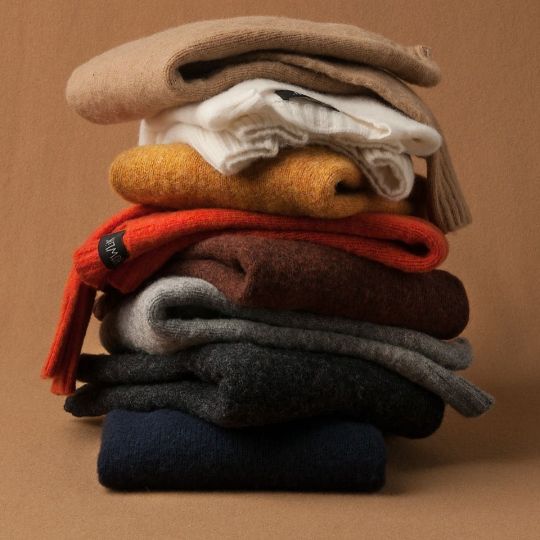
If you were to shop for a cashmere sweater today, you’d be buried in options. Over at Mr. Porter, you can find nearly 250 models, ranging from chalky pastel turtlenecks to NBA intarsias selling for about $1,750. More affordably, J. Crew’s “Everyday Cashmere” collection retails for just under $100, and it comes in Kelly-Moore-sounding colors, such as “rustic amber” (which is orange) and “safari fatigue” (which is green). You can even find cashmere pullovers nowadays at Costco. They’re located somewhere between the aisles for bulk Cheerios and 98″ plasma screen TVs. 

The newest name in cashmere is Naadam, a young upstart promising to deliver luxury sweaters for less than what most stores pay wholesale. They have a over a dozen videos on YouTube, which charmingly pitch their story as two young guys from New York City who made it out to the hinterlands of Mongolia. There, they get stranded somewhere outside of the nation’s capital, ride old motorcycles, and drink goat-milk vodka with nomads. A year later, they return to the Gobi desert with $2.5 million dollars in hand and the bold idea to buy cashmere direct from herders, so they can cut out the middlemen and start a direct-to-consumer knitwear brand. This, supposedly, is how they’re able to offer cashmere sweaters for $75. In every one of their sleek, expertly produced videos, a little baby goat bleats (that’s always the best part). 

Until recently, the cashmere trade remained mostly unchanged for the last five hundred years. From the mountains up Tibet and away across the back of the Himalayas to Bokhara, cashmere traveled much like the way it did before Marco Polo explored the Great Silk Roads. It came down from the mountains in countless little loads on the backs of yaks and horses – sometimes buoyed down interminable waterways on rafts and boats – before reaching a major hub, where it’s put on modern transport and swiftly whisked away to another country. If you’re wondering why cashmere should have to travel so far across Asia, just remember the stories of the still unconquered Everest. Across the vast barrier of the Himalayas, there are few routes.

Keep reading

The Sophisticated Black Tassel

image


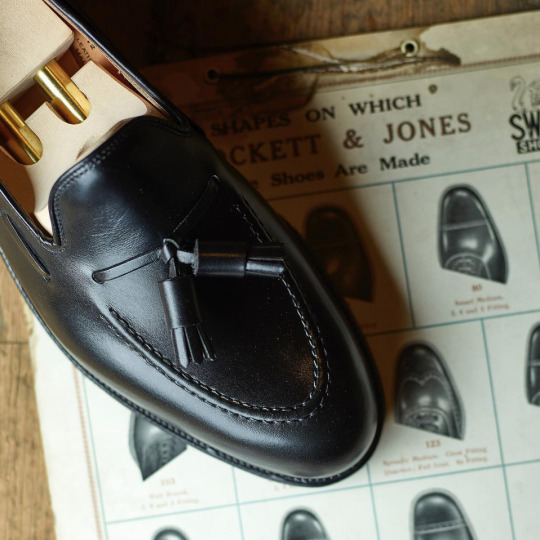
Hidden in the history of the tassel loafer is the story of why men’s dress has become increasingly casual with each passing generation. In the post-war period of the late-1940s, right when tweed jackets and Shetland sweaters dominated prep schools and Ivy League campuses, debonair actor Paul Lukas came back from Europe with a pair of oxfords. Their laces had little fringed tassels at the end, which Lukas thought made them look jauntier. So he took them to a couple of custom shoemakers to see if they could make something similar, and they in turn took the job to Alden. The company’s president at the time, Arthur Tarlow, came up with tassel loafers. That makes Alden’s model the original, and Paul Lukas the first man to wear this style. 

Alden’s tassel loafers were an instant success, but they didn’t exist in a vacuum. If you flip through any men’s clothing catalog from this period, you’ll see how much the idea of comfort had already supplanted Edwardian norms of propriety. Instead of high-button dress boots and gaiters, American clothiers were selling low-cut shoes such as white buckskins, brown oxfords, and canvas tennis shoes with rubber soles. In his 1982 Town & Country essay on loafers, which was later collected in his 1985 book Elegance, Bruce Boyer wrote: “To see these newer low-cut shoes side-by-side in the [1915] Brooks catalogue with the then more traditional higher-cut shoes is to realize immediately that back in 1915 the tide was unquestionably turning – had already turned in reality – and that men were allowing themselves more comfort in their dress. Heavy suits and boots, stiff collars, and high hats were all on the way out. Lightweight tweeds and flannels, button-down shirts and soft golf caps, Shetland sweaters and white bucks, had arrived.” The only thing missing from those 1915 catalogs were loafers, which were “the logical extension of comfortable and casual dress that marks the current century.” 

Tassel loafers were the norm by the 1960s, worn to business offices and government buildings alike, and favored by college graduates who wanted something dressier than their school-day pennies. But the tide turned again in the 1990s, when the style became a synecdoche for the country-club set and dishonest lawyers. In an all-too-often-cited New York Times article, Neil Lewis once reported that the term “tasseled loafer” was not just a way to describe a simple slip-on anymore, it was a political epithet:

Keep reading

A Little Room For Whimsy

image


Men’s style in general, and tailored clothing in particular, can be very serious at times. Most of our clothes are inspired by hunting and war, and made in colors such as drab olive, stone gray, and stark white. Fashion historians trace this back to what they call The Great Masculine Renunciation, when men around the world – from the French court to Chinese nobles – traded in their colorful, sumptuous garb for the kind of austere, somber clothes British aristocrats favored. 

Rumisu, an accessories company based in Istanbul, is the antidote to this seriousness. They’re a young brand, having started in the summer of 2013, but they’ve already made big waves. They’ve been picked up by leading boutiques such as The Armoury, shown up on Ozwald Boatang’s runway, and received favorable write-ups in Monocle and L’Uomo Vogue. Much of that is because of how they’ve transformed luxury scarves and pocket squares – which are traditionally more conservative items – into playful, at times even goofy, accessories. Their designs invite you into a dreamed-up world of creativity, have a child-like wholesomeness, and are built around themes that are both inspiring and relatable. I find they’re a good reminder that, even when things aren’t going that well, it helps to have a sense of humor. 

The company is run by a trio: Deniz and Pinar, who are sisters, and Deniz’s husband Emir. Deniz and Pinar grew up together in Turkey, but have dramatically different backgrounds. Deniz studied fashion in NYC, and then returned home to Turkey to be a designer for an upscale clothing boutique, helping them produce their in-house line. Pinar, meanwhile, studied economics at Harvard and then earned an MBA at Wharton. Later in life, when she decided to do something more creative, she co-founded Rumisu with her sister and brother-in-law. “She’s become the total bohemian in the family,” Deniz says affectionately. “Early in our collections, we had a print titled ‘Come Out of Your Closet,’ which was inspired by Pinar coming out as a more artistic person when everyone expected something different from her.” 

Keep reading

How to Color Outside of the Lines

image


English fashion designer Hardy Amies had a simple rule for getting dressed: if it looks right, it is right. The only rule for combining colors is to create a visually pleasing outfit, but doing so requires more than transplanting concepts from art theory books. Fashion isn’t like other art forms, to the degree it can be called an art form itself, and you can’t combine colors for an outfit in the way an artist would for a painting. There’s a social and emotional language to clothing. A neatly folded, white linen pocket square says business in a way that other squares don’t. 

Most people know the basics when it comes to color combinations. Grey trousers and blue jeans go with almost anything; dress shirts are often best in solid white and light blue. It’s moving beyond the basics that becomes challenging. How do you wear lighter colored sport coats? Which colors besides grey and tan work for trousers? How do you wear brighter, more unusual colors without looking like an Easter egg?

I recently spoke to Greg Lellouche about these questions. Greg, for those unfamiliar, is the founder of No Man Walks Alone (a sponsor on this site, although this isn’t a sponsored post). I’ve always admired Greg’s eye when it comes to color combinations. Before launching his online store, he worked as an investment banker on Wall Street, where he had to wear a suit-and-tie every day. At the same time, he often wears more progressive labels such as Stephen Schneider and Junya Watanabe on weekends. That appreciation for both classic men’s dress and avant garde casualwear, I think, gives him a unique perspective. Greg wears things that are a little off the beaten path, but in ways that I think are easy for others to adopt. 

Keep reading

The Best Printed Shirts of the Season

image


I’ve been really into bolder shirts lately, which I think of as a spring equivalent of textured knitwear. Menswear writers often list your basic, plainly colored v-necks as wardrobe staples, but I find they only work well under suits and sport coats. On their own, they’re a bit too bland, a bit too business casual. So I prefer things that are more textured, such as spongey lambswools, twisted cables, or flecked Donegals. I find them more versatile. And infinitely better looking. They add visual interest to a simple sweater-and-jeans outfit and can be layered under casual outerwear. 

It’s harder to wear textured knitwear this time of year, but the same idea applies to shirts. A bolder shirt pushes an outfit away from business casual territory; it adds visual interest. And while I still like crisp white linens and light-blue oxford-cloth button-downs – even on their own with tailored trousers or jeans – it helps to have some bolder prints for casual situations. They’re not as versatile as textured knitwear, but still useful when you want to make a spring outfit more stylish. The best ones I’ve found this season:


Keep reading

Highlights from Unionmade’s Sale

image


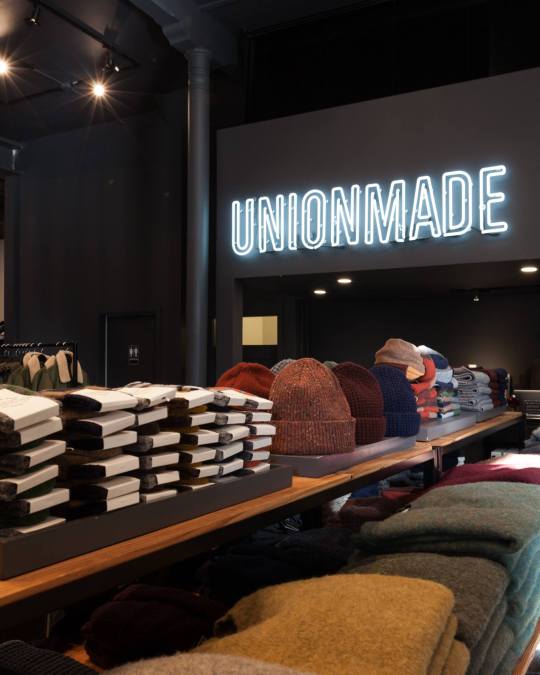
Unionmade is a great shop for workwear, heritage brands, and hard-to-find Japanese imports. They carry everything from Levi’s to Kapital, but the clothes come together in a way that can be roughly described as a classic, casual West Coast aesthetic. There are slim-straight jeans for guys who normally wear sport coats, as well as a huge selection of casualwear drawing militaria, workwear, and neo-retro outdoor gear. 

From now until Monday, they’re also having an early spring sale. Take 25% off all orders with the checkout code -25FINALSALE (be sure to include the minus sign, which is easy to miss if you copy-and-paste). As the code suggests, all purchases made with the code are final sale, so be sure to check measurements. The code does stack, however, on already discounted items in the sale section, although it excludes anything from Alden and Birkenstock. Some highlights I think are worth a look: 


Keep reading

Dressing for Your Complexion

image


In their guide Perfumes, widely considered the bible on the subject, Luca Turin and Tania Sanchez answer some commonly asked questions about fragrances. One was whether scents change according to the wearer’s personal chemistry. “For a long time, Luca believed the answer to be absolutely no,” writes Sanchez. “And that all assertions to the contrary were marketing ploys designed to make the average person feel uniquely addressed and bonded to the product, as if perfume were like a mood ring or shrink-to-fit jeans, sensitive to the wearer’s medical history, soul, or waistline. There’s something to that; undoubtedly it makes us feel special to sigh and say, ‘I love this perfume because it works fantastically with my chemistry.’” 

Their full answer is a bit more complicated than that – scents do change a little with the wearer’s chemistry, but not really – which is how I feel about the neverending debate about whether you should consider your skin tone when choosing colors. You hear this all the time, especially among men who use bespoke tailors. They, after all, have an infinite number of choices between the different shades of blue. Supposedly, earthy hues work on some men, while others are better off with something warmer. 

Much of this actually comes from Carol Jackson’s 1987 book, Color for Men, which transported 1970s make-up theory for women into men’s wardrobes. For Jackson, people came in four seasonal colors. Wintery men are defined by their olive complexions, dark brown hair, and brown eyes. She said they should avoid lighter colored jackets, such as those in natural camelhair, since they give their skin a yellow cast. Instead, she encouraged them to wear dark suits, white shirts, and dark ties, which she claimed enliven their natural look. 

Keep reading

A Fisherman on Fifth Avenue

image


The Compleat Angler is the book everyone owns, but no one has read. It’s the third most reprinted work in the English language, just after the Bible and Shakespeare. Written by an English tailor named Izaak Walton, it’s ostensibly about fishing, but fishing is just the hook to Walton’s deeper and more contemplative  mediations on all things pastoral. Between his practical instructions on how to be a better fisherman, Walton interleaved poems, song lyrics, illustrations, cooking recipes, and other diversions about nature. He believed that fishing was at once a sport, a social activity, and a spiritual experience – and by connecting with it, we could become better people. 

The thing to know about The Compleat Angler is that it was written during a time of tremendous upheaval. England was in the middle of its civil war; Oliver Cromwell had just executed the king; and the country was trying to set up its first Commonwealth. Walton, a staunch monarchist and devout Anglican, felt displaced, so he retreated to the countryside and sought refuge in fishing. He dreamed of the “Brotherhood of the Angle,” a group where men could set aside their political differences and unite through their shared appreciation of nature. This was transcendentalism before transcendentalism; a rejection of Hobbes’ Leviathan. It was a modest proposal that fishing isn’t really about catching fish, it’s about finding community and peace. As Walton puts it, to “go a-Angling” is to “study to be quiet.” One of my favorite passages from the book reads:

And for you that have heard many grave, serious men pity Anglers; let me tell you, Sir, there be many men that are by others taken to be serious and grave men, whom we condemn and pity. Men that are taken to be grave, because nature hath made them of a sour complexion; money-getting men, men that spend all their time, first in getting, and next, in anxious care to keep it; men that are condemned to be rich, and then always busy or discontented: for these poor rich-men, we Anglers pity them perfectly, and stand in no need to borrow their thoughts to think ourselves so happy. No, no, Sir, we enjoy a contentedness above the reach of such dispositions […]

Keep reading