Vintage Ghurka: Big in Japan

image


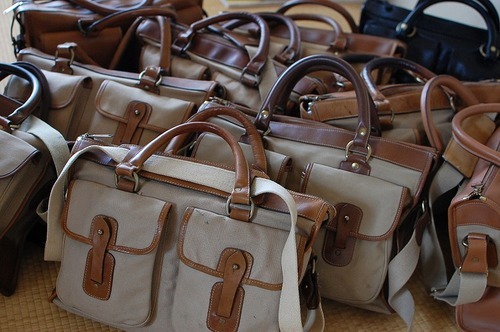
If it can be said that the Italians make good suits, the English make good shoes, and the Scots make good knitwear, then it can be said that the Japanese make good blogs. Some of the best around, actually. I recently found this one about vintage Ghurka bags made prior to 2004, when the brand’s founder Marley Hodgson sold the company. I suspect it’s maintained by a hobbyist, not Ghurka themselves (or so I hope). Google Translate isn’t very good at processing Japanese, but from what I can tell, the site has all the hallmarks of an enthusiast writing: the speculation of when and where things were made, the nostalgia over the “early days,” and the non-professional judgment of construction techniques. All stuff that speaks to my heart, really. 

The collection is simply awesome. There’s a range of popular models, such as the Expediter attaché and Express weekender (the second model Marley Hodgson ever designed, but the first he commercially offered), as well as some old paraphernalia and vintage catalogs. The best bit, however, might be the set of Examiner briefcases, of which our Japanese friend seems to have collected every variant. Check, for example, his documentation of details nobody else would have ever noticed, such as the differences in the brass studs used on the bottom of each these bags. I also love his eye for detail when he shoots those beautiful Talon zippers, and his sense for completeness when he lines up each product and shoots them as a set. It gives you the impression you’re looking at some serious anthropological research, and not just some guy with a crazy obsession for Ghurka. Normal people would call this unhealthy, and they’d be right, but it’s unhealthy behavior I can relate to.

You can still find vintage Ghurka pieces today on eBay and Etsy, as well as some Japanese trading sites (which I selfishly won’t reveal, sorry). Ghurka also sells vintage bags on their site, but at a higher price than what you’d pay if you did your own hunting. A bit cheaper is Ghurka’s mainline stuff made from “vintage army twill,” “vintage chestnut leather,” and “vintage black leather,” which I’ve heard are made to the same specs as the old line (though, I haven’t verified this firsthand). The vintage army twill collection was just put on sale last week. If I didn’t need to save up for a move in two months, I would have easily snatched up this Examiner


Keep reading

Barbour x Norton & Sons

image


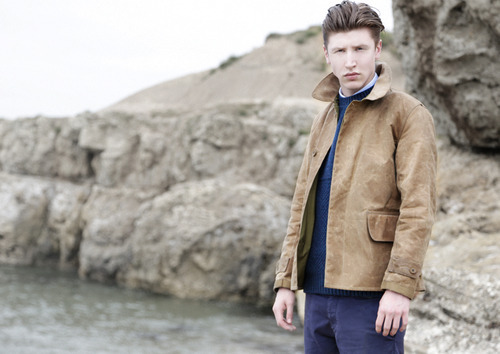
Fall collections are starting to finally trickle into stores and one that’s caught my interest is this new collaboration line between Barbour and Norton & Sons. Barbour ended their arrangement with Japanese designer Tokihito Yoshida last season (though Yoshida purportedly checked out well before that). Given how celebrated that line was, I’ve been curious to see where Norton & Son’s Patrick Grant will take it next.

The pieces are actually quite nice in person, but you would never know it from looking at websites. The problem is that none of the line’s good qualities come through in photographs. Whereas Yoshida’s jackets had complex designs and unique details (some would say “fakakta pockets”), the new incarnation is extremely simple – almost to a fault. There are few things that would capture your imagination if you were just scrolling through pictures in an online store, so you really have to try these on in person to see whether you’d like them (I know Barney’s is carrying the line this fall, but I don’t know which other brick-and-mortars).

The strength of the line is in the fabrication. The jackets, for example, have a real heft and sturdiness to them, and the materials make for nice, rugged silhouettes. There are also details, such as hidden layers underneath plackets, that sometime reveal themselves as folds in the lapel. Additionally, the low-gauge knitted sweaters are remarkably thick and warm. Some are a bit rough, such as the Shetlands, while others are quite plush, such as the rollnecks. You would never know any of this from photos though, and so far, all the online marketing has been fairly poor. The lookbook seen here gives the best view of the collection, but there are only four images and one is cropped from the chest up (who made that decision?). Photos from online stockists are worse, as they look like they were taken out of utility-wear mail order catalogs.

Not everything in the collection is great. This waxed coat, for example, is a bit too stiff and columnar to be flattering, in my opinion. On the other hand, the Barra jacket (available in sandstone and navy) would look nice with a pair of jeans or some beat up corduroys, and the Guernsey-inspired pattern on the Baleshare crew knit would do well layered underneath … well, a Barbour jacket. As with much of the line, that sweater unfortunately doesn’t photograph well. You can’t see the pattern in many stock images, and Oki-Ni (the one place where you can appreciate the pattern) for some reason pulled the sweater so far down that it looks like a women’s knit (in reality, the hem can stop at the hips, like a regular men’s sweater). My guess is that the poor presentation will result in every piece making it to end-of-the-season sales, and at half off, some of these will be great buys. 

Keep reading

Drake’s Fall/ Winter 2013

image


Drake’s released their fall/ winter 2013 collection yesterday. It hasn’t received that much fanfare on blogs yet (even in the ever-quick Tumblr-sphere), which is surprising given how many fantastic things there are.

Like last season, this collection seems to have a nice focus on textured neckwear. There are the traditional things, such as raw silks and tussahs in both solid and patterned designs, as well as plays on standards, such as variations on the traditional grenadine. In addition, there are some nice designs with a 1950s/ 1960s sensibility, such a fuzzy mohair blend and a range of boucles. The word boucle comes from the French word boucler, which means “to curl,” and it refers to how the yarns are formed. The fabric is made with a series of looped threads, typically with one being a bit looser than the others. This looser thread forms a small curled loop in the fabric, while the others form the anchors. The effect is a fabric that looks very textured and interesting, and feels slightly rough to the touch. I think of it as a fall/ winter version of raw silk and like to wear mine with tweeds.

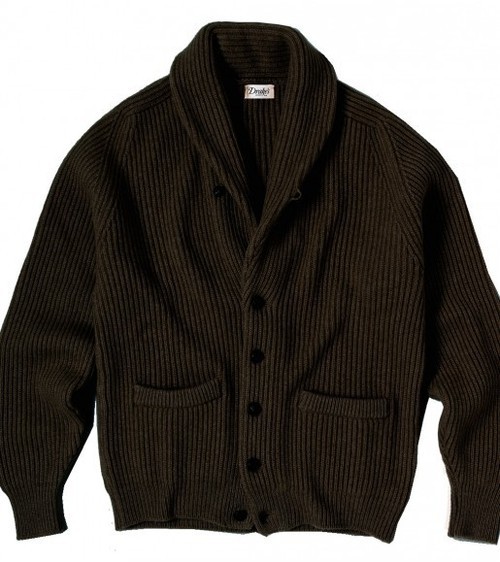
Alongside their neckwear is Drake’s usual mix of other men’s accessories, such as their beautiful, finely woven scarves, which this season comes in a range of tartan, Fair Isle, Navajo, and Kelim patterns. I also lusted over their knitwear. Some of their Guernsey and Aran sweaters looked very much like those sold by Inis Meain, which makes me wonder if that’s not who manufactured them. There are also some Shaggy Dogs, cabled lambswools, and Shetland knits in birdseye and Fair Isle patterns. Oh, and the four-ply cashmere shawl collar cardigan pictured above, which is not new, but so great that I’ll use any excuse to use the photo.

Two big highlights for me include their sport coats and pocket squares. I believe this is their first season offering tailored jackets online, and I suspect if it goes well, we’ll see an expansion of offerings in the future (previously, the only way to really buy their sport coats is to go to their London store). This season’s selection of pocket squares is also quite exciting. I think it may be their best yet since their medieval prints many years ago.

Keep reading

Chapal of Paris

image


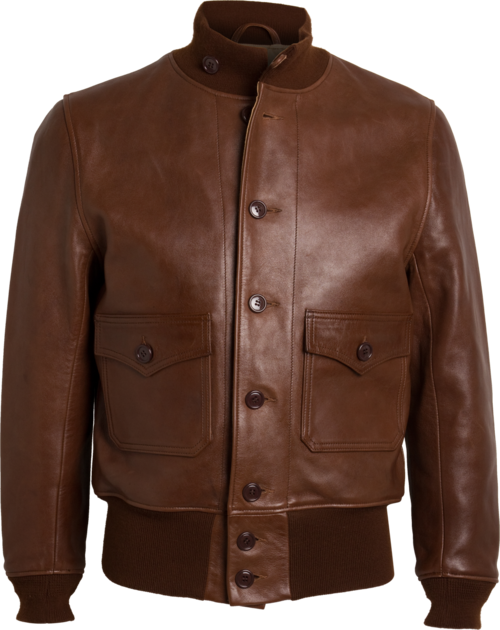
I’ve been really into leather jackets lately. Companies such as The Real McCoys, Toys McCoys, and Good Wear Leather for vintage reproductions; Ralph Lauren’s Purple Label, Enrico Mandelli, and Maison Martin Margiela for high-end fashion stuff; Valstar for that unique Italian take on the A1 blouson; and Temple of Jawnz for (relatively) affordable made-to-measure.  

Another company I’ve been admiring is Chapal. Having started in France in 1832, the company has belonged to the same family for the last seven generations. In the early-20th century, they made military flight jackets and pilot uniforms for the French air forces, and in the mid-century, they made garments for auto racers. Today, they’re a luxury brand manufacturing for their own line, as well as other companies, such as Jaguar and Bugatti. Everything is made in France and designs are mostly drawn from their aviation and racing history. There are a number of blousons, including the classic A1s, A2s, and G1s; some sport racing and roadster jackets; and a pretty incredible shearling originally worn by French pilots during World War II.

Prices aren’t cheap, but they’re fairly comparable to what you find at other luxury houses. The downside is that, unlike many of those other houses, Chapal doesn’t seem to go on sale. In fact, the only US stockist I know of is Bench & Loom, and although they’re having a sale now, Chapal isn’t included. They also rarely show up on eBay (though one blue racer jacket popped up last month). So, for now, they only seem to be available at full price, and that price will deter many.

But damn if their stuff doesn’t look terrific.

Keep reading

Donegals Not From Donegal

image


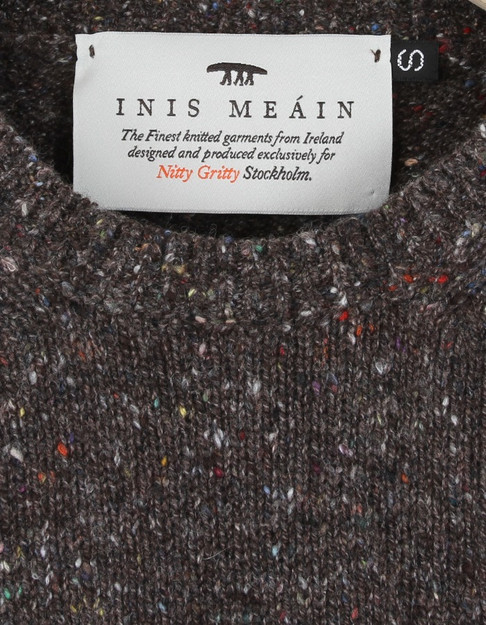
For the last few years, Inis Meáin has been making flecked wool sweaters every fall and winter season, which their stockists describe as “Donegal knits." Not because they’re actually made in Donegal, but rather because the flecks are reminiscent of the hallmark tweeds that come out of that region. Little bits of wool in differentiating colors are allowed to glob onto the knitted yarns in irregular ways, giving the garment a beautiful, earthy feel.

In the past, I’ve only seen these made from a relatively thick, pure wool. The flecks are usually a bit nubby and add some texture. The Bureau Belfast and Nitty Gritty used to carry them, but they’re all gone now. Manufactum still has the grey one, however, and that’s the version I have. The flecks are a bit more prominent in real life than they appear in the photos. When the sweater is worn, it almost looks like you’ve somehow wrapped your torso in granite. I admit, I find the pattern a bit overpowering by itself, but it looks fantastic when layered underneath a waxed cotton Barbour jacket or a Loden coat.

This season, there are softer cashmere versions - both to the touch and to the eye. Those are available at A Suitable Wardrobe and Frans Boone, with the second carrying two more colors than the first. The navy version, however, is what I think is the real gem, and that’s available at both stores. Little bits of orange and light blue yarns decorate the surface and give the navy sweater some beautiful depth. 

Unfortunately, these they’re pretty expensive, with the lowest full-retail price starting at $500. For something more affordable, A Suitable Wardrobe has a ribbed wool-cashmere blend on sale for about $332. And although not flecked at all, Hartford York has a pretty nice green knitted scarf by for $50. It’s not decorated in the same way, but even the frugal should be able to stay warm.  

Keep reading

Reconsidering the Single Monk

image


For a long time now, I’ve been skeptical of single monks. Not the kind with a swept back strap, like those on John Lobb’s Vale or Edward Green’s Oundle (I actually think those look kind of rakish), but rather the “garden variety,” where the strap goes horizontally across the tongue. Those always looked to me like something a friar would wear – a literal form of the “monk shoe.”

My prejudice started chipping away two years ago, when I was shopping for shoes at John Lobb and one of the sales associates bent down to fit me. Right underneath the cuff of his trousers flashed the slight glint of a buckle strap. He was wearing a pair of single monks, and I thought they looked pretty good. Sophisticated, even. Then, in the last year, Voxsartoria posted a nice looking ensemble he wore on vacation – a golden brown, checked, lambswool sport coat with a blue shirt, knit tie, grey flannel trousers, and a complementing pair of green suede single monks (I believe from Saint Crispins). And more recently, I started noticing photos of Antonio Liverano and George Cortina in single monk shoes. All of them looked great.

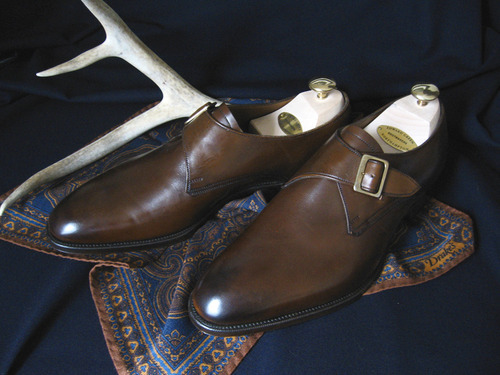
So, with trepidation, I decided to try a pair in what I think might be the most wearable design of all. Edward Green Mercers built on the shapely 82 last and made from the company’s antiqued dark oak leather. The straps on either side are slightly crossed, like an “X,” which I think helps mitigate the friar look. The buckle is also slightly dulled, so it doesn’t shine like a gold coin. These are from Edward Green’s recent sale, but you can buy the brown suede version from Axel’s.

When worn, I think they look pretty good. More sophisticated than a double monk, but less formal than a lace up, these seemingly go well with a casual sport coat and a pair of odd trousers. I admit, I still have some reservations, but the photos of Antonio Liverano and George Cortina below are doing a lot to change my mind.

Keep reading

The Real Peal


I found a great little half-hour video on Peal & Company on YouTube recently. For those who appreciate the history of British shoemaking, this is a rare opportunity to see a glimpse of a world long gone.

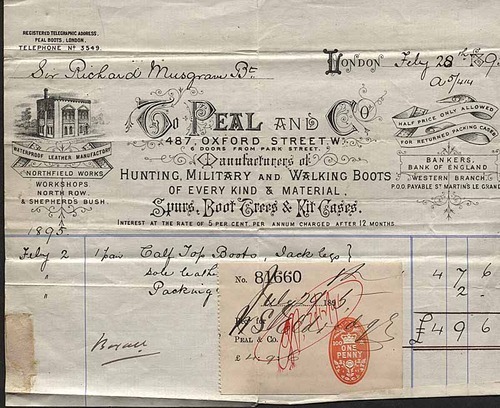
Peal & Co., as many readers may know, wasn’t always just a name stamped inside of Brooks Brothers’ shoes. They were once the largest bespoke shoemaking operation in the world. Having been founded in 1791 by Samuel Peal - an English cordwainer who first made a name for himself by patenting a new way of weatherproofing boots - they eventually built a list of clientele that stretched throughout North and South America, Europe, and East Asia. Sales reps would travel abroad to meet with men, measure and trace their feet, and then take their orders. These notes were then posted to Peal’s factory back in Acton Vale, London, and the finished shoes were delivered six weeks later. This “traveling bespoke” system was so successful that by the time of the company’s closing, two-thirds of Peal’s production went for export. 

image


The client list was impressive. There was the regular run of Hollywood stars (Fred Astaire, Humphrey Bogart, Cary Grant, Douglas Fairbanks, Henry Fonda, Steve McQueen, etc); industrialists such as Henry Ford; intellectuals such as Hugh Trevor-Roper; politicians such as the John F. Kennedy; and almost every diplomat, aristocrat, and king from that period. It’s hard to imagine this many people ordering bespoke shoes from just one firm today.

Keep reading