Bespoke Is This Box

image


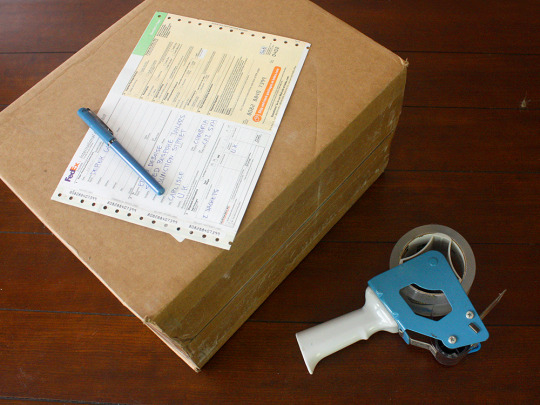
The term bespoke has a lot of marketing cachet nowadays. It’s used to describe anything and everything. There are bespoke salads, crackers, baconbicycles, cardboard boxes, and financial services. There’s even a ready-to-wear clothing line called Bespoken

Most of this is just harmless marketing hype – a way for brands to defend themselves against commodification – but some of it is disconcerting if you care about actual bespoke tailoring. Lots of made-to-measure and made-to-order services these days describe themselves as bespoke, even when they’re not, which makes it difficult for the casual consumer to know exactly what he’s getting. 

A couple of weeks ago, Simon Crompton wrote a basic primer on the differences between ready-to-wear, made-to-measure, and bespoke (it’s the start of a longer guide on how to buy tailored clothing). The info here will be nothing new for anyone who’s been interested in custom clothes for a while, but it’s the kind of thing that helps sets parameters for those just getting acquainted.  

Keep reading
Not Your Oxford Button Down

image


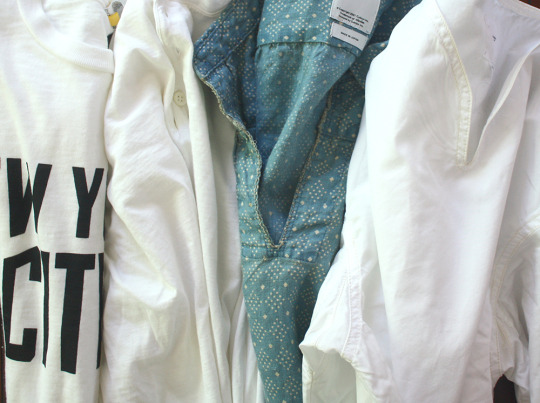
I’m fairly straightforward when it comes to tailored clothing. For shirts, I mostly wear light blues in stripes and solids – the latter in slightly more textured weaves than poplin (which I find too boring). End-on-end, oxford, and a heavier twill works well. A bold butcher stripe is a nice way to add visual interest to a tie-less, sport coat ensemble, while a solid blue shirt will serve as a nice background for any tie and jacket combination. As usual, I find if you limit the number of patterns you wear to two, you don’t have to think as much about pattern coordination. 

In contrast, my casualwear is all over the place, but lately I’ve been wearing shirts that are slightly more off-beat than your standard button-ups (or even the ever-reliable white tee). Outerwear tends to be simpler this time of year – assuming you can wear a jacket at all – so sometimes wearing an interesting shirt is about as much as you can do on a warm day. Four options I’ve been relying on: 


Keep reading

Sneakers Made in England

image


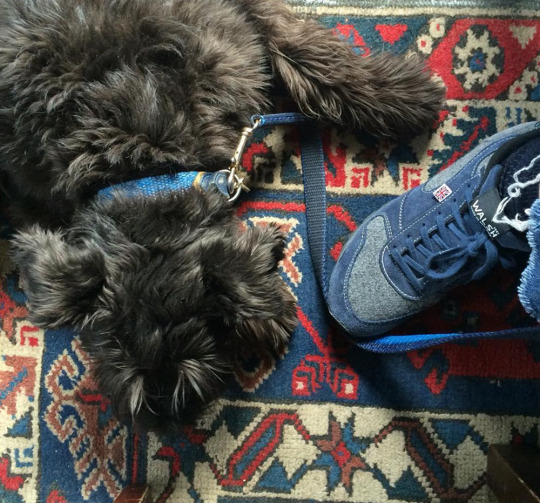
With all the interest in heritage brands and sneakers these days, I’m surprised there aren’t more articles about Norman Walsh. They’re the last British-owned sneaker company still producing in the UK. I recently picked up a pair of their blue and white Ensign running shoes. Originally designed for the Bolton Harriers to compete in the 1981 New York Marathon, they have that retro runner feel I’ve been enjoying so much (aka NarcDad shoes, for those who remember). 

Like the Harrier club, Norman Walsh is located in Bolton, which used to be a large textile production center before Britain lost most of its cotton industry. It’s also the birthplace of running shoes. Back in the 1890s, the town’s J.W. Foster & Sons (which would later become Reebok) developed the style by stripping away cricket shoes to make them more agile, and then adding spikes for traction. Norman Walsh himself served as an apprentice here before starting his own label in 1961. 

Fifty-five years later, his company remains. Their shoes are much beloved by British trail and fell runners – the latter being a term for people who race up hills (which, to be honest, sounds like a sport invented by a couple of fun-loving, drunk Brits). Along with athletic shoes, they also have a range of casual styles for people who like to wear their runners off the trails. 

Keep reading

Step Into the Unknown

image


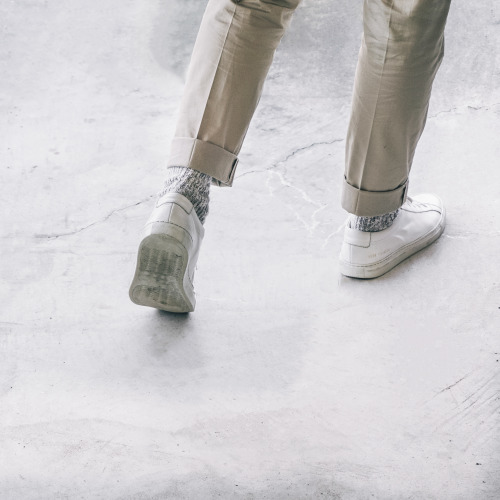
Anonymous Ism couldn’t be better named. The Japanese sock manufacturer has little social media presence – no Facebook or Instagram accounts, just a Twitter page with one lonely Tweet. Their company website isn’t even working. I finally tracked down their North American rep a few weeks ago and asked if I could get more information. He replied: “what would you like to know … and why?!”

It seems the company would like to stay as anonymous as possible. The only information I could get is that they’re owned by Gallet – a 32-year old Japanese company that has traditionally done private label manufacturing for high-end brands and shops. Anonymous Ism is their house line, and it’s proudly made in Japan, but they apparently don’t like talking about it. 

Nonetheless, the company makes some of the best casual socks I’ve come across. I’ve been wearing them for the past year and was so impressed by how well they’ve held up that I bought a dozen more this past sales season. Some of their offerings include quarter-length and no-show socks, although I only wear their three-quarter length designs. Typically made from a blend of cotton, acrylic, and polyester, they stay up surprisingly well throughout the day – letting you avoid that dreaded sock pooling that can happen around your ankles mid-afternoon. 

Keep reading

Get in Liner

image


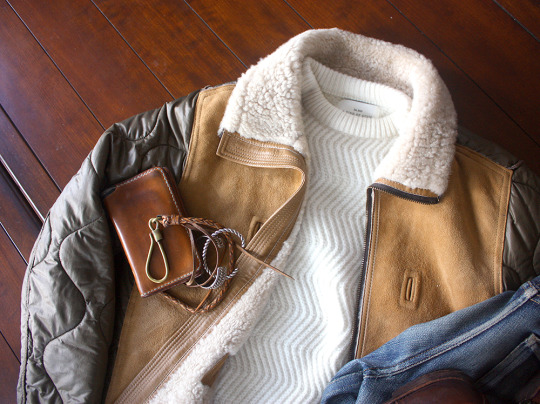
I wasn’t sure what to expect when I bought this Ten C liner. The Italian outerwear company offers all sorts of add-ons for their outerwear – body and hood liners made from felted wool, down, and shearling. I bought a few last year and like them, but the hood liners are admittedly more decorative than anything. 

This body liner, however, is fantastic. It goes well underneath all of Ten C’s outerwear, as you’d expect, with the shearling collar adding a bit of visual interest to whatever else you’re wearing. It can also be worn on its own. In fact, that’s how I’ve been mostly wearing it this past winter. Paired with my 3sixteen jeans and a chunky knit, it serves as a nice in-between piece when you want something warmer than a field jacket, but don’t want to deal with the bulk of a parka. 

The secret to a liner’s insulation is the quilting, where individual chambers trap warmth. Inside, any number of materials can be used for batting (the technical term for the warming middle layer). Sometimes you’ll find cotton, which doesn’t have much loft, but comes in different thicknesses. That’s probably what your grandmother used to make her quilted blankets. More commonly, however, you’ll find down or polyester (the latter being sometimes referred to as “microfiber”). Their high-loft makes them warmer and lighter weight than cotton, and they’ll hold up better after multiple washings. 

Keep reading

Rocky Mountain Featherbed

image


Men’s style had it rough in the 1970s. Sometimes referred to as the decade taste forgot, the ‘70s was characterized by tight shirts, bellbottom trousers, and the piles unrotting synthetics that will probably outlast this civilization. The clothes of that age, as well as the lifestyles, were as lurid as they were chaffing. 

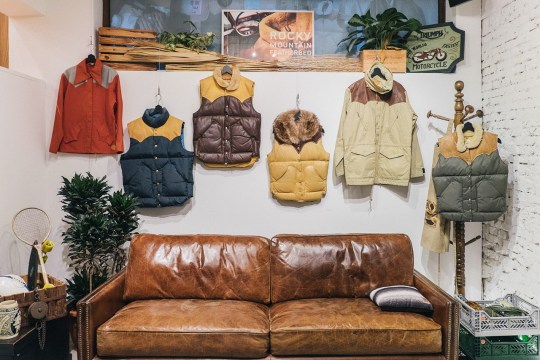
Not everything was terrible, however. What decade is better defined by corduroy sport coats and shearing collar jackets? Or those puffer vests that eventually peaked in the ‘80s? For as many companies that made flashy, disco-inspired clothes, there were just as many that relied on simpler, rugged charms. 

One of those was Rocky Mountain Featherbed, which was founded in the Cowboy State of Wyoming by Francis “Cub” Schaefer. RMFB specialized in down-filled outerwear with Western-style yokes, which became popular with skiers and ranchers across the American West. These were worn during the days when Colorado ski instructors were still likely to be seen in cowboy hats. Unfortunately, after a decade of success, the company went bust in the ‘80s and Cub lost control of his label to bankers. 

Keep reading

Finally, Time for Outerwear

Call 2015 the year without winter. Although it’s nearly mid-December, and Christmas is just a couple of weeks away, it’s only starting to feel like fall. Temperatures finally dropped below 60 a few weeks ago, however, and I was able to break out some knitwear and outerwear. No chance for truly heavy coats sadly, but any opportunity for layering is appreciated. Here are five of my favorite coats this season, along with some suggestions for alternative options. 


Keep reading

The Casual Carry

image


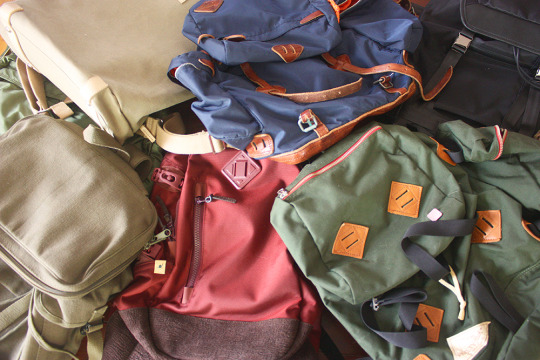
Backpacks have come a long way in the last hundred years. Granted, people have been carrying things on their backs forever, but it wasn’t until the arrival of companies such as Gerry Outdoors and Jansport did backpacks take the form they do today. Those early designs were made for the great outdoors – constructed from nylon shells and built with zippered compartments, they were later turned into everyday carries by hippies and students in the 1970s. Today, much like sneakers and jeans, backpacks have become fashion items. No longer just canvas school bags or techy outdoor gear, you can find a backpack style for almost any kind of causalwear that might be in your closet. 

Of course, none of these are usable with tailored clothing. Besides possibly ruining your jacket’s shoulder line, backpacks are much too informal – no matter how sleek the design. Still, for running errands or spending a few hours at a cafe in a pair of jeans and a bomber jacket? Backpacks can be just the thing. Here are five that I rely on. 


Keep reading

Comfy Knitwear for Home


Along with his lessons on how we can become better people, Fred Rogers taught us something about clothing. Each of his “Mr. Rogers’ Neighborhood” episodes started the same way: he’d come home from some unseen outside world, hang his sport coat up in a closet, and then reach for one of his trademark cardigans. The message was subtle, but there: changing into simple, comfortable clothes can be a way to hit the refresh button. By trading stiffer jackets for softer knitwear, we shrug off the day’s stress. 

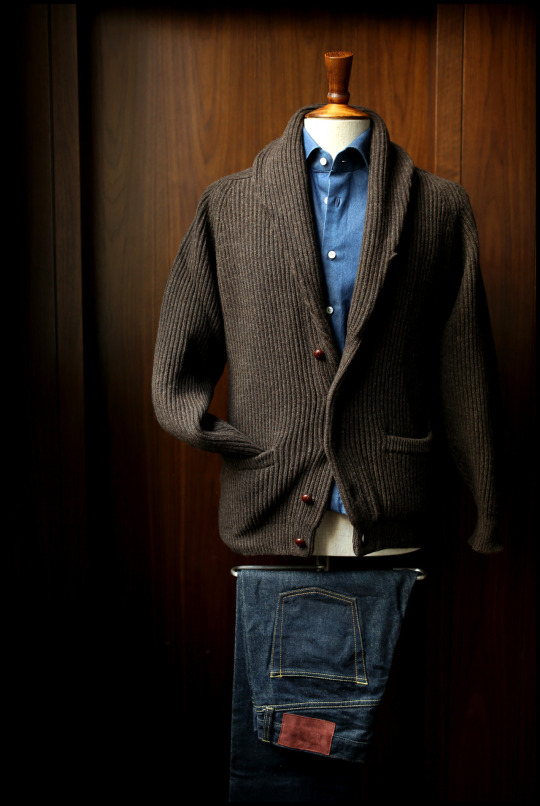
My own at-home uniform is similar, although not nearly as charming as Mr. Rogers’. I wear either a white t-shirt or light-blue button-down with 3sixteen jeans, Town View moccasins, and a chunky, shawl collar cardigan. The cardigans are plush, multi-ply lambswool pieces, which make them feel like comfy blankets. Slip one on and you instantly feel more relaxed at home – not to mention save on heating bills. 

They’re also great for hosting guests during holiday parties. Layer your knitwear by pairing a chunky, shawl collar cardigan with a thin, merino turtleneck, or wear one in lieu of a jacket with grey flannel trousers and a button-up. Doing so allows you to look casual, but still dressed. The next day, you can use that same sweater for grabbing coffee in the morning. Nothing is better for beating that early morning chill than throwing on something that’s both easy-to-wear and warm. 

Keep reading

Come As You Are

image


I had a nice chat with Patrick Johnson and one of his sales reps, Remy Ghougassian, a few weeks ago. The two were in San Francisco fitting customers, so we met after hours at the St. Regis hotel to chat over drinks. Since they just moved to New York City, I asked if they’ve found any cultural differences between the US and their home country, Australia. “I think there are some,” said Remy. “Australians tend to be more informal, even in professional settings. You can meet someone for the first time and they’ll treat you like an old friend.” 

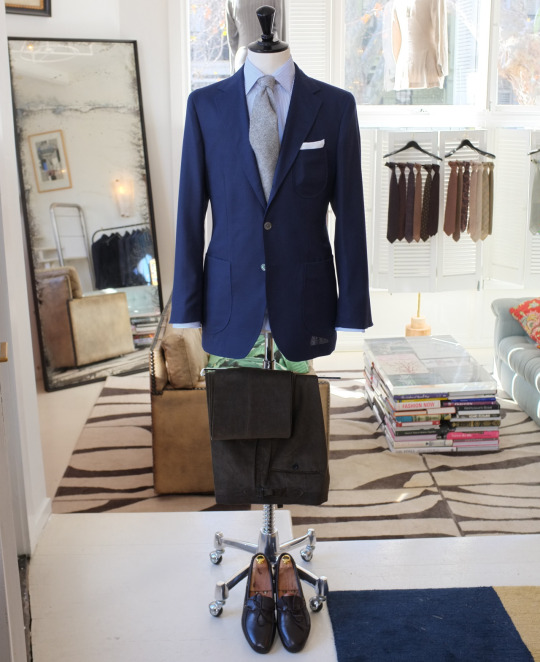
Perhaps that’s the best way to describe P. Johnson’s tailoring – casual, informal, and utterly unpretentious. Their company specializes in a trimmer, sportier take on traditional tailoring, although they don’t go as trendy as some fashion-forward lines. Patrick noted that, while they can obviously make anything a client wants, he prefers slightly more traditional lengths. “Short jackets often accentuate the hips, which is rarely a good look for men,” he said. So while their suits and sport coats fit slim, the jackets are still long enough to cover the wearer’s rear. 

What really defines their tailoring, however, is the construction method. P. Johnson is a made-to-measure customer clothier, using adjusted, computer-generated patterns that they produce in-house (in Australia, although the tailoring itself is done in Italy). This allows them to offer a better value to those who aren’t interested in bespoke. And while they allow clients to choose from a variety of styling details, their default house style is very soft. So soft, in fact, that even their most structured suits are about what you’d typically find in Naples – everything else is only softer. 

Keep reading