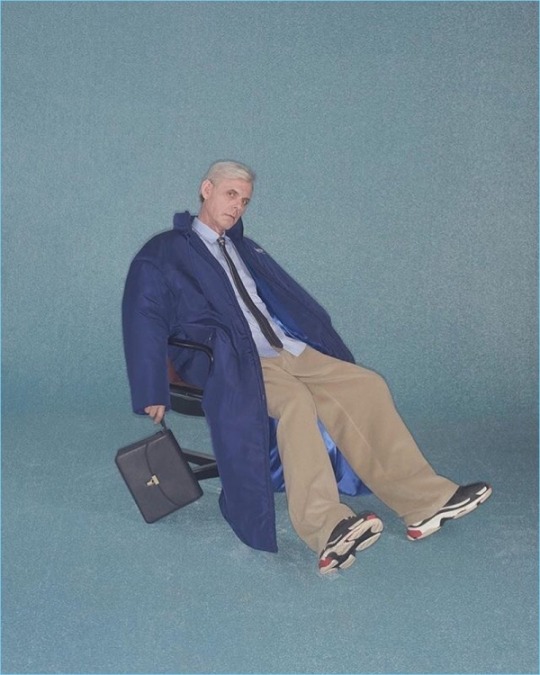
How to Wear Tailoring for Spring

image


A few months ago, L Brands, formerly known as The Limited, shuttered all 23 of their Henri Bendel stores, including their Fifth Avenue flagship in New York City. Founded in 1895, the luxury womenswear retailer was the first in many categories — the first retailer to hold a fashion show, the first retailer to hold semi-annual sales, and the first retailer to carry Coco Chanel’s line in the United States. On their website, they also took credit for discovering Andy Warhol, who they hired early on as an in-house illustrator.

Henri Bendel’s profits, however, have been dipping for years as the upscale retailer struggled to find footing against online behemoths such as Net-a-Porter and FarFetch. Last September, when they finally announced that they would close all their locations by the end of January, The New York Times contacted Mark Cho of The Armoury to see how his brick-and-mortars have been able to thrive in this economy. Mark said it came down to people — having personal relationships with customers and hiring sales associates who know The Armoury’s products. “For some luxury brands, the customer comes in and knows exactly what he wants, and the salesperson is just a vending machine,” Mark said. “The Armoury has no aspiration to be a big brand.”

Some of their success can also be chalked up to how they make classic men’s style feel relevant, especially to a new generation of men who didn’t grow up wearing a coat-and-tie. Their clothes are traditional and sophisticated, but they don’t reach for the same tired tropes about luxury clothing and class pedigree. They’ve also done an impressive job of pulling together small makers, such as Ring Jacket, Carmina, and Liverano & Liverano, before these names became common reference points for menswear enthusiasts. I can’t tell you how many bespoke tailors have told me about clients who ask for curvy, Florentine quarters – no doubt because of The Armoury’s influence. 

Keep reading

The Color of Roussillon, France

In August of 1942, not long after Germany took over Paris, Samuel Beckett and his companion (later wife) Suzanne Deschevaux fled their apartment in the French capital. The pair had been working in a Resistance cell known as Gloria, where they translated Axis documents and relayed information about troop movements for Allied powers. The info was coded into microfilm, hidden in candy boxes and slipped into toothpaste tubes, and then passed along through a chain of Gloria members, with each person reporting to the next in line, until the message reached Allied headquarters in London. 

That year, however, Gloria was betrayed by Robert Alesch, a Catholic priest and double agent who sold out hundreds of Resistance agents for his own financial gain. As a result, the Gestapo went around the Paris rounding up Gloria members and other anti-Nazi agents. One of the people arrested was Alfred Péron, a Jewish writer and Beckett’s closest French friend. He was interrogated and eventually deported to one of the most notorious concentration camps, Mauthausen on the Danube River. All categories of prisoners here, from Jews to gays to political opponents, were starved, beaten, used for medical experiments, and subjected to slave labor in the local stone quarries. Péron survived until the end of the war, but tragically died two days after the camp’s liberation in 1945.

In researching for Beckett’s biography, James Knowlson interviewed the extraordinary Germaine Tillion, one of the first Gloria members to be betrayed by Alesch. She was involved with one of the earliest underground organizations of the French Resistance, the Musée de l’Homme, and many of her friends had been executed by Nazis. Knowlson writes of the interview at The Independent:

Keep reading

On Nostalgia and Raincoats

image


Before nostalgia was considered sweet sentimentality, it was thought of as a mental disorder similar to paranoia. In the late-17th century, a medical student named Johannes Hofer coined the term to describe a set of peculiar anxieties he observed in Swiss mercenaries fighting abroad. Symptoms included melancholy, loss of appetite, and an intense longing for bygone times. Initially, nostalgia – from the Greek nostos, meaning homecoming, and algos, meaning pain – was mostly associated with soldiers. The Swiss military even forbade the playing of a particular milking song, Khue-Reyen, for fear that it would lead to desertion or suicide. But soon doctors found other people afflicted with the mania: newly arrived immigrants, children sent off to the countryside for nursing, and women who were forced into domestic servitude. 

Until the turn of the 20th century, the Western medical community came up with all sorts of strange remedial measures for nostalgia. Among the many dubious cures were using leeches, purging stomachs, and even shaming the condition out of patients. During the American Civil War, a military doctor named Theodore Calhoun thought nostalgia was a symptom of the weak-willed and unmanly. In a paper titled “Nostalgia as a Disease of Field Service,” which was read before a medical society, he maintained that “battle is to be considered the great curative agent of nostalgia in the field,” for men would find themselves with a clearer mind after having survived an onslaught. In her book Homesickness: An American History, Susan J. Matt recalls this passage from Calhoun’s stunning lecture, where he recommends public ridicule as a cure:

Any influence that will tend to render the patient more manly will exercise a curative power. In boarding schools, as perhaps many of us remember, ridicule is wholly relied upon and will often be found effective in camp. Unless the disease affects a number of the same organization, as in the case narrated above [Dr. Calhoun is referring to a case in which there is something of an epidemic of nostalgia in a particular regiment – where “nearly all who died were farmers” – before he came to its rescue], the patient can often be laughed out of it by his comrades, or reasoned out of it by appeals to his manhood.

Keep reading

How Sound Branding Changed Fashion

image


If you were just getting into menswear ten years ago, you likely updated your wardrobe in one of two directions. The first was the sort of skinny lapeled, Mod-inspired tailoring that prevailed after Mad Men debuted in 2007; the second was a sleek and colorful “metrosexual” style that was represented through Queer Eye for the Straight Guy. Those two looks dominated the editorial pages of GQ and Esquire, who showed the before-and-after transformations of men who learned how to buy slimmer clothing – and get things made slimmer still through a local alterations tailor. 

Today, those transformations are running in the opposite direction. Silhouettes are filling out and dressing like a dad is coming back in. High-fashion boutiques now stock the kind of “sensible” clothes your father likely buys from Kohl’s: relaxed-fit jeans; vacation shirts; schlubby tennis shoes; tactical fanny packs; and pastel-colored, washed-cotton caps (“they’re soft, shapeless, and familiar – just like dad,” writes Pete Anderson at Put This On). Mr. Porter even stocks the most fatherly of leg coverings this season: zip-off cargo pants that convert into cargo shorts, giving value-minded fathers a two-for-one (which is good since Mr. Porter’s version is a mind-boggling $1,000).

You can chalk some of this up to the fashion cycle. Once a look becomes popular, first adopters move on, thus swinging the pendulum in the other direction (fuller silhouettes give way to skinny silhouettes until the second collapses and fuller styles prevail again). The other is about the rising influence of Demna Gvasalia, the Georgian designer who led the design team at Maison Margiela before becoming the creative head at Balenciaga and his own label Vetements. When he showed his spring collection last year at the verdant Bois de Boulogne park in Paris, he sent models down the runway in “oversized color-striped windbreakers, pale jeans similar to those that made Barack Obama dad-in-chief, and bloated running shoes in the style of podiatrist-approved Asics.” Male models even carried children, the most literal interpretation of the trend. Dad style today is so au courant, Democratic Vice Presidential nominee Tim Kaine even tweeted about it

Keep reading

Five Style Tips from Drake’s Lookbook

image


For many men of my generation, who grew up in the 1980s and ‘90s, our first introduction to classic style was at a Ralph Lauren store. That’s where we fell in love with things such as sporting tweeds, chambray work shirts, and the chalky hand of ancient madder. Ralph Lauren didn’t invent these things, of course, but they presented them in a way that felt sexy. Brooks Brothers has been many things, but it has never been sexy. 

In some ways, Drake’s is doing that for a younger generation, albeit at a much smaller scale. As the brand has expanded beyond just accessories, taking on tailoring and sportswear, it’s been able to present a fuller vision of how classic style can be worn today. These lookbooks have become incredibly popular in recent years, often getting posted on sites such as Reddit’s Male Fashion Advice within minutes of their release. And much like how Ralph Lauren helped translate classic style for me, I think Drake’s is putting a new spin on the language. Instead of showing pinstripe suits in luxuriously paneled offices, with decor reminiscent of an expensive lawyer’s sanctum, they feature softer takes on classic menswear in more relatable environs. Tweeds and duffle coats are shown being worn at university campuses, seersucker suits in Southern diners, and brushed Shetlands on moss-covered, rocky shores

This season, the team went to Lanzarote, one of the seven main Canary Islands located just off the coast of Morocco. It’s a short four-hour plane ride from London, making it a popular fly-and-flop destination for vacationing Brits (many retreat there for some much-needed winter warmth). But for Drake’s, the subtropical archipelago was also an excellent solution to a real problem. How do you shoot a spring/ summer lookbook in the middle of January, when it’s snowing in London? To show their collection in a warmer clime, they headed to the one place known as the “Island of Eternal Spring.” 

Keep reading

How Thrift Stores Drive Fashion

image


For the truly fashion-obsessed, the shuttering of Gallagher’s Paper Collectibles ten years ago marked the end-of-an-era. The dingy, subterranean shop in the East Village was one of New York City’s greatest institutions. Inside was a veritable treasure trove of vintage fashion magazines, books, and photo prints. Stacked in corners and along shelves, you could find Vogue in all its editions, dusty issues of Harper’s Bazaar, 100-year-old copies of Town & Country, the now-defunct Mademoiselle, and more arcane titles, some of which were published in the 1860s. 

If you think this is just a local hangout for art students and the occupationally hip, you’d be wrong. In between preparing for their seasonal collections, award-winning designers used to come here to rifle through yellowed pages and plunder archives. Michael Gallagher, the store’s proprietor, once told The New York Times: “We get them all, Hedi Slimane, Karl Lagerfeld, Marc Jacobs big time, John Varvatos, Narciso Rodriguez, the Calvin assistants, the Gucci assistants, Dolce & Gabbana, Anna Sui – you name it. They all come here for inspiration. At least that’s what we call it.”

It’s no secret that designers copy. Menswear is full of work, sport, and military references, some of which have carried through into a professional dress. Penny and tassel loafers entered the canon because they were so thoroughly imitated. In the designer world, Tom Ford has been known to lift from Halston; Alexander McQueen stole from Vivienne Westwood. Helmut Lang once moved his operation from NYC to Paris to thwart copycats, but he himself replicated a disco bag from the indie design collective Three As Four. Diet Prada tries to publicly shame designers for copying, but with notable exceptions, they have little effect. Everyone knows how fashion works. When Oprah asked Ralph Lauren in 2011 how he’s been able to keep designing for so many years, he answered: “You copy. Forty-five years of copying; that’s why I’m here.”

Keep reading

How Workwear Stores are Evolving

image


For much of the 20th century, men’s media was about general interest publications giving readers the information they needed for “right living.” They told men how to dress for the office, grill meat on weekends, and mix delicious cocktails for after-dinner parties. As Cathy Horyn once wrote, “almost no one cares about this sort of thing anymore.” Online, audiences can easily find communities that share their specific interests and advertisers can target people more closely than ever before. It’s no longer enough for a publication to just say it’s “for men.”

This is Will Welch’s challenge at GQ. Welch was recently promoted to Editor-in-Chief at the magazine, replacing Jim Nelson, and while GQ isn’t losing money, it’s lost some cultural relevancy. To get readers to return, Welch promises to make GQ to be about more than just telling men how to match pocket squares with ties. This month’s music-themed issue, for example, covers Frank Ocean and dives into John Mayer’s Visvim-heavy wardrobe. And when Welch headed Conde Nast’s smaller, but edgier, GQ Style title, he featured the romantically styled designer Haider Ackermann, cult-favorite streetwear label Noah, and Gauthier Borsarello’s private Paris showroom, which is full of vintage inspiration. With Welch now at the top of GQ’s masthead, we can expect something similar between the main magazine’s covers. 

“Instead of dictating what’s good and what’s bad from some sort of imaginary mountaintop, if we can be meaningfully participating in a community of people – helping to elevate and tell the stories of the people who we think are doing really exciting things – to me that is a higher calling than, ‘don’t wear those pants, wear these pants,’” Welch told Business of Fashion. “If you try to be everything to everyone, you end up not being much of anything to anyone. So we’re making GQ less a big tent and more the only place to go when you want a rich, intelligent, and transportive plunge into all the stylishness the world has to offer.”

Keep reading

The Other Kind of Cashmere

image


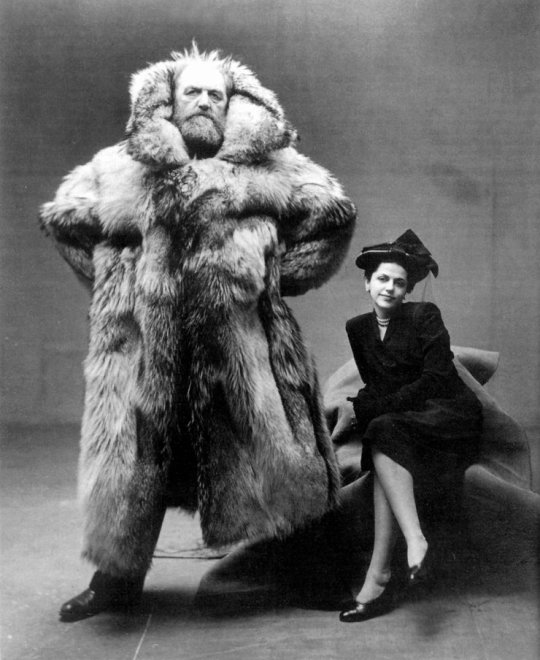
Danish explorer Peter Freuchen stood like an arctic bear when he was photographed alongside his wife in 1947. The image, shown above, made its way around the internet some years ago because of Freuchen’s magnificent outfit. Freuchen, already a giant of a man, was wearing a Sasquatchian sized fur coat – single-breasted, nearly ankle-length, with a collar so tall that it almost cleared his bald head. His wife, who was more typically dressed for the occasion, did not look amused. 

Freuchen was a real-life Most Interesting Man in the World. He was a writer, an arctic explorer, and a resolute anti-fascist. During the Second World War, he fought Nazis as part of the Danish Resistance and once gave Triumph of the Will director Leni Riefenstahl the finger at a film premier. But it wasn’t the Nazis who almost killed him – it was snow. Throughout his life, Freuchen took many 1000-mile dogsled journeys across Greenland’s northernmost tundra. During one of those arctic adventures, however, he found himself caught in a particularly bad blizzard. 

Hoping to wait out the storm in a snowbank, he buried himself beneath the ground’s surface, only to find that the snow above him was swiftly swirling around and turning into a thick layer of ice. Before long, Freuchen was encased in what was a frozen tomb. Quickly losing strength, he struggled for hours trying to claw his way out using nothing but his bare hands and some frozen bearskin. Freuchen had all but given up when he got an idea, which he details in his autobiography Vagrant Viking

Keep reading

Seven New(ish) Brands I’ve Been Watching

image


In an interview with The Telegraph, Patrick Grant of Norton & Sons and E. Tautz once described fashion as being an “ever-moving feast.” I often find that the quick-paced nature of fashion – where things are constantly being created and destroyed – makes the field endlessly interesting. There’s always something new, something different, something to talk about. And while my taste in tailoring leans classic, I like casualwear that’s a bit more progressive and experimental.

For the past few years, I’ve been doing these annual posts where I roundup new brands. To be sure, not all of them are actually new – many have been around for years – but they’re new to me. Here are seven labels I recently discovered. And while not all of them sell things I’d personally wear, I find them inspiring in some way. For more of the same, you can see previous years’ posts herehere, here, and here.


Keep reading

Finding the Perfect Flannel Shirt

image


Kiya Babzani, co-owner of the specialty denim empire Self Edge, is mostly hush about who patrons his stores, but he shared as story once of the most unlikely of customers. One day he received an order for a few things from Flat Head and Iron Heart. Having run the credit card a few times and getting the charge declined, he became suspicious of fraud. So he looked at the customer’s delivery information – Owenscorp in Paris – and reached out. “Oh it’s for Rick,” the buyer explained. “Sorry if the credit card didn’t go through. He wants these things sent to his studio." 

Rick, of course, refers to Rick Owens, who is reverently known to his fans as the “Lord of Darkness.” His clothes are masterpieces in terms of pattern making, far surpassing anything you’d find on Savile Row, but they’re cut for the clinically underweight. The shoulders are narrow, sleeves tiny, and chests tight. If you can somehow muscle your way into his clothes, however, they become beautiful, black coiling sculptures. Owens drapes and twists materials such as beaten lambskins and silky cottons to create garments that look like they’re decaying monastic robes in some space-age Brutalist future. 

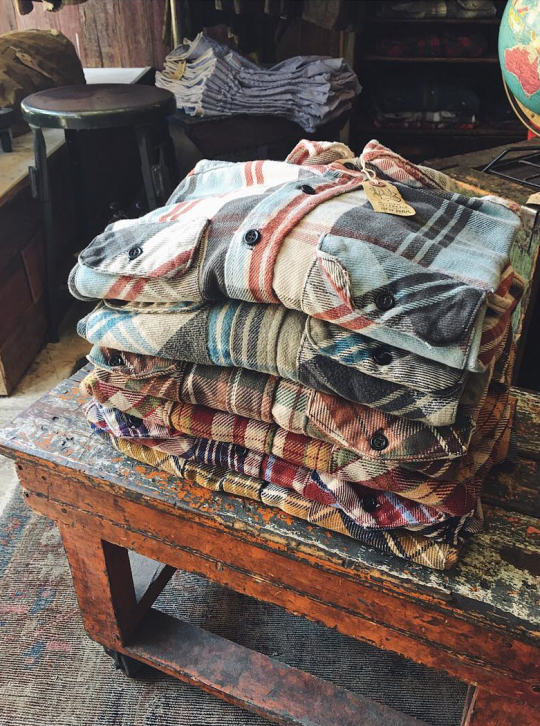
What brought Rick Owens to Self Edge? The thing that unites almost every American clothing experience: the hunt for the perfect flannel shirt. Owens found his in the form of a red buffalo check flannel from Iron Heart, but then lost it a year later. His assistant emailed Kiya again, asking if he had another (“it’s his favorite,” she pleaded). Kiya didn’t, but found the same model in blue. "No worries, just mail it. We’ll dye it,” she replied. Of course, that’s impossible. Once a check has been made, you can’t change it into a different color because the yarns have already been woven. But who’s going to question Rick Owens’ garment making techniques – or deny him of his favorite flannel?

Keep reading