
Three Strange Colorful Histories

image

Over at J. Crew, you can find over fifty shades of grey, ranging from “obsidian” to “vintage dove.” The company describes their granite-colored Ludlow suits as “coal,” but that color shouldn’t be confused with the cooler, stone-like shade of their 9" tech shorts, which are also labeled “coal.” Neither of those should be mistaken for J. Crew’s “Bedford coal,” which is different color entirely. In the past, the Americana outfitter has used all sorts of exotic names to describe very ordinary colors. There’s been “dried fig” (green), “surplus grass” (also green), “natural kale” (again, green), “spearmint sprig” (once more, green), and “fresh water” (blue). Reading through these colorful words, you’d struggle to know whether you’re scanning a J. Crew catalog or a farm-to-table menu at a hip Brooklyn bar-restaurant.

To help eliminate the confusion, some people have tried to standardize the ways in which we describe color. Albert Henry Munsell devised a three-dimensional mapping system for color in the 1880s. A. Maerz and Mr. R. Paul built on Munsell’s work but also incorporated common names for various hues and shades. They published their book A Dictionary for Color in New York in the 1930s. Across the pond, the British Colour Council produced a series of color indices from the 1930s through the ‘50s. Their first book, a two-volume set titled Dictionary of Colour Standards, was published in 1934. The Council hoped that it would do for color what “the great Oxford Dictionary has done for words.” The book “would mark,” they wrote, “the great achievement of modern times in assisting the British and Empire industries with colour definition,” thereby giving the British trades a competitive edge.

Shortly after the book was published, The Dictionary of Colour Standards was used as the official reference everywhere from the Royal Horticultural Society to the British Army to the Royal Institute of British Architects. Dermatologists, art curators, and map printers relied on the dictionary to produce important documents. Part of their success was due to the fact that they labeled every printed plate with an evocative name and reference number, much like you’d find in a Pantone guide. They also included fabric swatches for textile designers. Chartreuse, after all, registers sightly differently on paper than it does on fabric. So for the first edition of their book, the Council included carefully dyed silk ribbons. The follow-up edition, released in 1952, came with woolen yarns.

Keep reading

California Sunshine and Noir

There are two stylized images of life in Southern California. One is an exotic fantasy that was first communicated through surf films such as Gidget (1959) and Beach Party (1964), where the entire Golden State was distilled to the few beach towns that radiate up and down the coast. In these wholesome coming-of-age-stories, there’s always a group of athletic teens with sun-bleached hair that laugh and smile as they get into freewheeling antics at some late-night beach party. Sometimes there’s a romantic misunderstanding or a rivalry with a vicious, but hilariously stupid, group of bullies, but their lives are otherwise uncomplicated. As the endpoint of westward expansion in the United States, California is the geographical and symbolic opposite of the East Coast. Whereas New England’s gloomy weather inspires a kind of pensiveness, California is a place where you can live without a care, sometimes not even a thought, in the world.

The other representation of Southern California is darker, grittier, and more dystopian. In his book City of Quartz, historian Mike Davis paints a picture full of Dickensian extremes. Downtown Los Angeles has a monumental architecture glacis that segregates the rich from the poor. Wealthy neighborhoods in the canyons and hillsides are isolated behind guarded walls and electronic surveillance systems, while homeless people sleep on the street in a district known as Skid Row. In Hollywood, celebrity architect Frank Gehry apotheosized the siege look with a library that resembles a military compound.

Over in Watts, there is a series of shopping centers modeled on panopticon architectural systems, which English philosopher Jeremy Bentham surmised would help institutions control large groups of people with minimal resources. Seven-foot-high, wrought iron fences surround the largest shopping center while a private security force patrols the perimeter, and an LAPD substation is located inside the central surveillance tower. (Developer Alexander Haagen defended his design by saying the fence is inspired by a similar barrier that surrounds the USC campus, which separates students from community residents. That barrier has since only grown with new ID checks, fingerprint scanners, license plate readers, and surveillance cameras). This is a picture of a city girded by fear, and, as William Whyte observed of social life in cities, fear invariably ends up proving itself. In his chapter titled “Fortress LA,” Davis writes:

Keep reading

Can You Spot Bespoke?

image


I was recently having a discussion with my friend Voxsartoria about whether there’s a practical difference between bespoke and high-end ready-to-wear. He thinks the difference is not only night-and-day but claims he can tell when someone is wearing something that was made for them. I don’t believe him. 

Writers who cover bespoke tailoring will often breathlessly swoon about the Old World fitting rooms on Savile Row and how it feels to have a tailor stretch measuring tape across your shoulders. In the foreward of Anderson & Sheppard’s vanity book, A Style is Born, Graydon Carter says a client’s bespoke pattern is more honest than any autobiography (Carter’s foreward is beautifully written, but not that critical or technical). On the topic of whether bespoke lends any advantages, one of the most sensible and grounded articles I’ve read is by David Isle, which was published some years ago at No Man Walks Alone (a sponsor on this site). 

As David notes, comparisons between bespoke and ready-to-wear tailoring are usually complicated by “different makers, different fabrics, different wearers and all manner of other variables that could matter.” In his post, he compares a RTW Formosa sport coat to a bespoke one, both made in the same workshop, according to the same standard, and with the same fabric. The only difference here is that the RTW jacket is cut from a standard pattern and made-up as a finished jacket, whereas the bespoke one is cut from David’s pattern and refined through a series of two fittings. 

Keep reading

Things I’m Excited About

image


With spring officially a month away, new collections of airy polos, linen popovers, and loose-fitting safari jackets are just starting to hit stores, ready to be tried-on, coveted, and perhaps even purchased. For the next three months, brands will try to convince us that we need specialized outerwear to deal with the heat. “Get something unlined!” goes the mantra. This is mostly true until about June, when the sweltering swamp that is summer weather brings nothing but pain and regret. And yet, we’ll continue to wear those lightweight jackets because we bought them. Plus, we look better in outerwear.

For the time being, it’s still cold enough for the kind of clothes that generally excite people: warm scarves, chunky cable knits, Melton outerwear, and the occasional tweed. Friends of mine at StyleForum are already talking about what they plan to buy and wear this coming season, but I’ve only been thinking about how much I still enjoy my cold-weather gear. If you, like me, are still stuck in a fall/winter mindset, here are some things I’ve been excited to wear, and what I’m looking forward to wearing later this year.

COVERT CLOTH SUITS

Keep reading

The Liberty Cap

image

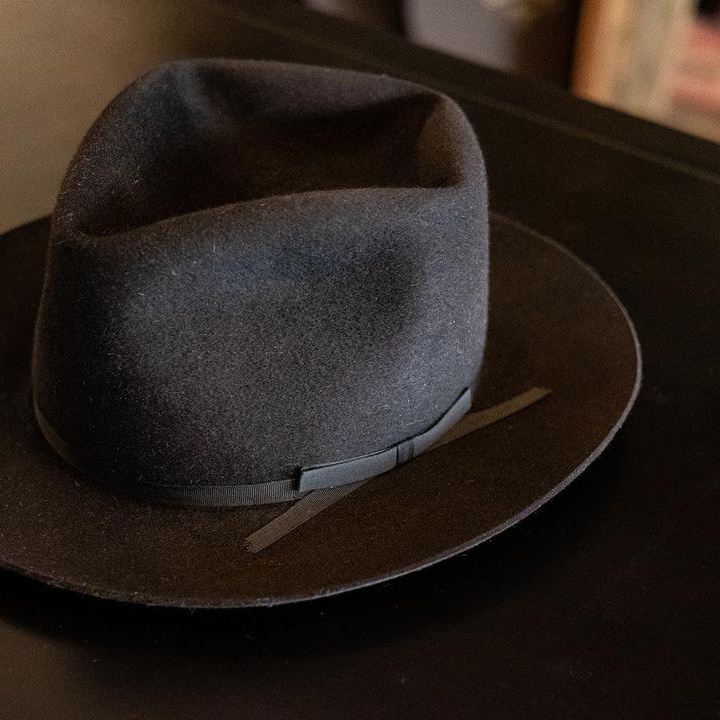
A lot has been written about the death of suits, along with the accompanying necktie, but the first piece of traditional men’s dress to have disappeared is the hat. It’s been said that men stopped wearing hats en masse when President John F. Kennedy declined to wear one at his inauguration. Neil Steinberg, I think, has a more nuanced and convincing account. In his book Hatless Jack, he traces the slow disappearance of men’s headwear back to the late 1800s. Changing social norms and technology probably had more to do with it. Plus, after the Second World War, hats were increasingly seen as stodgy and conformist. In an age when informality is equated with authenticity, the fedora and its cousins can feel phony. 

Costume designers, however, continue to use hats to great effect. A hat can be the quickest way to say something about a character, communicating something just below the surface about how the person feels and thinks. Earlier this month, Apple TV+ debuted their new eight-part mini-series, Little America, which puts on-screen the moving portraits of real-life immigrants. These stories, which were collected by Epic Magazine, are about the essential goodness of America’s promise. “Everyone here came from somewhere else,” Epic’s editors write. “Even Native Americans crossed the Bering Strait at some point. This is the basic American idea — an identity open to all — but it can be easy to forget from inside. And that’s when politics can turn ugly, as it has recently, with our political narrative becoming a story of blame and fear. Little America is meant to counter that narrative with a fuller portrait of our most recent arrivals." 

In an episode titled "The Cowboy,” Conphidance plays the Nigerian graduate student Iwegbuna Ikeji, who came to Oklahoma during the early 1980s to study economics. Ikeji’s open enthusiasm and frank dislike for certain parts of American culture put him at odds with his fellow students, as well as a snarky tutor. He doesn’t understand why Americans privilege the individual over the community, and some of the tensions between him and his peers are aggravated by racism, even if not totally motivated by it. 

Keep reading

Kintsugi, The Japanese Art of Repair

image


Earlier this month, Dartmouth professor and labor economist David Blanchflower published a study on the statistical relationship between well-being and age. Using data from 132 countries, Blanchflower found that people often become increasingly miserable as they head into their 40s. Colloquially known as the mid-life crisis, economists represent this trajectory with an inverted U-curve (for those who aren’t mathematically inclined, such as me, this is shaped like a “frowny face”). This pattern has been long known to psychologists, philosophers, and mystics, but Blanchflower found the exact age when the average midlife crisis peaks: 48, give or take a year depending on some conditions. “The curve’s trajectory holds true in countries where the median wage is high and where it is not, and where people tend to live longer and where they don’t,” he writes. The good news is that, according to science, things indeed get better. After age 48, people slowly start to find contentment.

Why is this? Some suggest this statistical pattern is hardwired into our biology. A 2012 study of chimpanzees and orangutans found that our closest evolutionary ancestors also fall into middle-aged ruts. Theirs tends to peak at the age of 30, which closely traces along the human timeline (a little past the midway point for life expectancy). The study’s methodology, however, is questionable at best. Accurately measuring happiness in humans is notoriously tricky, so you can only imagine what it’s like for great apes. “Each ape has several keepers, and every keeper was asked to assess the psychological well-being of their particular animal using a short questionnaire,” explains co-author Andrew Oswald. Among the questions, keepers had to answer: “If you were that animal, how happy do you think you would be on a scale of 1-7?” (I found this question to be so hilarious, it briefly relieved me from my miserable existence).

Economists don’t yet know why life gets better after age 48, but they have a few ideas. It could be that people learn to quell their unreasonable aspirations after mid-life, as well as adapt to their strengths and weaknesses. They may learn to compare themselves less to others or appreciate their remaining years as similar-aged peers pass on. A more straightforward explanation could be that the population sample at the end of the age spectrum is biased. Happier people tend to live longer, so the inverted U-curve simply reflects who has managed to stick around.

Keep reading

Respectability and Clothing

Every two months at The Economist, you can find Adrian Wooldridge opining about the modern world through his column, The Bagehot. Nearly all of his articles follow the same formula. He bemoans the lack of etiquette and grace in today’s society, and then ends with a heavy-hearted sigh. He hates how the young, who are the most educated generation in history, are more likely to model their style after the urban underclass, rather than yesterday’s educated elite. As a committed pogonophobe, he thinks beards represents the mainstreaming of male vanity. He snarks on athleisure. Predictably, he also hates seeing tattoos, piercings, and, most of all, bare male ankles. He wishes we still had the respectability of the fedora. You can almost hear the smugness in his voice when he writes: “These days, hat-wearing is a snub to authority rather than a sign of respect. The most popular hats are the ugliest: baseball hats that look like giant duck-bills, plastered with an inane slogan, and beanies that could double as tea cozies.”

In an October/ November 2018 column, Wooldridge laments the collapse of manners. According to him, 16th century Europeans behaved like barbarians. They reveled in torture and public hangings; they stank to high heaven. “It took centuries of painstaking effort –- sermons, etiquette manuals, and stern lectures –- to convert them into civilized human beings,” he says. Now, however, after nearly 500 years of the civilizing process, all has been undone in just a few decades. People eat food on trains, and public bathrooms are a mess. San Francisco, a boomtown for tech-driven growth, is littered with feces, syringes, and garbage. The people who were supposed to guard high culture, such as academics, have collectively turned against it. At the end of his essay, he admits to almost serial-killer-level behavior, which he excuses as his way of just trying to keep up with a de-civilized world.

I don’t think I’ll ever give in to the fashion for beards and tattoos, let alone turning up to meetings naked. But I’ve noticed that I increasingly circumvent the normal rules of politeness in a desperate attempt to keep going. I carry a pair of headphones with me at all times to insulate myself from the noise of my neighbors. I sprint ahead if I see any possible competitors approaching the queue for coffee. And I’ve graduated from putting my bag on the seat next to me on a train to a more cunning technique: I leave a copy of Jack Rosewood’s “The Big Book of Serial Killers” on the chair and smile maniacally at anyone who comes anywhere near. So far, the serial-killer strategy has worked remarkably well.

Keep reading

America’s Other Button Down

image


Those who heard Harry Hosier speak found him hard to forget. During the American Revolutionary War, Hosier, who’s better known as Black Harry, was a newly freed slave and an illiterate exhorter. In 1780, he met one of America’s founding bishops, Francis Asbury, who was traveling through the states to convert people to Methodism. At the time, Asbury needed someone to help drive his carriage, so Asbury hired Hosier, then a freedman, to travel with him. However, when Asbury noticed that his illiterate guide could recite long passages verbatim, he trained him to be a preacher in his own right.

At first, Hosier was supposed to just help bring black audiences to Asbury’s Methodist sermons. In his journal, Asbury wrote: “If I had Harry to go with me and meet the colored people, it would be attended with a blessing.” But in 1781, when Hosier gave his first sermon — “The Barren Fig Tree” — to a black audience in Virginia, his delivery was so effective and affective, even white audience members were moved to tears. Among the people in attendance that day was Benjamin Rush, a civic leader and one of the signers of the Declaration of Independence. Rush determined it was one of the best sermons he had ever heard. “Making allowances for his illiteracy, [Hosier] was the greatest orator in America,” he later wrote.

Together, Asbury and Hosier helped spread Methodism throughout America, as well as set up what would become one of the oldest American traditions: the traveling tent ministry. In the early days of the United States, it didn’t make much sense for ministers to set up a church. The souls they wanted to save were on the move, and people were continually pushing westward. Boomtowns that sprung up overnight were just as likely to go bust the next day. So staunchly devout men of God packed whatever they could into saddlebags, and then traveled through the wilderness and into towns on horseback, preaching to whoever would listen. These saddlebag ministers, who were known as circuit riders, spoke about the Word of God from street corners and open fields, in courtrooms and people’s cabins. Circuit riders still exist today, but they’ve traded their covered wagons for motor homes. You’ll often see them on university campuses, shouting at students about eternal salvation.

Keep reading

The Best End-Of-Season Sales

image


This will probably be the last sales post for the season. After this, there will be a few price drops here and there, but sizing will start to get scant, and the selection narrow. At the moment, however, there are still some excellent end-of-season promotions. Here are seven I’ve been looking at, along with choice picks from each section.

No Man Walks Alone: Up to 40% Off

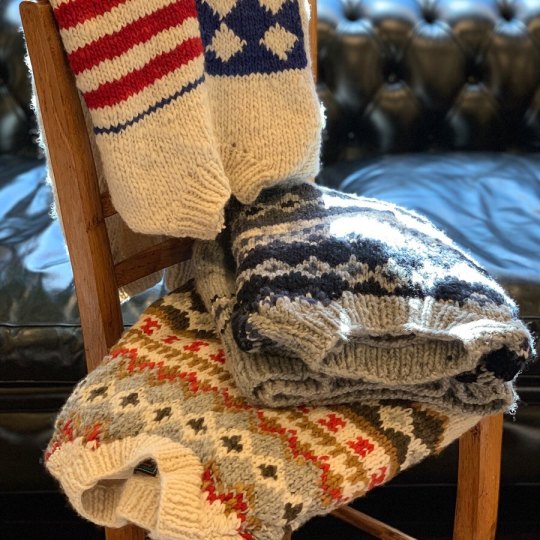
No Man Walks Alone, a sponsor on this site, just started their end-of-season promotion this morning, where you can find select items discounted by as much as 40% off. This season, I bought one of their Chamula sweaters, which are hand-knitted in Mexico from plush merino yarns. They’re stretchy and somewhat loosely knitted, but supremely comfortable and have an attractive, slightly uneven texture. Available in Fair Isle and an American flag motif. Just size up, as these run small.

Keep reading

How We’ll Remember This Decade

The end of the year always brings some reflection on what’s happened. The closing of this year, however, is special because it marks the end of a decade. So, this past week, I’ve been thinking about what are some of the biggest changes in fashion in the last ten years. Is it about the rise of specific trends, the emergence of certain subcultures, or something else? The more I think about it, the more I think this decade will be remembered not for its looks, but the ways in which we engage with clothing. 

I often go back to this 2015 article by Cathy Horyn, where the then New York Times writer suggested that we may have entered a post-trend universe. That is, where fashion used to be cyclical — going from skinny jeans to baggy, and then back to skinny again — it’s now possible for many styles to coexist together. As she puts it, “there is no single trend that demands our attention, much less our allegiance, as so many options are available to us at once.” She credits this to social media, the ability of brands to create their own universe, and a greater acceptance for diversity in dress in general. An excerpt:

Throughout the 20th century, the way women dressed was governed by trends — from the hobble skirt of the 1910s, a Paris invention that spread to small cities and was ultimately sold by Sears, to Dior’s radical New Look of 1947, to the ’60s miniskirt. But for lots of reasons, mostly to do with economics and, inevitably, the Internet, the industry has moved away from that model. The last big trend that I can recall, one that started on the runway and exploded among mainstream manufacturers, was the hospital-green cargo pants that Nicolas Ghesquière made for Balenciaga. That was more than a decade ago. 

Keep reading