End’s Spring Sale Starts

image


When it rains, it pours. End-of-season sales are coming down this week, with the newest one being from End – a UK-based shop that carries a range of inventory rivaling Mr. Porter’s. At the moment, you can take 20% off with the checkout code VIPSALE. That might not sound like much, but remember the prices here are already about 20% lower than US-based boutiques (thanks to automatic VAT discounts). If your order is worth less than $800, they’ll arrive duty-free. Shipping is also free on orders over $250. 

Since the inventory is so large, your best bet is to scan through the site’s list of brands. Some that I think are notable:

  • ArkAir: ArkAir is the civilian-wing of an old English company, Arktis, which has been providing standard-issue military wear to special forces around the world since 1985. Over the years, they’ve sold to everyone from the French Foreign Legion to UK’s Royal Marines. ArkAir is inspired by those original military jackets, but the clothes are cut in a way that makes them practical for civilian use. Best of all is the price. With jackets nowadays commonly landing north of $500, these hover around $250. With the checkout code, that brings them to $199. 
  • Barbour: One of the best times to get a Barbour jacket is during End’s promotions. Being that prices here are, again, lower than most places, the 20% discount just makes them even more affordable. Along with core-line models, such as the Beaufort and Bedale, you can find things such as the Ashby (which is basically the Bedale, but with a slimmer body and longer sleeves). See my Barbour Buyer’s Guide here. 

Keep reading

The Armoury’s Spring Lookbook

image


Lookbooks don’t always have to be instructive. Especially for casualwear brands, they’re more often than not meant to serve as style inspiration – showing the idea or spirit behind a collection, rather than telling you how to wear something. 

For the last year, however, The Armoury has been putting together seasonal presentations that feel both fun and grounded. Even if the looks are at times a little bold, many can be tweaked here and there to fit modern life. Last season, they did something in conjunction with illustrator Fei Wang (aka Mr. Slowboy). This season, they shot something inside one of their Hong Kong stores. 

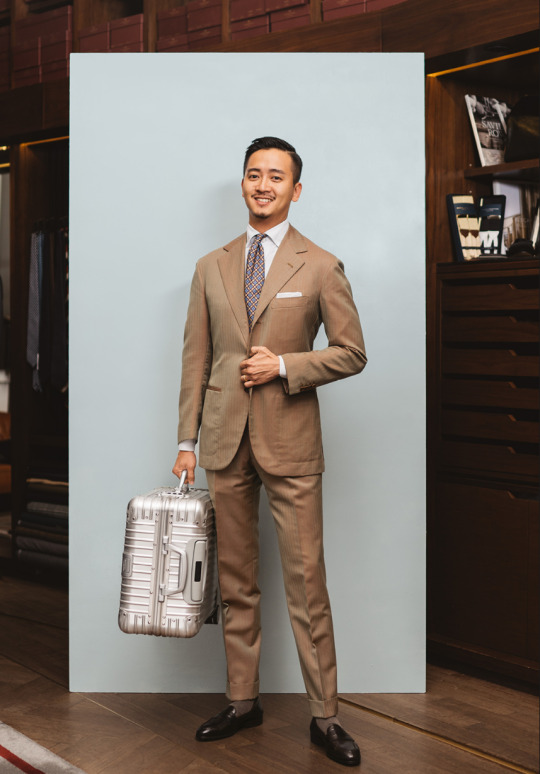
There are lots of great takeaways here. The main one is how easily a suit or sport coat can be dressed down with a pair of slip-on shoes, whether they’re tassel loafers, penny loafers, or those Belgian-esque styles from Baudoin and Lange. Similarly, just like how tweed sport coats can be worn with the right pair of jeans in the winter months (I like Drake’s for these purposes), you can do the same thing with linen jackets on warmer days. The one below from Ring Jacket is cut a little trimmer and softer, which makes it easier to bridge the gap in formality between tailored clothing and denim. 

Keep reading

Everybody Loves the Sunshine

image


Every season, there are one or two things I regret having missed out on. Last season, it was this Melton wool “traveler coat” from Kaptain Sunshine. It’s a long, raglan-sleeved overcoat made with lots of cool details – including a flapped patched, ticket pocket set just above the hips; equestrian-inspired leg straps hidden in the interior; and a perfectly cut collar that looks great when worn up. Most of all, I love the silhouette. Comfortable fitting and slightly oversized, it’s a refreshing take on men’s outerwear in this slim-fit age. You can see my friend Kyle wearing it here with a chunky, cabled turtleneck and some light washed jeans. 

If you’ve never heard of  Kaptain Sunshine, don’t worry – they’re a relatively new label, having just started in 2013. Their designer, Shinsuke Kojima, was one of the founding editors of Huge, a popular Japanese magazine that sadly folded just two years ago. Having left the publishing business, Shinsuke now designs his own menswear line, Kaptain Sunshine, as well as Woolrich’s Japanese collections

Like many other Japanese brands, Kaptain Sunshine takes inspiration from vintage Americana, militaria, and outdoor wear. A lot of this comes from Shinsuke’s love for vintage clothing, which he’s been collecting since he was 15 years old. As a teen, he used to rummage through Tokyo’s dustier thrift stores for vintage Levi’s, varsity sweaters, and beat-up military parkas. These days, you can still find him on the weekends at Suntrap, a premier vintage outfitter in Tokyo, which Shinsuke cites as one of his favorite shops. 

Keep reading

The In-Between Gabardine

image


It would be too much to say that the suit is dead, but here in San Francisco, you’d struggle to find occasions to wear one. More and more people nowadays are dressing down for the office, even in industries where client-facing interactions have historically required more professional wear. My prediction is, in another generation or so, dark suits will only live on through weddings and funerals – the last places for traditional clothing in any society. 

My solution so far has been to rely on sport coats, or at least informal suits made from casual materials (e.g. cotton, linen, and corduroy – which, if I were to be honest, are mostly worn as suit separates). Even if a dark suit today is a rare sight, few people bat an eye at more casual forms of tailoring. You can wear a sport coat to a nice bar or restaurant, or depending on where you work, even the office. 

The problem is that none of those options really look as good as a traditional two-piece, so this year I’m hoping to get what I call an “in-between” suit – something smarter than a sport coat, but more casual than traditional business dress. Bold, patterned flannel is nice for this sort of thing, but I’m hoping to start off with wool gabardine. 

Keep reading

Guide to Getting Good Gloves

image


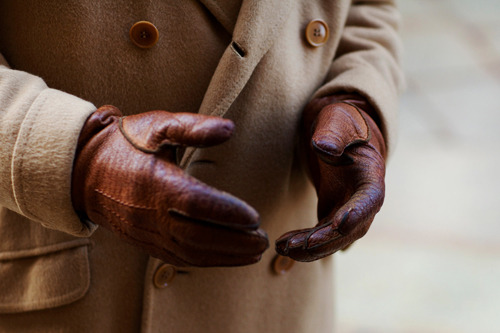
Gloves aren’t just a style statement this time of year; they’re a practical necessity if you live someplace cold. I’m in Canada at the moment, visiting family, and can’t even leave the house without a pair already on. Plus, check out Luciano Barbera’s beautifully aged gloves pictured above – old and richly patina’d from years of use. Such gracefully aged gloves can be a nice way to add interest to a winter ensemble. 

If you can only own one pair, get them in dark brown. Something made from a soft and supple Nappa leather will be versatile enough to go with almost anything. You’ll also want to get them wool-lined, if not at least cashmere-lined. Unlined gloves fit closer to the hand, but you’ll appreciate the added warmth of wool-lined gloves when temperatures drop below forty. 

If you have room for more than one pair, however, I think it’s nice to get some that go with certain outfits. Think about the material, stitching, lining, and even silhouette (yes, gloves have silhouettes). A rundown of what I find particularly useful for my wardrobe:

Keep reading

Starting to Feel Sheepish

image

Winter clothes for me is all about the materials. The soft hand of woolen flannel; the sturdiness of tweed. Waxed cotton can be a good way of keeping rain off your back, although bonded cotton can sometimes drape in more interesting ways. A plush alpaca blend sweater can also be a good alternative to cashmere, even if it sheds a little. The trick is finding something thick enough.

For the last year or so, I’ve been wanting to get a shearling jacket. Shearling being a kind of sheepskin, particularly from lamb, that has been cured so that the fleece remains attached to the leather (when the hide is taken from merino sheep, you have mouton).

Granted, shearling hasn’t had the best history. Not too long ago, the mere mention of it evoked ideas of the Marlboro Man. Those long, bulky, no-nonsense coats with patchwork-like seams running up the back and tufts of wool peeking out from beneath the cuffs. The silhouettes were blocky and the leathers were often dry and cracked, leaving the wearer looking vaguely like King Kong. As ranch coats and bomber jackets, shearlings carry a sort of rugged, workwear sensibility.

There have been times, however, when shearling was considerably more luxurious – even if still questionable in taste. In the early 1930s, clothing catalogs used to advertise their shearling coats alongside suede leather jackets and horsehide outerwear, seemingly ignoring the Great Depression. The material then came back in the ‘60s and ‘70s with the Peacock Revolution. Swanky men wore shearling coats with chunky turtleneck sweaters and velvet bellbottoms, presumably to their eternal regret years later.

Keep reading

A Bit About Cashmere

image


There are a lot of things I love about living in the Bay Area – the food and bar scene, the relatively diverse community, and the summer/ fall festivals. The only thing I hate is the real estate. Housing is expensive, gentrification is rampant, and for the kind of buildings I like to live in, home insulation isn’t that great. Unless you’re in a new building or can afford some multi-million dollar house, old buildings, especially Craftsman ones, are kind of drafty. 

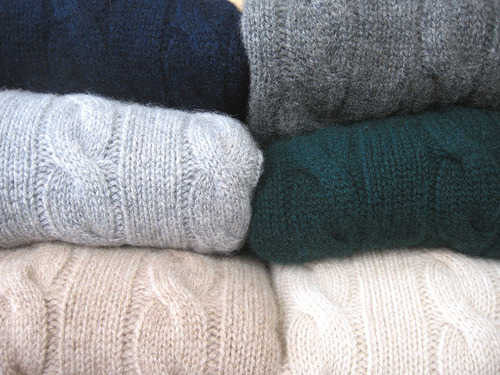
I used to waste a lot a money in the winter on heating bills, but a couple of years ago, found that I could cut that back with some good cashmere sweaters. Cashmere knits may be the only things that can be rightly called investment pieces. They’re expensive, but depending on where you live, you’ll make up the cost in what you’ll save on heating. 

In some early-20th century trade journals, you’ll find rumors that the finest cashmere used to come from Russia, but for at least the last hundred years, China and Central Asia have been the main sources. From the mountains up Tibet and away across the back of the Himalayas to Bokhara, cashmere travels much like the way it did before Marco Polo explored the Great Silk Roads. It comes down from the mountains in countless little loads on the backs of yaks and horses – sometimes buoyed down interminable waterways on rafts and boats – before reaching a major hub, where it’s put on modern transport and swiftly whisked away to Europe. If you’re wondering why cashmere should have to travel so far across Asia, just remember the stories of the still unconquered Everest. Across the vast barrier of the Himalayas, there are few routes. 

Keep reading

My Morning Coat

image


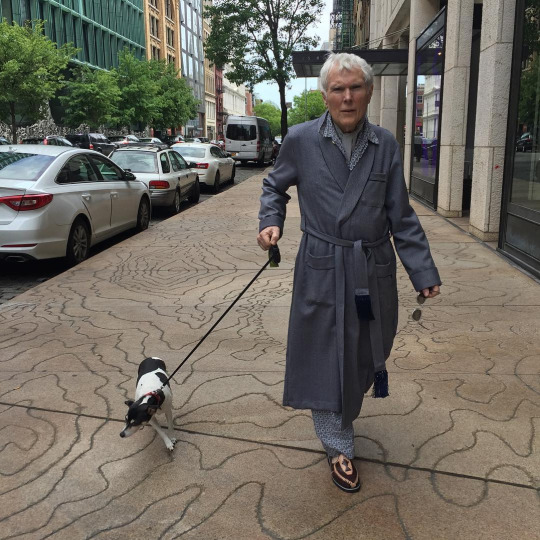
I love this photo of Glenn O’Brien strolling down some NYC street in a dressing gown and leather huaraches. Designers have been trying to turn pajamas into glamorous streetwear for the last two or three years, and while I agree with Robin Givhan that you should resist, wearing something like this in the morning while walking your dog just sounds fun. 

I bought my first dressing gown last year. It was a bespoke commission from Ascot Chang, with the gown itself made from a length of mid-weight, grey windowpane Fox flannel. It’s great for chilly winter mornings, but a little too heavy for spring and summer. So I’ve since picked up two more – one made from an indigo-dyed Khadi (a kind of handspun, handwoven Indian cotton fabric) and another in a dotted navy silk. 

One of the nice things about working with a shirtmaker is that you can often get things made bespoke for not much more than what you’d pay for high-end ready-to-wear. That not only includes dress shirts, but also things with similar constructions – shirt jackets, pajamas, and dressing gowns. The only exception might be silk gowns, which are apparently better off-the-rack. 

Keep reading

The Ideal Coat Wardrobe

image


Despite that old line attributed to Mark Twain – “the coldest winter I ever spent was a summer in San Francisco” – it actually doesn’t get that cold here. In the dead of winter, temperatures can drop into the low 40s, but that’s basically springtime in Moscow, when street performers come out to Stary Arbat to busk for tourists. 

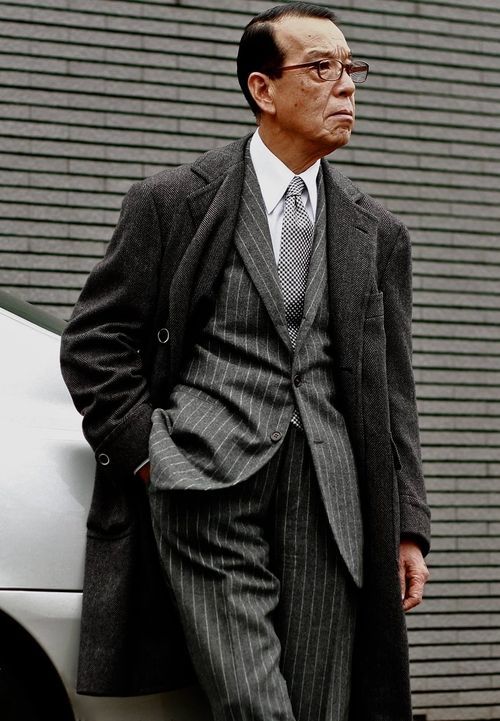
Still, that doesn’t make me want dress coats any less. And by dress coats I mean the kind of topcoats and overcoats that have mostly disappeared from modern wardrobes. With fewer men wearing suits and sport coats nowadays, fewer still need the kind of outerwear that traditionally accompanied them. So, today, we have hundreds of casual outerwear styles, but only a handful of options for something dressier than a parka. 

My own wardrobe has two dress coats, and despite the weather being less-than-frigid, I find them surprisingly useful. They’re too warm for the afternoon, but great for keeping out that biting chill in the morning and night – which are basically the only times I’m outside of work.

Keep reading

The Armoury Starts a Video Channel


One of my favorite menswear shops, The Armoury, just started a YouTube channel. Jeremy Kirkland, who heads up their marketing, tells me it’ll be a place where they can answer popular questions (e.g. what men should look for in a suit), as well as showcase some of the brands and artisans they carry. “We want to make things easygoing and approachable,” he says. “Sometimes people assume there’s a bit of pretentiousness in tailored clothing. We want to break that stereotype.”

The channel currently has a video on how a suit should fit, as well as a nice run down of their Ring Jacket line (good for guys who might not be able to stop into their Hong Kong or NYC locations). Jeremy tells me they’ll also have special appearances in the future. Taka from Liverano & Liverano will be stopping by to explain the Florentine cut; Pino from Orazio Luciano will talk about Neapolitan tailoring. Other artisans will be coming by as well to answer questions about fit and quality, giving people a broader understanding of men’s clothes (even if they might be shopping elsewhere). 

You can check out the channel here. The next video should come out later this winter.

Keep reading