How Sound Branding Changed Fashion

image


If you were just getting into menswear ten years ago, you likely updated your wardrobe in one of two directions. The first was the sort of skinny lapeled, Mod-inspired tailoring that prevailed after Mad Men debuted in 2007; the second was a sleek and colorful “metrosexual” style that was represented through Queer Eye for the Straight Guy. Those two looks dominated the editorial pages of GQ and Esquire, who showed the before-and-after transformations of men who learned how to buy slimmer clothing – and get things made slimmer still through a local alterations tailor. 

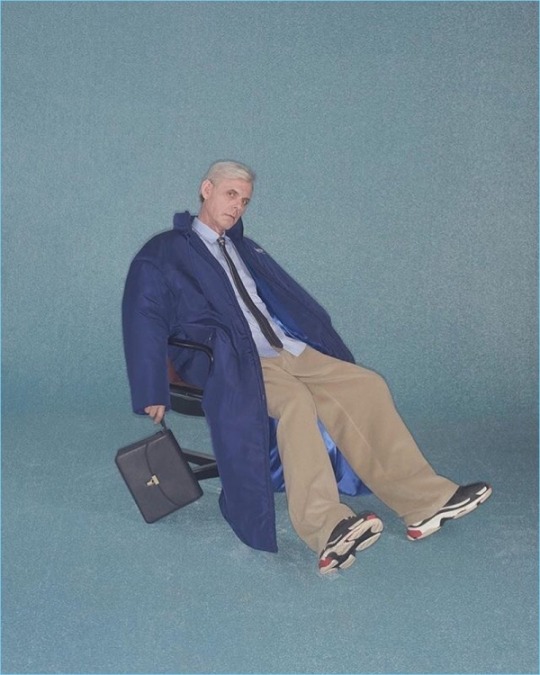
Today, those transformations are running in the opposite direction. Silhouettes are filling out and dressing like a dad is coming back in. High-fashion boutiques now stock the kind of “sensible” clothes your father likely buys from Kohl’s: relaxed-fit jeans; vacation shirts; schlubby tennis shoes; tactical fanny packs; and pastel-colored, washed-cotton caps (“they’re soft, shapeless, and familiar – just like dad,” writes Pete Anderson at Put This On). Mr. Porter even stocks the most fatherly of leg coverings this season: zip-off cargo pants that convert into cargo shorts, giving value-minded fathers a two-for-one (which is good since Mr. Porter’s version is a mind-boggling $1,000).

You can chalk some of this up to the fashion cycle. Once a look becomes popular, first adopters move on, thus swinging the pendulum in the other direction (fuller silhouettes give way to skinny silhouettes until the second collapses and fuller styles prevail again). The other is about the rising influence of Demna Gvasalia, the Georgian designer who led the design team at Maison Margiela before becoming the creative head at Balenciaga and his own label Vetements. When he showed his spring collection last year at the verdant Bois de Boulogne park in Paris, he sent models down the runway in “oversized color-striped windbreakers, pale jeans similar to those that made Barack Obama dad-in-chief, and bloated running shoes in the style of podiatrist-approved Asics.” Male models even carried children, the most literal interpretation of the trend. Dad style today is so au courant, Democratic Vice Presidential nominee Tim Kaine even tweeted about it

Keep reading

Five Style Tips from Drake’s Lookbook

image


For many men of my generation, who grew up in the 1980s and ‘90s, our first introduction to classic style was at a Ralph Lauren store. That’s where we fell in love with things such as sporting tweeds, chambray work shirts, and the chalky hand of ancient madder. Ralph Lauren didn’t invent these things, of course, but they presented them in a way that felt sexy. Brooks Brothers has been many things, but it has never been sexy. 

In some ways, Drake’s is doing that for a younger generation, albeit at a much smaller scale. As the brand has expanded beyond just accessories, taking on tailoring and sportswear, it’s been able to present a fuller vision of how classic style can be worn today. These lookbooks have become incredibly popular in recent years, often getting posted on sites such as Reddit’s Male Fashion Advice within minutes of their release. And much like how Ralph Lauren helped translate classic style for me, I think Drake’s is putting a new spin on the language. Instead of showing pinstripe suits in luxuriously paneled offices, with decor reminiscent of an expensive lawyer’s sanctum, they feature softer takes on classic menswear in more relatable environs. Tweeds and duffle coats are shown being worn at university campuses, seersucker suits in Southern diners, and brushed Shetlands on moss-covered, rocky shores

This season, the team went to Lanzarote, one of the seven main Canary Islands located just off the coast of Morocco. It’s a short four-hour plane ride from London, making it a popular fly-and-flop destination for vacationing Brits (many retreat there for some much-needed winter warmth). But for Drake’s, the subtropical archipelago was also an excellent solution to a real problem. How do you shoot a spring/ summer lookbook in the middle of January, when it’s snowing in London? To show their collection in a warmer clime, they headed to the one place known as the “Island of Eternal Spring.” 

Keep reading

How Thrift Stores Drive Fashion

image


For the truly fashion-obsessed, the shuttering of Gallagher’s Paper Collectibles ten years ago marked the end-of-an-era. The dingy, subterranean shop in the East Village was one of New York City’s greatest institutions. Inside was a veritable treasure trove of vintage fashion magazines, books, and photo prints. Stacked in corners and along shelves, you could find Vogue in all its editions, dusty issues of Harper’s Bazaar, 100-year-old copies of Town & Country, the now-defunct Mademoiselle, and more arcane titles, some of which were published in the 1860s. 

If you think this is just a local hangout for art students and the occupationally hip, you’d be wrong. In between preparing for their seasonal collections, award-winning designers used to come here to rifle through yellowed pages and plunder archives. Michael Gallagher, the store’s proprietor, once told The New York Times: “We get them all, Hedi Slimane, Karl Lagerfeld, Marc Jacobs big time, John Varvatos, Narciso Rodriguez, the Calvin assistants, the Gucci assistants, Dolce & Gabbana, Anna Sui – you name it. They all come here for inspiration. At least that’s what we call it.”

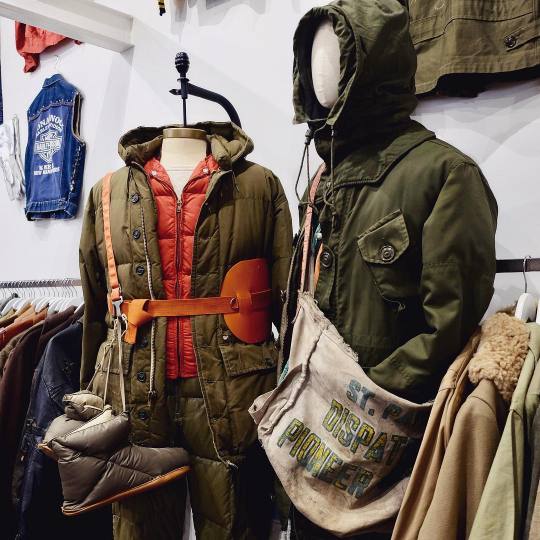
It’s no secret that designers copy. Menswear is full of work, sport, and military references, some of which have carried through into a professional dress. Penny and tassel loafers entered the canon because they were so thoroughly imitated. In the designer world, Tom Ford has been known to lift from Halston; Alexander McQueen stole from Vivienne Westwood. Helmut Lang once moved his operation from NYC to Paris to thwart copycats, but he himself replicated a disco bag from the indie design collective Three As Four. Diet Prada tries to publicly shame designers for copying, but with notable exceptions, they have little effect. Everyone knows how fashion works. When Oprah asked Ralph Lauren in 2011 how he’s been able to keep designing for so many years, he answered: “You copy. Forty-five years of copying; that’s why I’m here.”

Keep reading

The Other Kind of Cashmere

image


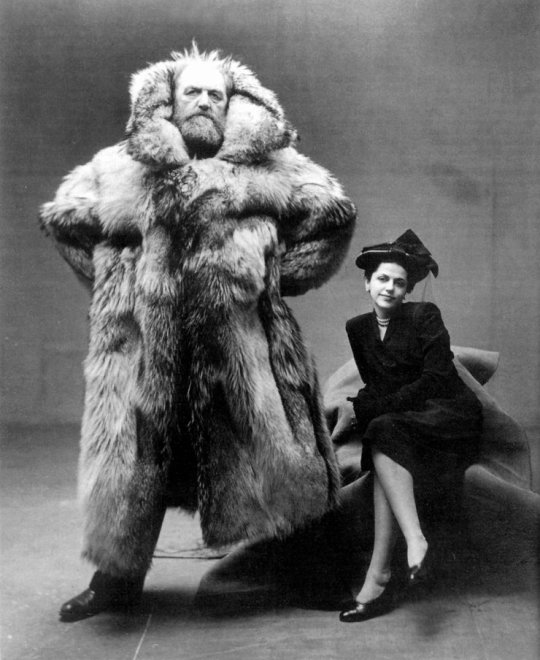
Danish explorer Peter Freuchen stood like an arctic bear when he was photographed alongside his wife in 1947. The image, shown above, made its way around the internet some years ago because of Freuchen’s magnificent outfit. Freuchen, already a giant of a man, was wearing a Sasquatchian sized fur coat – single-breasted, nearly ankle-length, with a collar so tall that it almost cleared his bald head. His wife, who was more typically dressed for the occasion, did not look amused. 

Freuchen was a real-life Most Interesting Man in the World. He was a writer, an arctic explorer, and a resolute anti-fascist. During the Second World War, he fought Nazis as part of the Danish Resistance and once gave Triumph of the Will director Leni Riefenstahl the finger at a film premier. But it wasn’t the Nazis who almost killed him – it was snow. Throughout his life, Freuchen took many 1000-mile dogsled journeys across Greenland’s northernmost tundra. During one of those arctic adventures, however, he found himself caught in a particularly bad blizzard. 

Hoping to wait out the storm in a snowbank, he buried himself beneath the ground’s surface, only to find that the snow above him was swiftly swirling around and turning into a thick layer of ice. Before long, Freuchen was encased in what was a frozen tomb. Quickly losing strength, he struggled for hours trying to claw his way out using nothing but his bare hands and some frozen bearskin. Freuchen had all but given up when he got an idea, which he details in his autobiography Vagrant Viking

Keep reading

No Man Walks Alone Winter Sale

image


No Man Walks Alone is a sponsor on this site, but they’re also one of my favorite online retailers. The shop’s founder, Greg – who can be clearly seen above walking alone – simply has great taste. He knows his way around a coat-and-tie rig, but also has a good eye for casualwear. For guys who love Italian tailoring and want to build a weekend wardrobe, No Man Walks Alone is a great one-stop shop. 

This morning, they started their end-of-season sale, where you can find select items marked down by as much as 40%. Some of my favorite brands here include Sartoria Formosa, which is wonderful for high-end Neapolitan tailoring, and Kaptain Sunshine, which offers slightly quirky and offbeat takes on Americana and workwear (they’re like LL Bean with a sense of humor and a lot more style). Few stores capture my personal interest in clothing as well as NMWA, especially in the way they mix tailoring with workwear and contemporary styles. Here are ten favorites right now from their sale.


Keep reading

How Tempo is Changing Fashion

Yesterday marked the beginning of a new year on the Gregorian calendar. While seasons and days have their natural demarcations, the division of years is a totally artificial, man-made boundary. Humankind needs some way to clear the books and start a new ledger; somehow we have jointly decided that the time to do this is the turning of the new year, and that this happens on an agreed-upon day in the dead of winter. The Earth recognizes no particular difference between Tuesday and Monday, but by now billions of new year resolutions have been made, some already broken. This year, we tell ourselves, will be the year that we become better versions of ourselves. 

Fashion, too, reinvents itself on a schedule. Every year brings new clothes, new trends, and even new companies. 2019 will offer hundreds of options for every imaginable item that could be in a closet, each evolution differing from its predecessor only by a matter of degrees. Hanes is for basics. American Apparel is Hanes, but pornographic. Everlane is American Apparel, but celibate. Entireworld is Everlane, but cultish. 

Though the market drowns in options, and the stream of fashion moves ever quicker, the average consumer does not navigate the twists and torrents of the entire industry. Instead, they find direction from just a handful of companies. And what matters is not the passing of seasons or the deluge of new releases, but rather how each company organizes those releases that affect our perception of time – and, relatedly, style.

Keep reading

Ten Amazing Boxing Day Sales

image


Today is Boxing Day for people in the Commonwealth, as well as the start of end-of-season promotions. I’m rounding up the best seasonal sales at Put This On, but I wanted to pull out my ten favorites here. There are some tremendous deals right now. Mr. Porter, notably, launched their winter sale yesterday, where you can find things such as discounted Edward Green shoes and Schott leather jackes. End has waxed cotton Barbours starting at $175; J. Crew has their anorak discounted to $100, as well as hemp work shirts for a mere $14 (I think tax costs more for most purchases at this point). Brooks Brothers’ oxford button-downs are seeing a rare promotion. And there are some terrific deals on outerwear, from Marni overcoats to Blackmeans double riders

END: Up to 60% Off Select Items

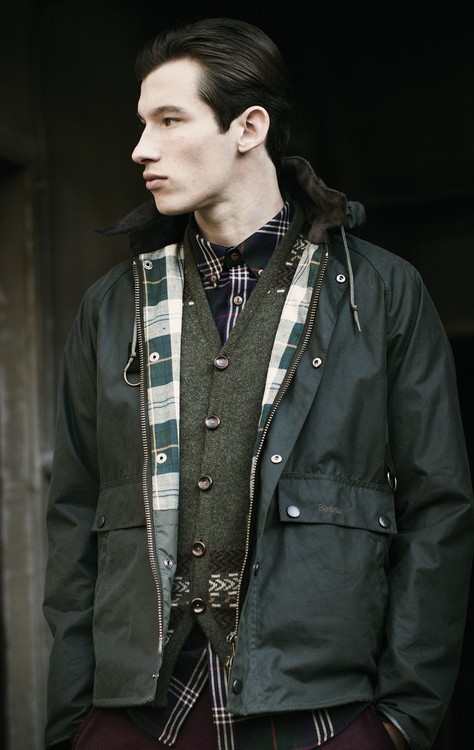
If you’re one of the few people left on this planet that reads about menswear online, but doesn’t own a Barbour jacket, END has some of the best prices around. Their end-of-season promotion includes a wide range of Barbour styles, including the Bedale for $199 and Beaufort for $259. I wear the Bedale over heavy sweaters, but use the longer Beaufort on the rare occasions I layer a Barbour over a sport coat. END also has Barbour’s Ashby, which is a slimmed-up Bedale, for $175. See this Barbour buying guide I wrote years ago for sizing advice.

Keep reading

Better than Wool Flannel Trousers

image


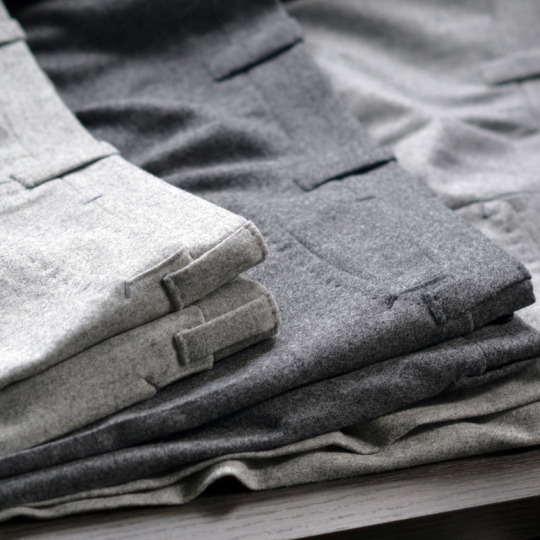
Flannel trousers are the backbone of any tailored wardrobe. They’re professional without looking pushy, sophisticated without being slick. Best of all, while they’re perfectly suitable for the office, they make you feel like you’re lounging in your brushed cotton pajamas. Wool flannel is so soft and comfortable, the Brits used it for undergarments up until the early 20th century. Doctors even recommended wearing flannel to ward off ailments and cure dysentery. Although, not everyone was convinced. In a 1900 issue of The Medical Times, one skeptic wrote: “The writer was a constant victim to colds. He was really a victim of flannels, having fall after fall procured underwear of heavier weight and all wool, in the determination to avoid the chills and shivery sensations during winter. [He fell] for the flannel craze.” 

Like all wool fabrics, flannel comes in two forms: worsted and woolen. Maybe these categories should be renamed to combed and uncombed, however, because it’s the combing process that separates them. Combing wool is exactly what it sounds like. Before wool is spun into yarn, a spinner can separate out the fibers by combing the material. This sets the hairs parallel to each other, as well as removes any of the shorter fibers that would spoil the regularity characteristic of worsted. After the wool has been combed, it’s spun into yarn and then woven into a fabric. And by combing the hairs first, the resulting fabric will feel a bit smoother and crisper, which is how you get shiny, hard-finished fabrics. Woolens, on the other hand, aren’t put through the same process. Thus, the fabric is spongier and loftier, as the fibers point in every possible direction. To give examples, gabardine is worsted; tweeds are generally woolen. 

Flannel is available in both forms. Worsted flannel will have a subtle but visible twill weave just beneath its fuzzy nap. Woolen flannel, on the other hand, tends to look cloudier (like the every-which-way direction of the hairs on tweed). I prefer woolen flannel this time of year because it’s softer and spongier next to the skin, its lofty surface helps trap heat, and its mottled finish lends visual interest. None of these characteristics are present to the same degree in the increasingly more common worsted variety, whose only virtues are that it’s studier and can be woven into a lighter weight material. If you have the money for it, get worsted flannel for spring/ summer, then heavier woolen flannel trousers for those bitingly cold winter nights.

Keep reading

Are Fashion Seasons Outdated?

image


When did you start wearing tweed and flannel on a consistent basis this year? About a generation or two ago, these two robust fabrics would have made their first appearance after Labor Day, which marked the natural end of summer fashion. After all, that was the spirit behind the saying “no white after Labor Day,” a rule so sacred among etiquette hardliners that Patty Hearst’s character was murdered for it as punishment in the 1994 movie Serial Mom. But this year, my autumnal clothes have been dashing in-and-out of my wardrobe, with summer pieces continuing to be useful as late as November. Last month, thirteen US federal agencies released a stunning report saying climate change has already had devastating impacts on our health and economy. On a more superficial level, I can’t help but wonder if it’s also affected our wardrobes – and menswear retailing. 

Every year, the traditional concept of four seasons seems increasingly outdated. Scientists have found that, as the planet warms up, the tropics have been expanding 0.1 to 0.2 degrees latitude every decade, so that places that once had four seasons are now shifting to having just two. Vox had an article this week about how global warming could change US cities by the year 2050 (“In some cities, it’ll be like moving two states south”). “You can see that Scranton, Pennsylvania, will have a climate that resembles that of Round Hill, Virginia, today,” they wrote. “That’s a distance of about 220 miles as the crow flies, but it means that Scranton will face average summer peaks that are 4.8°F higher and winter temperature lows that are 5.5°F higher.” 

This is happening all over the place, not just in Scranton. In parts of New England, winters have warmed at an average rate of more than 1°F per decade since 1970 — that’s more than 4°F total. Last year, some eastern US cities were beset with summerlike temperatures as early as February. And across the US, winters feel shorter and generally milder, with the transition from cold winter weather to warmer spring temps happening earlier. Alexander Stine, an Assistant Professor of Earth & Climate Sciences at Harvard, says: “Once we account for the fact that the average temperature for any given year is increasing, we find that some months have been warming more than others. Most of the difference is the result of this shift in the timing of the seasons, and a decrease in the difference between summer and winter temperatures.”

Keep reading

One Thing We Can Agree On

image


Men’s style has never been more factionalized. Whereas men once agreed on what they thought were The Good Clothes, today’s landscape is such that the ascendency of one look doesn’t necessarily displace another. Ten years ago, men rallied around Americana and denim, then prep and Italian tailoring. Now with a million style tribes, it’s hard to coalesce excitement around any one thing. There’s streetwear and techwear, tailoring and normcore, the brutalist avant-garde and Japanese folk. Nothing is fully in or out. 

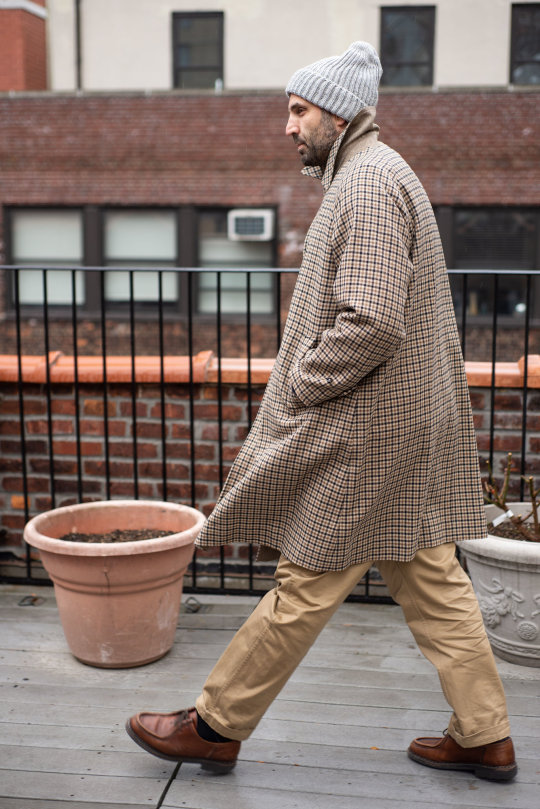
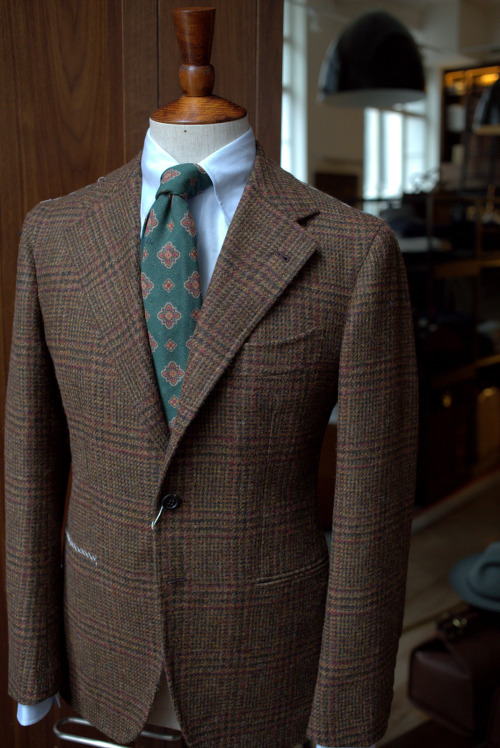
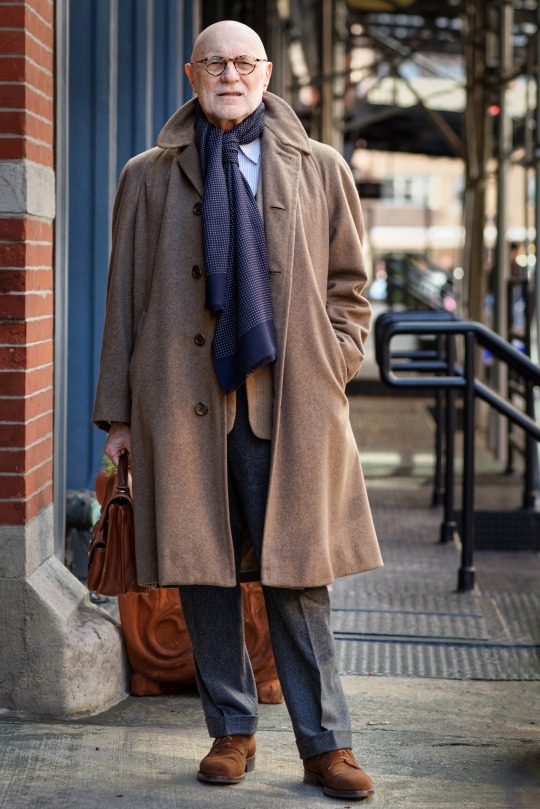
There is, however, one small sliver of overlap: the classical overcoat, loose and slightly oversized, which has somehow managed to cut across style genres. Preps pair polo coats with tweeds and flannels. Streetwear aficionados have worn camelhair topcoats ever since Kanye sported his with suede Chelsea boots. Contemporary menswear guys, those of both maximalist and minimalist stripe, like theirs with sleek jeans and textured sweaters. Even workwear lines such as RRL offer the occasional belted duster or tweed.

These are not just superficial overlappings, either. As men’s style has started loosening up, both fashion forward guys and classic menswear enthusiasts have found common ground on how they think a coat should fit. Whereas traditional overcoats once seemed out-of-touch, shoulder-hugging coats now look out-of-date. Classic overcoats right now are the one thing we can all agree on. 

Keep reading