Drake’s New Spring Collection

image


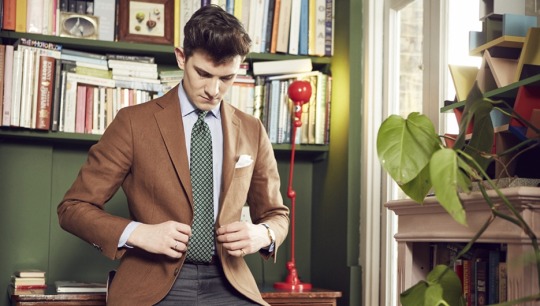
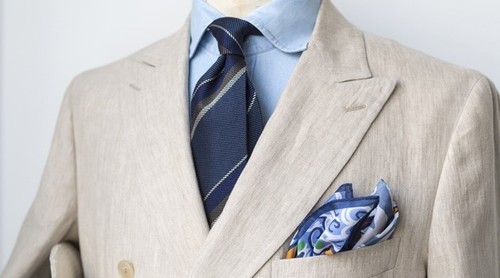
One of my favorite things about Drake’s is their ability to design things that feel contemporary on the one hand, but also classic on the other. It’s easy, after all, to produce ties that are classic and boring. Also easy to make ones that are trendy and awful. Steering a line between those two worlds, however, that takes skill, which is why Drake’s is so impressive. For a company that ventures beyond your typical Macclesfield silk prints and basic rep stripes, their batting average is very high. 

Some of that is due to how closely Michael Hill and his team work with mills. “I’m hesitant to take all the credit,” he tells me. “We’ve been working with the same mills since the 1970s, which means every collection is a collaboration. I often sit down with them and pour over their archives to figure out what to design today.” Those new designs will draw from a color here, maybe a weave there, but then be updated in ways to make them feel current. “There are few better ways to design than by looking at what’s been successful for us and the mill in the past,” Michael says. 

That’s important for men who like to wear more casual suits or sport coats. A conservative striped tie will go with anything, but if you’re looking for something more interesting to go with a tailored jacket, Drake’s always has plenty of tasteful options. Some of my favorites from this season:

Keep reading

Fake Tweeds for a Fake Spring

image


What the hell happened to spring? We’re a good two months into the season, with summer being exactly a month away, but it still feels like the last days of winter. I had a chance to break out a linen suit a few weeks ago, when the temperatures climbed into the mid-80s, but it’s been too cold to wear anything breathable since then. It’s almost like spring never came.

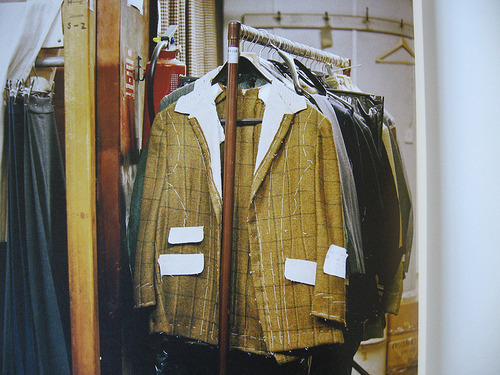
One option I’ve been relying on is a “faux tweed” sport coat I had made through Napoli Su Misura. The term “faux tweed” refers to how the fabric has the sort of district check you’d expect to see on a traditional tweed, but none of the prickly surface. Instead, it’s made from a smoother, worsted wool, making it something like a citified version of a country cloth. Indeed, some people don’t like faux tweeds because they feel like they’re neither fish nor fowl, but they’re also perfect for those days that feel the same. Spring can be an awkward time for tailored clothing, when you might want something to match the gloomy weather, but wearing a real tweed can feel wrong in May.

You can find faux tweeds in a number of books. Porter & Harding’s Glorious Twelfth and Hudderfield’s Worsted Alsport are two of the most popular. Voxsartoria, pictured below, is seen wearing something from the first, while StyleForum member Mafoofan, pictured above, is wearing something from the second. There’s also Harrison’s Moonbeam, which is made from a wool and angora blend. It has a plush, almost cashmere-like feel, and a bit more nap than the two aforementioned sources. No Man Walks Alone has a ready-to-wear Moonbeam sport coat available this season, which was made for them by Sartoria Formosa in Naples. 

Keep reading

Spring for Drake’s

image


We’re still solidly in winter, but Drake’s new spring/ summer arrivals remind us that warmer days are just around the corner. The popular English label continues to design some of the best men’s accessories I’ve seen anywhere. Michael Hill, the company’s Creative Director, tells me that they’ve relied a lot on interesting and subtle weaves this season. “We have a linen chambray from Solbiati,” he says. “It has a nice texture and a bit more color than plain weave linens. There will also be some semi-warp faced cloths, which have a nice, antique hand, as well as a lot of slubby silks." 

My favorites so far are the grenadines and pocket squares. Drake’s grenadines now come in two weaves – larger and smaller versions known as garza grossa and garza fina, respectively. They also have grenadines with striped, dotted, and jacquard patterns, for those who want something a little more distinctive (these look particularly good). For pocket squares, there are cotton bandana prints, as well as a number of interesting designs on silk habotai – an exceptionally lightweight, slightly sheer, plain weave silk that has a bit of sheen. I find it goes well with cotton and linen jacketings. 

Michael also tells me they have some sport coats, shirts, and chinos coming. "We’ve never thought about design in terms of a product alone,” he says. “It’s always been about a look as a whole, so in some ways, this is a natural extension for us. It’s taken a bit of work to learn how to construct these other things, but I feel we’ve done a good job." 

Keep reading

Thinking About Fall Clothes in Spring

image


Christian at Ivy Style once called me a clotheshorse. If you know Christian at all, you know that’s not a compliment. He’s one of the few bloggers I know (if not the only one) who has a healthy relationship with clothes. He likes them, but doesn’t obsess over them. In any case, what prompted it was me asking him last spring what he thought of some brand’s sweaters. He said “You’re one serious clotheshorse if you’re already thinking about fall!”

And it’s true, I tend to think about clothing purchases way in advance. Lately, for example, I’ve been thinking about green tweed sport coats. The London Lounge is selling a new barleycorn and herringbone mix through their cloth club. It’s a beautiful design with a blue and chestnut brown windowpane, but I’m not yet sure of what’s out there, so I’ve been unable to commit. Flipping through A Style is Born and Scottish Estate Tweeds gave me some ideas, however. As did going through some photos I’ve downloaded throughout the years. All are included below. 

My intuition is that lighter, more olive-ish shades of green are easier to wear than anything too true. Lest one wants to look like they’ve recently won the Masters Tournament anyway. But the photo of Gianluca Migliarotti (director of O'Mast and I Colori Di Antonio) proves otherwise. I think it may be more about the cut than the color. With a well-cut, soft shouldered jacket, a green sport coat seems like it could go excellently with a pair of a khaki chinos, grey flannels, and tan cavalry twills. Something to also wear with a light blue or country tattersall shirt, and perhaps some brown suede wingtips. 

So far, my two favorites include the photo of the Kylnadrochit estate tweed at the very end of this post, and the one seen on Michael Alden in his video on how to wear a pocket square. Those pitch perfect shades of olive, with the subtle and tasteful checks, look like they’d make for a great autumnal sport coat. Especially for a guy who thinks about such things in spring. 

Keep reading

Spring for Barbour

image


I can’t help but to keep coming back to Barbour every season. This past fall/ winter, I picked up two pieces from their collaboration line with Norton & Sons, both of which have come into regular rotation. There’s this black Shetland sweater, which is wonderfully thick and hardy, and has a tightly knit ribbed hem to help it stay up on the torso. The sweater’s unusual texture adds some important surface interest when it’s layered underneath a simpler jacket. I also bought this waxed cotton field coat, which has two button-tabs at the back to give the coat some shaping, hidden storm cuffs to help keep the wind out, and two big pockets for stowage. I’ve been wearing it with beat up jeans and boots whenever the weather feels cold or wet.

As I’ve mentioned before, the problem with many of these pieces is that they’re hard to appreciate just through photographs. They lack the kind of unusual detailing that makes things popular on blogs or help catch a customer’s eye as he’s scrolling through an online store’s inventory. Instead, they focus more on simple designs and unique materials. The shell on my new field coat, for example, feels more interesting than the coated cottons I’ve handled from Apolis or Filson. Scuffs show-up more easily in the wax, which gives the coat some character, and the velvet collar, I suspect, will wear down beautifully over time.

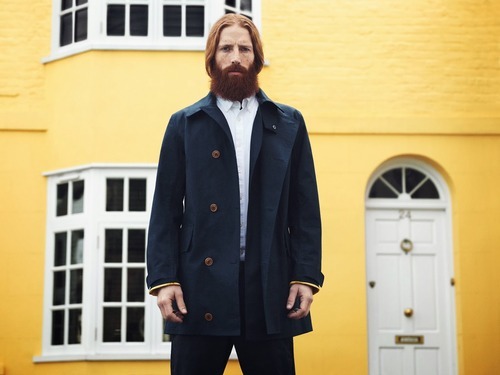
This season’s latest Barbour x Norton & Sons collection feels much the same – simple and handsome, although not always styled as well as it could be in marketing materials. There’s a long navy raincoat, for example, that’s often photographed with the front buttoned-up, which I think unfairly hides the “lapel” that softly rolls out when the jacket is worn open (above is the one photo I can find that shows this). There’s also a cotton/ linen Guernsey sweater with a subtle dropped shoulder that’s easy to miss. My interest in Guernsey sweaters (a type of fisherman’s knit) was piqued last year when I saw these photos of David Somerset and British fishermen. I might give this one a try this spring. 

Barbour has also introduced a new subline – called Spey – as part of their Heritage collection. Spey offers fly-fishing inspired jackets, colorful shirts, and lightweight Fair Isle sweaters. I admit, like Barbour’s Dept. B, some of these feel like cheap derivatives of Tokihito Yoshida’s work, although there’s an interesting fly-fishing take on the classic Bedale. In any case, I’ve included a great fly-fishing movie at the very end of this post, should you want to watch something beautiful and get romanced into liking Spey more than you should.  

Keep reading

A Basic Shirt Wardrobe, Part Two

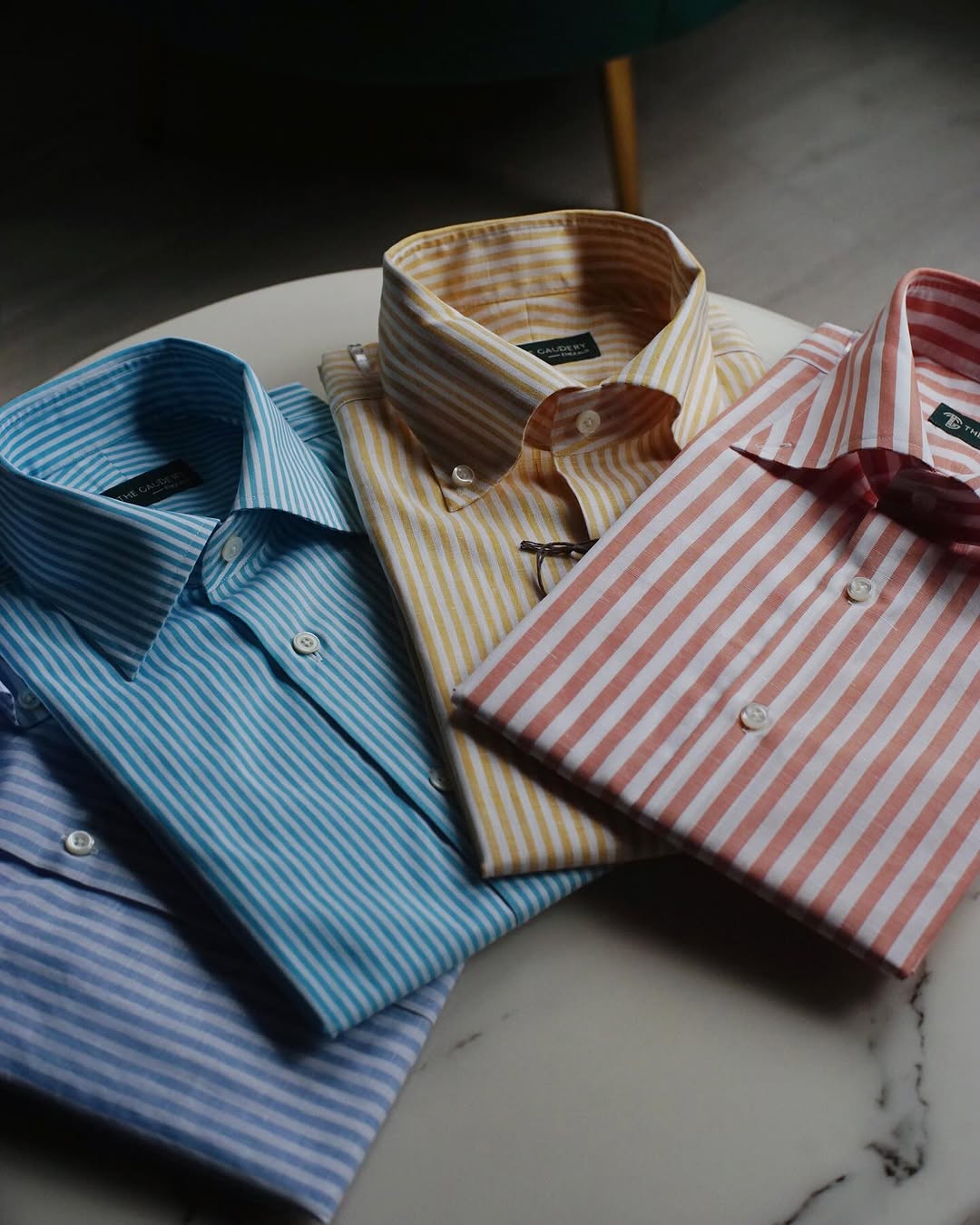
In 2008, a StyleForum member shared photos of a bespoke shirt they had made by the renowned Neapolitan shirtmaker Anna Matuozzo. Though the images have since been lost to time, they showed a blue-and-white Bengal-striped dress shirt made from Carlo Riva cotton, featuring a semi-spread collar and some extraordinary details. The buttons were firmly shanked, the sleevehead and yoke showcased delicate shirring, and fine, nubby topstitching traced the seam running along the shoulder—all hallmarks of careful hand tailoring. At the time, the price for such a shirt—bespoke, cut from an adjusted block pattern, and crafted with the highest degree of handwork—was 350 Euros. The price was considered so stratospheric at the time that it sent several forum members reeling. One distinguished member with decades of bespoke experience questioned the rationale behind spending so much on a dress shirt. "If an errant meatball rolls down your body, it's done," he cautioned.

I was reminded of this painful lesson last year while getting dressed. A decade of dipped garlic naan and Vietnamese spring rolls rolling down my gullet has nudged me up a size. Unlike jackets, shirts don't have seam allowances, so I've had to rebuild my shirt wardrobe. A few weeks ago, I published a post about which shirts I find useful in a tailored wardrobe; this one is about casualwear.

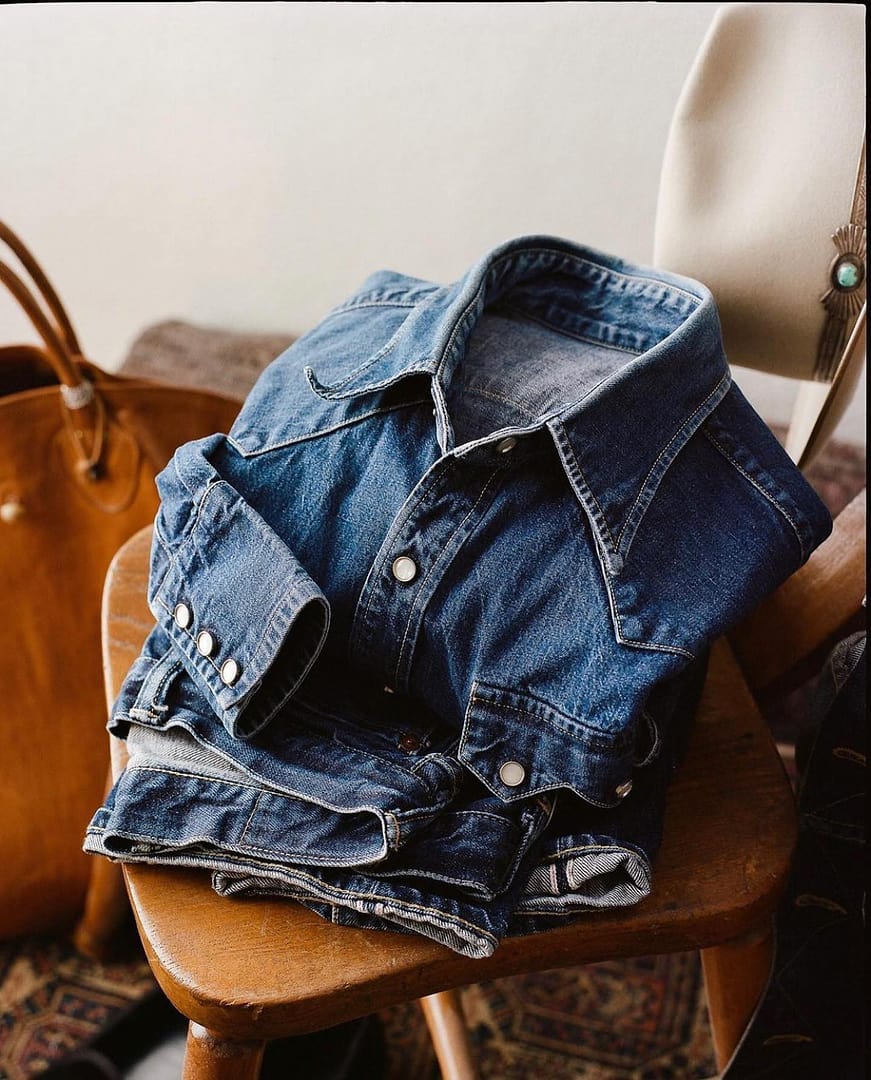
Like my "Excited to Wear" posts, this series is full of personal prejudice. Over the years, I've found that dry, generic lists of "wardrobe essentials" are rarely useful or interesting. What I enjoy reading most are people's unapologetic opinions on clothing. That said, casualwear presents a unique challenge. Unlike traditional men's tailoring, which follows a relatively narrow set of conventions, casual dress is vast and varied. Much of what I'll cover here will only resonate if you, like me, enjoy dressing like Bob the Builder. Still, I hope you find one or two things worth considering.

Keep reading

A Basic Shirt Wardrobe, Part One

I believe it was in an old blog post on A Suitable Wardrobe where I came across a Bruce Boyer quote—and I paraphrase—that a well-curated wardrobe is the best incentive to stay in shape. By "stay in shape," he meant staying the same size, of course. If you've invested a considerable amount into clothes that hang without a pull or a ripple, you probably don't want to gain or lose too much weight, either way.

That quote recently came to mind as I started rebuilding my shirt wardrobe. I had a moment of realization last year, much like when Daisy buried her face into Gatsby's collection of sheer linen and fine flannel shirts, sobbing, "They're such beautiful shirts." Except, mine weren't so beautiful—they were so slim. Things I bought fifteen years ago no longer fit, as I've gone up a size. Unlike tailored jackets, button-ups don't come with inlays, so I've been slowly rebuilding my shirt collection, piece by piece.

This process has made me reflect on what constitutes a genuinely useful shirt wardrobe. The tattersalls I thought would go nicely under rustic tweed jackets—while technically true—barely saw any use over the past fifteen years. The discounted Margiela shirt I bought as an experiment looked more like a bad Kickstarter project than thoughtful avant-garde, as I never really had the right pieces—or personality—to make it work. So here's what I think should be in a basic shirt wardrobe. Like my "Excited to Wear" posts, this is filled with personal prejudice and bias—it's simply about what I think should be in my wardrobe. But hopefully, you find this more interesting than generic guides about how every man should dress. This guide will be broken into two parts: shirts for tailoring and shirts for casualwear.

Keep reading

Ten Of The Best Black Friday Sales

Even when it's online, and you can shop from the comfort of your home, Black Friday always feels like a mad dash to find the best days. To simplify the landscape, I round up the best menswear-related promotions every year and post them here, along with a selection of notable picks at each store. These guides are designed to cover almost every budget—from relatively affordable basics to designer items—so there's something for everyone. This year, I've organized the list to move from "general and affordable" to "specialized boutiques with higher prices," along with a smattering of shoe deals, underwear sales, and grooming products at the end. 

J. CREW: UP TO 50% OFF; PRICES AS MARKED

I've always felt that J. Crew is one of the better one-stop shops for men just starting to build a better wardrobe. The prices are accessible, the designs are classic, and the quality is reasonable. However, it helps to know what to buy. 

Keep reading

Excited to Wear This Fall

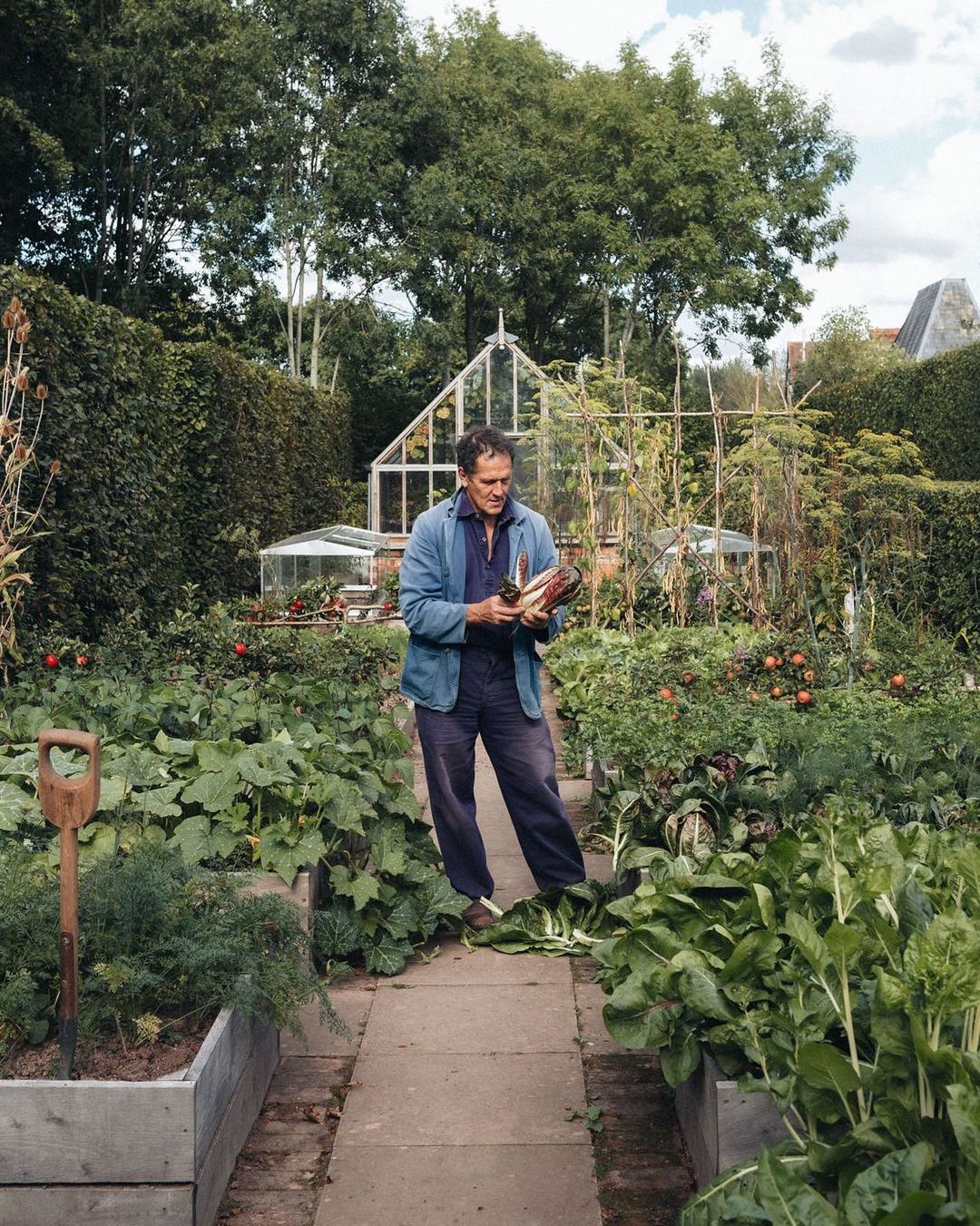
About eighteen years ago, Monty Don, the British horticulturist and human Peter Rabbit, penned an article for The Guardian titled “Dirty Dressing.” It was about how to dress for the dirty task of gardening. “Never wear tight trousers,” he advised. “Always buy trousers at least one waist size too big, make sure that the pockets are big enough to comfortably hold penknife, hanky, string, phone, pencil, labels, and perhaps a mint or two. […] If you are not familiar with their joys, high-rise trousers are fantastically comfortable and keep your lower back warm. My children still squirm with embarrassment every time they see me in them (which is most days) but that is probably some kind of seal of approval.”

I remember being charmed by his intransigent views; each proclamation was stated matter-of-factly without the need for justification or even elaboration. “Do this, that, and the other thing.” Sometimes, it feels like writers are unwilling to criticize anything nowadays or put their foot down on something they know. This admittedly includes me, a menswear writer who feels it’s impossible to responsibly dole out generalizable menswear advice because people have different needs, personalities, and lifestyles.

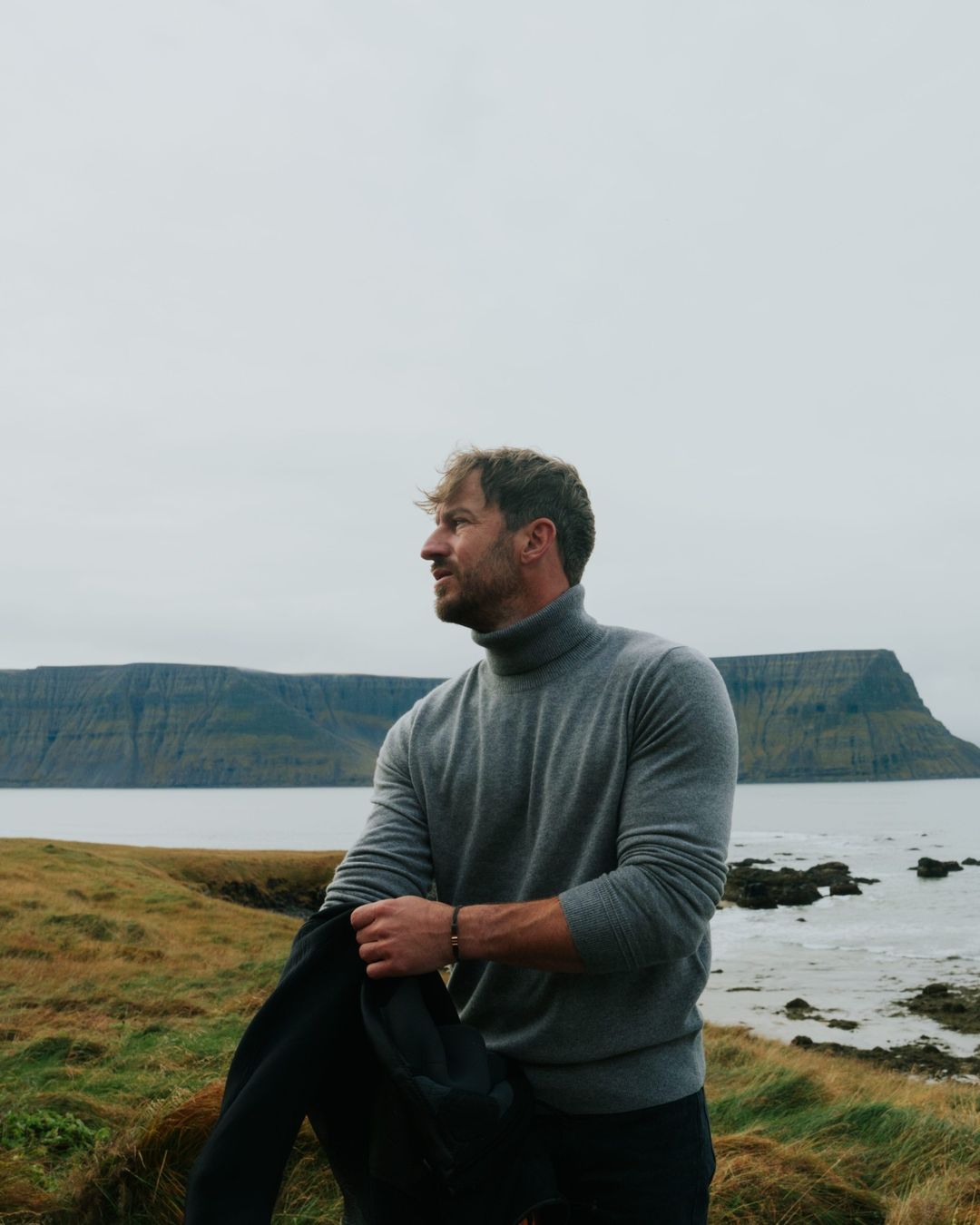
So, in the last few years, I’ve been doing this series called “Excited to Wear,” which isn’t about things everyone should buy—no one can recommend those—but simply the things I’m most excited to wear for the new season. These posts allow me to get a bit Monty Don-ish, with my tongue firmly planted in my cheek and with the recognition that I’m only speaking about my personal views. Here are ten things I’m excited to wear as the weather gets cooler. There's also a fall/ winter playlist at the end for you.

Keep reading

American Space Cowboys

It’s often said that America has not been this divided since the Civil War, but even these tumultuous times pale in comparison to the social unrest of the 1960s, when post-war America’s cleavages along race, gender, and sexuality threatened to rip the nation apart. Within ten short years, the United States saw the unfolding of the civil rights movement and the outbreak of countless race riots; the publishing of Betty Friedan’s 1963 book The Feminine Mystique, which sparked second-wave feminism; the Vietnam War and anti-war protests; countless acts of state violence, such as the My Lai Massacre and police brutality at the 1968 DNC; and three major political assassinations (JFK in '63, Malcolm X in '65, and Martin Luther King Jr. in '68). The one bright spot came at the end of this dark decade, when the world finally saw a brighter facet of the American spirit. 

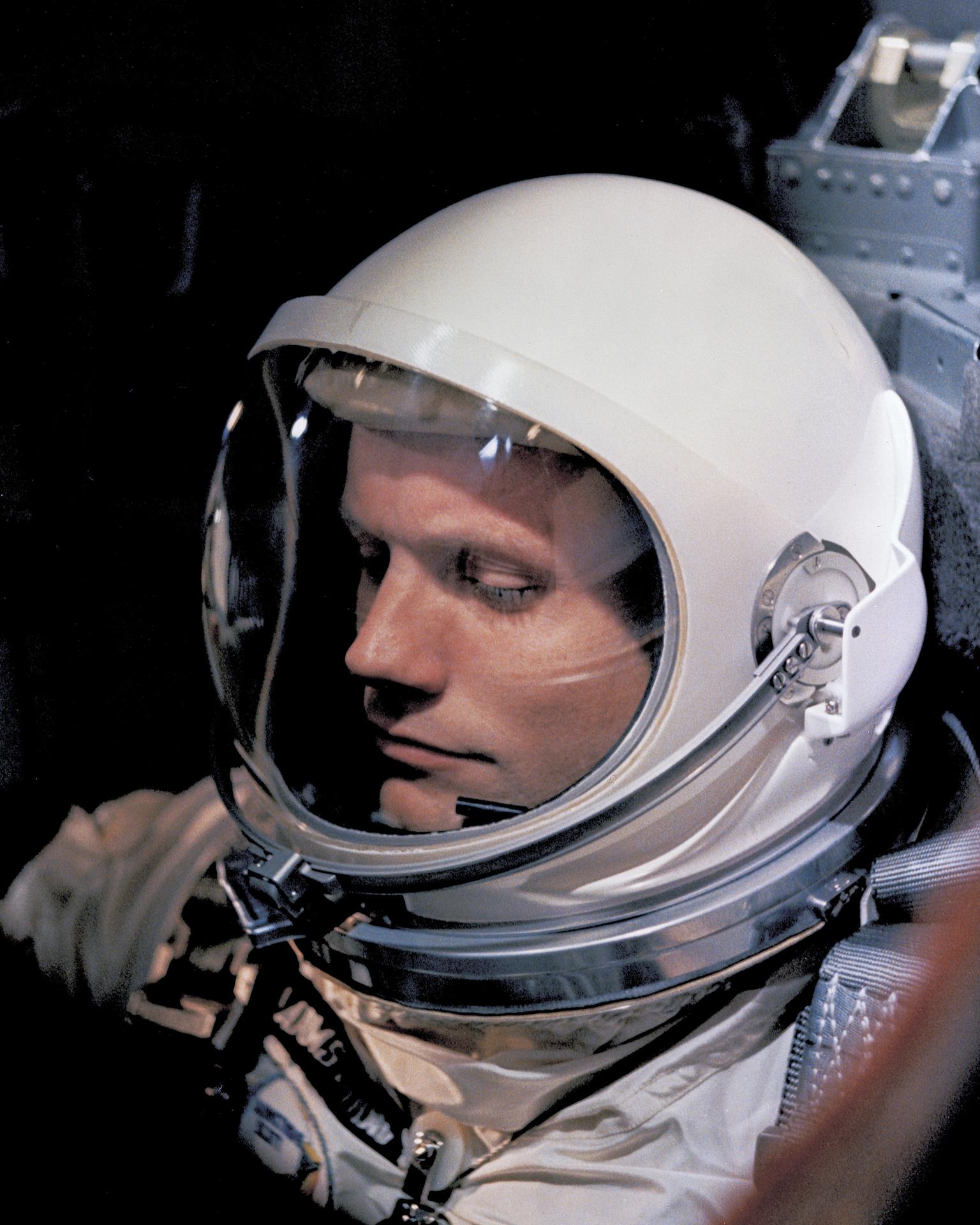
In the summer of 1969, an estimated three hundred million people—a fifth of the world’s population—turned on their television screens to witness a technological miracle. They watched Apollo 11 trace a path through the sky, pierce the darkness of space, and hurtle toward the lunar surface. When the American spacecraft finally descended onto the celestial body, Neil Armstrong gingerly stepped down a ladder and planted his foot on the moon’s dusty regolith. Shortly after, his voice crackled through the void: “That’s one small step for man, one giant leap for mankind.” 

Back home, CBS was one of the many news outlets doing live coverage for millions of viewers. When the module touched down, and Armstrong announced that "the Eagle has landed," CBS' cameras cut back to their anchors, Wally Schirra and Walter Cronkite. At that moment, viewers saw an emotional Schirra wiping away a tear while the usually composed Cronkite bowed his head, momentarily speechless. Although the newsroom was silent, it felt as though the whole cosmos had just cheered. More than fifty years later, this moment is still one of this nation's proudest achievements. 

Keep reading