How to Design Clothes

image


A couple of years ago, Wall Street Journal’s style editor Jacob Gallagher described the Italian menswear line Eidos as “something that only looks good on men who are as handsome as the brand’s designer, Antonio Ciongoli.” I admit, up until then, I had been thinking the same thing. And while Antonio always looked good in photos – wearing trim white jeans and citified bomber jackets – I’ve learned my lesson over the years in not modeling my wardrobe too closely after handsome Italian men I see online. 

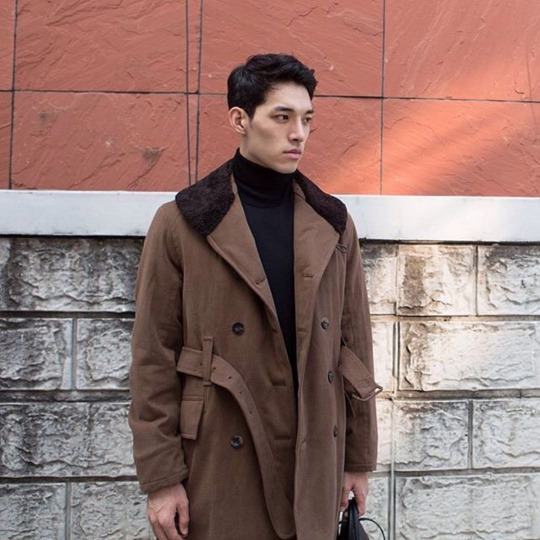
Last winter, however, while I was around downtown San Francisco, I decided to stop by Bloomingdale’s and check out the line. The clothes, to my surprise, were exceptionally wearable. The knits, based on old Aran classics, were updated with more interesting weaves and details. The polos were trim and cut with unusual collars, but they looked good when layered under a jacket. And then there was the outerwear, which was my favorite part of the collection. Slouchy, knee-length topcoats – one of which I later bought – paired just as easily over sport coats as they did with sneakers and jeans. You can see Mitchell Moss wearing a brown tweed one on his Instagram.

Part of this is about the editing process. In an amusing segment at Blamo! (a menswear podcast you should be following), Antonio said that he’s tried to make the line a lot simpler over the years:

Keep reading
Finding A Different Kind of Closure

image


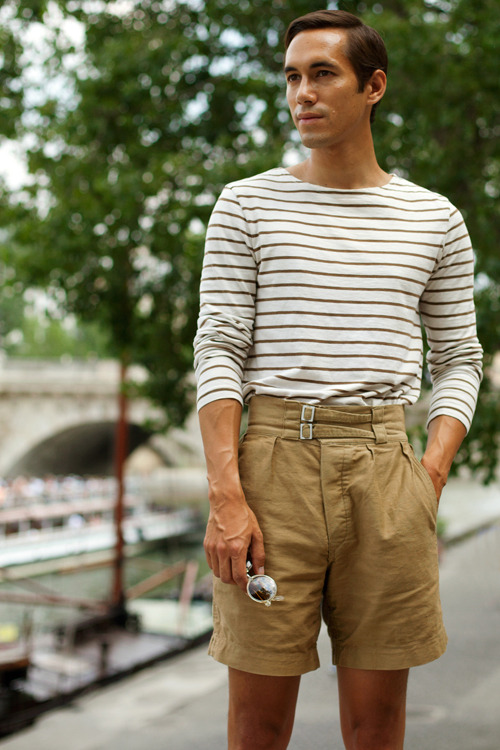
Most pants are made to visually disappear into the background of an outfit. A pair of grey flannel trousers set the stage for your shirt, tie, and jacket, just as jeans serve as the foundation for almost any causal ensemble. In the summer, however, when it’s too warm for layering, your shirt and trousers ought to do more than usual. I like slightly atypical tops this time of year. I’ve also been looking for pants with more distinctive closures. 

Almost all trousers you’ll come across have a simple button or zip closure, with more sophisticated ones coming with what’s known as a “French fly” (also called a waist stay). That’s the hidden, interior tab that attaches to an extra button or two inside of your pants, which relieves strain from the top of your zipper and allows the fly to lay flat. Some designers, however, pillage archives to come up with more unique systems. Some are easily wearable; others admittedly less so. 

The more daring ones, such as Margiela’s “sailor pants,” often take after historical dress. Those multi-button designs are modeled after something Regency-era men used to wear on the whipping seas. And while they were once a favorite of Beau Brummell, they’re all but unwearable today except for men who have a lot of time on their hands. Similarly, while heritage-inspired brands such as Engineered Garments have made their versions of Thai fisherman pants – also known as Sabays, which is Thai for “comfortable” – the loose, wraparound style is maybe a little too close for comfort to culottes (unless you’re David Sedaris anyway). Blurhms’ wrap pants, I think, are a better alternative if you like that style. I just wish theirs fit a bit fuller. 

Keep reading

Mr. Porter Price Drops

image


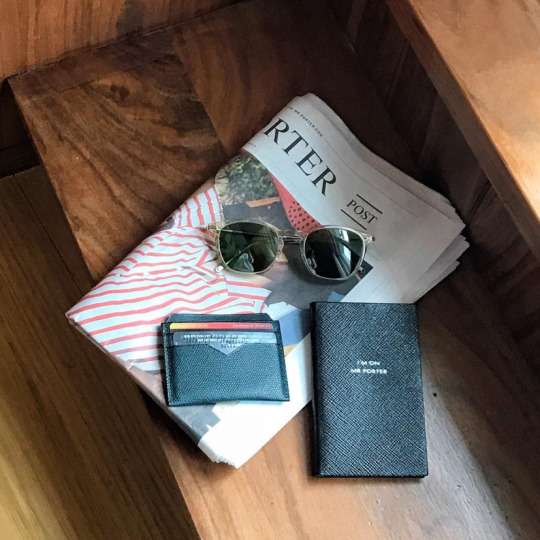
Sale season this year is moving along quickly. Mr. Porter just made their second round of price cuts, putting things at 70% off just two weeks after they started their spring promotion. Given the size of their inventory, your best bet is to filter things by size and see what serendipitously pops up. Also worth checking back once a week or so. As people make returns, you can expect to see some items get restocked. 

Some things I think are notable: brands such as Chimala, Camoshita, Eidos, Kapital, and Drake’s are favorites and they have some surprisingly good things still left. I also like these Margiela leather babouches, Margaret Howell linen-wool blend sweater (lovely color); Our Legacy washed jeans; chunky Nonnative ribbed turtleneck; Orlebar Brown swimwear; Engineered Garments folk print shirt; Viberg work boots (blessed be the men with bigger feet), Gaziano & Girling loafers, and suede Valstarino bombers. For this coming fall/ winter, there are some heavily discounted gloves from Dents, just $50 a pair for leather models lined in cashmere. Lastly, don’t forget to check Mr. Porter’s much slept-on house label, Kingsman. The stuff there is often made in collaboration with top-end companies, such as Mackintosh and Drake’s, but will often get passed over because people forget to look. 


Keep reading

The Nicest Pair of Shoes I’ve Seen

image


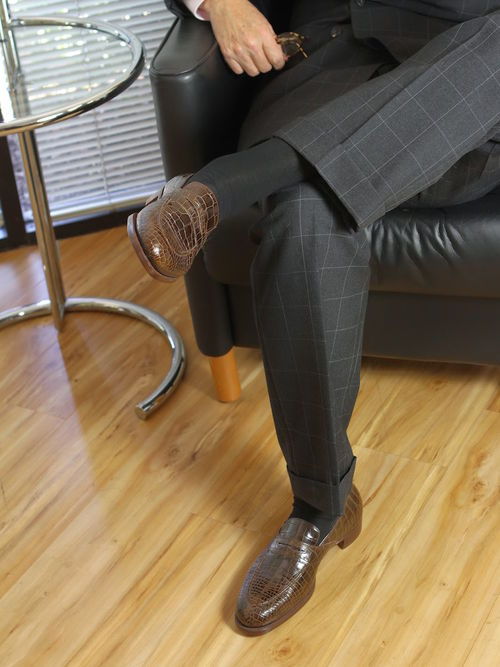
Far and away, the nicest pair of shoes I’ve seen were on Will Boehlke, the former writer and editor of A Suitable Wardrobe. Will was wearing them when I bumped into him five years ago at a hotel. He was coming out of a fitting and I was going into mine. As we passed, I noticed he was wearing some chocolate brown, glazed alligator penny loafers, which I later found out were specially made for him by George Cleverley. I never really considered exotic leather shoes up until then, but since seeing them, I’ve always wanted a similar pair for myself. 

The problem with exotic shoes – particularly those made from alligator or crocodile – is you don’t know if you’ll like them until you try them. And prices here will range from the merely to the horribly expensive, as lower-end exotics aren’t usually worth buying. Anything affordable will be made from caiman, which is a small, Central American reptile that’s a close cousin of American alligator. Caiman leather is cheap, but it’s also not terribly great. Scaly, wrinkly, and tough, it starts off ugly and only gets worse with wear. Roje Exotics has a good video demonstrating the difference between quality crocodile skins and caiman. 

If an affordable pair isn’t made from caiman, then it’s likely constructed from the less desirable parts of an alligator or crocodile hide – the tail or maybe the sides. What you want is a maker who will cut the uppers from the belly of the animal, as well as do some proper pattern matching, but doing so means fewer pairs of shoes can be squeezed from the hide. And thus we land back at the original price problem. 

Keep reading

Horsebit Loafers: A Bit Questionable

image


No shoe style is more controversial than the bit loafer. Part of is that slip-ons have forever held a slightly louche appeal – and none moreso than the snaffle bit variety. Up until the First World War, it was the English who set footwear standards, and they favored laced-up oxfords in the city and heavier brogues in the country. It was only until the Americans popularized penny and tassel loafers that that slip-ons gained greater acceptance. And even then, they’ve always been looked at with a bit of suspicion. Today, a conservative oxford will say little about you. A penny or tasseled loafer, on the other hand, comes with some preppy connotations. 

Bit loafers suffer from an even greater problem because they’re associated with some of the worst types of dressers – flashy guys in overly slim-fitting suits, with their shirts unbuttoned to their sternum. Or arrivistes who wear them with contrast collars while, presumably, fantasizing about being the protagonist in 1980s movies about finance. If the term tassel loafer can be used as part of an epithet – to quote that famous 1993 line where George Bush complained that Bill Clinton was supported by “every lawyer that ever wore a tasseled loafer” – just imagine the pretentious bravado that can be assumed of people who wear metal on their feet. 

Still, I’ve been wanting to get a pair every spring. The iconic Gucci version – originally designed in the 1930s, just as the penny loafer was taking off – looks a lot better with summer suits than an oxford. In fact, that’s the genius of the horsebit loafer. In one of his books, Bruce Boyer wrote of the style: “It was the first shoe that bridged the gap between casual and business wear. This dressy slip-on was refined with fine, lightweight calfskin, a pared-down shape, and a metal snaffle bit, and as such it became avenue-elegant and gained acceptance in corporate board rooms and country clubs alike.” 

Keep reading

Everybody Loves the Sunshine

image


Every season, there are one or two things I regret having missed out on. Last season, it was this Melton wool “traveler coat” from Kaptain Sunshine. It’s a long, raglan-sleeved overcoat made with lots of cool details – including a flapped patched, ticket pocket set just above the hips; equestrian-inspired leg straps hidden in the interior; and a perfectly cut collar that looks great when worn up. Most of all, I love the silhouette. Comfortable fitting and slightly oversized, it’s a refreshing take on men’s outerwear in this slim-fit age. You can see my friend Kyle wearing it here with a chunky, cabled turtleneck and some light washed jeans. 

If you’ve never heard of  Kaptain Sunshine, don’t worry – they’re a relatively new label, having just started in 2013. Their designer, Shinsuke Kojima, was one of the founding editors of Huge, a popular Japanese magazine that sadly folded just two years ago. Having left the publishing business, Shinsuke now designs his own menswear line, Kaptain Sunshine, as well as Woolrich’s Japanese collections

Like many other Japanese brands, Kaptain Sunshine takes inspiration from vintage Americana, militaria, and outdoor wear. A lot of this comes from Shinsuke’s love for vintage clothing, which he’s been collecting since he was 15 years old. As a teen, he used to rummage through Tokyo’s dustier thrift stores for vintage Levi’s, varsity sweaters, and beat-up military parkas. These days, you can still find him on the weekends at Suntrap, a premier vintage outfitter in Tokyo, which Shinsuke cites as one of his favorite shops. 

Keep reading

The In-Between Gabardine

image


It would be too much to say that the suit is dead, but here in San Francisco, you’d struggle to find occasions to wear one. More and more people nowadays are dressing down for the office, even in industries where client-facing interactions have historically required more professional wear. My prediction is, in another generation or so, dark suits will only live on through weddings and funerals – the last places for traditional clothing in any society. 

My solution so far has been to rely on sport coats, or at least informal suits made from casual materials (e.g. cotton, linen, and corduroy – which, if I were to be honest, are mostly worn as suit separates). Even if a dark suit today is a rare sight, few people bat an eye at more casual forms of tailoring. You can wear a sport coat to a nice bar or restaurant, or depending on where you work, even the office. 

The problem is that none of those options really look as good as a traditional two-piece, so this year I’m hoping to get what I call an “in-between” suit – something smarter than a sport coat, but more casual than traditional business dress. Bold, patterned flannel is nice for this sort of thing, but I’m hoping to start off with wool gabardine. 

Keep reading

The Rugged Jeep Coat

image


It’s amazing how much of our wardrobe comes from the military. Every other person you see nowadays is dressed to kill. Men in cafes wearing Melton wool pea coats and heavy leather bombers; women in Army green field jackets; and businessmen with large, cotton gabardine trench coats thrown over their suits. Even seemingly innocuous items have their roots in war. Chinos, for example, were originally worn by British and French servicemen in the 19th century. Today, they’re just standard issue for cubicle farmers. 

One military style I’ve been into lately is the jeep coat – a short, double breasted design that American soldiers once wore during the Second World War. Some look like they’re little more than olive colored versions of naval pea coats, but I favor the more dramatic styles with shawl collars (see an example above). 

Since fashion is all about repurposing design, you have to go back to the turn of the 20th century to really understand jeep coats. Back then, fur traders and loggers in the Pacific Northwest would wear blanket coats – called so because they were made from the garishly patterned, brightly colored blankets. The coats were double breasted in order to keep the wearer warm, but also cut short to allow for easy movement. These were work clothes, after all, even if the style would later spread throughout the US – first as souvenir gifts, then as fashion items, and finally as military garb. 

Keep reading

A Bit About Cashmere

image


There are a lot of things I love about living in the Bay Area – the food and bar scene, the relatively diverse community, and the summer/ fall festivals. The only thing I hate is the real estate. Housing is expensive, gentrification is rampant, and for the kind of buildings I like to live in, home insulation isn’t that great. Unless you’re in a new building or can afford some multi-million dollar house, old buildings, especially Craftsman ones, are kind of drafty. 

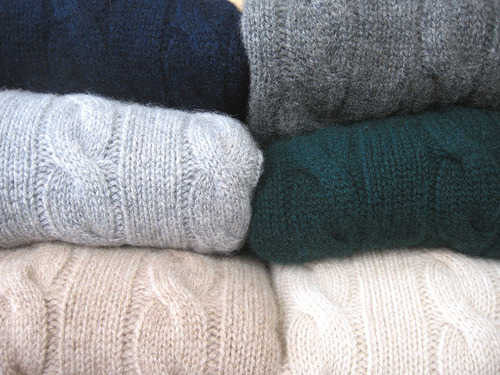
I used to waste a lot a money in the winter on heating bills, but a couple of years ago, found that I could cut that back with some good cashmere sweaters. Cashmere knits may be the only things that can be rightly called investment pieces. They’re expensive, but depending on where you live, you’ll make up the cost in what you’ll save on heating. 

In some early-20th century trade journals, you’ll find rumors that the finest cashmere used to come from Russia, but for at least the last hundred years, China and Central Asia have been the main sources. From the mountains up Tibet and away across the back of the Himalayas to Bokhara, cashmere travels much like the way it did before Marco Polo explored the Great Silk Roads. It comes down from the mountains in countless little loads on the backs of yaks and horses – sometimes buoyed down interminable waterways on rafts and boats – before reaching a major hub, where it’s put on modern transport and swiftly whisked away to Europe. If you’re wondering why cashmere should have to travel so far across Asia, just remember the stories of the still unconquered Everest. Across the vast barrier of the Himalayas, there are few routes. 

Keep reading

My Morning Coat

image


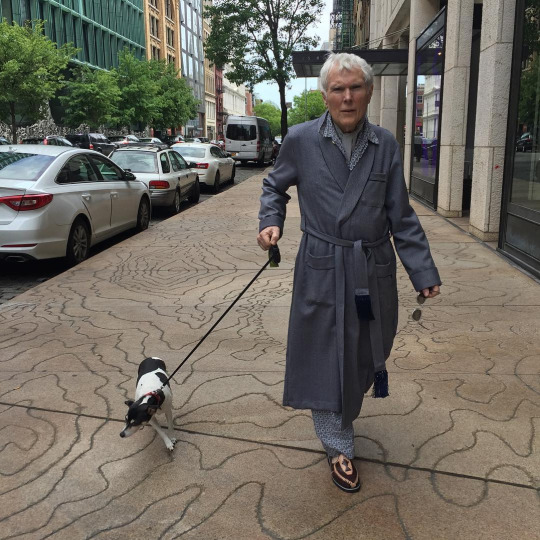
I love this photo of Glenn O’Brien strolling down some NYC street in a dressing gown and leather huaraches. Designers have been trying to turn pajamas into glamorous streetwear for the last two or three years, and while I agree with Robin Givhan that you should resist, wearing something like this in the morning while walking your dog just sounds fun. 

I bought my first dressing gown last year. It was a bespoke commission from Ascot Chang, with the gown itself made from a length of mid-weight, grey windowpane Fox flannel. It’s great for chilly winter mornings, but a little too heavy for spring and summer. So I’ve since picked up two more – one made from an indigo-dyed Khadi (a kind of handspun, handwoven Indian cotton fabric) and another in a dotted navy silk. 

One of the nice things about working with a shirtmaker is that you can often get things made bespoke for not much more than what you’d pay for high-end ready-to-wear. That not only includes dress shirts, but also things with similar constructions – shirt jackets, pajamas, and dressing gowns. The only exception might be silk gowns, which are apparently better off-the-rack. 

Keep reading