Skip Grad School, Buy A Turtleneck

image


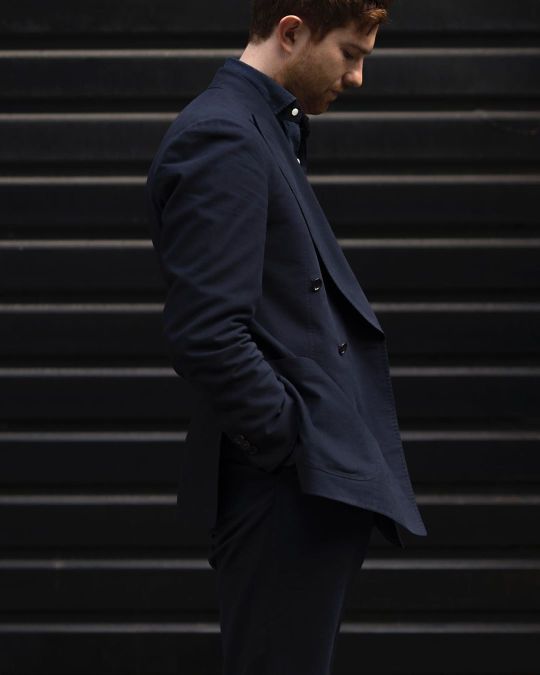
Woe betides anyone who takes life advice from me. I am, after all, a man who wound up writing about workwear on a blog called Die, Workwear. But for the academically inclined who may be hustling to get grad school applications submitted before December 1st, let me impart some advice: don’t go to grad school. Get a turtleneck instead.

A turtleneck will confer you all the same benefits of having a graduate school education. For one, you’ll feel smugly superior to other people and have false confidence that you’ve become more attractive (you are not, and you have not). You get to say “residency” with a convincing and assured tone. You’ll fit right into any event billed as being part of a “speaker series.” Like having a graduate diploma, a turtleneck will not increase your job prospects. You will, however, become slightly more annoying to everyone around you. Consequently, you will likely suffer from incurable loneliness and social isolation. The only difference is that graduate education can cost you upwards of a quarter-million dollars. To put that in perspective, that’s like buying 5,000 turtlenecks from J. Crew or three from Cucinelli.

How did this workwear garment become such a symbol of the smug and insufferable? The story of the turtleneck follows the same arc of almost everything associated with high-society. Things that once gave more than a whiff of moral laxity are today used as a cudgel against rebellious youths. At the turn of the 20th century, proper gentlemen in frock coats frowned up upon lounge suits as the ill-attire of workwear men and lowly store clerks. Today, a suit-and-tie is seen as the entry card to proper society. Similarly, jazz was once labeled as the “devil’s music” for its focus on improvisation over a traditional structure, performer over composer, and the black experience over conventional white sensibilities. Now it’s something people list on their Facebook profile to seem high-class and sophisticated. (Anyone who thinks rap music represents some kind of new degeneracy needs to listen more closely to blues classics such as Victoria Spivey’s “Dope Head Blues” and Charley Patton’s “Spoonful Blues”).

Keep reading

This Winter’s Tonalwave

image


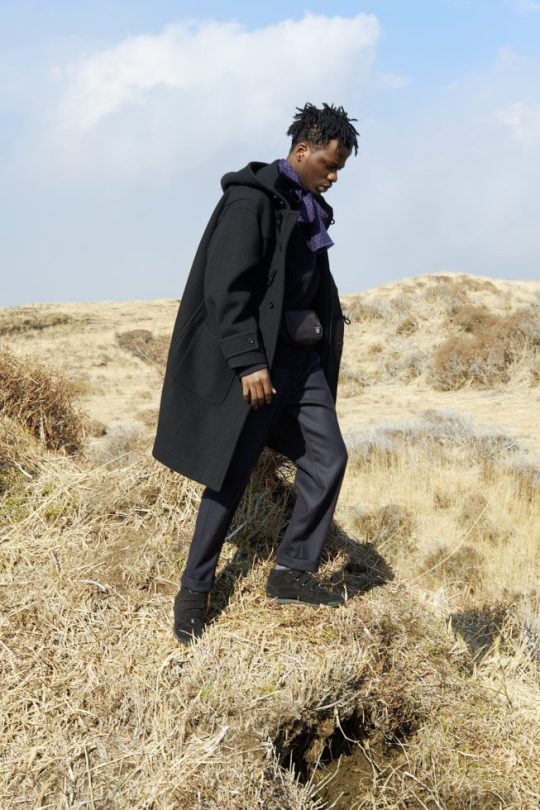
In the early 1980s, when prep and power dressing dominated the American landscape, a few Japanese designers were preparing for a revolution. In the West, many of our trends in literature, architecture, and fashion derive from the Regency era. We wear navy suits because, in the early 19th century, British men of means paired navy coats with cream-colored breeches. About a generation later, Regency blue gave way to Victorian black when Queen Victoria decided everyone should look somber. Nearly 200 years later, these norms remain. Most men today wear navy, black, grey, and white — following in the steps of those early-19th-century traditions — and pair navy coats with lighter colored trousers because of Beau Brummell.

For a select few, this all changed in 1983 when Rei Kawakubo and Yohji Yamamoto debuted their now-legendary spring/ summer collections in Paris. Thoughtlessly dubbed the “beggar’s look” by critics, these so-called rags were quite calculated in their design. Their asymmetric, deconstructed, and artfully ripped clothes enshrouded their wearers in mystery. As Yves Saint Laurent noted, fashion in the early 1980s was all about color and lots of it. These Japanese artists, on the other hand, deliberately avoided vivid color and made heavy use of a monochromatic palette, from “strong and varied hues of black to the simplicity and crispness of shades of white.”

“Kawakubo’s and Yamotmo’s black was often an unassuming, harmonious shade, reminiscent of Japanese ink painting,” wrote the authors of Future Beauty: 30 Years of Japanese Fashion. “Their expressive use of a black palette also partook of the qualities celebrated in Jun'ichirō Tanizaki’s book In Praise of Shadows (1933), which finds in shadow the essence of the Japanese aesthetic and speaks of the Japanese skill with light and shade. The designers’ choice of color, unfettered by any Western paradigm, was perceptively singled out by The Washington Post as the distinguishing feature of their style, along with the purity of their aesthetic. The French newspaper Libération likened Kawakubo’s and Yamamoto’s creations to their intense black-and-white films of Kenji Mizoguchi, while French Vogue compared them to calligraphy scrolls, which symbolize a beauty devoid of color.“

Keep reading

Notes on Camping and Fashion

On an island in the New York Harbor, a quick ferry ride from downtown Manhattan, you can spend a night in a tent while enjoying an unparalleled view of Lady Liberty. The experience is hosted by Collective Governors Island, one of the many glamping destinations popping up across America. Glamping, which is a portmanteau of glamour and camping, is about “roughing it,” but with the modern amenities of a luxury hotel — a real bed, plush furnishings, stocked minibars, massage tables, and attending stewards. Such experiences have been around since the early 20th-century with African wildlife safaris, but today’s glamping retreats offer something local and democratic.

The Yelp reviews for Collective Governors Island are nothing short of hilarious. The campground is described as a “soccer field” and “dirt-filled.” One reviewer complained that there aren’t enough planned activities aside from movie night and s'mores. Another says the island is too quiet. More than a few say that sleeping under the stars — no matter how romantic the idea — means you have to suffer under a blanket of heat and humidity. This is because, well, the Northern Hemisphere tilts towards the sun in the summertime, and sleeping in a tent means it’ll be hot. My favorite is the reviewer who complained there are bugs and wished there was a kiddie pool. The most sensible person wrote: “Some of these reviews are a bit ridiculous. I mean, it’s CAMPING after all.”

Then there are the critics on the other side of the aisle. Sportsmen, hikers, and outdoor purists often see glamping as a posh and phony version of the real thing. Why pretend you’re reconnecting with nature when these RRL-like set-ups are often better than your actual home? Glamping is frequently described as inauthentic, but that raises the question: what is the most authentic version of camping?

Keep reading

Touched By A Feeling

image


Our emotional associations with texture are arguably innate and perhaps even universal. In an article published in Textile: The Journal of Cloth and Culture, Hilary Davidson examined the fabrics people are buried in. What is the last thing someone ever wears, and who decides what emotions those garments embody? Davidson analyzed excavation findings from British cemetery sites, where the bodies of poor mid-19th century Londoners were often laid to rest. “The choice of interred textiles and garments — such as a satin baby’s bonnet, pinned silk ribbons, and a false waistcoat— their qualities and construction all bespeak emotions around pride, dignity, religious feeling, tenderness, and socially codified grief,” she writes. “Clothing fragments become a substitute fleshliness as the bodily tissue they cover wears away, the last traces of the invested, materialized emotions surrounding death.” The softness of some of those garments was also presumably meant to bring the dead some eternal comfort.

Such associations between texture and emotion mostly follow a predictable pattern. We like things that are soft, silky, and smooth; we dislike things that are sharp, cold, and jagged. There’s a reason why challenging days are described as “hard” and “rough,” while sweet moments make you feel “warm and fuzzy.” One study published in Acta Psychologica found a relationship between body temperature and feelings of exclusion. When people feel socially excluded, the mere act of holding a warm beverage can make them feel better. 

Similarly, in a series of psychological experiments, University of Michigan professor Joshua Ackerman found our thinking can be affected by the physical things we handle. “These influences are not trivial – they can sway how people react in important ways, including how much money they part with, how cooperative they are with strangers, or how they judge an interview candidate,” Ed Yong wrote of the study in Discover. “Weight is linked to importance, so that people carrying heavy objects deem interview candidates as more serious and social problems as more pressing. Texture is linked to difficulty and harshness. Touching rough sandpaper makes social interactions seem more adversarial, while smooth wood makes them seem friendlier. Finally, hardness is associated with rigidity and stability. When sitting on a hard chair, negotiators take tougher stances, but if they sit on a soft one instead, they become more flexible.”

Keep reading

The Other Kind of Slip-On

image


In his book Gentleman, Bernhard Roetzel opens his chapter on overcoats with an amusing observation about dress coat culture. Superficially, outerwear is designed to keep us warm and protected from the elements. But even in temperate climates, overcoats figure into people’s wardrobes because people feel a need to put things on and take them off. Dress coats are part of the language of making an entrance, a gesture that’s first communicated through old films and TV shows. There’s something romantic about shuffling a coat off your shoulders before you sit down at a bar or restaurant. 

“By putting on his overcoat, a man indicates his intention to leave. By taking it off, he indicates that he has arrived,” Roetzel writes. “Only when he has been relieved of his overcoat does he begin to make his entrance. But the man who arrives without taking off his overcoat is signaling reserve, distrust, or just indecision. ‘Later the whole crowd went to a bar, where at first everybody stood around in the overcoats …’ wrote Max Frisch in Gantenbein (also known as A WIlderness of Mirrors), outlining in a few words a situation that is as yet unresolved.”

Perhaps that’s why I find raglan overcoats so appealing. In my mind, they’re like a modern version of a cape, the most dramatic of entrance clothing. I can imagine myself curling a coat’s edge between my fingers and palm, then swirling the coat behind me before it settles cleanly on my shoulders. Naturally, you’ll need to ask friends and family members to stand back, so the swirling cape — or I mean coat — doesn’t hit them in the face. If there are enemies nearby, however, give them no warning. 

Keep reading

No Man Walks Alone Anniversary Sale

image


Six years ago, Greg Lellouche called me to say he’s starting a new online store called No Man Walks Alone (today a sponsor on this site). I remember being excited about it because Greg has a uniquely open-minded view on men’s style. Even today, most shops are singularly focused on prep, workwear, or the avant-garde – they push a very specific look. No Man Walks Alone mixes all three in a way that feels natural. 

In a recent interview at Handcut Radio, Greg says he thinks streetwear has had a positive influence on menswear, at least on balance. “I like how streetwear has liberated men from the idea of a uniform. They can wear crazy printed pants with an old sweatshirt from high school and not feel ridiculous about mix-and-matching different perspectives. By broadening the scope, it’ll eventually trickle down to a mainstream way of dressing, and it’ll bring a bit more freedom and individuality to men’s style.” That open-mindedness probably explains why you can find everything from Italian tailoring to Japanese workwear to the avant-garde at his shop.

To celebrate their sixth anniversary, No Man Walks Alone is offering a 20% discount if you use the checkout code sixyears. The promotion is running until this Tuesday, October 22nd. Here are nine things in the store I’ve been admiring.

Keep reading

You Might Suffer From Floppy Butt

image


There was a time when I thought buying pants was simple enough. So long as I could comfortably close the waist and the pants didn’t fall down, they fit. Then I learned about Floppy Butt, also known as the “silent killer of silhouettes.” Hidden behind people, unseen without special mirrors, Floppy Butt all too often goes undetected. Truth be told, I still suffer from Floppy Butt — my butt, indeed, is very floppy. But the condition no longer shows up in my pants, which is the important thing. 

Floppy Butt is a technical term, not a colloquial one, for when you have horseshoe-shaped folds underneath your seat (a polite person’s way of saying butt, which is rude). The condition is often accompanied by ripples down the back of the legs and fullness around the seat (again, butt, or in the Queen’s English, arse). It can be difficult to spot this at home with a regular mirror. When you crane your back to see how you look from behind, you’ve already distorted your silhouette. Better if you can find a three-way mirror, say when you’re walking through a department store. Or, if you have friends and family members, ask them to inspect your posterior (i.e., seat, butt, and arse).

It brings me no joy to say this, but you probably suffer from Floppy Butt without even knowing it. Much like how a suit jacket hangs from the shoulders, trousers hang from the waistband — and the rise determines where the waistband rests. Swing this delicate balance scale in one direction or the other, and suddenly, things can get distorted. You may have Floppy Butt because your trousers are too large for your pancaked-shaped seat (no judgement, as my seat is inverted like crescent-shaped Florentine lapels). Or, like most men, you stand with your hips forward and knees locked (a posture my friend David describes as Auditioning Male Pornstar).

Keep reading

A Look at Drake’s FW19 Collection

image


In academia, and particularly social science, research methods have become more rigorous, but the field has produced fewer big thinkers. Take David Ricardo, for instance, the British political economist who transformed the world at age 37 after reading Adam Smith’s Wealth of Nations. Having already made a fortune as a stockbroker and loan broker, Richardo published his first political economy paper on the “bullion controversy” in 1809. He posited that the Bank of England’s propensity to issue excess banknotes was causing inflation, an early theory in what is today known as monetarism. A few years later, in his “Essay on the Influence of a Low Price of Corn on the Profits of Stock,” he articulated the law of diminishing marginal returns.

His most significant contribution, however, came when he studied Britain’s protectionist Corn Laws. Using the simple, yet profound example of how Britain could trade cloth for Portuguese wine, he formulated the idea of comparative advantage — the basis for much of free trade thinking today. Like other great political economy theorists before him, such as Adam Smith and Karl Marx, Ricardo had the uncanny ability to arrive at complex conclusions without the mathematical tools deemed essential in today’s academic research. In his book Price Theory, David Friedman wrote of the man: “The modern economist reading Ricardo’s Principles feels rather as a member of one of the Mount Everest expeditions would feel if, arriving at the top of the mountain, he encountered a hiker clad in T-shirt and tennis shoes.”

Ricardo’s examples, however, were not arbitrary. Portugal at the time was renowned for its sweet port wine, and Britain excelled at producing woolens, linens, cottons, silks, and all things textile related. In the Scottish Border towns, tweeds and cashmere were woven and knitted from local and native wools. Further south, Manchester’s steam-driven textile mills produced almost a third of the world’s cotton, thus giving the city its nickname, Cottonpolis. Spitalfields, similarly, was known for its exquisite and lustrous silk. French Protestant refugees (Huguenots) in the 17th century established the silk trade in this East London district after fleeing from religious persecution. The tradition was later taken up by Irish immigrants who arrived with little more than their weaving skills. It was a simple example involving Britain’s textile industries that helped to set up the following 200+ years of economic theory.

Keep reading

Too Much of a Good Thing

image


A few months ago, when the Criterion Collection debuted their online streaming service, a user on Blamo’s Slack channel noted the film company also sells branded totes. There are three designs, two made from cotton canvas and the other a ripstop nylon. They feature clean graphics, promise to hold almost anything you need, and are downright cheap at just $20 or so. They also inspire you to daydream. “I could use this for grocery shopping,” I thought to myself. “Or carry my books and laptop to the coffee shop.”

Affordability, identity, and imagination are a potent mix for impulse shopping. I made it to the Shopify checkout page before stopping myself. As a sanity check, I reached back to the nether regions of my closet, where I extracted a beige, cotton canvas tote smushed somewhere between my raincoats and umbrellas. I found four smaller totes scrunched up inside — totes within a tote — like nesting matryoshka dolls.

Totes are taking up an expanding part of our lives. If you live in a major US city, there’s a good chance you have them hidden somewhere – in the back of your closet, under your sink, or in your car’s trunk. As counties and states are imposing fees or outright bans on plastic bags, many people are carrying lightweight totes as a way to save money. But totes have also become the new graphic t-shirt. Culturally, they’re everything: a useful item for daily carry, an inexpensive thing to manufacture, a cheap item to purchase, a marketing tool, and a symbol of identity. If you understand what’s happened to totes in the last 20 years, you can understand a lot about American consumer culture.

Keep reading

Tailoring for Younger Men

image


In 1968, Tommy Nutter was exasperated with his sales job at Donaldson, Williamson, and G. Ward, a bespoke tailoring firm based in London’s Burlington Arcade. Nutter derisively described their house style as “little” and wanted to update it with some flair. The traditional-minded tailors in the workroom, however, dismissed his ideas as technically impossible and, in any case, tasteless. “People did not come here to be measured up for tents,” one journalist documented. So Tommy petitioned for a new job at Henry Poole. When the firm’s managing director, Samuel Cundey, saw Tommy’s fashionably long hair, however, he sent him away, horrified.

Tommy would save his ideas for himself. Shortly after quitting his job, he and Edward Sexton went on to form one of the most important tailoring houses of the 20th century, Nutters of Savile Row. If you believe menswear lore, many of the long-standing firms, such as Huntsman, viewed Nutters at first with suspicion. Bespoke tailoring at the time was a hush-hush and stuffy business. Tailoring shops didn’t even have display windows and firms such as Anderson & Sheppard considered publicity vulgar. The expression “it’s not done” not only sums up the hard-edged attitude of many in the solvent class, but also the tailors who served them.

Nutters not only displayed their goods to the public, they also talked to journalists and attracted younger customers into the then-stodgy precincts of Savile Row. They tailored for Elton John, Mick Jagger, and The Beatles, as well as women such as Twiggy and Diana Ross. Men walked out of the Nutters shop clad in box plaid suits, flared pants, and mini-platform shoes. As they strutted down the street, competing tailors stared, mouths agape. Perhaps they were offended by the garish designs. Or maybe they feared Nutters made them look stodgy by comparison.

Keep reading