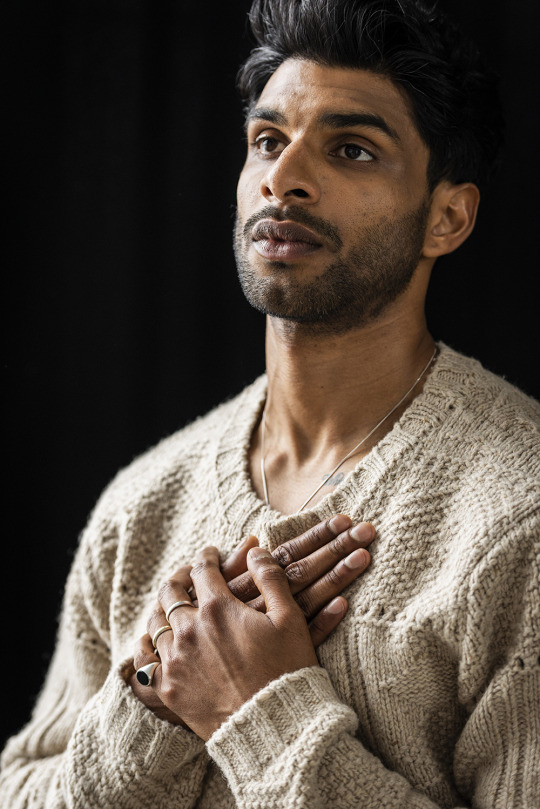
The Most Flattering Sweater?

image


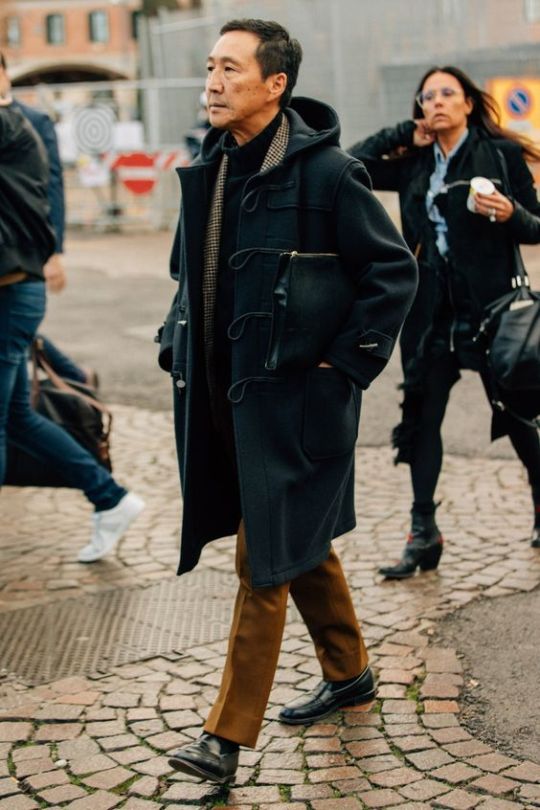
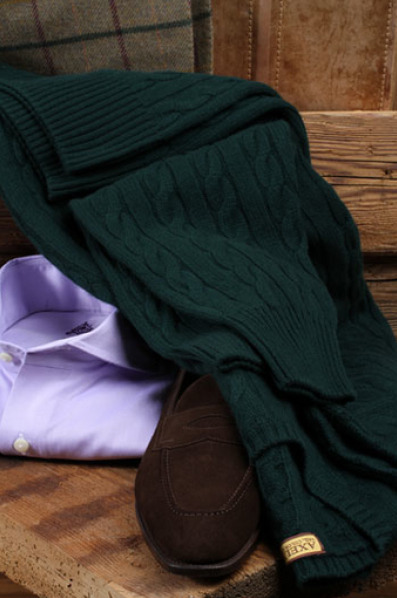
Back in 1996, Tom Junod wrote a piece for GQ Magazine, which was nominated for a National Magazine Award. Simply titled “My Father’s Fashion Tips,” it was about his father’s impeccable style, as well as the opinions of a man who felt strongly about clothes. The article is a wonderful read, and even includes some rules for underwear, but the best part is his father’s unwavering confidence that a turtleneck is the most flattering thing a man can wear – an inflexible and enduring axiom that, Tom writes, his father believed in more than the existence of God. 

Anytime my father wears a turtleneck, he is advancing a cause, and the cause is himself. That is what he means when he says that an article of clothing is “flattering.” That is where his maxim extolling the turtleneck acquires its Euclidean certainty. The turtleneck is the most flattering thing a man can wear because it strips a man down to himself – because it forces a man to project himself. The turtleneck does not decorate, like a tie, or augment, like a sport coat, or in any way distract from what my father calls a man’s “presentation;” rather, it fits a man in sharp relief and puts his face on a pedestal – first literally, then figuratively. It is about isolation, the turtleneck is; it is about essences and first causes; it is about the body and the face, and that’s all it’s about; and when worn by Lou Junod, it is about Lou Junod. 

Every year around this time, fashion writers try to convince us that the turtleneck is, in fact, finally coming back. You can take this to mean that they are always in style or never quite in, although it’s probably a mix of both. Turtlenecks teeter on the edge of men’s closets. They’re viewed with as much suspicion as they are with interest

Keep reading

One Thing We Can Agree On

image


Men’s style has never been more factionalized. Whereas men once agreed on what they thought were The Good Clothes, today’s landscape is such that the ascendency of one look doesn’t necessarily displace another. Ten years ago, men rallied around Americana and denim, then prep and Italian tailoring. Now with a million style tribes, it’s hard to coalesce excitement around any one thing. There’s streetwear and techwear, tailoring and normcore, the brutalist avant-garde and Japanese folk. Nothing is fully in or out. 

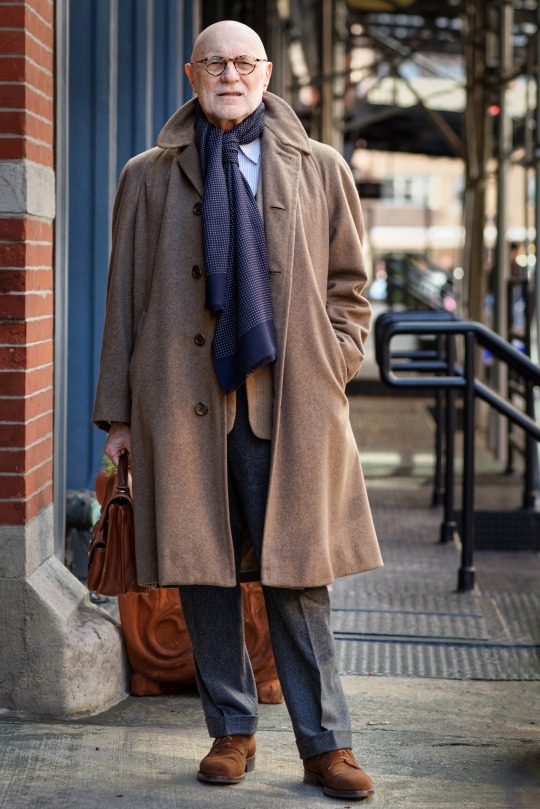
There is, however, one small sliver of overlap: the classical overcoat, loose and slightly oversized, which has somehow managed to cut across style genres. Preps pair polo coats with tweeds and flannels. Streetwear aficionados have worn camelhair topcoats ever since Kanye sported his with suede Chelsea boots. Contemporary menswear guys, those of both maximalist and minimalist stripe, like theirs with sleek jeans and textured sweaters. Even workwear lines such as RRL offer the occasional belted duster or tweed.

These are not just superficial overlappings, either. As men’s style has started loosening up, both fashion forward guys and classic menswear enthusiasts have found common ground on how they think a coat should fit. Whereas traditional overcoats once seemed out-of-touch, shoulder-hugging coats now look out-of-date. Classic overcoats right now are the one thing we can all agree on. 

Keep reading

Looking for a Shear Thing

image


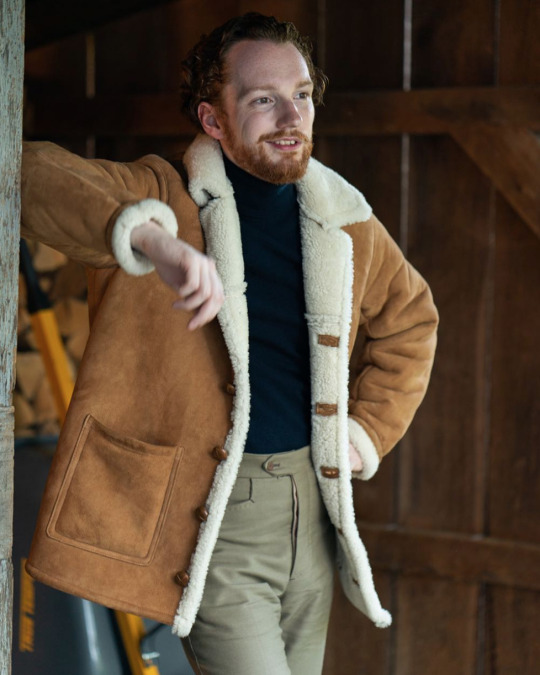
When it comes to outerwear, few styles come pre-loaded with as much meaning as a shearling. Not too long ago, the mere mention of it evoked images of the Marlboro Man. Those long, bulky, no-nonsense coats that have patchwork seams running up-and-down the back, and tufts of wool peeking out from beneath the cuffs. The silhouettes are blocky; the leathers often dry and cracked. They make their wearers look like King Kong. 

There have been times, however, when shearlings were considerably more luxurious – even if questionable in taste. In the early 1930s, catalog retailers advertised shearling coats alongside suede leather jackets and horsehide outerwear, seemingly unaware of the Great Depression. The material came roaring back in the ‘70s with the Peacock Revolution. Swanky men wore them with chunky turtlenecks and velvet bellbottoms, presumably to their eternal regret years later. They’ve also been part of some important rebel uniforms, including the better side of skinheads (e.g. the non-racist kind) and French zazous (who were an anti-establishment, punk version of French dandies). 


Keep reading

No Man Walks Alone Anniversary Sale

image


No Man Walks Alone is an advertiser on this site, but also one of my favorite stores. In the last ten years, the average menswear shopper has become a lot more sophisticated – they know just as much about Neapolitan tailoring as they do about directional casualwear. No Man Walks Alone serves that kind of customer. They have classic suits and sport coats, but also interesting clothes for the weekend. It’s one of the few shops where a guy can pick up a wardrobe for almost any part of his life. 

This weekend marks their fifth year of doing business, and to celebrate, they’re holding a sale. For the next five days, you can take 20% off any order with the checkout code 5YEAR. The code even works on already-discounted sale items. Here are ten things I think are particularly worth a look:


Keep reading

Today is the Best Time in Fashion

image


Everyone in menswear seems to believe his part of the world is in decline. Ivy Style’s Christian Chensvold, for example, yearns for a preppier past, when Brooks Brothers still made proper button-downs. A Continuous Lean’s Michael Williams romanticizes a time when America still had manufacturing. The Art of Manliness’ Brett McKay is trying to revive traditional masculinity. And StyleZeigeist’s Eugene Rabkin can’t seem to find one good thing about designer fashion. For him, clothes are hurtling towards greater superficiality, hype, and crass commercialism. In a Business of Fashion op-ed about how “fashion has become unmoored and lost its original meaning,” Rabkin is so down and depressed, he can’t even get worked up about his own indictment. He dispiritingly ends his essay with: “In other words, whatever.”

Samuel Huntington calls such writers “declinists” for how they assert things are getting worse. He was talking about weightier matters than men’s trousers, but the idea of an earlier, better time runs deep in the history of Western intellectual thought. In his book The Idea of Decline in Western History, Arthur Herman outlines the long shadow of Western pessimism. “While intellectuals have been predicting the imminent collapse of Western civilization for more than 150 years, its influence has grown faster during that period than at any time in history,” he notes. 

Herman starts his book with 19th century thinker Arthur de Gobineau, who resigned himself to the idea that the Aryan race would one day be tragically “contaminated” through its contact with the Latins, Gauls and other “lower orders.” He then moves on to declinists of every stripe, “from philosopher-pessimists such as Friedrich Nietzsche and Michel Foucault, cultural pessimists such as Henry Adams and Brooks Adams, and historian-pessimists such as Oswald Spengler and Arnold Toynbee.”  

Keep reading

Tragedy of the Common Cashmere


If you were to shop for a cashmere sweater today, you’d be buried in options. Over at Mr. Porter, you can find nearly 250 models, ranging from chalky pastel turtlenecks to NBA intarsias selling for about $1,750. More affordably, J. Crew’s “Everyday Cashmere” collection retails for just under $100, and it comes in Kelly-Moore-sounding colors, such as “rustic amber” (which is orange) and “safari fatigue” (which is green). You can even find cashmere pullovers nowadays at Costco. They’re located somewhere between the aisles for bulk Cheerios and 98″ plasma screen TVs. 

The newest name in cashmere is Naadam, a young upstart promising to deliver luxury sweaters for less than what most stores pay wholesale. They have a over a dozen videos on YouTube, which charmingly pitch their story as two young guys from New York City who made it out to the hinterlands of Mongolia. There, they get stranded somewhere outside of the nation’s capital, ride old motorcycles, and drink goat-milk vodka with nomads. A year later, they return to the Gobi desert with $2.5 million dollars in hand and the bold idea to buy cashmere direct from herders, so they can cut out the middlemen and start a direct-to-consumer knitwear brand. This, supposedly, is how they’re able to offer cashmere sweaters for $75. In every one of their sleek, expertly produced videos, a little baby goat bleats (that’s always the best part). 

Until recently, the cashmere trade remained mostly unchanged for the last five hundred years. From the mountains up Tibet and away across the back of the Himalayas to Bokhara, cashmere traveled much like the way it did before Marco Polo explored the Great Silk Roads. It came down from the mountains in countless little loads on the backs of yaks and horses – sometimes buoyed down interminable waterways on rafts and boats – before reaching a major hub, where it’s put on modern transport and swiftly whisked away to another country. If you’re wondering why cashmere should have to travel so far across Asia, just remember the stories of the still unconquered Everest. Across the vast barrier of the Himalayas, there are few routes.

Keep reading

Finding a Watch for Your Wardrobe

image


Even if they’re both into style, the online communities for men’s clothing and fine horology exist on different islands. Guys who are into suits and Japanese workwear are often not that up on watches. And guys who are into watches are not always interested in clothes. These communities speak different languages, and have different standards for what makes something good. 

If you’re on this side of the divide – the one that’s more interested in menswear than mechanical movements – finding the right watch can be a challenge. For one, prices are dizzying. While you can get partially canvassed suits nowadays for $500, and full-grain leather shoes for half that amount, the ticket price for an entry-level, quality watch usually starts in the low four-figures – collector’s pieces are five-figures. That can make experimentation prohibitively expensive. Secondly, if you’re concerned about how to find a watch that actually complements the rest of your wardrobe, you have to learn a new visual language. Which watches go with suits, which go with workwear, and which go with contemporary menswear? 

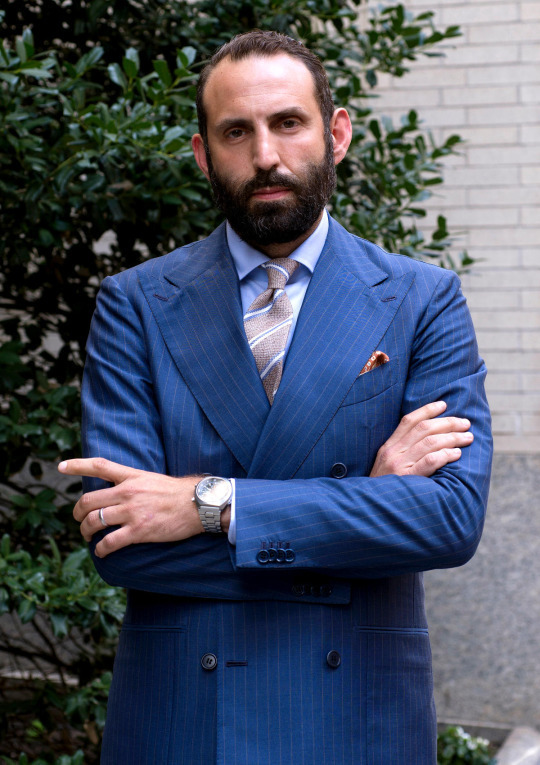
I recently chatted with Greg Lellouche, co-founder of No Man Walks Alone (a sponsor on this site, although this isn’t a sponsored post) about how to find the right watch for any given wardrobe. Greg has been an avid watch collector since the late 1990s, when he bought his first one, the Sinn 142 ST you see him wearing above. Since then, he’s collected everything from vintage Rolexes to Speedmasters to Reversos. When he worked on Wall Street, Greg’s coworkers used to turn to him for advice when they were looking to buy a new wristwatch with their annual bonus. 

Keep reading

Easing into a Cold-Weather Wardrobe

image


Much of men’s style takes after British tailoring, when dress norms were set during a different time period and climate. This is why, when we imagine a fall wardrobe, we think of the kind of heavy tweeds and wool overcoats that used to be seen in periodicals such as Apparel Arts. And yet, today, the cold season has been noticeably pushed back – late September still feels like summer and we’re months away from heavy outerwear weather. The biggest challenge for dressing this time of year is managing the wide temperature swings that can bring warm afternoons into chilly nights. Back when he was still writing about men’s style, Will Boehlke used to call this “shoulder season.”

It’s easy to dress well for early autumn if you rely on suits and sport coats. Instead of lightweight Frescos and linens, you want jackets in ribbed corduroys, mid-weight tweeds (nothing too heavy), and worsted wools. Worsted is just another way of saying the wool fibers were combed before they were spun into yarn, which makes the resulting fabric a little smoother and clearer finished (as opposed to woolens, which are left uncombed and are consequently spongier). 

There’s also a class of fabrics colloquially referred to as faux or citified tweeds. These are smooth, tightly woven worsteds made in rustic patterns reminiscent of traditional checks. They carry the distinctive colors and patterns of Scottish estates, as well as the tonal range best associated with the British countryside – bark, moss, and heather. They wear warmer than true summer fabrics, but don’t trap as much heat as real tweeds. Which is to say that they fit exactly in the middle. A couple of faux tweeds, along with a heavier navy sport coat in hopsack, serge, or this Sportex, and you’d have your early-fall tailored wardrobe covered. 

Keep reading

Drake’s Goes Collegiate

image


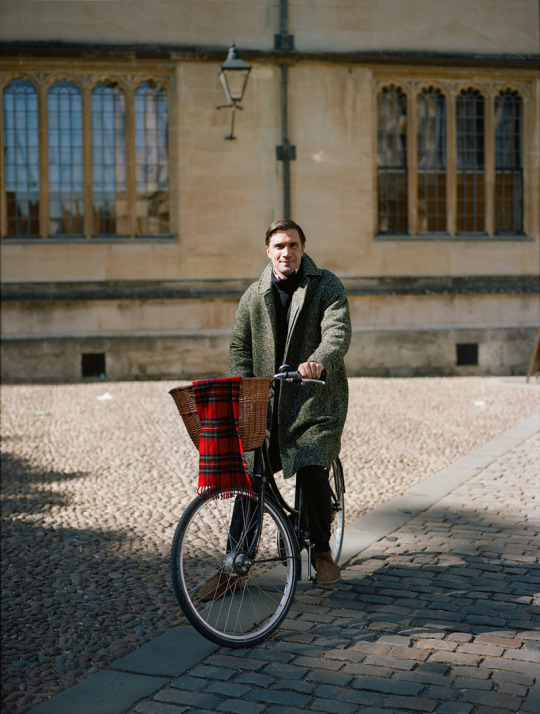
If prep ever makes a comeback, it’ll be because of lookbooks like Drake’s. For this coming fall/ winter season, they shot their collection of brushed Shetlands and tweedy outerwear against the collegiate Gothic architecture of Oxford University. The combination makes the photos look as though they were lifted straight out of Take Ivy. One of Drake’s employees, an Oxford alum who helped put this project together, led the team through his favorite parts of the campus and his old, familiar watering holes. 

Drake’s Creative Director, Michael Hill, doesn’t want you to think this is about Ivy Style, however. “We’ve always been inspired by Ivy clothing, but this isn’t about recreating a look,” he says. “It’s just that we’re close to Oxford and it’s a beautiful setting. Ivy is a style that inspires us greatly – we look back at provenance and history a lot. But this is also very much about doing something right for today, in our own way, and presenting our clothes in a manner that we feel was fun and playful.”

Playful is a good way to describe some of the new items this season. There’s a pocket square decorated with a spinning collage of space-floating astronauts (if you buy a truck-ton of those squares, I imagine they could make for cool wallpaper inside a nursery). I also like the single-stick London Undercover umbrellas that feature an archival print on the underside of the canopy, as well as the brightly colored, Kelim scarves (I bought the blue one). For the bold and fearless, there are block striped Shetlands coming soon. Those look as though Drake’s mashed together all the Shetland yarns they’ve run separately in the past and turned them into a single sweater. David Hockney, a man known for his eccentric embrace of color, would be proud. 

Keep reading

Finding Artisans in India

image


A couple of years ago, former Eidos designer Antonio Ciongoli and Stoffa founder Agyesh Madan headed to India to work on a collaboration. They developed two hand-dyed indigo fabrics – one shirting weight, the other trouser weight – and came up with a hand-block pattern for some prints. Unfortunately, the collaboration never came to fruition. Eidos’ parent company, Isaia, wasn’t sure how the market would react to unstable dyes (in contrast to synthetic dyes, natural dyes fade and run easily). Like Brooks Brothers’ customers in 1959, who angrily stormed back into the stores and complained about how their madras shirts were bleeding in the wash, they worried that people would mistake the character of natural dyes as defects. 

The work wasn’t all lost, however. Madan eventually used part of that trip for a Drake’s collaboration, and Ciongoli used it as inspiration for a new line. Since stepping down as Creative Director at Eidos – which is now run by Simon Spurr – Ciongoli has started 18 East, a new menswear apparel brand under Roller Rabbit. The line is debuting tonight at New York City’s 180 the Store

18 East isn’t necessarily a travel line, but it’s about traveling. The number 18 refers to how R is the 18th letter of the alphabet (a nod to their parent company, Roller Rabbit), and East is an allusion to Eastern manufacturing. “Everything we make is with small, artisanal suppliers,” Ciongoli explains. “When people talk about handwork, they’re often talking about how someone is operating a machine by hand. But handwork here means real handwork – even the embroideries are done purely by hand.” 

Keep reading