A Donegal Tie From Vanda Fine Clothing

image


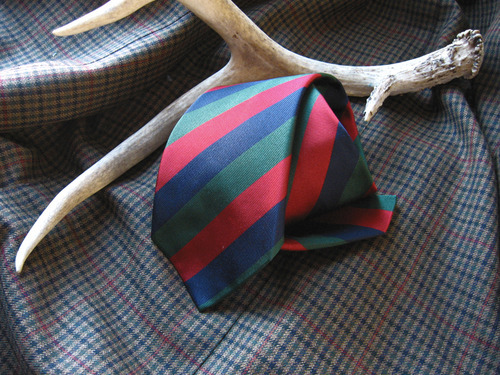
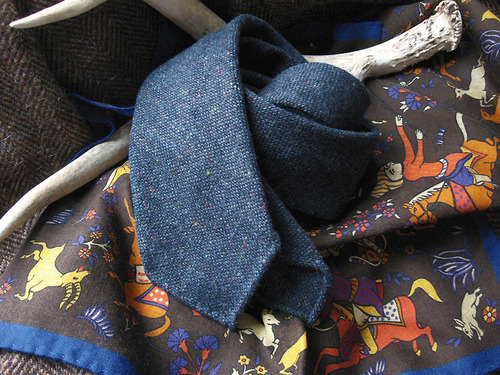
The wet and rainy weather yesterday was made better by a package I received from Vanda Fine Clothing. Gerald and Diana heard I was looking for a blue Donegal tie, and generously offered to gift me one of theirs. The tie turned out to be even more handsome than I expected. 

Every time I wear a Vanda, I’m reminded of how much I enjoy their neckwear. Vanda specializes in lightweight constructions - meaning their ties are made with a thin, pure wool interlining to help the fabric hang well, but there’s otherwise no padding inside. This allows their ties to knot distinctively and beautifully, as there’s not so much structure that the life is strangled out of the shell fabric. Whereas some ties on the market these days feel stiff and thick, Vanda’s are essentially the opposite: light and airy, with a touch of casual sensibility. 

The Air Force Blue Donegal tweed you see here was woven for them by Molloy & Sons – a small mill in Donegal, Ireland owned and operated by a father-and-son team (literally Sean Molloy & his son). Unfortunately, Donegal tweed has yet to receive any government protections, so while Harris Tweed has to be woven in the Outer Hebrides of Scotland in order to carry the name, anyone can weave a fabric nowadays and call it Donegal. Indeed, what’s marketed today as Donegal is usually just someone trying to describe their fabric as being flecked with irregular bits of color (a “design” special to tweed weavers in Donegal), rather than make claim on material’s origins. This, on the other hand, is the genuine stuff.  

There is one change to Vanda’s construction since I last bought from them. Apparently they’ve had to add a label in order to legally protect their products. In keeping with the spirit of their company, the label was added in the most discrete way possible - sewn into the inside fold of the tie, impossible to see unless you were actually looking for it. I actually like the change, as it adds a bit of branding without at all being noticeable about it. 

Keep reading
That Russell Ain’t the Only Russell

image


Written in a little handbook for young men entering the tailoring trade, Mr. J. King Wilson of John Morgan and Company (tailors of JFK’s first bespoke suit, and his tailors until his presidency) had this to say about fitters:

“The fitting room is a great leveler. The most bombastic customer seems but insignificant when you have got him with his pants down. They say no man is a hero in the eyes of his valet. The same is true as between a customer and his tailor to whom many of his foibles and petty conceits are exposed.”

I imagine that’s never rung any truer than it did on Monday, when I met Steed for a fitting. It was their last day in San Francisco, but I had already scheduled a trip to be out of town this past weekend. So to catch them before they left, I flew back Monday afternoon, rushed home to grab my garments, and then rushed to their hotel to make my appointment. I didn’t have time to change, so I showed up in what I wore to the airport: a white t-shirt, brown leather A-2 jacket, heavily worn jeans, and a pair of dark brown boots. I couldn’t have looked more out of place, but neither Edwin or Matthew seemed to mind. In any case, I’m sure it’s not as though I could appear to be anything but a clotheshorse, even if I had shown up in a coat and tie. 

At our meeting, I wrapped up my first order and put in another. On the list is Russell plaid sport coat that I’m rather excited about. Russell plaid, as I mentioned over a year ago, is like a large-scale glen plaid, but with the horizontal part of the check stripped away. That leaves the vertical check to dominate, which is then accented with a thin stripe – usually in burgundy, dark purple, or burnt orange. I’ve always thought of it as one of the most tasteful of patterns. Unique, but conservative, with a little bit of “Old Money” sensibility to boot. You can see it worn well by men such as Luciano Barbera, Bernhard Roetzel, and George Frazier below. 

Keep reading

The Other Black Watch

image


Browsing for neckwear through a computer screen can sometimes make you miss subtler qualities. Things such as the heavy drape of a 50oz silk twill or the chalky hand of ancient madder can be passed over for more “obvious” things, such as the rough weaves of raw silk or boucle. Repp stripes are also often overlooked, even though they’re exceptional versatile and - unlike some of the overly conservative foulards that are popular today - will reliably be stylish ten or twenty years from now. 

I recently picked up this black watch regimental, which I only noticed because my friend Cooper Frederickson brought it to my attention over a year ago. Since then, I haven’t been able to stop seeing it. On Mark Cho of The Armoury and Drake’s, on Mariano Rubinacci of The London House, on Luciano Barbera of … Luciano Barbera, and of course on Charles, the Prince of Wales. The tie even made an apperance once in an old issue of Popeye, a Japanese style magazine. 

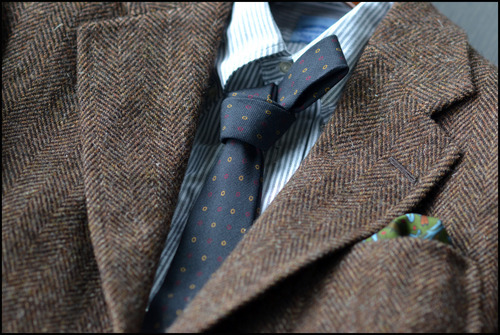
The “standard” black watch, as everyone knows, is a blue, green, and black Scottish tartan, but that’s not the only one. There’s also this green, red and blue striped design, which draws its colors from when decommissioned Black Watch officers needed something to represent their service once they returned to civilian life. And like all regimental stripes nowadays - what was once something socially signifying has now just become a design (for most people, anyway). I’ve found this design to go excellently with solid navy and brown checked sport coats. It’s simple and unique, but also unassailably tasteful. And it’s not something I think I would have noticed online if a better eye hadn’t directed me to it. 

For those interested, you can get a black watch regimental through A Suitable Wardrobe (made by Drake’s, and is the one I have), Ben Silver, and Benson & Clegg. Sam Hober also used to have the material for bespoke options, but seems to have run out (he may restock soon). When shopping for one, just be careful to not accidentally pick up the Lord Taverners tie, like I once did. They’re similar, but the black watch one is darker and, in my opinion, more sophisticated looking.

Keep reading

The Most Stylish Thing I Could Post Today


Aside from one post on Jacques Brel, I don’t talk about music on here, largely because this site is about menswear and I assume people will just skip over music posts that don’t align with their taste (I know I do). Still, a few menswear bloggers recently had a conversation about jazz on Twitter, which prompted me to revisit some old footage of the Newport Jazz Festival on YouTube. For those unfamiliar, The Newport Jazz Festival is a summer music festival that happens every year in the small town of Newport, Rhode Island. These concerts have been the source of a countless number of great recordings - including ones by Nina Simone, Muddy Waters, Ray Charles, Billie Holiday, Ella Fitzgerald, and Miles Davis.

These particular videos you see here are from 1958. Eisenhower and Nixon were in office, the Cold War’s “Space Race” had just started, African Americans had not yet gained full civil rights, and two parents who just had a newborn baby decided to name him “Michael Jackson.” Of all the footage I’ve seen on the internet in the last ten years, these stand out as some of the best. The music of jazz and blues being played all day; the footage of people dancing on rooftops; the popping beer and spinning carousels; the cardigans worn loosely over t-shirts; the men in coats and ties; and the footage of oddly simple moments in what was a very complicated America. It’s all really fantastic to watch.

The last video below is of the full documentary, which is a bit long, but if you see nothing else, at least check out the very first clip above. It’s the most stylish thing I could post today.

Keep reading

An Old Umbrella

image


My friend Réginald-Jérôme de Mans - who’s a weekly contributor to A Suitable Wardrobe’s blog - is remarkably good at finding menswear-related items on eBay. Or anywhere on the web, really. In fact, he was a guest on A Suitable Wardrobe’s first podcast episode for just this skill. It aired almost a full three years ago, but is still available for listening here under the title “Browsing for Bargains on the Web.”

What makes RJ’s finds exciting is that they’re often things of exceptional quality, such as leather goods from Hermes; stuff from the heydays of “once were” companies such as Old England and Arnys; or items slightly off the beaten path, such as intricately designed ties and the occasional … riding whip. When I can, I try to include some of his links in our eBay roundups over at Put This On. Except for the few times when I want something for myself.

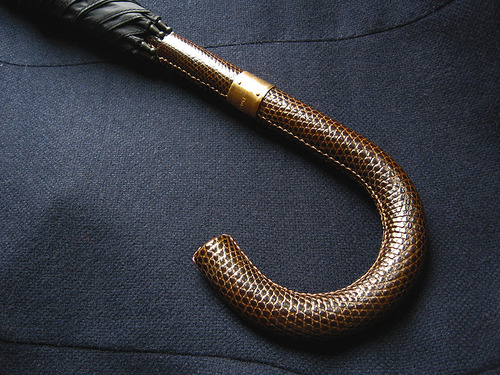
Like this old umbrella from Ralph Lauren I recently won. The handle is covered in a hand stitched, lizard skin leather; the shaft is made from a handsome, dark wood; and the frame is composed of eight strong metal ribs. It was supposedly made for the RL brand by the British Royal Warrant holders Swaine Adeney Brigg, which I admit I was originally a bit unsure of. However, there are a number of good signs: the nailed brass collar, metal tipped shaft, small mother-of-pearl button, and seemingly original, slightly yellowed, old tag hand sewn into the rib that indeed says “Brigg’ 100% Nylon Made in England.” There’s even two accompany tags - one with the Brigg label stating that the leather is lizard skin, and a small pamphlet instructing the owner on how to properly care for the umbrella. From what I can tell, this is a genuine article.

Unique makes of high-quality umbrellas tend to come in one of two forms. There are single stick constructions, where a single piece of wood is carefully bent with steam and pressure so that it forms both the handle and shaft. Then there are umbrellas such as this one, where the handle is either wholly made from, or just decorated with, a unique material. This can be metal, animal horn, exotic leathers, whangee, or anything that might set the umbrella apart from others. You can find both these types direct from their makers, or from online shops such as Oi Polloi (who has umbrellas with Malacca or leather-covered handles); A Suitable Wardrobe, Grunwald, or Mr. Porter (who have a variety of styles from Maglia Francesco, the largest Italian producer of high-quality umbrellas); Exquisite Trimmings or No Man Walks Alone (who carry my favorite maker, Mario Talarico); and online haberdasheries such as Kent Wang or Howard Yount (who offer their own private label line). The Armoury might also be a good source for Fox umbrellas now that they have a New York City store (readers in East Asia, of course, can just order from The Armoury’s Hong Kong location).

Keep reading

Spring for Barbour

image


I can’t help but to keep coming back to Barbour every season. This past fall/ winter, I picked up two pieces from their collaboration line with Norton & Sons, both of which have come into regular rotation. There’s this black Shetland sweater, which is wonderfully thick and hardy, and has a tightly knit ribbed hem to help it stay up on the torso. The sweater’s unusual texture adds some important surface interest when it’s layered underneath a simpler jacket. I also bought this waxed cotton field coat, which has two button-tabs at the back to give the coat some shaping, hidden storm cuffs to help keep the wind out, and two big pockets for stowage. I’ve been wearing it with beat up jeans and boots whenever the weather feels cold or wet.

As I’ve mentioned before, the problem with many of these pieces is that they’re hard to appreciate just through photographs. They lack the kind of unusual detailing that makes things popular on blogs or help catch a customer’s eye as he’s scrolling through an online store’s inventory. Instead, they focus more on simple designs and unique materials. The shell on my new field coat, for example, feels more interesting than the coated cottons I’ve handled from Apolis or Filson. Scuffs show-up more easily in the wax, which gives the coat some character, and the velvet collar, I suspect, will wear down beautifully over time.

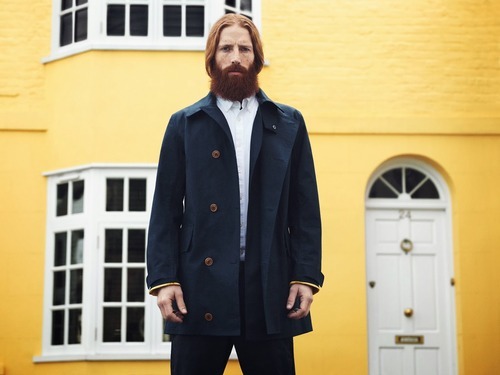
This season’s latest Barbour x Norton & Sons collection feels much the same – simple and handsome, although not always styled as well as it could be in marketing materials. There’s a long navy raincoat, for example, that’s often photographed with the front buttoned-up, which I think unfairly hides the “lapel” that softly rolls out when the jacket is worn open (above is the one photo I can find that shows this). There’s also a cotton/ linen Guernsey sweater with a subtle dropped shoulder that’s easy to miss. My interest in Guernsey sweaters (a type of fisherman’s knit) was piqued last year when I saw these photos of David Somerset and British fishermen. I might give this one a try this spring. 

Barbour has also introduced a new subline – called Spey – as part of their Heritage collection. Spey offers fly-fishing inspired jackets, colorful shirts, and lightweight Fair Isle sweaters. I admit, like Barbour’s Dept. B, some of these feel like cheap derivatives of Tokihito Yoshida’s work, although there’s an interesting fly-fishing take on the classic Bedale. In any case, I’ve included a great fly-fishing movie at the very end of this post, should you want to watch something beautiful and get romanced into liking Spey more than you should.  

Keep reading

1930s Esquire and Apparel Arts Illustrations

image


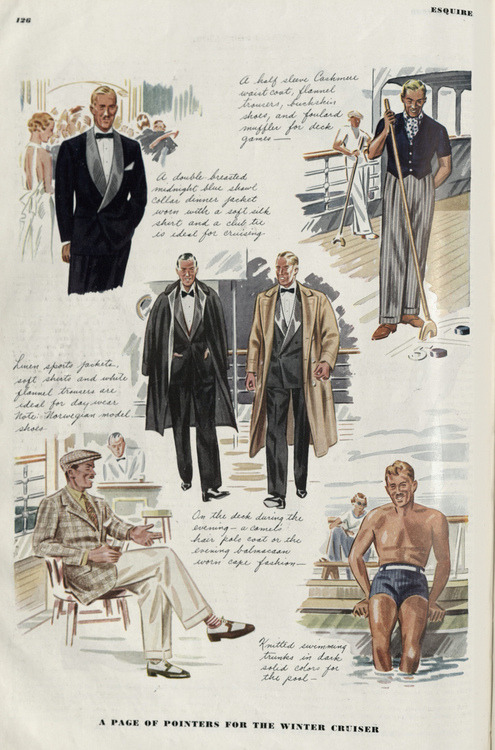
A friend of mine recently scanned some remarkable scans of old issues of Esquire and Apparel Arts, all originally published around the 1930s or so. Apparel Arts was a quarterly large-format publication, started by Arnold Gingrich, who was also the founder of Esquire. Where Esquire was aimed at the consumer, Apparel Arts was for the trade. You see, buyers who work for clothing stores today typically rely on lookbooks, tradeshows, and fashion magazines to decide what they should stock each season. This wasn’t so in the 1930s. Back then, small independent shops relied on Apparel Arts to figure out what the best dressed men wore, and consequently what they should offer to their customers.

For a number of reasons, the usefulness of Apparel Arts declined after the end of the Second World War, so it was transformed into GQ in 1957. One of the conspicuous things you’ll notice is that – along with scantily clad women – GQ today has small caption boxes listing the brands of the clothes they’re promoting. Fashion spreads will say things such as “Suit by Ralph Lauren $2,875; Shirt by Brioni $475; Tie by Zegna $185.” In Apparel Arts, there were no such captions. It was a publication simply about how to dress well given different settings.

It’s for this and many other reasons why men who enjoy classic men’s clothing often look back to  Apparel Arts with fondness. These illustrations are also some of the few examples we have left for what we mean when we say “classic men’s dress.” This is the coat-and-tie look worn without the twee-ness of the modern GQ, the frumpiness of Men’s Wearhouse, or the peacocking of Pitti attendees. Though, it’s perhaps good to mention that the styles shown here were also the peacocking of their day. A friend of mine once emailed me a funny cartoon from a 1935 issue of The New Yorker, where a man is shown at a swanky social gathering while dressed in a peak lapel, windowpane jacket; polka dot ascot; and patterned trousers. A pocket square is spilling out of his breast pocket, and people around him are seen whispering, “They say he reads ‘Esquire.’” A modern version of this cartoon might show people saying, "They say he’s a blogger.“ 

In any case, enjoy these illustrations. My friend scanned hundreds of them, but for the sake of brevity, I’ve only posted about fifty here. Colin McDowell penned a nice piece today at The Business of Fashion, where he talks about how fashion reporting has suffered greatly from the decline of fashion illustration. One needs to only do a search on Google Images for old Vogue covers to see what he means. These, in some ways, are the menswear equivalents. 

Keep reading

Josephine Baker Pocket Squares

image


In happy weekend news, Drake’s full spring/ summer collection is now available on their website. Included are some summer shirts made in their newly acquired Rayner & Sturges factory, as well as some ready-to-wear sunglasses from Nackymade. They’ve also expanded their colors for grenadines (now boasting many shades of green, brown, and blue) and broadened their line of shantungs. In addition, the unique fuzzy mohair tie they introduced last season seems to have been kept, and there are some basic repp stripes to satisfy their more conservative customers.

Perhaps most interesting of all is their pocket square line. There’s a handsome cotton animal print that I think would sit well in the pocket of any tropical wool or linen sport coat, as well as a spring/ summer version of their tile print design. I actually bought a couple of their tile prints last season and have found them to be incredibly useful. The print is unusual enough to not overly match any tie, but also conservative enough to not stick out too much on its own.

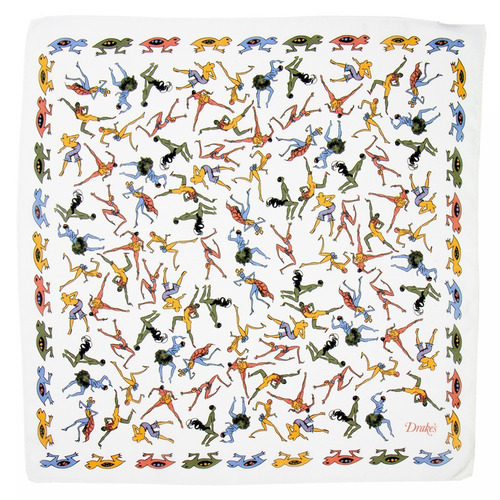
The best square of all might be the one honoring Josephine Baker – widely considered the “First Lady” of jazz and an important figure in the American Civil Rights Movement. Baker famously refused to perform for segregated audiences in the US, and had a not uncomplicated relationship with French society as a symbol of Black femininity. I’ve included a great documentary on her at the end of this post, should you want to watch some fascinating Black history. There are also some things over at The Phoenix Project dedicated to her, although those are aimed at women’s wear. 

Many thanks to Drake’s for not releasing a line of Bill Evans or Miles Davis pocket squares this season, for otherwise, I might have gone broke. 

Keep reading

A Cruel Cosmic Law

image


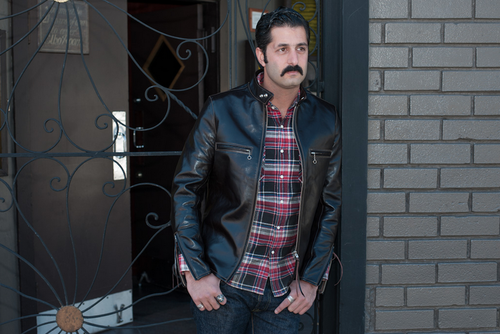
There must be some cruel cosmic law that puts everything we covet just outside of our reach. It doesn’t matter what your budget is. If you’re used to spending $200 on something, the thing you’ll want most will cost $300. If you’re used to spending $1,000, the most desirable item will cost $1,500. I was reminded of this when I stopped by Self Edge recently to try on some new jeans. While aimlessly browsing around, I also found a couple of great leather jackets, the star of which is this black cafe racer by The Himel Brothers.

Cafe racers are simple, single rider jackets with stand up collars, two to four slash pockets, and zippered sleeves. Although they were originally designed for just motorcycle use, they eventually came to symbolize American ideals of freedom and rebellion. Naturally, with social appeal came fashionable imitations, which is perhaps why Bruce Boyer once said that black leather jackets are just shadows of their former selves, “diluted to the point of mere role-playing.” That’s undoubtedly true, although I admit that doesn’t stop me from still liking them.

The Himel Brother’s cafe racer is made from a unique front quarters horsehide sourced from the Shinki tannery - the same Japanese tannery that supplies the great John Chapman. It’s a thin leather - much thinner than the horse or cowhides you’d typically find on the market - and consequently also much lighterweight. The semi-analine, vegetable tanned skin has been finished with a thin layer of wax coating, which presumably will give the leather a really nice “vintage” look once the jacket has been broken in. Other details include leather strips hung from the zipper pulls and a tiger camo lining in the interior. I’d normally find camo lining to be a bit cheesy, but I rather like it here. When worn, it gives the jacket a nice bit of rugged detailing. 

Unfortunately, it costs $1,950, and when I saw the price tag, I did one of these. Even more sadly, Self Edge never holds big sales. They have two a year, usually at a discount rate that matches the year’s number. So in 2012, they had a sale for 12% off; in 2013, it was 13% off; and this year, it’ll probably be 14% off. At that rate, I can probably afford this jacket in 2050, assuming it and I are still around. On the upside, The Himel Brothers has this same model, in limited sizes, at a slightly lower price on their website (they typically do custom orders). However, those will be made from different materials (presumably heavier and more traditional, which may be a good or bad thing, depending on your taste) and won’t have the same details.

Keep reading

New London Lounge Deliveries

image


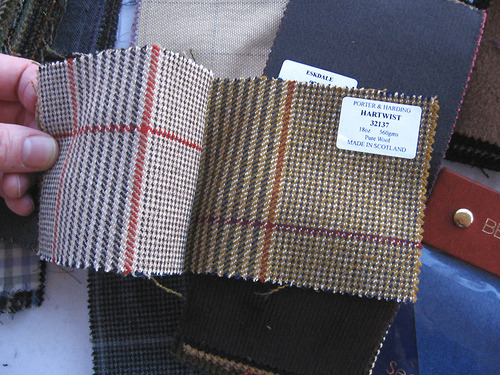
I recently received two new London Lounge fabrics, which is great timing because Steed will be touring the US next month. Included in the shipment was a brown Shetland herringbone, with qualities that I’ve found impossible to get elsewhere. Spongy and light in the hand, it has the large enough pattern to distinguish it as a true herringbone when worn. I’ve put down two other swatches below for comparison – one from Abraham Moon and another from a mill I no longer remember. Most herringbones you’ll see today are like these (either in cloths or ready-made garments). They’re often too smooth, too red, too yellow, too dark, too light, too muddled, or most of all, too small in pattern. This one, in contrast, is perfect. It’s thick, heavy, and tweedy, and carries just the right combination of mid- and dark-browns to make it look rich and earthy. My photos unfortunately don’t do it justice. You should rely on the first photo below (supplied by The London Lounge) and Voxsartoria’s picture above for more accurate representations. The cloth is truly fantastic.

The second is a cream and brown glen plaid that was modeled after a jacket Gianni Agnelli was often seen wearing. This too has a large-scale pattern, although this time it’s aggressive enough to give me reservation. Large patterns have the advantage of helping distinguish odd jackets as true odd jackets (rather than suit jackets), but once too large, it can start looking like a horse blanket. I’m slightly afraid this is too big for my frame, although photos of Agnelli and Alden in theirs make me consider otherwise.

In any case, there was some debate on the forums recently about whether London Lounge fabrics are worth their premium. Most jacketings cost about 150 GBP, which is a good 50% to 100% more than what you’d expect to pay at a standard English mill (assuming you even have to take cloth prices into account at the tailors, which you often don’t have to do). I won’t rehash the discussion, but suffice to say, I’m a happy paying customer. I’ve yet to find suitable alternatives to Michael’s cloths, and find a lot of value in having someone trim the wide world of books for me to a manageable selection. Plus, it’s difficult to find cloths made in these heavy of weights anymore – useful if you want the kind of drape and shaping seen in old suits

– without crossing over into overcoating territory. I’m already looking forward to the next round of subscriptions.  

Keep reading