Old Leather and Foster & Son’s Tour

image


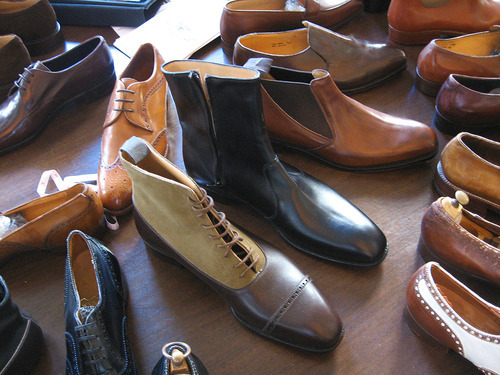
W.S. Foster & Son is in San Francisco this week, holding a trunk show at The Wingtip, which is a move from their regular location at The Fairmont Hotel. I was able to make it out yesterday to meet Andrew Murphy and Jon Spencer, who serve as the company’s retail manager and lastmaker respectively. With them were some samples from their ready-to-wear and bespoke range, as well as some vintage shoes that have been sitting in their archive for God knows how long.

Everything looked lovely, but there were a couple of models in particular that caught my eye. One was a uniquely designed wingtip, with a swooping line from the shoe’s eyelets to the quarters, and then a winged cap toe to balance everything out. Apparently, it was modeled after an old design by Alan McAfee, who was a bespoke shoemaker on London’s Dover Street before going out of business sometime in the 1980s. And, among the ready-to-wear range, there was a side zip boot, which was modeled after something Foster & Son once made for a Sultan. His had a bright gold zipper and a taller heel, which accommodated some silver spurs. This RTW model is a bit more discreet, with a black tonal zipper, a regular heel, and no spurs. It’s perhaps better suited to someone who’s … um … not a Sultan.

In handling some of the vintage shoes, I noticed that the leather felt a little different. It was glossier and smoother, with a grain that was nearly invisible. I asked if this was because of the age of the shoe, or if there was something about the quality of calf leather fifty or sixty years ago. Both Jon and Andrew agreed that it’s the latter. It’s apparently harder to source good materials these days. Cows are made to grow faster and larger through modern industrial husbandry techniques – and since all leather is a by-product of the meat industry, that means most skins are too stretched out and thin to use for high-quality shoes. Foster & Son works to get the best materials, but the supplies aren’t what they used to be.

Keep reading

Anderson & Sheppard’s New Online Shop

image


For those who can’t make it to London, Anderson & Sheppard just opened a new online shop. As an extension of their Clifford Street haberdashery, it features almost everything in the company’s ready-to-wear line. There are seemingly hundreds of designs for pocket squares, scarves, and ties, and possibly the biggest selection of knitwear you’ll find anywhere. Smaller sections are also available for shorts, swimwear, and coats

The site does seem to have some kinks at the moment. I confirmed with them that customers in the United States will be able to shop, but I wasn’t able to checkout with anything in my cart. We can probably assume those will be worked out in the coming days. Additionally, the trouser section seems to still be in development. Along with the impressive knitwear, that might be one of the site’s best sections, as their Clifford Street shop was originally built with a strong focus on ready-to-wear trousers.

Lastly, for those who missed out on the firm’s vanity book, A Style is Born, it’s now available online at a much more reasonable price. The original price, that is. The book quickly sold out in the first few months of its release and resellers have been offering it for $250 or more. You can now get it from Anderson & Sheppard directly for a much more reasonable price of $125

Keep reading

M the Civilized Man

image


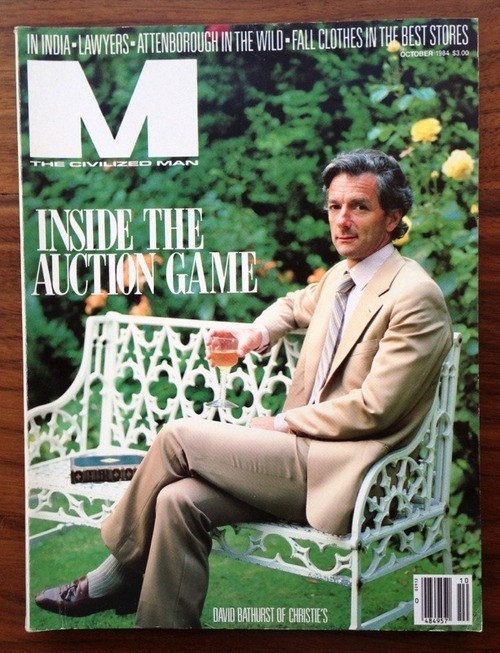
I was cleaning up my apartment over the weekend when I came across a stack of old, forgotten issues from the now defunct M Magazine. A Fairchild Publication, M was launched in September of 1983 with a special issue on Prince Philip and navy blazers. It lasted just seven short years under the title of M the Civilized Man before it was changed to M Inc (Manhattan Inc) in 1990. About two years later, the magazine folded completely, with subscribers receiving GQ for the remainder of their subscriptions. 

For the time it lasted, however, the publication was great. Especially during those early years. Although it wasn’t a fashion publication, per se, it was loosely centered on style. Every issue had a fashion spread, a feature on stylish men or places, and the occasional story on handsome items you might want to buy that month. There was also always a column at the end that would pose a rhetorical “why not?” As in, why not buy some fancy pajamas, or a three-piece suit, or a sweater with a big pheasant on it? (The last was a real, honest-to-God question posed by the magazine’s editors).

Towards the end of the ‘80s, the publication gravitated towards Italian fashion and trendy casualwear, but the earlier issues felt a little more classic, if not at least British and American. In more recent years, John Tinseth over at The Trad put together a “best of M” book, although I haven’t been able to find a copy. Peter Kaplan was also working to re-launch the title through Conde Nast before he unfortunately passed away.

Keep reading

New Standards

image


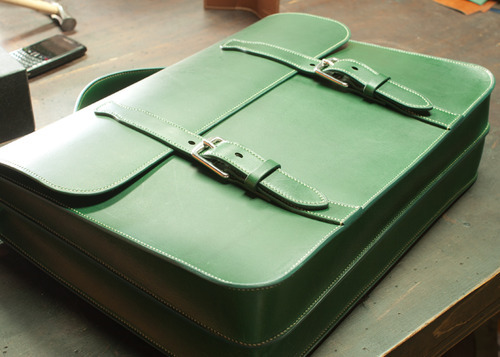
One of the nice things about writing a menswear blog is that I get to meet people who actually make things. Bespoke cordwainers, tailors, and even the occasional fashion designer – people who produce the things that many of us love. A few years ago, I met Bellanie – the co-founder and craftswoman behind Chester Mox – when I was searching for a leather card case online. Since then, we’ve become friends, and I’ve had the fortune of seeing her skills as a leather worker develop. 

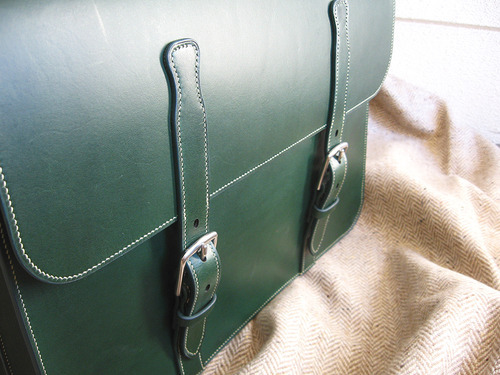
Recently, Bellanie graduated from an apprenticeship with a master craftsperson, and her whole line has undergone an overhaul. She sent me couple of pieces (on loan) to check out, and I can genuinely say: I think she’s setting new standards for what men can expect for their money. The last time I’ve been this impressed with a brand was with Meermin – that Spanish shoe company that, I believe, has redefined affordable footwear. I think Chester Mox is now doing the same, except for high-end leather goods. 


image

Keep reading

That Japanese-Italian Style

image


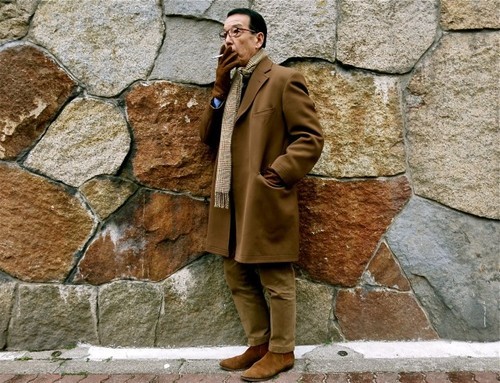
The term “timeless style” can feel like such a cliché nowadays, but it’s genuinely amazing how little — and how awesome — Yukio Akamine’s style has changed since I first saw him on The Sartorialist nearly ten years ago. Granted, ten years is hardly timeless, but with how quickly fashion moves on the internet, that almost feels like a lifetime ago.

Akamine has described his style as being traditionally British, but I actually think of it as a Japanese-Italian interpretation of British clothes. The fabrics are heavy, but the tailoring – save for a few sharply cut double breasted jackets – mostly looks soft and rounded. The shoulders are unconstructed and sloping, the lapels slightly extended, and the quarters gently curved. His shirt collars also look soft and unfused, and the points are long in a way that you almost only see in Southern Italy nowadays. For casualwear, he seems to favor the kind of slim fitting suede A-1 blousons that Valstar made famous in the 1960s, and like many Italians, pairs them with tailored trousers.

And while much of what he wears feels conservative, there are some dandyish details. In several photos, he’s seen in a chunky rollneck sweater with a tweed sport coat, and a couple of his single-breasted jackets have both patch pockets and peak lapels (a daring combination). Plus, there are those deep, deep two-inch cuffs. On most men, these kind of things would seem affected, but on Akamine, they look so natural and good. Whether it’s because of that handsome face or his age, I don’t know. I’ll give them a try when I’m in my 70s so I can at least tell if you if it’s the latter.

Keep reading

A Second Wave

image


No Man Walks Alone recently convinced Stephan Schneider to re-release his Merino Coat, which was originally part of his FW11 Frozen Waves collection. I’ve been wanting one for years. It’s the stuff of legends, and heavily sought after by style enthusiasts, but frustratingly hard to find.

Schneider, for those unfamiliar, is a Belgian designer with a strong background in textiles, and works not only as a designer for his own label, but also as a professor at one of the fine arts universities in Berlin. His work is a breath of fresh air in men’s fashion, which nowadays seems to operate on two polar ends. There’s the heavy reliance on traditionalism and archival material on the one hand (e.g. traditional tailoring and old-timey workwear), and dark colors and aggressive silhouettes on the other (e.g. gothninja and its increasing number of derivatives).

Schneider’s work is different. It has a subtle masculinity to it, with its looser cuts, rich fabrics, and warm uses of color. There’s admittedly nothing high-concept here – and many of the pieces are in some ways quite simple – but there’s always an element of design to keep one amused. Indeed, for the kind of guy who wants something a little different and contemporary, but doesn’t want to get too abstract, much of Schneider’s work fits the bill.

Keep reading

Tailor’s Tips


My friend Gianluca, who directed the films O'Mast and I Colori di Antonio, just released a new project in collaboration with Italy’s oldest mill, Vitale Barberis Caonico. Titled Tailor’s Tips, it features VBC’s master tailor, Giovanni Barberis Organista, talking about how he makes a classic Ulster – a heavy piece of English outerwear defined by its half-belted back, patch pockets, and unique collar style. Hard to find off-the-rack nowadays, as fewer and fewer men wear “dress coats” (or dress anything, for that matter). The closest we really get to them in the United States are polo coats, although they don’t really have the same rustic feel. 

In any case, I’m told that this is a twelve-part series, and that a new episode will be released once a month. Just note that you may have to turn on closed captions in the control panel, which will pop up when you hover your mouse over the video (Mr. Organista speaks in Italian). As always, it’s a pleasure to see Gianluca’s work, as he’s one of the few directors doing work on the craft of custom tailoring. 

Keep reading

Neapolitan Chastity Belts

image


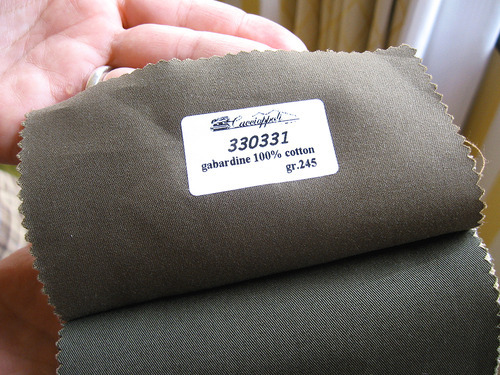
Napolisumisura was in town this past Friday as part of their US tour, and I stopped by to order some trousers. The ones they made for me last year have been fantastic. The cut is slim, but genuinely not skinny, and the rise is classic without without being fuddy duddy. Plus, the prices are just so attractive. On this last visit, I choose a grey pick-and-pick wool from Dormeuil, a brown moleskin from Holland & Sherry, and two fabrics from the Neapolitan supplier Caccioppoli (the dark blue cotton and tan linen you see below). All will be made with an unnecessary number of buttons – four on the fly and an additional four for closure, giving me a total of eight to contend with when I’m just trying to change in and out of my trousers. I like to think of these as Neapolitan chastity belts. 

For men in San Francisco, there’s a bit of good news. Napolismisura’s founder, Mina, is now traveling to the city with her partner Dino. One of the nice things about Mina is that she’s not afraid to gently push back when she thinks the client is making a mistake. It makes for a much more comfortable process and, I think, better outcomes. In fact, on this last visit, my fittings went so well that I added a new suit to the order – an olive cotton number with a suit jacket designed so it can be worn alone as a sport coat. It’ll be single breasted with a 3/2 roll, but will have patch pockets, a barchetta breast, and a subtle spalla camicia detailing at the sleeveheads to give it the right casual vibe. 

The only thing I’m unsure of is the fabric. Mina and Dino recommended an 8oz cotton from Caccioppoli, which has a kind of softness to it that makes it feel like a basic worsted wool (though, obviously without the sheen). When I think of cotton sport coats, however, I think of those thick and rumply ones you can beat around like jeans. I may change the fabric, but with their next visit being in February, there’s still time to decide. Especially when one is wearing a softly tailored chastity belt, there’s little else to do but think about clothes. 

Keep reading

Brooks Brothers’ Friends & Family Sale

image


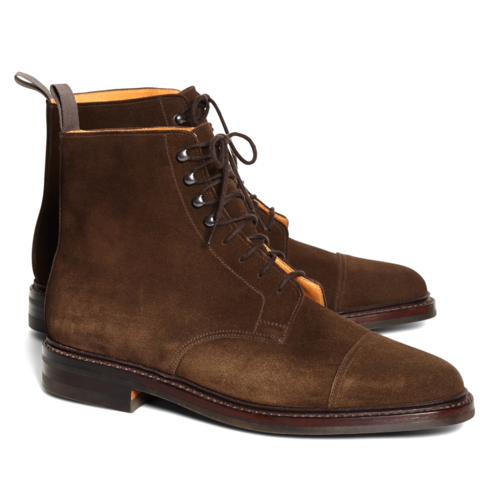
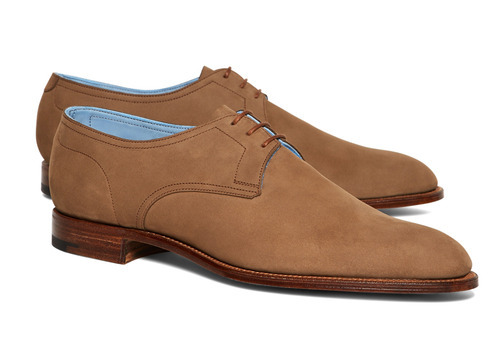
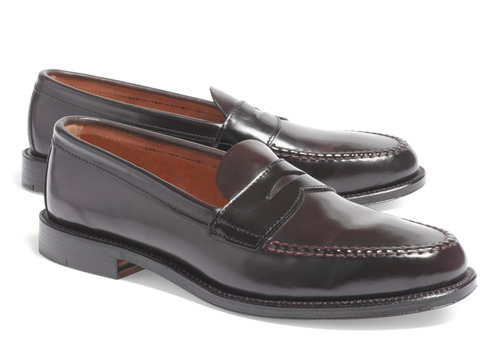
Brooks Brothers’ mid-season sale has started, coming almost a month earlier than usual. For the moment, you can take 25% off your order with the checkout code FF25. Some notable items I found:


image

image

Keep reading

Possibly the Best Sport Coat I’ll Ever Own

image


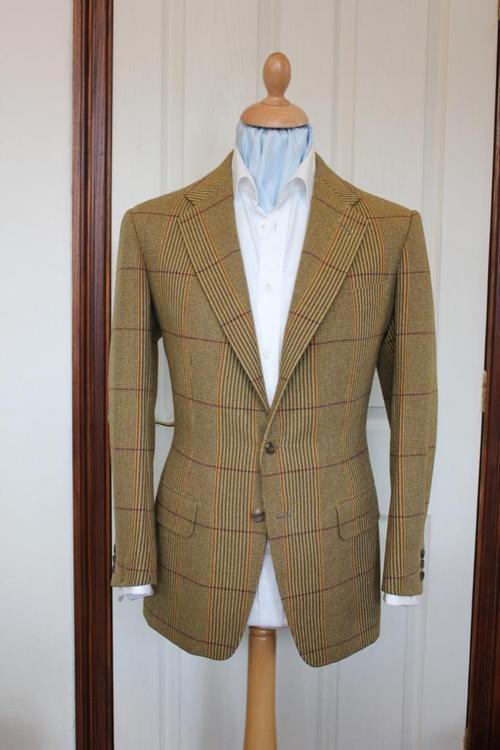
I may be speaking too soon – as this jacket is still in transit to me – but this Russell plaid sport coat by Steed may be the best tailored jacket I will ever own. It was inspired by a photo of George Frazier, a writer who started his career as a jazz critic before moving on to more general topics. In 1960, Esquire published his essay titled “The Art of Wearing Clothes,” which in my opinion, is one of the best pieces of writing on men’s style that has ever been penned. A must read, if you haven’t already.

Russell plaid is a distinctive check. It’s something like a tan glen plaid, but with the horizontal stripes stripped away, so only the vertical ones remain. For the lateral sections, there are dark, thin lines, typically in plum, brown, or rust orange, which help balance the rest of the pattern. You can find it in the form of a made-to-order hacking jacket at Leonard Logsdail, or in Harrisons and Hardy Minnis’ books if you’re going bespoke. Mine is from Harrisons (Porter & Harding’s Hartwist No. 32137), which is a darker color than the beigey version you’ll find from Hardy.

This jacket reflects Steed’s house style well, although I did have some things adjusted. The quarters are cut slightly more open, to give the jacket a dynamic look, but aren’t so open that I feel they define its style. I also asked for flapped welted pockets, rather than my usual patch, as I felt they’d give the tweed a certain kind of refinement. Additionally, I had the details done up in a more American or Italian sensibility, rather than British. The front is made with a 3/2 roll and a cheeky three buttons on each sleeve, rather than Steed’s default of four.

Keep reading