My Favorite Casual Shoes

image


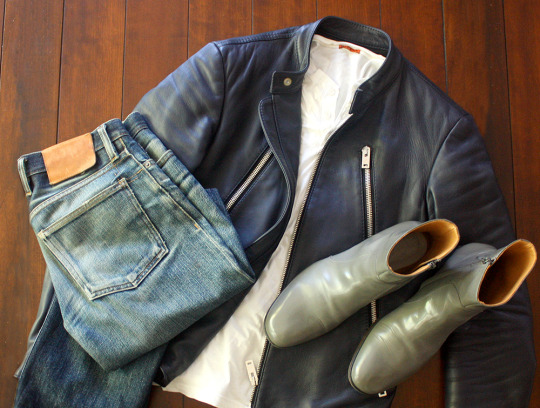
I hate having zippers on my pants, but I love them on my shoes. My go-to causal footwear these days are side zips – an ankle height, usually plain toe style that features a zipper running up each of the medial sides. Without any of the straps, buckles, or elasticated gussets you’d find on jodhpurs or Chelseas, they have a sleeker and cleaner look. I like them for their slightly rockstar vibe, even if my life resembles any thing but. 

The great thing about side zips is that, although they’re a little more interesting than traditional styles, they’re surprisingly versatile. The key is to pay attention to certain details. The cleaner, more minimalist versions have concealed zippers and thinner soles (although some have Cuban heels, I like mine to sit closer to the ground). You can find these from brands such as Robert Geller, Tom Ford, Story Et Fall, and Maison Margiela. Mine, pictured above and below in grey and black, are from Margiela. Note, to get that lower profile, the soles typically have to be glued on, rather than stitched. I don’t mind so much, but it does mean they can’t be resoled as many times. 

These sorts of side zips pair well with contemporary brands such as Robert Geller, Stephen Schneider, and Lemaire. I like them with more casual pieces – a zippered cafe racer from Margiela, for example, or hooded coat from Stephan Schneider – but for a night out on the town, you can try them with a topcoat and some slim trousers. It’s a slightly dressier look, but one that feels laid back. 

Keep reading
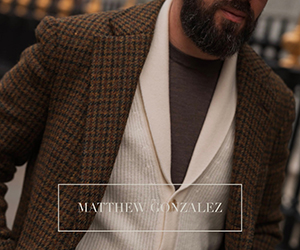
RRL’s Handknit Cardigans

image


Of all the clothing styles we derive from warfare, you wouldn’t think the soft knit cardigan would be one of them. But when James Thomas Brudenell, a British army officer and the 7th Earl of Cardigan, wanted a sweater he could slip on and off without disarranging his hair, a new classic was born. Button-front sweaters have their roots in the Crimean War, in which Brudenell fought, but today they’re associated with cozy firesides, pipe smoking, and grandfatherly attire. 

That’s not to say they have to be stodgy. Steve McQueen gave shawl collar styles a macho appeal when he used them as part of his off-duty uniform. Hip Parisian youths on the Rive Gauche wore them in the ‘50s and ‘60s while discussing jazz, philosophy, and New Wave films. And Kurt Cobain inspired millions of grunge fans in the ‘90s to raid their local thrift stores for vintage pieces. 


Keep reading

Bellied vs. Straight Lapels

image


Like I’m sure anyone reading this site, I’m very particular when it comes to my clothes. I like my tailored jackets to have an extended shoulder line, side vents, and a three-roll-two closure. I prefer my trousers to have slanted pockets. And if the fabric is loosely woven, I think jackets are better with flapped pockets instead of patch (otherwise, with something like a Shetland tweed, the pockets can sag a little more with time). 

There are some things, however, that I’ve never been able to settle on. Like how I feel about the curve on a lapel – which is sometimes known as the belly. 


Keep reading

Saint Crispin’s of the Americas

image


If you live in North America and love Saint Crispin’s as much as I do, there’s some good news this month. The company just started their “Saint Crispin’s of the Americas” operation, headed by former Armoury employee Zachary Jobe. This means three things. 

First, there will be many more trunk shows. Phillip used to visit the US twice a year, hitting only the largest cities. With Zachary’s help, they’ll now be touring the US on a quarterly basis, visiting everywhere from Miami to Washington DC to Atlanta to Denver to San Diego to Los Angeles (in addition to the usual rounds through NYC, Honolulu, San Francisco, etc). You can see their full tour schedule here. 

This is useful since, more than any other shoe company, it can be important to try Saint Crispin’s on in-person before buying. They make their shoes with a lot of shape – cutting things a bit closer to the foot – and use harder stiffeners. That means there’s less room for error when it comes to fit, and the break-in period can be more punishing if you get things wrong. More trunk shows means more opportunities for men to try on their shoes in-person and get professional advice. 

Keep reading

My First Pair of Bespoke Shoes

image


Back in the early ‘90s, GQ hired British writer Peter Mayle for a series of articles. Mayle had just become known for his NYT best seller, A Year in Provence, which was about his time in France. His new GQ series was to be about life’s more extravagant pleasures – the grandest hotels, freshest truffles, softest Mongolian cashmere, etc. The articles were later republished as a book, Acquired Taste. The book is more fluff than substance, but Mayle is such a great writer and so filled with gusto that it’s hard not to get swept away. 

The first chapter of Acquired Taste is about bespoke shoes – specifically those made in the West End of London (you can listen to part of the chapter on YouTube). Mayle gets into the ridiculousness of it all in the second paragraph:

To some men – even those who revel in bespoke suits with cuff buttonholes that really undo, or made-to-measure shirts with single-needle stitching and the snug caress of a hand-turned collar – even to some of these sartorial gourmets, the thought of walking around on feet cocooned in money somehow smacks of excess, more shameful than a passion for cashmere socks, and something they wouldn’t care to admit to their accountants. Their misgivings are usually supported by the same argument: what could possibly justify the difference in price between shoes made by hand and shoes made by machine? Unlike the miracles of disguise that a tailor has perform in order to camouflage bodily imperfections, the shoemaker’s task is simple. Feet are feet. 

Keep reading

Quilted Flannel Sport Coats

image


Sometimes I worry the internet is not only changing the way we buy clothes, but also the kind of clothes we buy. So many things don’t translate well into .jpeg – subtle details such as texture and finishing are lost; silhouettes are flattened out into two-dimensional measurements. Some of my favorite clothes are things I stumbled upon by chance, but would have never given a second look online. 

This ts(s) jacket is a good example. I’ve only had it for a month, but it’s been a go-to favorite almost every day when I’m not wearing a sport coat or leather jacket. I really only picked it up after seeing Greg from No Man Walks Alone last year in it when he was in San Francisco for a trunk show. The jacket isn’t impressive online, but once you see it worn with other things – in Greg’s case, a pair of slim, faded jeans and Margiela German Army Trainers – the appeal becomes obvious. 

The modern uniform for tailored clothing typically involves a sport coat with jeans. Sometimes that works; a lot of times it doesn’t. The problem with wearing tailored clothing with denim is that the jacket usually has to be a lot more casual than people think – something like your shorter, slimmer interpretations of classics, rather than actual classics themselves. Unless you have the cool of Andy Warhol, the combo can otherwise come off like a sartorial mullet. 

Keep reading

Introducing Nine Lives

image


Some people lose their careers because of alcohol; others find new ones. Ian Segal, a former poetry editor at The New Yorker, was drinking late one night with friends in Tokyo. They talked about how cool it would be to start a new clothing label that combined all the things they loved – workwear and various cultural scenes. The next day, after sobering up a bit, Ian received a phone call from his buddy, who said they needed to meet for production samples. “I was like, ‘oh, this is actually happening.’”

For a brand that was born out of a drunk, late-night discussion, Nine Lives is quite coherent. It’s reimagined workwear, but in a way that’s never been done before – taking mid-century American work clothes and cutting them with a sort of dark, Japanese mod and punk edge. “We wanted to approach this as though heritage- and contemporary-wear are in the same boat,” says Ian. “As in, what if sashiko were invented today?”

The brand is a combination of a few people’s efforts. There’s Ian, the former New Yorker editor, and then Kotaro Sato, a Japanese clothing designer who used to work as a tattoo artist on LA’s Sunset strip. The third person in this trio is Masa Takayanagi, one of Yohji Yamamoto’s pattern makers, who gives Nine Lives its unique silhouettes. 

Keep reading

How to Build a Brand

image


For anyone trying to build a menswear company, Christian Kimber should be a case study. He’s a young, 28 year-old designer, born and bred in the south of England, but now living as a transplant in Australia. Over the last three years, he’s built a small, globally distributed label – carried at boutiques such as Gentry, as well as major department stores such as Bloomingdales – and recently opened his own brick-and-mortar store in Melbourne (at a time when everyone says B&Ms are dead). 

Christian is proof positive that you can do a lot if you’re driven to create. He doesn’t have any formal training – no fashion degree or design internship. As he puts it, everything has been sort of like “running a food truck in order to build up to a restaurant.” Three years ago, he was working odd jobs here in there in London’s fashion industry, doing sales work for My Wardrobe and Selfridges, then a bit of marketing for E. Tautz. It was from being in and around Savile Row that he picked up his love for tailoring. 

“At some point, I wanted a pair of olive suede tassel loafers,” he said. “I couldn’t find what I wanted, so I decided to make my own.” Christian designed the prototype, put together a run at a factory, and quickly sold through his inventory online. Most people with that success would charge forward, but Christian took a step back to think more about what he wanted to do with his newfound brand. “I took about a year-and-a-half off to really think about what sort of company would reflect me.” 

Keep reading

The Armoury Starts a Video Channel


One of my favorite menswear shops, The Armoury, just started a YouTube channel. Jeremy Kirkland, who heads up their marketing, tells me it’ll be a place where they can answer popular questions (e.g. what men should look for in a suit), as well as showcase some of the brands and artisans they carry. “We want to make things easygoing and approachable,” he says. “Sometimes people assume there’s a bit of pretentiousness in tailored clothing. We want to break that stereotype.”

The channel currently has a video on how a suit should fit, as well as a nice run down of their Ring Jacket line (good for guys who might not be able to stop into their Hong Kong or NYC locations). Jeremy tells me they’ll also have special appearances in the future. Taka from Liverano & Liverano will be stopping by to explain the Florentine cut; Pino from Orazio Luciano will talk about Neapolitan tailoring. Other artisans will be coming by as well to answer questions about fit and quality, giving people a broader understanding of men’s clothes (even if they might be shopping elsewhere). 

You can check out the channel here. The next video should come out later this winter.

Keep reading

Seven New(ish) Brands I’ve Been Watching

image


I love finding new and interesting brands. And luckily with fashion, the pace is fast enough for there always to be something exciting around the corner. For the last two years, I’ve been doing these posts on new brands I’m watching – and with every post, the number of companies I want to talk about seems to grow. I’ve worked to keep these lists down to seven, but this one could have easily stretched to ten. 

Granted, not everyone here is actually new. Some are actually old, heritage companies that have been around for ages – they’re just new to me (and hopefully, you). The scope is also more on contemporary casualwear, not tailored clothing, but if your interests are as broad as mine, maybe you’ll find something to like here as well.  

(To see previous years’ posts, you can click here and here).

Keep reading