Looking Like a Japanese Hiker

image

Back in the early 1940s, Leon Leonwood Bean – founder of L.L. Bean – wrote a practical guide on living in the great outdoors. The point of the book, he wrote, is not to “bore readers with personal yarns and experiences, but to give definite information in the fewest words possible on how to hunt, fish, and camp.” The book, while not that well edited, is tightly packaged into 104 pages. It also covers everything from building beds to cooking outdoors to finding lost hunters. You can find it these days through Amazon (it makes for a nice gift for outdoor enthusiasts), although it’s also available for a free read through Google Books

Naturally, for the purposes of this blog, the most interesting section is chapter twelve, which covers what to wear when you’re out in the hills. Leon Bean suggests taking along a pair of 12″ leather top rubbers (what I assume are his Bean boots) and shorter 6.5″ moccasins for dry days, when you’re out on the ridge before it starts snowing. Pants should be medium-weight wools built with knitted or zippered bottoms; outerwear ought to include a medium-weight, all wool coat with a game pocket at the back; shirts should likewise be made from wool, with at least one being a red paid in case “you go out to drag a deer without a coat” (that way, you won’t be shot by other hunters.) A sign of his times, Bean suggests leaving the house with your heaviest business suit. And for handkerchiefs, he says to take along six red bandanas (never anything white). “I also recommend colored toilet paper,” he writes. 

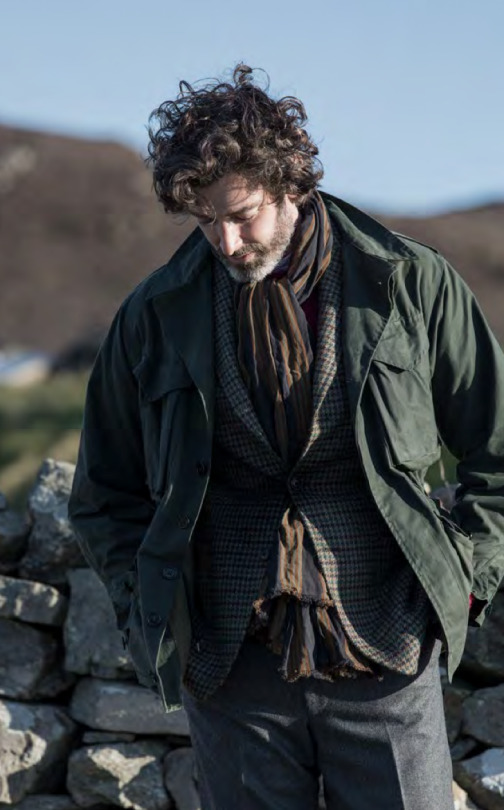
The excerpt is charming, and even if it’s a bit antiquated, it nicely describes a sort of autumn style that still feels relevant today. To be sure, outdoor clothing has always defined fall wardrobes, whether that’s tweed sport coats worn out in English countrysides or the sort of workwear Bean favored. For me, a big inspiration at the moment is Japanese hiking gear – a little more casual than traditional tailoring, a touch less rugged than shooting apparel. No less outdoorsy. 

Keep reading

Splitting the Difference

image


It’s easy to fall in love with a pair of oxfords, particularly if you’re browsing for shoes online. They’re naturally sleek, with minimally detailed uppers that give the shoes a sense of formality. And for many people, dressing up is the same as dressing well. Derbies by comparison can get lost in the mix, but I find them infinitely more practical. Like most men, I rarely wear suits. And for daily use, oxfords just look off to me with sport coats and trousers – even worse with jeans. They’re simply too formal. 

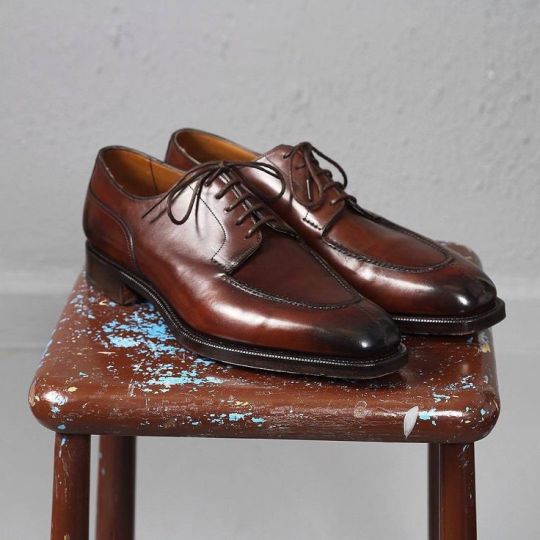
When it comes to derbies, none make my heart pitter patter as much as the Norwegian split toe. I love them for both their design and how much they repulse others. It’s true they can look a bit taxidermic. And if done poorly, an elongated toe seam can even seem phallic. When everything comes together well, however, nothing looks as good to me. Wingtips are too common; cap toes too plain. Norwegian split toes plant your feet in the ground and say you like something a little different. 

Apparently, the style has some workwear roots. John Lobb of St. James calls the style a Navvy cut for how they used to be worn by British navigational engineers (or navvies for short). Nicholas Templeman, who used to work as a lastmaker at the company, tells me men used to wear them when they worked on canals, railways, and roads:

Keep reading

Finding the Perfect Pair of Jeans

image


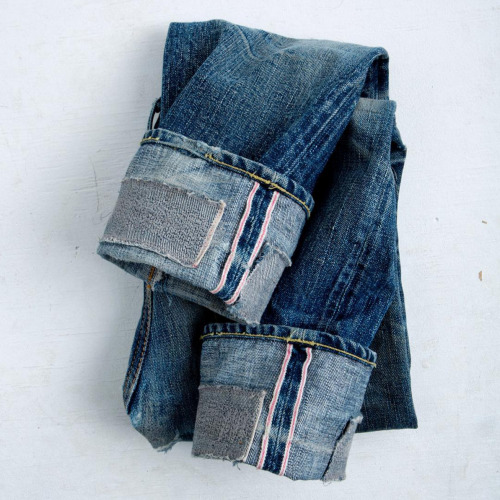
Nothing defines the American fashion experience more than trying to find the perfect pair of blue jeans. They’re the foundation of any wardrobe outside of tailored clothing, the casual equivalent of gray flannel trousers. This old Australian documentary on Levi’s summed it up best: 

The symbols that tell a story in a twinkling of an eye are usually everyday products, but some are very special. The Eiffel Tower says France, but the little Sony walkman says Japan. The archetypal symbols that yell America are the Coke bottle and Levi’s Strauss jeans. They all enjoy the prestige of being regarded as design classics. […] Film stars, American presidents, student protestors, and rock musicians have all worn the 501. From gold mining through protest, to what they are today, [blue jeans] are the story of the acceptable uniform for non-conformity. 

Some men look great wearing tailored clothing year-round, but I can’t imagine building a wardrobe without blue jeans. They’re practical, hard wearing, and frankly look great. Even Bruce Boyer, the closest thing we have today to an arbiter elegantiarum in classic menswear, occasionally wears a pair. Over the years, I’ve cycled through at least a dozen models trying to find the Platonic ideal. The truth is the perfect pair of jeans doesn’t exist – a lot depends on what other clothes you like to wear. Here are ten models, however, that I think are notable. 

Keep reading

On Developing Personal Style

image


So, I’ve been working on a two-part series for Put This On (for those who don’t know, most of my writing is there). The posts were inspired by an online Vogue article I read earlier this year. Apparently, fashion editors are just like the rest of us. Despite having closets overflowing with options, they mostly rely on the same things for their day-to-day routines. An excerpt:

Like an exploding volcano of denim and satin, a tidal wave of cashmere and cotton, our clothes threaten to overtake our tiny apartments, to bury us alive under tees and trousers. This wouldn’t be so bad, maybe, if we actually wore all this stuff, if 365 days meant 365 different outfits—730 if we changed for evening! But nooo. In fact, most of us rely on a few favorites in serious rotation, leaving the rest of the orphans in the closet begging for crumbs.

To judge just how severe this situation has become, and with spring in full flower and the temptation to buy still more!—more!—beckoning from every shop and laptop, I asked some of my Vogue colleagues to share with me what it is they actually wear from their bursting closets.

Keep reading

Some of That Southern Comfort

image


Tailoring is a fierce trade with an ever-shrinking market. Which is perhaps why, if you talk to enough tailors, you’ll find they all hate each other. A tailor will tell you so-and-so is cheating his customers by using cheaper trims. Or such-and-such tailor isn’t cutting things right. For whatever reason, this sort of talk is especially common among the older tailors in Southern Italy, who are all too eager to tell you how everyone is doing things wrong except them. 

Part of this is the natural sniping that happens in small, competitive industries. The other part is about how tailors are trained. Traditionally, a tailor will enter the trade by apprenticing under a master cutter or tailor. Since their work as an apprentice is still contributing to the shop’s general output, that means things have to be done in a very careful and specific way. This lends a kind of rigidity to the learning process that, I assume, carries with the person throughout much of the career. People who do things differently are thought to be wrong, lazy, or just outright evil. 

Not all tailors are so rigid in their thinking. I’ve had some great conversations with Herrie Son, a young up-and-coming tailor located in Nashville, Tennessee – a city admittedly better known for its down-home country music than traditional suits and sport coats. Still, Herrie brings a bit of Savile Row craft to the American South. She got her start at the London College of Fashion, where she focused on handcraft tailoring, and then did some work for Thom Sweeney and Welsh and Jefferies. At the first, she learned how to cut; at the second, she learned how to make. 

Keep reading

Drake’s Drops New Fall Lookbook

image


Just as cloudy skies on Groundhog Day predict an early spring, Drake’s autumn lookbooks are a reminder that cooler days lie ahead. This year, the team shot their collection in the Shetland Islands. Which is fitting given how prominently their brushed Shetland cable knits feature in this lookbook. Thick sweaters in sapphire blue, canary yellow, and scarlet red serve as cheerful accents to otherwise drab ensembles made of prickly tweed, napped flannel, and waxed cotton. “We really went in on the knitwear this season,” says Michael Hill, the company’s creative director. “They’re made in the Shetland Isles by people who love what they do.” 

Ever since Drake’s expanded beyond their core line of ties and pocket squares, such collaborations have been an important part of their business. Belvest, where founder Michael Drake once work, makes the company’s sport coats in Italy. Blackhorse Lane Ateliers sews Drake’s jeans in London (those are the best jeans I’ve found to wear with sport coats). Last season, Drake’s also collaborated with the Japanese dyeing house Buaisou to produce a limited range of hand-dyed, indigo, cashmere-and-wool scarves

This season, they’re continuing with new collabs. One of my favorites is the viscose-silk blend scarf you see above, which was made in Northern Italy. “It’s our take on the college scarf,” says Michael. “The fabric has a lot of texture, so you don’t have to be too precious with it. The more crumpled and disheveled it looks, the better.” Drake’s also went to India to get these cashmere scarves woven in classic madras patterns. The irregular fibers give the twill weave an unique texture. Michael tells me they’ll continue with that collaboration next spring, but with brighter colors and lighter weight yarns.

Keep reading

David Kind, A New Kind of Luxury

image


It’s been about ten years since fashion journalist Dana Thomas penned Deluxe. And today, it stands as one of the best books I’ve read on the rise and fall of luxury labels such as Prada and Louis Vuitton. The book is about how the constant search for higher profits has led many old-world luxury companies to give up things that made them special in the first place – a commitment to quality, a focus on craft, and a willingness to innovate in terms of design. It’s not hard to notice that, for consumers in Western Europe, North America, and Japan, these labels have become less and less relevant over the years. 

It’s hard, however, to identify what’s replacing them. My friend Paul Munford, who runs the very smart Leanluxe, likes to say modern luxury companies are centered around a quiet confidence in branding, virtue of product, specialization, and transparency. Think of companies such as Ledbury, Common Projects, and Tracksmith

Perhaps. Sometimes I think Paul’s focus is more driven by aesthetic differentiation (e.g. minimalist branding) than actual business models. Plus, luxury is inherently hard to define. The people who were buying Louis Vuittion a generation ago may not be the same people buying Ledbury today. At the same time, that may not matter, as it’s clear a shift is happening. Mr. Porter, for example, is very much a luxury shop – and they don’t carry many of those old world brands. 

Keep reading